Stereo imaging, at its core, is about recreating a three-dimensional sense of space from two-dimensional images. It's more than just a visual trick; it’s a fundamental shift in how we perceive and interact with the world around us. From medical diagnostics to entertainment, the ability to perceive depth unlocks a wealth of possibilities. For years, we've relied on traditional methods, but the increasing demand for accurate, reliable, and readily available 3D information is driving innovation in stereo imaging technologies.
The global relevance of stereo imaging isn't limited to high-tech industries. Consider its vital role in disaster response. Accurate 3D maps created via aerial stereo imaging help first responders assess damage, plan rescue routes, and allocate resources effectively. The United Nations uses these technologies for mapping refugee camps and monitoring infrastructure projects in developing nations. According to the ISO standards for photogrammetry, precision in stereo image capture and processing is continually increasing, leading to more reliable datasets. We're seeing a constant need for improvements, especially in challenging environments—fog, rain, low light—where current systems struggle.
Simply put, stereo imaging is the technique of capturing two slightly different images of the same scene, mimicking the way our own eyes see. This difference, known as disparity, contains the information needed to calculate depth. Processing these images through sophisticated algorithms generates a 3D representation. It's becoming essential for modern industry—think autonomous vehicles needing to "see" the road ahead, or surgeons using 3D visualizations for complex procedures. It's no longer just about what things look like, but what their spatial relationship is, and how we interact with that space.
The Fundamentals of Stereo Imaging
Look, after years in the field, you learn that accurate data is king. Stereo imaging gives you that. It's built on simple geometry, but getting it right – that’s the trick. We’re talking precise camera calibration, understanding baseline distances, and dealing with things like lens distortion. It’s not just snapping a couple of photos; it’s a meticulously controlled process. Without those fundamentals, you end up with a wonky 3D model, and that's useless on a construction site or in a surgical room.
The quality of the final 3D reconstruction relies heavily on the quality of the input images. High resolution is a given, but equally important is minimizing noise and maximizing contrast. That means good lighting, stable platforms for the cameras, and understanding the limitations of the sensors. We’re constantly pushing the boundaries with new sensor technologies, but even the best sensor needs proper handling and processing to deliver reliable results.
The Global Context and Applications
Stereo imaging’s reach is wider than most folks realize. From mapping coastlines for environmental monitoring to creating detailed 3D models of archaeological sites, the applications are diverse. I’ve seen it used extensively in the mining industry for volumetric calculations – figuring out how much material is in a stockpile, for example. That’s critical for inventory management and cost control. And we’re seeing an explosion of its use in robotics, particularly in autonomous navigation.
The demand is particularly high in developing nations where accurate mapping data is often scarce. Organizations like the World Bank are leveraging stereo imaging for infrastructure planning and monitoring progress on large-scale projects. In the aftermath of natural disasters, it’s invaluable for damage assessment and coordinating relief efforts. The speed and accuracy it provides are often the difference between life and death.
What's driving this global uptake is the falling cost of hardware and the increasing sophistication of processing algorithms. Ten years ago, a good stereo imaging system would have cost a small fortune. Now, you can get comparable results with off-the-shelf components and open-source software. That's democratizing the technology and putting it in the hands of more people who can benefit from it.
Defining Stereo Imaging and its Relevance
Stereo imaging, at its most basic, is the process of creating a three-dimensional representation of a scene from two or more two-dimensional images. This mirrors the way human vision works – our two eyes provide slightly different perspectives, and our brain interprets the disparity to perceive depth. It’s not about creating a perfect replica of reality, but about generating a useful and accurate representation for a specific purpose.
Its relevance to modern industry and humanitarian needs is immense. Think about the precision required in modern manufacturing. Stereo imaging allows for quality control checks that are simply impossible with traditional methods. In healthcare, it's revolutionizing surgical planning and training. And as mentioned before, in disaster relief, it provides crucial information for saving lives. It’s a tool for better decision-making, improved efficiency, and increased safety.
What I’ve seen on site, day in and day out, is the need for information that’s not just visually appealing, but actionable. Stereo imaging delivers that. It’s not just about seeing a 3D model; it’s about being able to measure distances, calculate volumes, and identify potential problems before they become costly mistakes.
Core Components of Effective Stereo Imaging
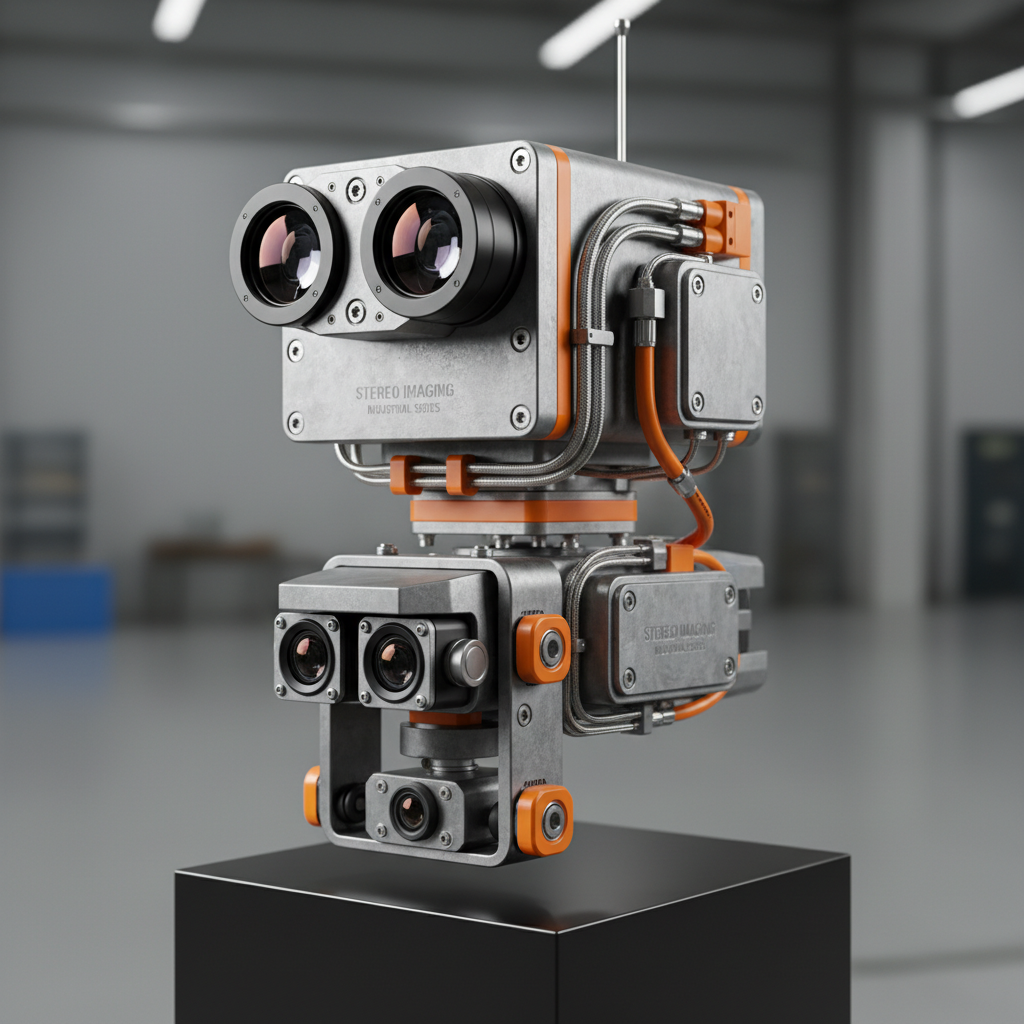
Let's talk about what actually makes a system work. First, you've got the cameras. They need to be properly calibrated and synchronized. Then, there’s the baseline distance – the distance between the cameras. Too small, and you don't get enough disparity for accurate depth calculation. Too large, and you run into occlusion problems where one camera can’t see what the other sees. It's a delicate balance.
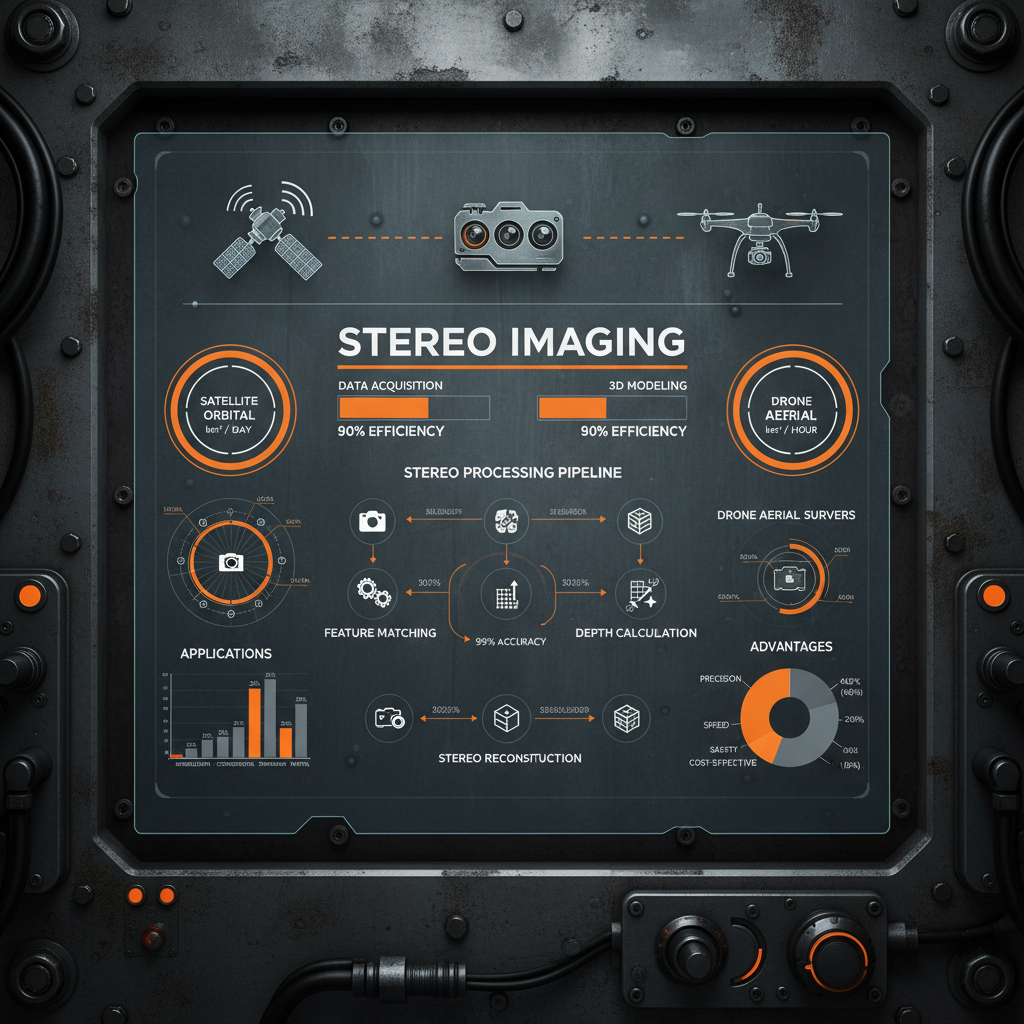
The processing algorithms are also critical. These algorithms identify corresponding points in the two images and use the disparity to calculate depth. Robust algorithms are needed to handle noise, distortions, and variations in lighting. And finally, you’ve got the output – the 3D model. The format and accuracy of this model depend on the intended application.
Stereo Imaging Performance Metrics
Real-World Applications and Use Cases
I’ve seen stereo imaging deployed in some pretty challenging environments. Take the oil and gas industry, for example. They use it for inspecting pipelines and offshore platforms, identifying corrosion and potential failures. It's far safer and more efficient than sending divers down there.
In agriculture, it’s being used to monitor crop health and yield, creating detailed 3D maps of fields. This allows farmers to optimize irrigation and fertilization, leading to increased productivity. I’ve even seen it used in forestry to assess timber volume and track deforestation.
Advantages and Long-Term Value
The benefits are clear. Cost savings are a big one. By creating accurate 3D models, you can avoid costly rework and delays. Sustainability is another key advantage. By optimizing resource allocation and reducing waste, stereo imaging contributes to more sustainable practices. And, crucially, it enhances safety – reducing the need for humans to work in hazardous environments.
But beyond the tangible benefits, there's also the element of trust. When you can see the problem in 3D, it's easier to understand and address it. That builds confidence among stakeholders and fosters a culture of innovation. Stereo imaging isn’t just about technology; it's about empowering people to make better decisions.
Future Trends and Innovation in Stereo Imaging
We’re on the cusp of some major breakthroughs. The integration of artificial intelligence is going to be huge. AI-powered algorithms will be able to automatically identify objects and features in 3D models, making the analysis process much faster and more efficient. I see a lot of potential in combining stereo imaging with LiDAR and other sensing technologies to create even more comprehensive and accurate representations of the world.
There’s also a growing focus on miniaturization. We’re developing smaller, lighter stereo imaging systems that can be deployed on drones and robots. This will open up new possibilities for applications in areas like infrastructure inspection and environmental monitoring. And the push for real-time processing is also important – being able to generate 3D models on the fly will be critical for applications like autonomous navigation.
I'm especially excited about the potential of combining stereo imaging with digital twin technology. Creating a virtual replica of a physical asset allows for predictive maintenance, remote monitoring, and optimized performance. It’s a game-changer for industries like manufacturing and construction.
Summary of Challenges and Potential Solutions in Stereo Imaging Implementation
| Challenge |
Impact on Accuracy |
Potential Solution |
Implementation Cost (1-10) |
| Poor Lighting Conditions |
Reduces image quality, leading to inaccurate depth maps |
Utilize active stereo imaging with structured light or time-of-flight sensors |
7 |
| Camera Calibration Errors |
Distorts the 3D reconstruction, introducing geometric inaccuracies |
Implement robust camera calibration routines with frequent checks |
5 |
| Occlusion Issues |
Creates gaps in the 3D model, making it incomplete |
Employ multiple viewpoints or advanced interpolation techniques |
6 |
| Computational Complexity |
Slow processing times, hindering real-time applications |
Leverage GPU acceleration and optimized algorithms |
8 |
| Surface Reflectivity Variations |
Causes issues with feature matching, resulting in inaccurate depth estimation |
Use polarization filters or specialized imaging techniques |
4 |
| Data Storage and Management |
Large 3D datasets require significant storage capacity and efficient organization |
Implement cloud-based storage and data compression techniques |
3 |
FAQS
Outdoor environments present significant challenges. Sunlight variability, weather conditions like rain or fog, and moving objects can all degrade image quality and accuracy. We typically use robust algorithms and calibrated sensors, but sometimes you just need to wait for better conditions. Active stereo systems, with their own light sources, are becoming more common to combat these issues. The key is understanding the environment and choosing the right tools.
LiDAR generally offers higher accuracy, especially over long distances, but it’s significantly more expensive. Stereo imaging is much more affordable, making it accessible for a wider range of applications. Accuracy is improving rapidly with advancements in algorithms and sensor technology. For many use cases, like visual inspection or creating base maps, stereo imaging provides a good balance between cost and performance.
Real-time processing requires significant computational resources. Typically, you’ll need a powerful CPU and a dedicated GPU. The exact requirements depend on the resolution of the images, the complexity of the algorithms, and the desired frame rate. Edge computing devices are becoming increasingly popular – they allow you to perform the processing locally, reducing latency and bandwidth requirements.
Yes, but it presents unique challenges. Water absorbs light, reducing visibility and contrast. Specialized cameras and lighting systems are required. Backscatter from particles in the water can also interfere with the process. Careful calibration and robust algorithms are essential. We’ve used it extensively for underwater inspections, but it’s always more complex than terrestrial applications.
Common errors include inaccurate camera calibration, insufficient texture in the scene (leading to poor feature matching), and occlusion. Mitigation strategies include meticulous calibration procedures, using structured light to add texture, and employing multiple viewpoints. Careful attention to lighting conditions and proper image pre-processing are also crucial.
Consider the key requirements of your application: resolution, accuracy, field of view, and working distance. Also, think about the environmental conditions. Will it be used indoors or outdoors? Will it be exposed to harsh weather? Different camera systems are designed for different applications. It’s always a good idea to start with a well-defined set of requirements and then research the available options.
Conclusion
Stereo imaging is a powerful technology that’s transforming the way we perceive and interact with the world. From improving efficiency in industrial processes to saving lives in disaster relief operations, its applications are diverse and impactful. The advancements in sensor technology, processing algorithms, and AI integration are driving a continuous evolution of its capabilities and accessibility.
Looking ahead, the continued development of robust, affordable, and user-friendly stereo imaging systems will be critical for unlocking even more potential. It's not just about creating pretty pictures; it's about delivering actionable insights that drive better decision-making. For more information and to explore how stereo imaging can benefit your projects, visit our website: www.space-navi.com.