Radiometric resolution, a cornerstone of modern imaging and remote sensing, is increasingly vital across diverse industries, particularly within aerospace and defense. It defines the sensitivity of a sensor to changes in electromagnetic radiation, essentially determining the number of distinct intensity values a sensor can detect. This capability is crucial for accurately characterizing and analyzing the Earth’s surface, monitoring space environments, and even ensuring the precision of guidance systems. Understanding radiometric resolution is no longer a technical detail, but a fundamental requirement for efficient data acquisition and interpretation in today’s data-driven world.
Globally, the demand for high-resolution imagery is surging, driven by applications like precision agriculture, disaster management, urban planning, and environmental monitoring. According to the UN’s Sustainable Development Goals, accurate and timely data is paramount for achieving objectives related to climate action, sustainable cities, and responsible consumption. The World Bank also utilizes high-resolution imagery for infrastructure development and poverty reduction programs. The aerospace industry, in particular, faces a constant challenge to improve sensor capabilities, including boosting radiometric resolution, to meet these growing demands and unlock new possibilities in space exploration and Earth observation.
The escalating need for detailed environmental monitoring, coupled with advancements in sensor technology, highlights the increasing importance of radiometric resolution. Its limitations can directly impact the effectiveness of critical applications, from identifying subtle changes in vegetation health to detecting camouflaged objects. Improving radiometric resolution is therefore a key focus for innovation and investment within the industry.
Introduction to radiometric resolution
In its simplest form, radiometric resolution refers to the number of bits used to represent the intensity of a pixel in a digital image. A higher bit depth translates to a greater number of possible intensity levels, allowing for finer distinctions between shades and colors. This is critical for tasks such as identifying subtle differences in land cover types or detecting minute variations in temperature. The aerospace sector relies heavily on accurate radiometric resolution for satellite imagery used in environmental monitoring, security applications, and scientific research. radiometric resolution is a core element of data integrity.
For applications like astronomical observation, where detecting faint signals is paramount, maximizing radiometric resolution is essential. Conversely, in some commercial imaging scenarios, a lower radiometric resolution might be sufficient, offering a trade-off between data size and processing requirements. Understanding these trade-offs is crucial for selecting the appropriate sensor and optimizing data acquisition parameters.
The Fundamentals of Radiometric Resolution
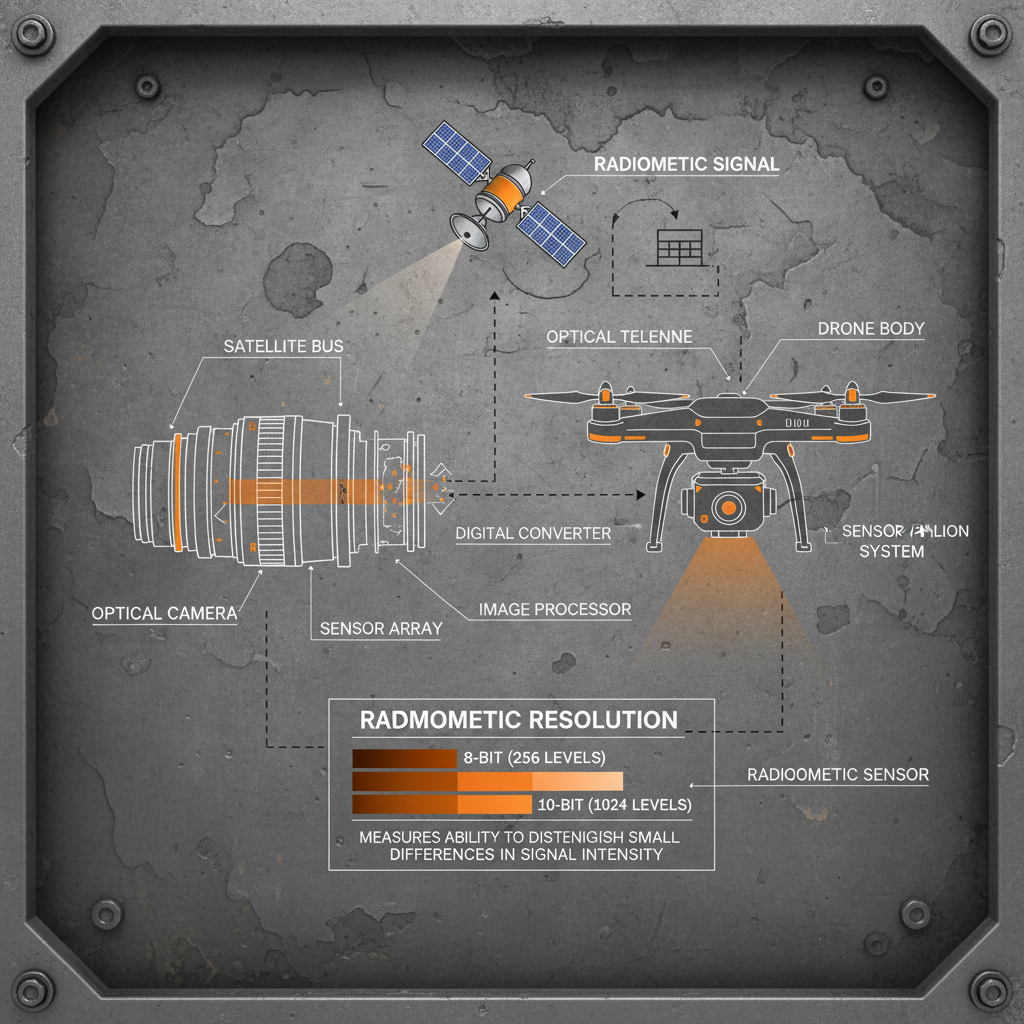
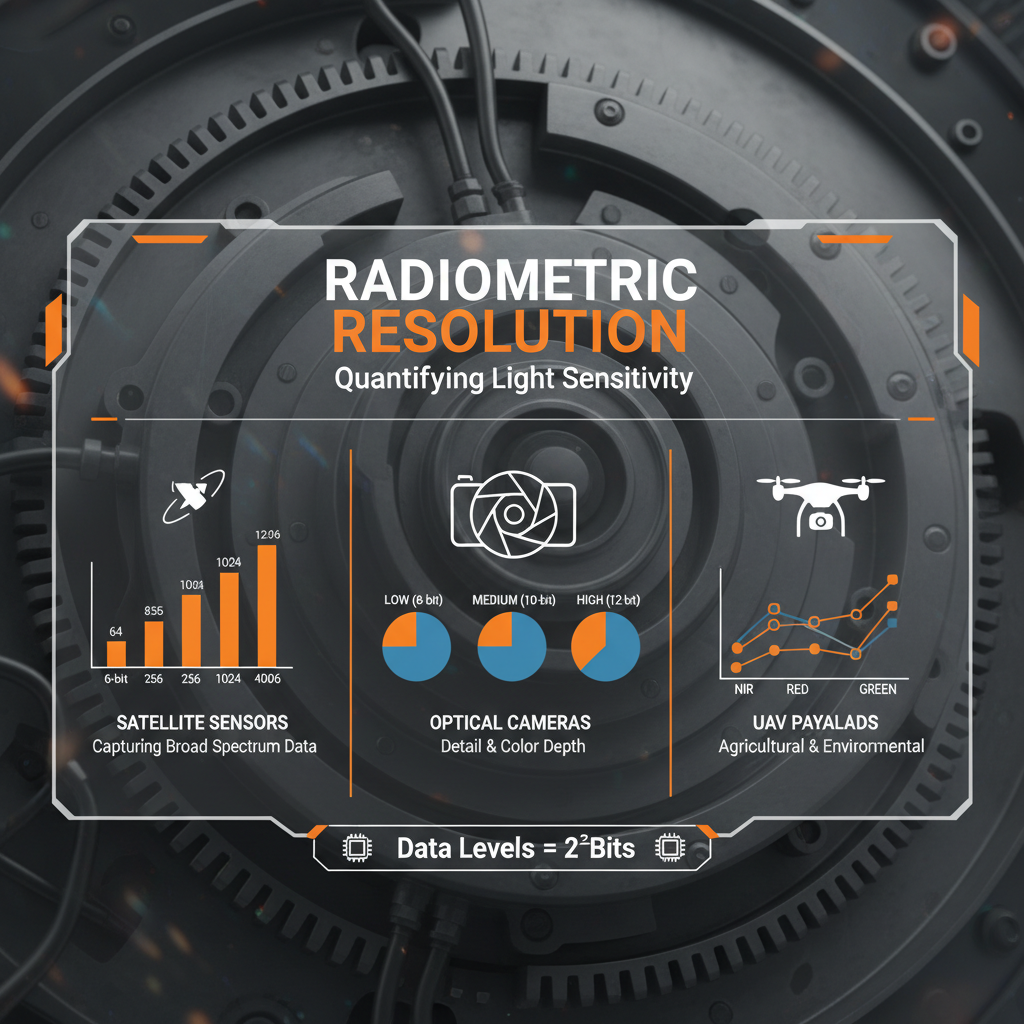
Radiometric resolution is directly linked to the sensor’s analog-to-digital converter (ADC). The ADC quantizes the continuous range of incoming electromagnetic radiation into discrete digital values. For example, an 8-bit sensor provides 28 = 256 possible intensity levels, while a 10-bit sensor provides 210 = 1024 levels. Higher bit depths offer greater precision and allow for more subtle variations in measured radiance to be captured. This is particularly important when dealing with low-contrast scenes or subtle spectral differences. radiometric resolution impacts data quality.
Several factors can affect the effective radiometric resolution of a system, including sensor noise, atmospheric effects, and signal saturation. Noise introduces random variations in the signal, effectively reducing the number of discernable intensity levels. Atmospheric scattering and absorption can also alter the signal, reducing its accuracy. Ensuring proper calibration and employing appropriate atmospheric correction techniques are crucial for maximizing the benefits of high radiometric resolution.
The concept extends beyond simply the number of bits; it encompasses the dynamic range of the sensor - the ratio between the strongest and weakest signals it can reliably detect. A wider dynamic range, combined with high radiometric resolution, allows for simultaneous observation of both bright and dark features in a scene, preventing saturation or loss of detail.
Core Components Influencing Radiometric Resolution
Several key components contribute to achieving and maintaining high radiometric resolution. First, the quality of the sensor's detector material plays a significant role. Materials with lower noise characteristics and higher sensitivity are crucial. Second, the design of the ADC is paramount; a high-resolution ADC with a low quantization error is essential for accurately converting the analog signal to digital form. Furthermore, the signal processing electronics must be carefully designed to minimize noise and distortion. radiometric resolution depends on careful engineering.
Calibration is also a vital component. Regular calibration procedures ensure that the sensor's response is accurately mapped to known radiance values. This process corrects for sensor drift and inconsistencies, maintaining the accuracy of radiometric measurements over time. Effective calibration requires traceable standards and meticulous quality control procedures. Space-based sensors, in particular, require robust calibration strategies due to the challenging environmental conditions.
Finally, the system’s thermal management plays a role, as temperature fluctuations can affect the performance of the sensor and ADC. Maintaining a stable operating temperature is crucial for preserving radiometric accuracy. Sophisticated thermal control systems are often employed in aerospace applications to mitigate these effects.
Real-World Applications of Radiometric Resolution
The applications of high radiometric resolution are widespread and impactful. In precision agriculture, detailed radiometric data allows for the assessment of crop health, detection of stress factors (like water deficiency or disease), and optimization of irrigation and fertilization strategies. This leads to increased yields and reduced resource consumption. In environmental monitoring, high radiometric resolution aids in tracking deforestation, monitoring water quality, and assessing the impact of pollution.
Defense and intelligence agencies rely heavily on high-resolution imagery for target detection, identification, and tracking. The ability to discern subtle differences in reflectance can reveal camouflaged objects or identify changes in terrain. Furthermore, in remote sensing applications for disaster management, high radiometric resolution imagery can be used to assess damage, map affected areas, and coordinate relief efforts effectively. For example, following a wildfire, high-resolution data can delineate burn scars and estimate the extent of forest loss.
Radiometric Resolution Performance by Sensor Type
Advantages and Long-Term Value
Investing in high radiometric resolution provides tangible benefits in terms of data accuracy, improved decision-making, and long-term cost savings. Accurate data reduces the need for costly rework or corrections, particularly in applications like infrastructure monitoring or environmental remediation. The ability to detect subtle changes early on can prevent significant problems from escalating, minimizing potential risks and liabilities.
Furthermore, high radiometric resolution contributes to enhanced sustainability by enabling more efficient resource management and reducing waste. For example, precision agriculture practices, driven by high-resolution imagery, can minimize the use of fertilizers and pesticides, protecting ecosystems and promoting biodiversity. The trust engendered by reliable and accurate data is also a significant long-term value, fostering confidence among stakeholders and facilitating collaborative efforts.
Future Trends in Radiometric Resolution Technology
Several exciting trends are shaping the future of radiometric resolution. Advancements in detector technology, such as the development of new materials and fabrication techniques, are enabling the creation of sensors with even higher sensitivity and lower noise levels. Quantum sensors, in particular, hold tremendous promise for achieving unprecedented levels of radiometric resolution.
Furthermore, the integration of artificial intelligence (AI) and machine learning (ML) algorithms is enhancing the ability to extract valuable information from high-resolution imagery. AI-powered image processing techniques can automatically identify subtle patterns and anomalies that would be difficult or impossible for humans to detect, unlocking new insights and capabilities.
Challenges and Potential Solutions
Despite the advancements in radiometric resolution technology, several challenges remain. High-resolution sensors are often more expensive and require more complex data processing pipelines. Managing the large volume of data generated by high-resolution systems can also be a significant hurdle, requiring substantial storage capacity and computational resources.
One potential solution is the development of more efficient data compression algorithms that can reduce data size without sacrificing radiometric accuracy. Another is the adoption of cloud-based processing platforms that provide scalable computing resources on demand. Furthermore, advancements in on-board processing capabilities will allow for more data to be processed directly on the satellite or aircraft, reducing the burden on ground-based infrastructure.
Addressing the cost challenge requires continued investment in research and development to explore new materials and manufacturing processes. The development of standardized calibration procedures and data formats will also help to reduce costs and improve interoperability.
Summary of Radiometric Resolution Challenges and Potential Solutions
| Challenge |
Impact on radiometric resolution |
Potential Solution |
Implementation Difficulty (1-5, 5=High) |
| High Sensor Cost |
Limits accessibility to high radiometric resolution capabilities. |
Invest in novel materials and manufacturing processes. |
4 |
| Data Volume & Storage |
Increased data management complexity and costs. |
Develop efficient data compression algorithms. |
3 |
| Atmospheric Interference |
Reduces signal clarity and radiometric accuracy. |
Implement advanced atmospheric correction techniques. |
2 |
| Sensor Noise |
Limits the ability to detect subtle changes in radiance. |
Employ low-noise detector materials and cooling systems. |
3 |
| Calibration Complexity |
Maintaining radiometric accuracy over time. |
Develop automated calibration procedures and traceable standards. |
4 |
| Data Processing Requirements |
Demand for significant computational power. |
Leverage cloud-based processing platforms and AI algorithms. |
3 |
FAQS
The difference is significant. An 8-bit sensor can represent 256 intensity levels, while a 16-bit sensor can represent 65,536. This means a 16-bit sensor offers far greater precision and the ability to distinguish subtle differences in brightness or color. For applications like remote sensing, where detailed spectral analysis is crucial, 16-bit radiometric resolution is often essential for accurate results. This allows for the detection of finer variations in land cover, vegetation health, or water quality, offering superior data quality and more informed decision-making.
Atmospheric correction aims to remove the distortions caused by atmospheric scattering and absorption. These effects can reduce the apparent radiometric resolution by blurring the signal and introducing noise. Effective atmospheric correction restores the true radiance values, improving the accuracy of radiometric measurements and effectively increasing the useful radiometric resolution of the data. It’s a crucial step in pre-processing imagery for quantitative analysis.
Radiometric and spatial resolution are distinct but complementary concepts. Spatial resolution refers to the size of the smallest feature that can be distinguished in an image, while radiometric resolution describes the sensitivity to differences in light intensity. Generally, increasing one often comes at the expense of the other. Higher spatial resolution typically requires more data and can reduce the available bit depth (radiometric resolution), and vice versa. Finding the optimal balance depends on the specific application.
Common sources of noise include thermal noise from the sensor itself, shot noise due to the discrete nature of photons, and read noise introduced during the signal processing chain. External factors like cosmic rays and electromagnetic interference can also contribute. Minimizing noise requires careful sensor design, cooling systems, shielding, and robust signal processing techniques. Calibration procedures are also essential for correcting for systematic noise sources.
Accurate radiometric calibration requires traceable standards and a well-defined calibration procedure. This typically involves exposing the sensor to known radiance sources and measuring its response. Regular calibration is essential to account for sensor drift and maintain accuracy over time. The calibration should be performed under conditions that closely mimic the operating environment. Documentation of the calibration procedure and results is crucial for data quality control.
Hyperspectral sensors are specifically designed for maximizing radiometric resolution, often employing hundreds of narrow spectral bands. Quantum sensors, still under development, hold enormous potential for achieving even higher levels of sensitivity and precision. Cooled detectors, such as those using mercury cadmium telluride (MCT), minimize thermal noise and improve radiometric performance. Advances in CMOS and other detector technologies are also contributing to improvements in radiometric resolution.
Conclusion
In conclusion, radiometric resolution stands as a pivotal element in modern imaging and remote sensing, particularly within the aerospace sector. Its ability to discern subtle variations in electromagnetic radiation is foundational for a broad spectrum of applications, ranging from precision agriculture to environmental monitoring and national security. Understanding the factors influencing radiometric resolution, from sensor technology to atmospheric effects, is crucial for maximizing data quality and extracting meaningful insights. The continuous advancements in detector technology, data processing algorithms, and calibration techniques are poised to further elevate the capabilities of radiometric imaging.
Looking ahead, investing in higher radiometric resolution sensors and developing innovative data analysis methods will be essential for addressing the growing demands for accurate and reliable information. We encourage you to explore the possibilities offered by high-resolution imagery and integrate these capabilities into your projects. Visit our website at www.space-navi.com to learn more about our advanced antenna products, solar arrays, and satellite components and how they can support your radiometric sensing applications.