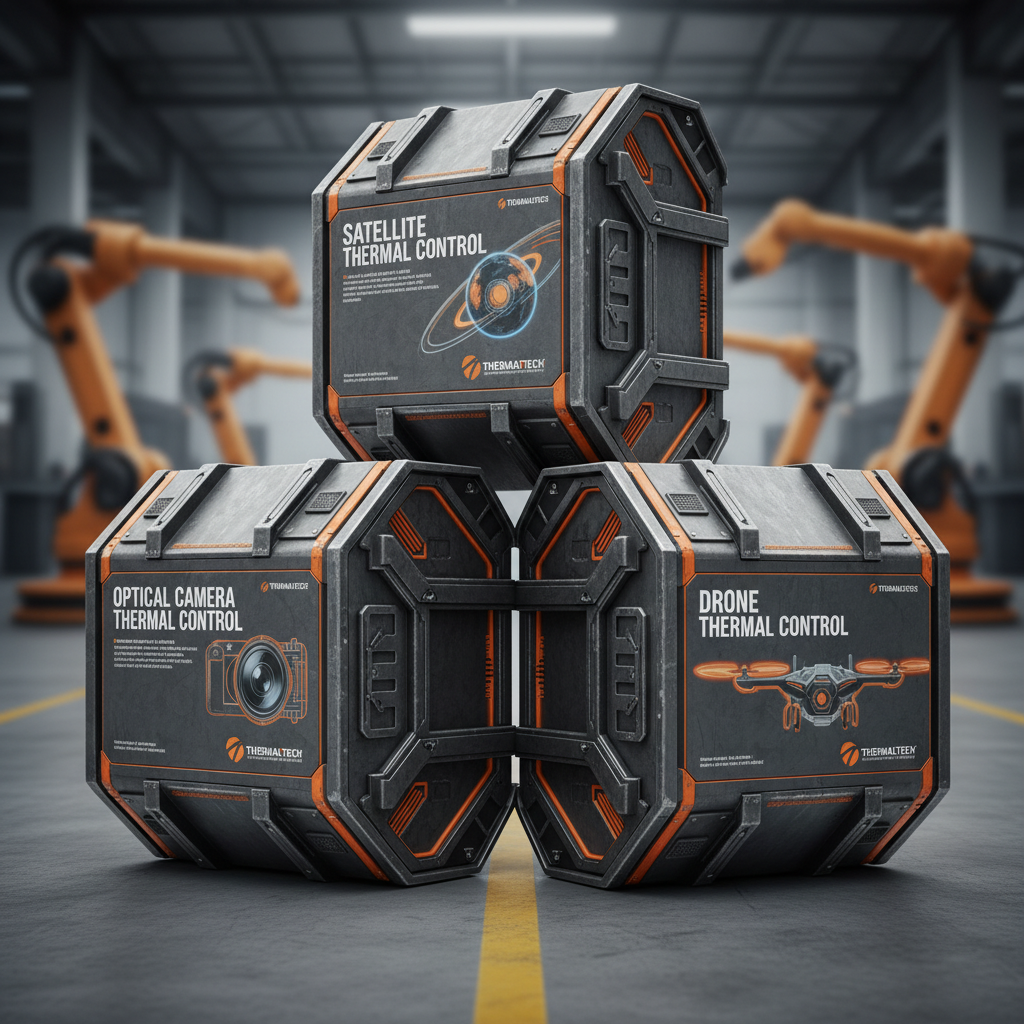
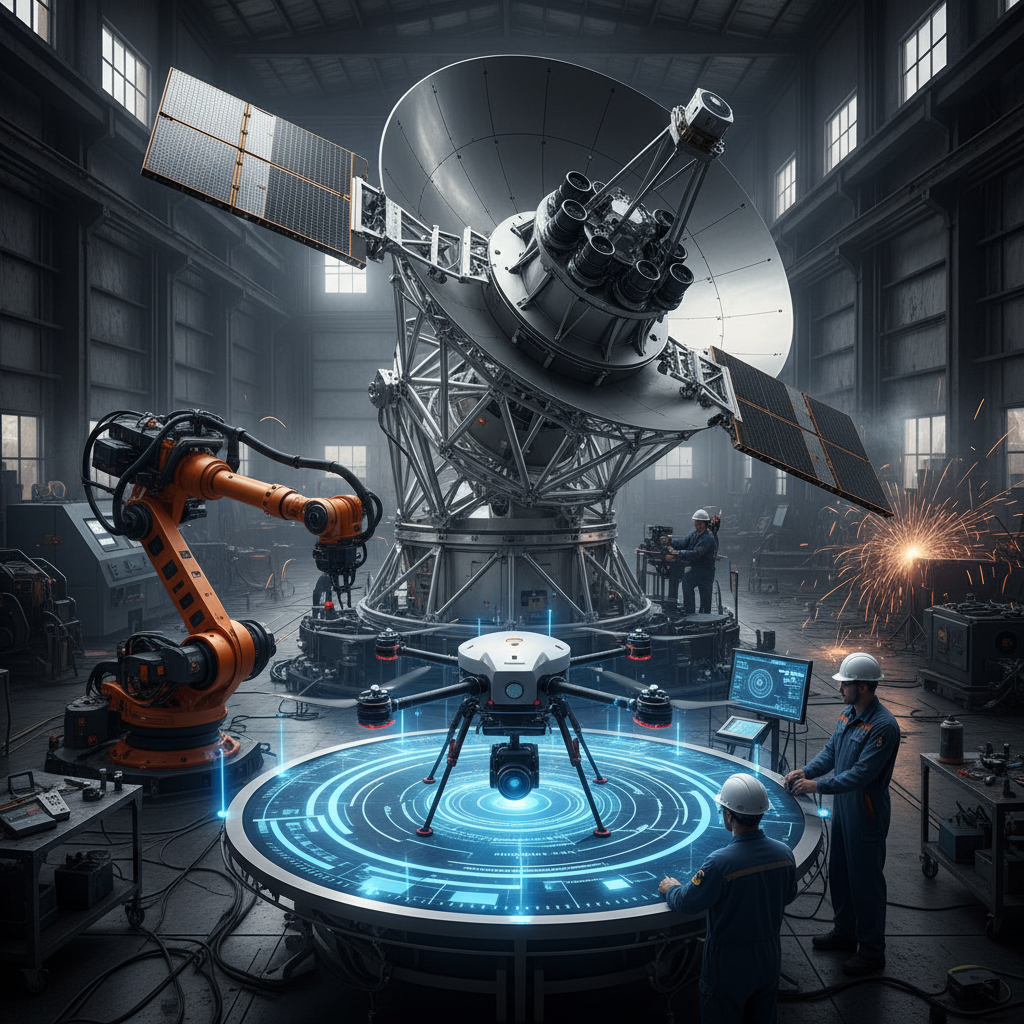
In the demanding environment of aerospace engineering, thermal control is not merely a technical requirement but a critical safeguard for mission success. From the searing heat of direct solar radiation to the absolute cold of deep space, satellite components and UAV systems must maintain precise operating temperatures to avoid catastrophic structural failure or electronic malfunction.
The global aerospace sector is seeing a surge in miniaturization and increased power density, which places unprecedented stress on traditional cooling methods. As we deploy more complex instruments—ranging from high-resolution optical cameras to advanced power controllers—the ability to manage heat flux efficiently determines the lifespan and reliability of the entire spacecraft.
Understanding the nuances of thermal management allows engineers to optimize everything from lithium battery pack stability to the efficiency of gallium arsenide solar arrays. By integrating advanced passive and active thermal control strategies, the industry can push the boundaries of exploration, ensuring that sensitive electronics remain functional in the most hostile environments known to man.
The Global Significance of Aerospace Thermal Control
On a global scale, the aerospace industry adheres to rigorous ISO and ECSS standards to ensure that thermal control systems can withstand extreme temperature swings. With the rise of the "New Space" economy, there is a critical need to balance high-performance cooling with the strict mass constraints of launch vehicles. Failure to manage these temperatures can lead to "thermal runaway" in lithium battery packs or the degradation of delicate optical sensors.
The challenge is compounded by the vacuum of space, where convection is non-existent, leaving radiation and conduction as the only means of heat transfer. This physics-driven constraint forces engineers to innovate with multi-layer insulation (MLI) and heat pipes, ensuring that power sub-systems do not overheat while keeping satellite components warm during eclipse periods.
Defining Thermal Control in Space Systems
In simple terms, thermal control is the art and science of maintaining a spacecraft's internal temperature within a specific range to ensure the survival and operation of its hardware. It involves a combination of passive techniques, such as specialized coatings and insulation, and active techniques, such as heaters and pumped fluid loops.
This process is intrinsically linked to the humanitarian and scientific goals of modern space exploration. Whether it is a weather satellite providing disaster relief data or a communications array enabling global connectivity, the reliability of the data depends entirely on the thermal stability of the onboard instruments and equipment.
By managing the thermal environment, we prevent the physical warping of antenna products and the efficiency loss in calcium-titanium-mineral solar arrays. Essentially, thermal control acts as the "life support system" for the machine, protecting the silicon and metal from the brutal realities of the cosmic environment.
Core Components of Effective Heat Management
The first pillar of a robust thermal control strategy is Material Durability. Aerospace-grade materials must resist ultraviolet degradation and atomic oxygen erosion while maintaining a constant solar absorptance and infrared emittance ratio over years of exposure.
Next is Thermal Scalability. As satellite data processing requirements grow, the heat generated by onboard computers increases. Modern systems must be scalable, allowing for the integration of more advanced heat sinks or louvers without requiring a complete redesign of the satellite's chassis.
Finally, Cost Efficiency and Mass Optimization are paramount. Every gram of thermal shielding added increases launch costs. Therefore, the industry focuses on integrated solutions—such as using the structural frame as a heat spreader—to achieve maximum thermal control with minimum weight.
Operational Scalability and Efficiency Metrics
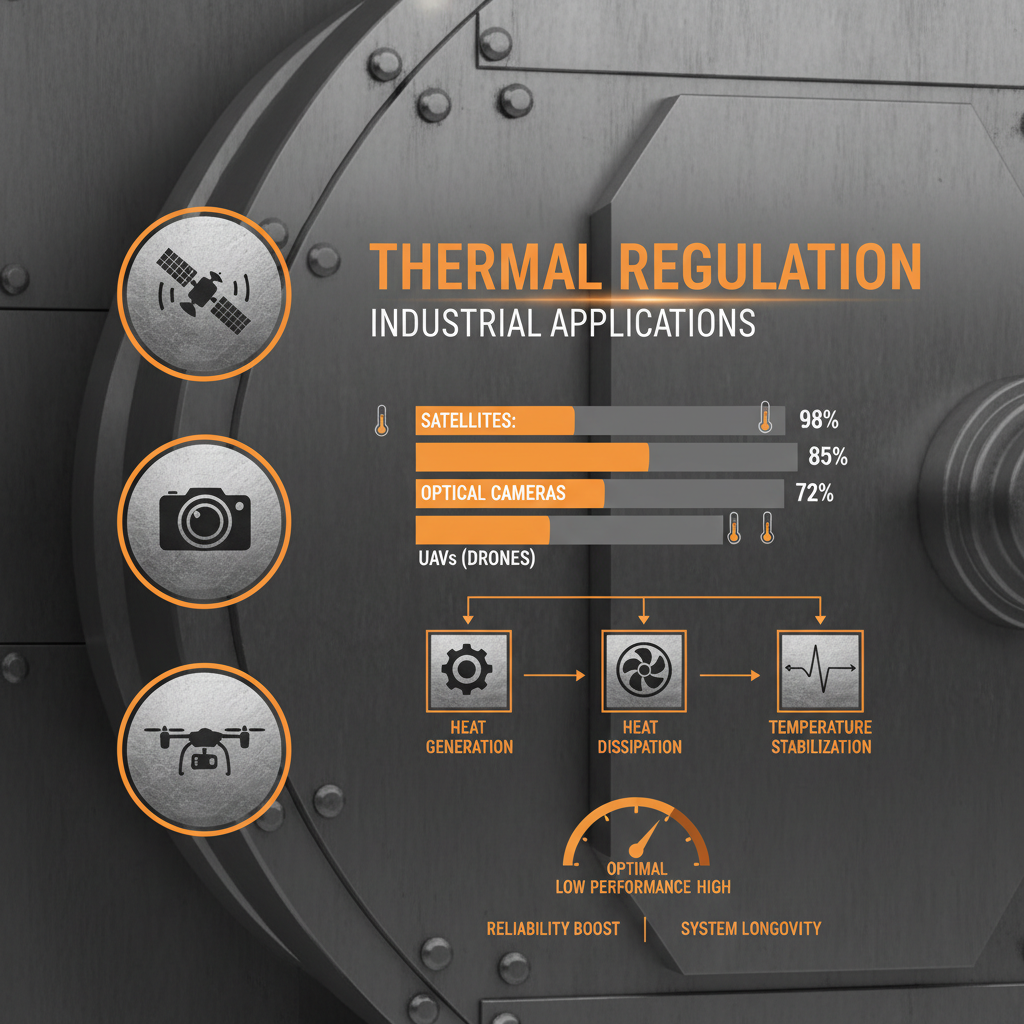
Measuring the effectiveness of thermal control requires looking at the delta between the internal component temperature and the external environment. High-efficiency systems demonstrate a "flat" temperature curve even during peak power consumption phases of the mission.
By analyzing different methodologies—from passive radiators to active cryogenic coolers—we can determine which approach offers the best balance of reliability and power consumption for specific UAV or satellite missions.
Comparison of Thermal Control Methodology Efficiency
Real-World Applications in Satellite Infrastructure
In practical terms, thermal control is applied extensively in the deployment of folding and unfolding mechanisms. These mechanical parts are susceptible to "cold welding" or seizure if temperatures drop too low, necessitating local heaters to ensure seamless deployment.
Similarly, in UAV operations for remote industrial zones, thermal management is used to protect lithium battery packs from freezing in high-altitude flights or overheating during rapid discharge cycles, ensuring flight stability and operator safety.
Long-Term Value and System Reliability
The long-term value of investing in superior thermal control manifests as an extended operational lifespan. When components are kept within their optimal thermal window, the rate of chemical degradation in batteries and the risk of solder joint fatigue in electronics are drastically reduced.
Beyond the technical, there is a logical and emotional angle: trust. Space agencies and commercial operators trust their multi-million dollar assets because they know the thermal architecture can handle "worst-case" scenarios, such as unexpected solar flares or prolonged shadow periods.
Innovation in this field doesn't just save money; it saves missions. By ensuring that TT&C products and satellite data links remain stable, we maintain the continuous flow of information that is vital for global security and scientific discovery.
Future Innovations in Thermal Control Materials
The future of thermal control lies in "smart" materials. We are seeing the emergence of electrochromic surfaces that can change their emissivity based on an electrical signal, effectively allowing a satellite to "sweat" or "shiver" to regulate its temperature autonomously.
Digital transformation is also playing a role through the use of Digital Twins. Engineers can now simulate complex thermal gradients in a virtual environment, optimizing the placement of heat pipes and radiators before a single piece of hardware is manufactured.
Sustainability is also entering the fray, with a shift toward non-toxic, high-efficiency refrigerants and the use of recycled aerospace alloys that offer better thermal conductivity without increasing the carbon footprint of production.
Comparative Analysis of Next-Gen Thermal Control Solutions
| Technology Type |
Thermal Efficiency |
Mass Impact |
Implementation Risk |
| Electrochromic Skins |
High (Adaptive) |
Negligible |
Medium |
| Loop Heat Pipes |
Very High |
Moderate |
Low |
| Nano-porous Insulation |
Extreme |
Very Low |
High |
| Phase Change Alloys |
Medium-High |
High |
Low |
| Carbon Nanotube Sheets |
High (Conductive) |
Very Low |
Medium |
| Active Cryo-coolers |
Absolute |
Very High |
High |
FAQS
Passive systems, such as MLI and surface coatings, require no power and have no moving parts, which significantly increases reliability and reduces the burden on the power sub-system. In CubeSats, where power budgets are extremely tight, passive thermal control provides a fail-safe way to maintain temperature without draining the lithium battery packs.
Solar cell efficiency typically drops as temperature increases. Effective thermal control ensures that the arrays do not overheat during direct sun exposure, which prevents a drop in voltage output and extends the overall operational life of the solar cells by reducing thermal stress.
Yes. By using localized heaters or specialized low-friction thermal coatings, thermal control systems keep folding mechanisms above the critical temperature where vacuum-induced cold welding occurs, ensuring that antennas and solar arrays deploy correctly upon reaching orbit.
Heat pipes act as "thermal superconductors," rapidly moving heat away from high-power components (like power controllers) to external radiators. This prevents hotspots that could damage sensitive electronics and ensures a uniform temperature distribution across the spacecraft chassis.
UAVs deal with atmospheric convection, meaning they can use air-cooling (fans/heatsinks), whereas satellites rely entirely on radiation. However, UAVs face rapid temperature changes during altitude climbs, requiring dynamic thermal control to protect batteries and flight computers from icing.
A failure can lead to several outcomes: overheating can cause electronic components to "latch up" or melt, while extreme cold can cause batteries to lose capacity or structural components to crack. This is why redundancy—such as combining passive insulation with backup heaters—is a standard industry practice.
Conclusion
In summary, thermal control is the invisible backbone of aerospace reliability. From the selection of durable materials and the implementation of scalable heat sinks to the integration of smart, adaptive surfaces, managing the thermal environment is what allows our most advanced technology to survive the vacuum of space and the pressures of high-altitude flight.
As we look toward the future of interplanetary exploration and the proliferation of mega-constellations, the demand for lighter, more efficient, and more autonomous thermal solutions will only grow. By prioritizing thermal stability today, we pave the way for the next generation of sustainable and resilient space infrastructure. Visit our website: www.space-navi.com