Altitude, the vertical distance above a reference point – most commonly sea level – is a fundamental concept with profound implications across numerous disciplines. From aviation and meteorology to physiology and engineering, understanding altitude is critical for safe and efficient operations. Its influence extends beyond technical fields, impacting human health, environmental studies, and even athletic performance. The accurate measurement and consideration of altitude are not simply academic exercises; they are essential for navigating our world and addressing a wide range of challenges.
Globally, altitude plays a significant role in diverse sectors. The World Meteorological Organization (WMO) utilizes precise altitude data for weather forecasting and climate modeling, influencing agricultural planning and disaster preparedness. The aviation industry, governed by the International Civil Aviation Organization (ICAO), relies on altitude measurements for air traffic control, ensuring safety and optimizing fuel efficiency. Furthermore, altitude is a key factor in understanding atmospheric pressure changes, impacting everything from satellite communication to the behavior of high-altitude ecosystems.
The challenge lies in accurately determining and accounting for altitude variations. Traditional methods, while reliable, can be limited by environmental factors or accessibility. As human activity expands into more challenging environments, like mountainous regions and high-altitude cities, the need for robust and adaptable altitude measurement and mitigation strategies becomes increasingly crucial. This is especially pertinent in the context of climate change, which is altering altitude-related phenomena like snow levels and atmospheric conditions.
Introduction: The Significance of Altitude
The concept of altitude permeates virtually every aspect of our understanding of the Earth's systems. It’s not simply a number representing height; it's a crucial variable in determining atmospheric conditions, temperature gradients, and even the distribution of life. Accurate altitude data empowers scientists, engineers, and policymakers to make informed decisions related to infrastructure development, environmental protection, and public safety.
The increasing demand for precision in altitude measurements is driven by a convergence of factors, including advancements in aviation, the expansion of urban areas into mountainous regions, and growing concerns about climate change. The ability to accurately assess altitude differences is essential for applications like precision agriculture, where terrain variations impact crop yields, and for managing water resources in mountainous watersheds.
Defining Altitude and its Relevance
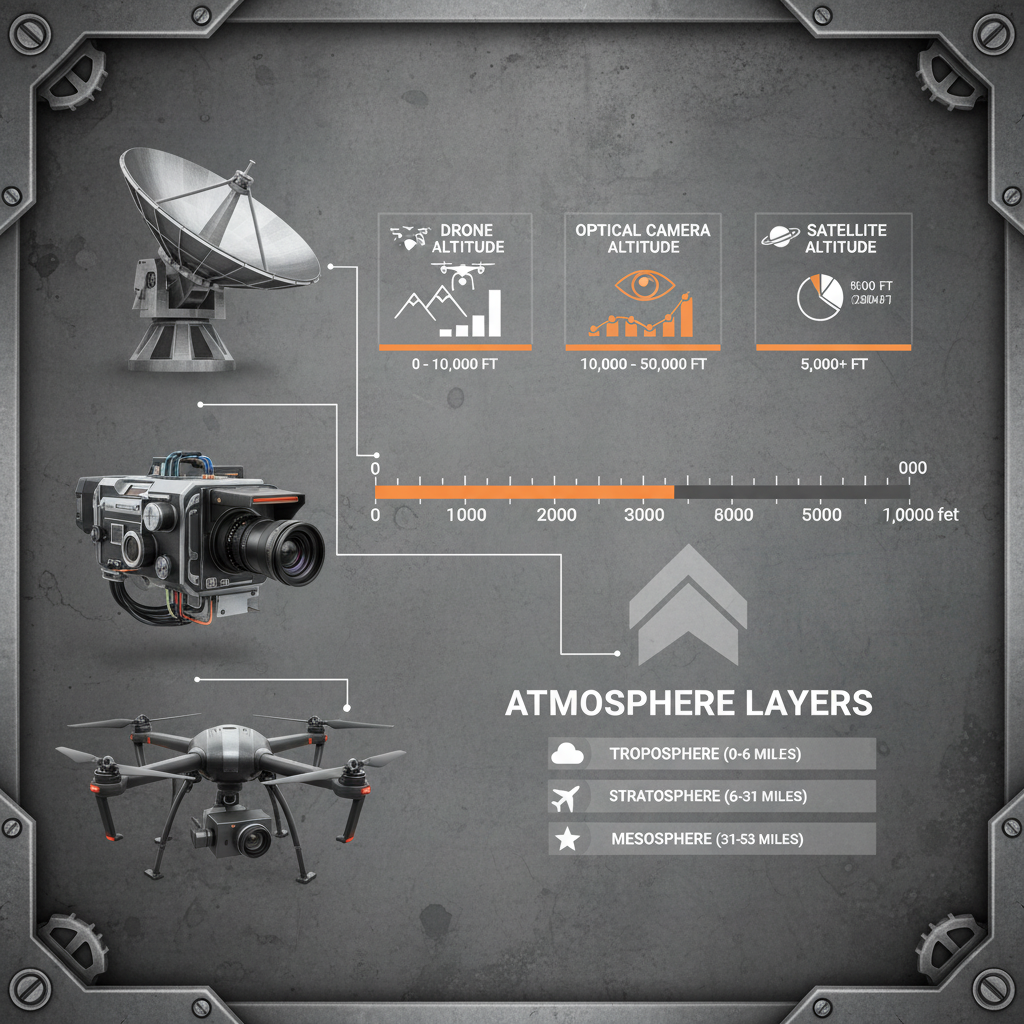
In its simplest form, altitude refers to the vertical distance above a defined reference point. Most commonly, this reference point is sea level, referred to as Mean Sea Level (MSL). However, altitude can also be defined relative to other datums, such as local ground level or a geoid model. The method of measurement influences the accuracy and applicability of the altitude value. Various techniques are employed, including barometric altimeters, GPS measurements, and radar altimetry.
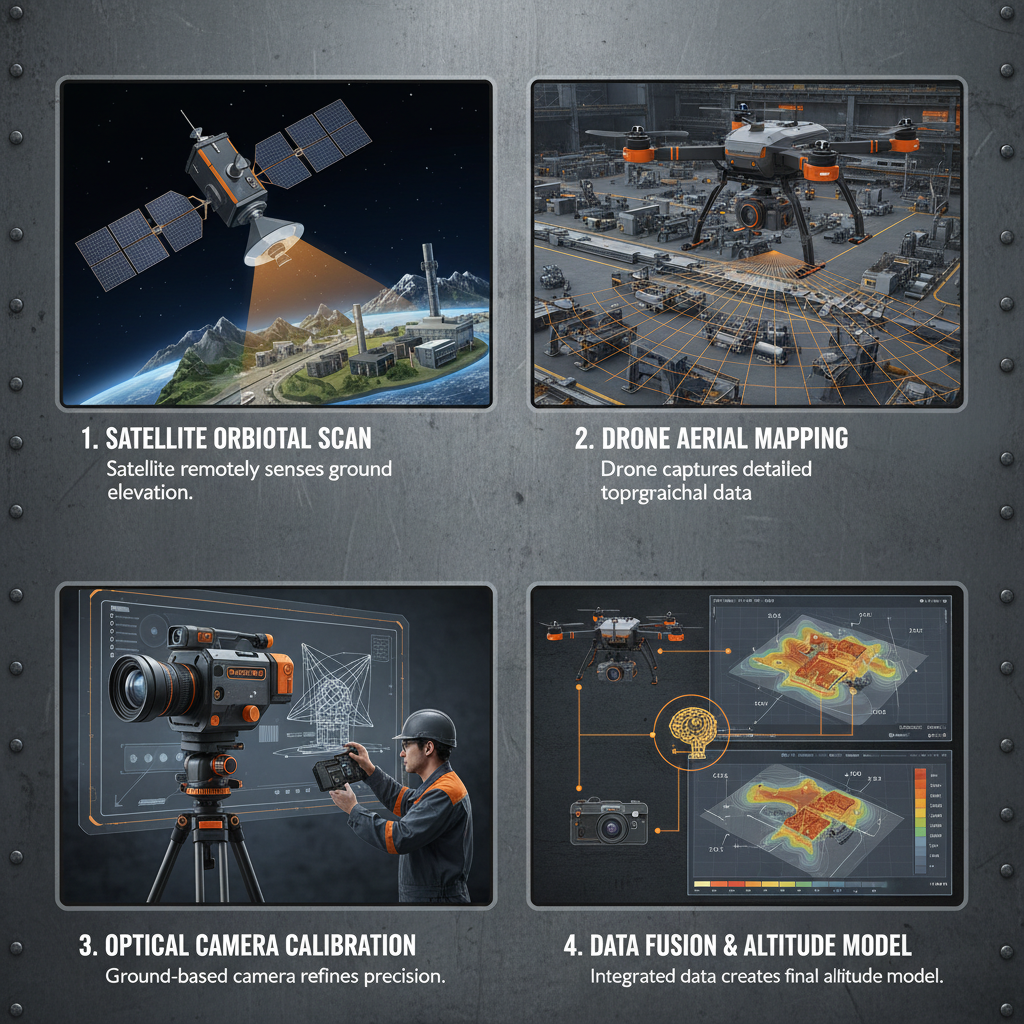
The relevance of altitude extends far beyond simple geographic positioning. In modern industry, precise altitude data is integral to the functionality of unmanned aerial vehicles (UAVs) for mapping and surveying. In humanitarian needs, accurate altitude mapping supports disaster relief efforts by identifying accessible routes and assessing the impact of landslides or floods. The growing field of vertical farming also relies on precise altitude control for optimizing growing conditions.
Ultimately, altitude isn't just a geographical coordinate; it's a key parameter influencing numerous natural processes and technological applications. Understanding the nuances of its definition and measurement is paramount for addressing a wide range of challenges in the 21st century.
Key Factors Influencing Altitude Measurement
Several factors can significantly impact the accuracy of altitude measurements. Atmospheric conditions, such as temperature and air pressure, affect the performance of barometric altimeters, requiring frequent calibration and corrections. Geoidal variations – irregularities in the Earth’s gravitational field – can introduce errors in GPS-derived altitudes, necessitating sophisticated geoid models for precise positioning.
Another critical factor is the choice of vertical datum. Using different datums (e.g., MSL, local ground level) can result in substantial altitude differences, particularly in regions with complex topography. Furthermore, the resolution of digital elevation models (DEMs) used for altitude mapping influences the level of detail and accuracy achievable. Selecting the appropriate measurement technique and datum, coupled with rigorous data processing and validation, is vital for ensuring reliable altitude information.
The precision of altitude measurements also depends on the instrumentation used. High-precision GPS receivers, coupled with real-time kinematic (RTK) corrections, can achieve centimeter-level accuracy. However, these systems are often expensive and require clear sky visibility. LiDAR (Light Detection and Ranging) technology provides highly detailed elevation data but can be limited by vegetation cover and atmospheric conditions.
Practical Applications of Altitude Data
The applications of precise altitude data are remarkably diverse. In aviation, altitude is fundamental to air traffic control, navigation, and ensuring safe flight operations. In surveying and mapping, altitude data is used to create accurate topographic maps and digital elevation models for infrastructure planning and resource management.
Furthermore, altitude plays a critical role in environmental monitoring. Analyzing altitude variations helps track glacier melt, monitor sea-level rise, and assess the impacts of landslides and other natural disasters. In agriculture, altitude data informs precision farming techniques, enabling farmers to optimize irrigation, fertilization, and crop selection based on terrain variations.
Altitude Measurement Technique Performance
Global Applications and Industry Impact
In remote industrial zones, such as mining operations in mountainous regions, precise altitude data is vital for infrastructure planning, slope stability analysis, and ensuring worker safety. In post-disaster relief operations, altitude information is crucial for assessing damage, identifying safe evacuation routes, and coordinating aid delivery. Organizations like the Red Cross and FEMA rely heavily on accurate altitude mapping for effective disaster response.
The agricultural sector benefits significantly from altitude data. Precision agriculture techniques, guided by altitude mapping, optimize irrigation, fertilization, and crop selection, leading to increased yields and reduced environmental impact. In mountainous regions like the Andes and the Himalayas, altitude-specific farming practices are essential for sustainable agriculture.
Advantages and Long-Term Value
Investing in accurate altitude measurement and data processing yields substantial long-term benefits. Cost savings are realized through optimized infrastructure planning, reduced risks of geological hazards, and improved resource management. Sustainability is enhanced by enabling precision agriculture, minimizing environmental impact, and supporting climate change adaptation strategies.
From a social impact perspective, accurate altitude data improves public safety, enhances disaster preparedness, and supports equitable access to resources. The reliability of altitude information fosters trust between stakeholders, enabling informed decision-making and collaborative problem-solving. Furthermore, innovation in altitude technology drives economic growth and creates new opportunities in fields like geospatial engineering and data analytics.
Future Trends and Innovations in Altitude Technology
The future of altitude measurement is poised for significant advancements. The integration of artificial intelligence (AI) and machine learning (ML) algorithms promises to enhance the accuracy and efficiency of altitude data processing. The development of advanced sensor technologies, such as solid-state LiDAR and quantum altimeters, will enable more precise and reliable measurements.
Digital transformation is playing a crucial role in making altitude data more accessible and user-friendly. Cloud-based platforms and web-based mapping tools empower users to visualize, analyze, and share altitude information seamlessly. The increasing adoption of green energy solutions, like vertical wind turbines optimized for varying altitudes, demonstrates the growing demand for precise altitude data in emerging industries.
Furthermore, the convergence of altitude data with other geospatial datasets – such as satellite imagery and demographic information – is creating new opportunities for predictive modeling and decision support. This synergistic approach will enable a more holistic understanding of complex environmental and societal challenges.
Summary of Altitude Technology Challenges and Potential Solutions
| Challenge Area |
Current Limitations |
Potential Solutions |
Implementation Cost (1-10) |
| Atmospheric Interference |
Barometric inaccuracies due to weather changes. |
Real-time atmospheric correction models; sensor fusion. |
6 |
| Geoid Model Uncertainty |
Inaccurate altitude calculations with GPS in areas of complex terrain. |
High-resolution geoid models; localized geoid adjustments. |
7 |
| Data Accessibility |
Limited access to high-quality altitude data in developing regions. |
Open data initiatives; cloud-based data sharing platforms. |
4 |
| Vegetation Obstruction |
LiDAR limitations in densely forested areas. |
Multi-spectral LiDAR; AI-powered terrain filtering. |
8 |
| Sensor Cost |
High cost of high-precision sensors (RTK-GPS, LiDAR). |
Development of lower-cost sensors; sensor sharing programs. |
5 |
| Data Processing Complexity |
Complex workflows for altitude data correction and analysis. |
Automated data processing pipelines; user-friendly software tools. |
6 |
FAQS
Several factors can influence altitude accuracy, including atmospheric conditions (temperature, pressure), geoidal variations, the chosen vertical datum, and the limitations of the measurement instrument itself. Regular calibration, using appropriate correction models, and selecting the right technique for the environment are crucial for minimizing errors. The quality of digital elevation models (DEMs) used for processing also plays a significant role.
Atmospheric pressure decreases with increasing altitude. This relationship is critical in aviation as it affects engine performance, lift generation, and the ability of pilots to breathe comfortably. Aircraft altimeters rely on measuring atmospheric pressure to determine altitude, and pilots must account for pressure variations due to weather and altitude when calculating flight parameters. Understanding this relationship is fundamental to safe flight operations.
Mean Sea Level (MSL) is a global average sea level used as a standard reference for altitude. Orthometric height, on the other hand, represents the distance above the geoid – an equipotential surface that approximates mean sea level but accounts for variations in Earth's gravity. MSL is commonly used for general purposes, while orthometric height provides a more accurate representation of true elevation.
Accurate altitude data is invaluable for disaster preparedness and response. It aids in identifying areas vulnerable to landslides, floods, and other hazards. During a disaster, altitude mapping can help assess damage, plan evacuation routes, and coordinate aid delivery. High-resolution elevation models provide critical information for emergency responders, enabling them to make informed decisions and save lives.
Emerging technologies like solid-state LiDAR, quantum altimeters, and AI-powered sensor fusion are poised to revolutionize altitude measurement. Solid-state LiDAR offers improved reliability and reduced cost compared to traditional LiDAR. Quantum altimeters promise unprecedented accuracy by leveraging the principles of quantum mechanics. AI algorithms can enhance the accuracy of existing sensors by correcting for atmospheric effects and other sources of error.
Altitude data plays a crucial role in precision agriculture. Variations in altitude affect soil properties, water drainage, and temperature gradients, influencing crop yields. Farmers use altitude maps to optimize irrigation schedules, apply fertilizers precisely, and select crop varieties suited to specific terrain conditions. This leads to increased efficiency, reduced environmental impact, and improved crop quality.
Conclusion
Throughout this exploration, we’ve seen that altitude is far more than just a numerical measurement of height. It’s a fundamental parameter influencing a vast range of natural phenomena and technological applications, impacting fields from aviation and agriculture to disaster response and environmental monitoring. Accurate altitude data is essential for informed decision-making, sustainable resource management, and enhancing public safety. The ability to accurately determine and utilize altitude information continues to grow in importance in an increasingly complex world.
Looking ahead, advancements in sensor technology, data analytics, and artificial intelligence will unlock even greater potential for altitude-based solutions. Embracing open data initiatives and fostering collaboration between researchers, industry professionals, and policymakers are critical for realizing the full benefits of this valuable resource. We encourage you to learn more about altitude and its applications by visiting our website: www.space-navi.com.