Remote sensing, the acquisition of information about an object or area without making physical contact, has rapidly evolved from a niche scientific field to an indispensable tool impacting numerous facets of modern life. Its ability to monitor large areas efficiently and cost-effectively addresses crucial global challenges, from environmental monitoring and disaster response to urban planning and agricultural management. Understanding the principles and applications of remote sensing is no longer confined to specialists; it's becoming a foundational skill for professionals across diverse industries and a critical component of informed decision-making.
The global relevance of remote sensing is underscored by the increasing need for accurate, timely, and comprehensive Earth observation data. According to the United Nations, effective monitoring of sustainable development goals (SDGs) relies heavily on remote sensing capabilities. The World Bank utilizes remote sensing data for infrastructure planning and environmental impact assessments. The ISO standards organization develops guidelines for remote sensing data quality and processing. These organizations, among many others, recognize the power of remote sensing in fostering sustainable practices and addressing complex global issues.
Remote sensing offers an unparalleled ability to collect data about Earth's surface, atmosphere, and oceans. This capability is essential for responding to pressing global concerns like climate change, deforestation, and food security. The ongoing refinement of sensor technologies and data processing techniques continues to unlock new possibilities, making remote sensing a cornerstone of informed environmental management and societal advancement.
Defining Remote Sensing and its Importance
Remote sensing, at its core, is the science and art of obtaining information about an object, area, or phenomenon without physically contacting it. This is typically achieved by detecting and measuring electromagnetic radiation reflected or emitted from the Earth’s surface. It differs from traditional methods of data collection, such as ground surveys, by providing a synoptic view over large areas, reducing the need for extensive fieldwork and offering a time-efficient approach.
The importance of remote sensing stems from its ability to address a wide range of critical needs, spanning from monitoring environmental changes – such as deforestation and pollution – to aiding in disaster management, resource exploration, and precision agriculture. As our world faces increasing environmental pressures and a growing population, the need for accurate and timely Earth observation data provided by remote sensing technologies becomes ever more paramount.
The Global Context of Remote Sensing
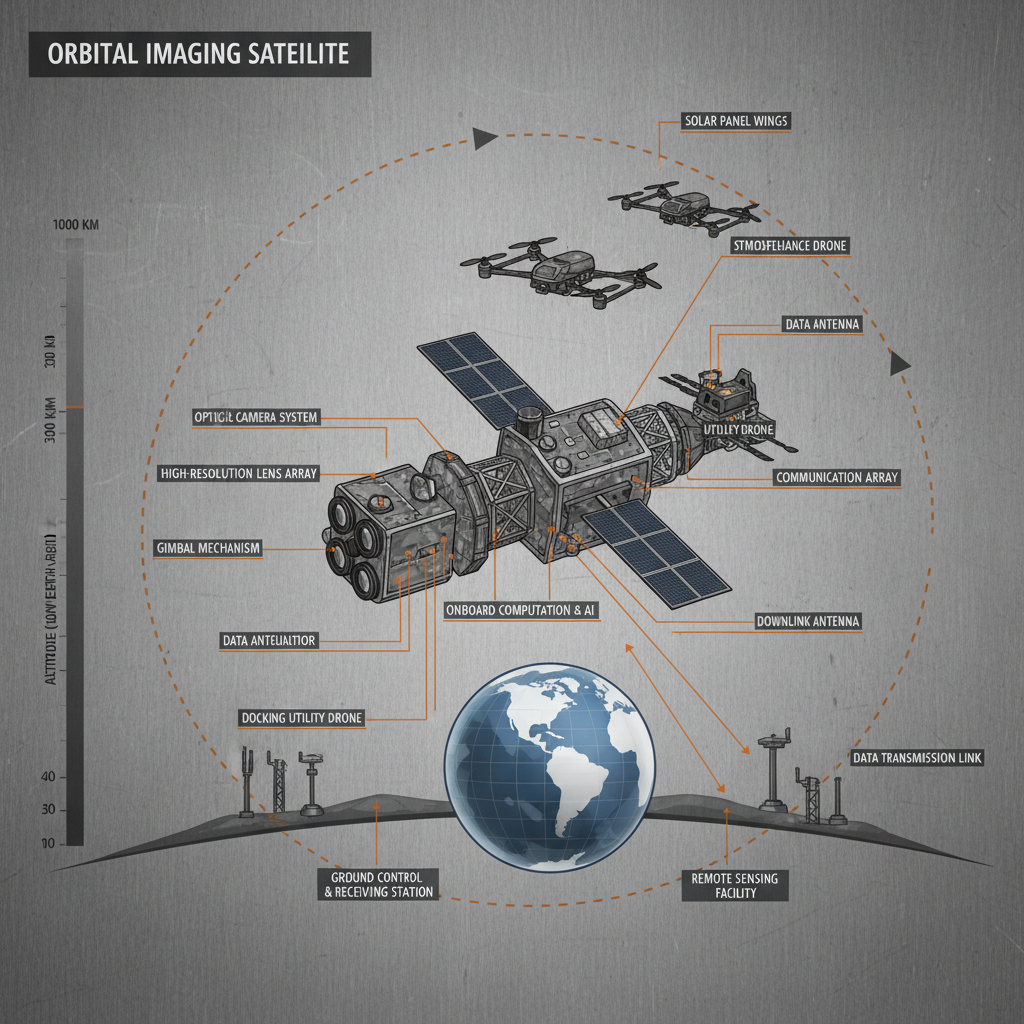
Remote sensing technologies are globally deployed, serving as critical infrastructure for numerous international organizations and national governments. The European Space Agency (ESA) operates a fleet of satellites providing valuable data for environmental monitoring and security applications. NASA’s Earth Observing System (EOS) provides a comprehensive view of Earth's systems, advancing our understanding of climate change and natural hazards. Developing nations increasingly rely on remote sensing for resource management and sustainable development.
A key challenge addressed by remote sensing is the increasing demand for timely and accurate environmental data. The rate of deforestation, for example, is a pressing concern, and remote sensing provides the only feasible means of monitoring forest cover changes across vast and inaccessible regions. Similarly, the rapid urbanization occurring in many parts of the world requires efficient monitoring of land use changes and infrastructure development, capabilities offered by remote sensing technologies.
The accessibility of remote sensing data continues to improve, driven by initiatives such as the Landsat program, which has provided freely available satellite imagery since 1972. This democratization of data empowers researchers, policymakers, and the public to leverage Earth observation data for informed decision-making and address global challenges collaboratively.
Understanding the Core Principles of Remote Sensing
The foundation of remote sensing rests on the interaction between electromagnetic radiation and matter. All objects emit, reflect, and absorb electromagnetic radiation at different wavelengths. Remote sensors detect and measure these variations to gather information about the object’s characteristics. The electromagnetic spectrum encompasses a wide range of wavelengths, from short-wave gamma rays to long-wave radio waves, each providing unique insights.
A crucial principle is spectral signature analysis. Every material possesses a unique spectral signature – a distinct pattern of reflectance and absorption across different wavelengths. By analyzing these signatures, remote sensing systems can identify and classify different features on Earth’s surface, such as vegetation types, soil composition, and water bodies. This ability forms the basis for many applications, including land cover mapping and environmental monitoring.
Furthermore, understanding concepts like spatial resolution, spectral resolution, temporal resolution, and radiometric resolution is essential for interpreting remote sensing data effectively. Spatial resolution refers to the size of the smallest feature that can be distinguished in an image. Spectral resolution describes the number and width of spectral bands captured by the sensor. Temporal resolution represents the frequency with which data is collected over the same area, and radiometric resolution refers to the sensitivity of the sensor to differences in signal strength.
Key Components of a Remote Sensing System
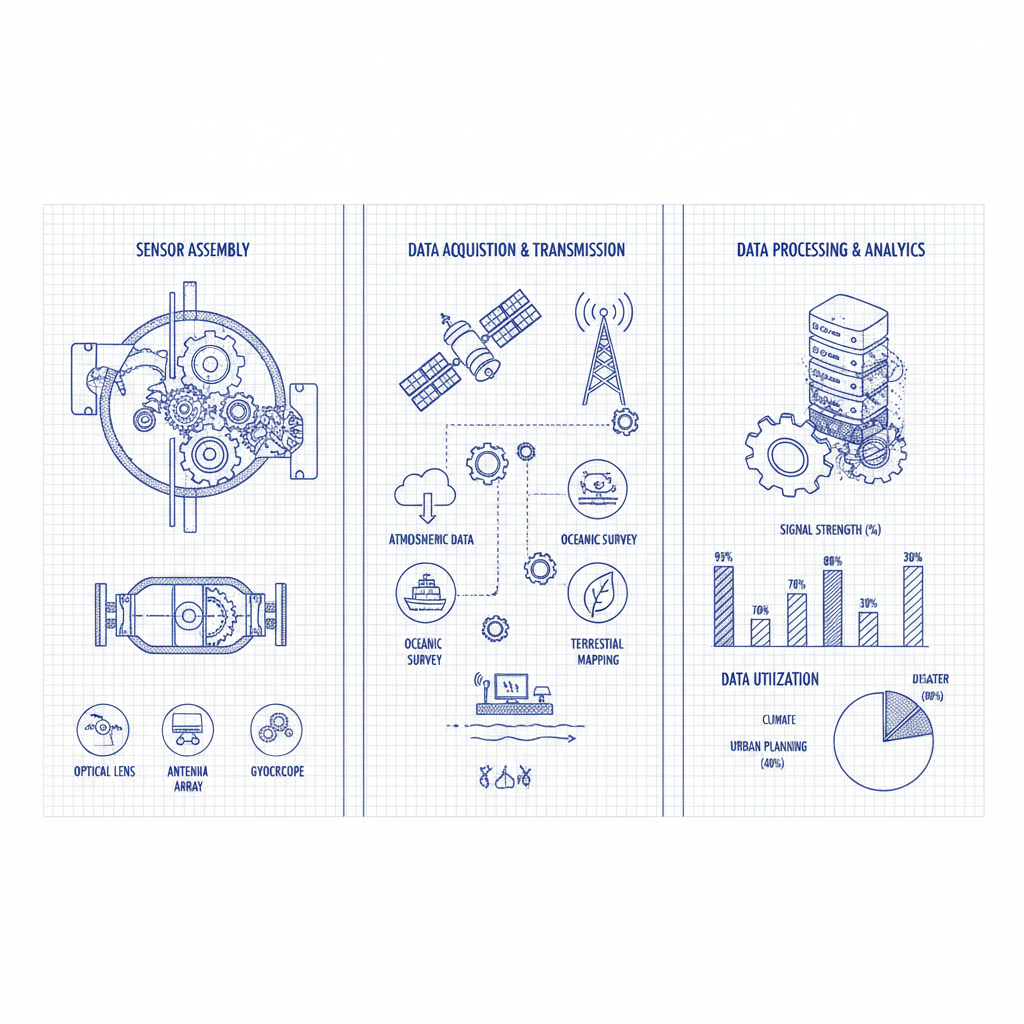
A complete remote sensing system encompasses several interconnected components. First is the energy source, which can be natural (e.g., sunlight) or artificial (e.g., radar). Next, the atmosphere interacts with the radiation, causing scattering and absorption, which must be accounted for during data processing. The sensor itself detects and measures the electromagnetic radiation.
Data transmission is another critical element, involving the transfer of information from the sensor to a receiving station. Once received, the data undergoes pre-processing, including geometric and atmospheric corrections, to remove distortions and ensure accuracy. Finally, data analysis and interpretation involve extracting meaningful information from the processed data, often using specialized software and techniques.
Remote Sensing Data Quality Assessment
Global Applications and Real-World Use Cases
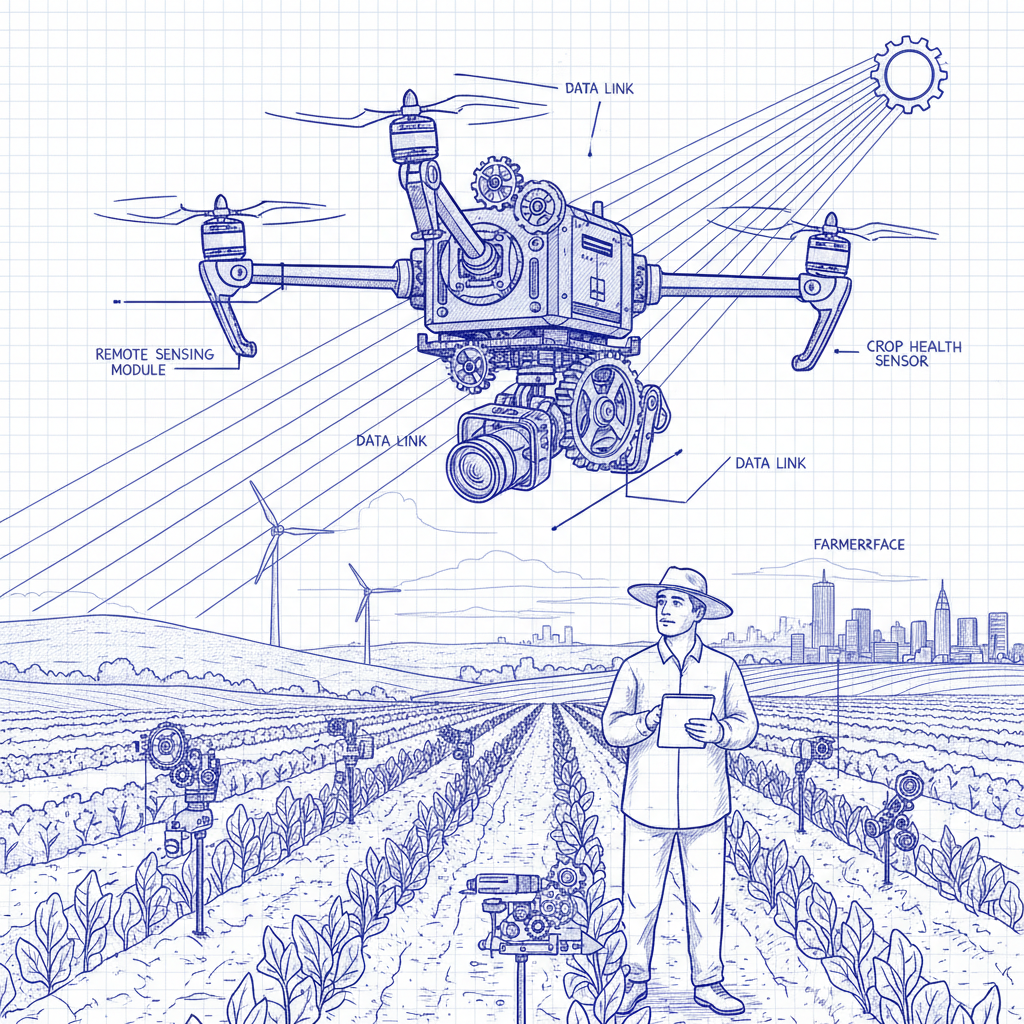
The applications of remote sensing are remarkably diverse. In agriculture, it aids in crop monitoring, yield prediction, and precision farming techniques, optimizing resource use and increasing productivity. In forestry, remote sensing helps assess forest health, monitor deforestation rates, and support sustainable forest management practices.
In post-disaster relief operations, remote sensing provides crucial information for damage assessment, identifying areas in need of assistance, and coordinating response efforts. In remote industrial zones, monitoring environmental impacts and ensuring regulatory compliance is essential, and remote sensing provides an efficient and cost-effective means to achieve this. Coastal zone management relies heavily on remote sensing data to monitor shoreline changes, assess erosion rates, and manage marine resources.
Advantages and Long-Term Value Proposition
Remote sensing offers several distinct advantages over traditional methods of data collection. It provides a broad, synoptic view over large areas, reducing the need for extensive fieldwork. It offers a time-efficient approach, allowing for frequent monitoring of dynamic phenomena. It can access remote and inaccessible areas, providing data where ground-based surveys are impractical.
The long-term value of remote sensing lies in its ability to support sustainable decision-making. By providing accurate and timely information about Earth’s resources and environment, it enables informed policies and practices that promote environmental protection, resource conservation, and societal well-being. The cost savings associated with reduced fieldwork and efficient monitoring further enhance its value proposition.
Future Trends and Innovations in Remote Sensing
Several exciting trends are shaping the future of remote sensing. The proliferation of small satellites – CubeSats and NanoSats – is lowering the cost of space-based Earth observation and increasing the frequency of data acquisition. Artificial intelligence (AI) and machine learning are playing an increasingly important role in processing and analyzing remote sensing data, enabling automated feature extraction and predictive modeling.
Hyperspectral imaging, which captures data across a very large number of narrow spectral bands, is gaining prominence, providing detailed information about material composition and enabling more precise identification of features. The integration of remote sensing with other geospatial technologies, such as geographic information systems (GIS) and global positioning systems (GPS), is creating powerful tools for spatial analysis and decision support.
Table Summarizing Challenges and Potential Solutions in Remote Sensing
| Challenge |
Impact on Remote Sensing Applications |
Potential Solution |
Implementation Feasibility (1-10) |
| Atmospheric Interference |
Reduced Data Accuracy & Quality |
Advanced Atmospheric Correction Algorithms |
8 |
| Data Volume & Storage |
Increased Processing Time & Costs |
Cloud-Based Data Storage & Processing |
9 |
| Data Interpretation Complexity |
Requires Specialized Expertise |
AI-Powered Data Analysis Tools |
7 |
| Sensor Calibration & Maintenance |
Data Inconsistency & Drift |
Automated Calibration Procedures & Regular Sensor Checks |
6 |
| Limited Access to High-Resolution Data |
Restricts Detailed Analysis |
Increased Availability of Commercial Satellite Imagery |
7 |
| Integration with Existing Systems |
Data Silos & Workflow Inefficiencies |
Standardized Data Formats & APIs |
8 |
FAQS
Remote sensing plays a crucial role in environmental monitoring by enabling the tracking of deforestation, pollution levels, glacier and ice sheet changes, and the health of vegetation. Satellite and aerial imagery provide a comprehensive overview of environmental conditions over large areas, identifying trends and supporting informed decision-making for conservation efforts. It can also measure water quality parameters and monitor the spread of invasive species.
Remote sensing enhances precision agriculture by providing data on crop health, soil moisture, nutrient levels, and irrigation needs. This allows farmers to optimize resource allocation – water, fertilizers, and pesticides – based on specific field conditions, leading to increased yields and reduced environmental impact. Technologies like NDVI (Normalized Difference Vegetation Index) are key tools for assessing plant vigor.
Passive remote sensing relies on detecting naturally emitted or reflected electromagnetic radiation, like sunlight. Sensors measure the energy that already exists. Active remote sensing, on the other hand, involves transmitting a signal – like radar or lidar – and measuring the energy that is reflected back. This allows for data collection regardless of sunlight availability and provides information about surface elevation and structure.
Interpreting remote sensing data can be challenging due to factors like atmospheric distortions, sensor limitations, and the complexity of natural landscapes. Accurate interpretation requires specialized knowledge of remote sensing principles, image processing techniques, and the specific characteristics of the study area. Ground truthing—validating data with on-site measurements—is also essential.
Remote sensing is invaluable in disaster management, enabling rapid assessment of damage from events like floods, earthquakes, and wildfires. Satellite imagery provides situational awareness, identifies affected areas, and supports search and rescue operations. It can also monitor the progression of disasters and predict potential risks, enabling proactive mitigation measures.
The costs of implementing remote sensing solutions vary widely depending on the complexity of the project, the type of data required, and the level of analysis needed. Costs can include data acquisition, software licenses, hardware (sensors, processing units), and personnel expenses. However, the increasing availability of free or low-cost data sources like Landsat and Sentinel-2 is making remote sensing more accessible.
Conclusion
Remote sensing has evolved from a specialized scientific discipline to an essential tool for addressing critical global challenges. Its ability to collect large-scale, accurate, and timely data about Earth’s environment, resources, and infrastructure makes it indispensable for informed decision-making in a wide range of fields – from environmental monitoring and disaster management to agriculture and urban planning. Understanding the core principles and applications of remote sensing is becoming increasingly vital for professionals across diverse industries.
Looking ahead, the continued development of new sensor technologies, AI-powered data analysis techniques, and cloud-based platforms promises to unlock even greater potential for remote sensing. Embracing these innovations and fostering collaboration between researchers, policymakers, and industry stakeholders will be crucial for maximizing the benefits of remote sensing and building a more sustainable and resilient future. For more information and access to advanced remote sensing solutions, visit our website: www.space-navi.com