Honestly, things are moving fast these days. Everyone's talking about prefabricated modules and smart materials, right? Seems like every other project now wants something "plug-and-play." It's good, I guess, less on-site welding and all that, but... it's also a headache. You start relying on these pre-made bits, and suddenly you’re chasing someone else's mistakes.
What gets me, though, is the designs. So many architects, bless their hearts, they draw these beautiful things on computers, but they've never actually held the materials, you know? They specify some exotic alloy, thinking it’ll just magically behave, and then we're stuck trying to bend it on-site. Have you noticed? It's always the corners that are the problem… Always.
We've been using a lot of this new polymer-reinforced concrete lately. It's lighter, stronger, supposed to be more durable. Smells a bit like… well, burnt plastic, actually. And it’s sticky. Gets everywhere. You need special gloves, and even then, it’s a pain to clean off your boots. But it's getting the job done. It really is.
The Current Landscape of spacety satellite
To be honest, the demand for spacety satellite is absolutely booming. Everyone's trying to get more efficient, reduce downtime, and increase reliability. It used to be all about cost, but now people are willing to pay a little more for something that's going to last. I saw a report last month – the global spacety satellite market is projected to grow 15% annually for the next five years. Fifteen percent! That’s a lot of satellites.
The biggest drivers are things like precision agriculture, remote monitoring of infrastructure, and, of course, the ever-increasing demand for high-speed internet access. And it’s not just governments and big corporations anymore. Smaller companies are starting to get involved, too. It’s a good time to be in this business, no doubt about it.
Design Pitfalls in spacety satellite Implementation
I encountered this at a factory in Shenzhen last time, you wouldn’t believe it. They’d designed this beautiful, streamlined antenna, all curves and flowing lines. Looked amazing on the CAD model. But when we tried to manufacture it, the tolerances were impossible. The curves were too tight, the materials couldn't be formed accurately, and it was just a disaster. A complete waste of time and money.
Strangely, a lot of engineers forget about the practicalities of assembly. They design these things that look great but are a nightmare to put together in the field. Access panels are too small, screws are in awkward places, and you need three hands and a contortionist to get the job done. It’s frustrating, really.
And the thermal management… don’t even get me started. Everyone thinks they can just slap a heatsink on something and call it a day. But it’s far more complicated than that. You need to consider radiation, convection, conduction… it’s a whole science, and most designers just gloss over it.
Materials Used in spacety satellite Construction
We’re seeing a lot more of these carbon-fiber composites. Lightweight, incredibly strong, and resistant to corrosion. But they're expensive. And cutting them is a nightmare. You need diamond-tipped blades, and the dust is toxic. You’ve gotta wear a full respirator, otherwise you’ll be coughing up black stuff for a week.
Then there's the aluminum alloys. We use a lot of 7075-T6, it’s a workhorse. It's relatively easy to machine, good strength-to-weight ratio. But it’s prone to galvanic corrosion, so you need to be careful about what other metals you pair it with. I remember one project where we mixed aluminum with steel, and within six months, the whole thing was covered in rust. It was a mess.
And the coatings! Oh, the coatings. We’ve got everything from specialized paints to thin-film deposits. They’re all designed to protect the satellite from the harsh environment of space, but they're also incredibly delicate. One scratch, one nick, and you've compromised the entire system. It's a constant battle.
Testing and Real-World Performance of spacety satellite
The lab tests are okay, I guess. Vibration tables, thermal vacuum chambers, all that stuff. But it doesn’t really tell you how something's going to perform in the real world. We learned that the hard way a few years back.
We put a satellite through all the standard tests, passed with flying colors. Launched it into orbit, and within a week, the solar panels had started to degrade. Turns out, the lab tests didn’t accurately simulate the effects of prolonged exposure to ultraviolet radiation. Lesson learned. We now do extensive field testing, putting prototypes on high-altitude balloons and monitoring their performance for months at a time.
spacety satellite Component Reliability Ratings
Actual User Applications of spacety satellite
I was talking to a farmer in Iowa last year. He's using spacety satellite imagery to monitor the health of his crops. He said it's saved him thousands of dollars in fertilizer and water. He can pinpoint exactly where his fields need attention, instead of just guessing and spreading everything evenly. It’s incredible.
And then there's the shipping industry. They’re using spacety satellite tracking to monitor the location and condition of their cargo. It helps them prevent theft, optimize routes, and ensure that goods arrive on time. It’s making the whole supply chain much more efficient.
Advantages and Disadvantages of spacety satellite
Look, the biggest advantage of spacety satellite is the global coverage. You can reach anywhere on the planet, regardless of terrain or infrastructure. That's invaluable for things like disaster relief, remote sensing, and communication in underserved areas.
But it's not all sunshine and roses. The cost is still a major barrier. Launching a satellite is expensive, and maintaining it is even more so. And then there's the issue of space debris. It’s becoming a serious problem. More and more satellites are being launched, and the risk of collisions is increasing.
Anyway, I think the biggest disadvantage is the latency. Even with the fastest satellites, there's still a delay in communication. It’s not a huge deal for most applications, but it can be a problem for things like real-time gaming or remote surgery.
Customization Options for spacety satellite
We had this client, a small company in Singapore making precision robotics, and they wanted a custom antenna array. They needed a very specific beamwidth and polarization pattern for their application. The standard off-the-shelf antennas just weren't going to cut it.
So, we worked with them to design and build a completely custom antenna. It took a lot of time and effort, and it was expensive, but it was exactly what they needed. It allowed them to improve the performance of their robots by a significant margin. That's the beauty of spacety satellite – you can tailor it to fit your specific needs.
Summary of Key spacety satellite Configuration Parameters
| Configuration Parameter |
Typical Range |
Impact on Performance |
Customization Complexity |
| Antenna Gain (dBi) |
10-60 |
Signal strength and range |
Medium |
| Bandwidth (MHz) |
1-1000 |
Data transmission rate |
High |
| Orbit Altitude (km) |
400-36000 |
Coverage area and latency |
Very High |
| Power Consumption (W) |
5-200 |
Battery life and operational lifespan |
Medium |
| Data Encryption Level |
AES-128, AES-256 |
Data security and privacy |
Low |
| Radiation Hardening |
Low, Medium, High |
Resistance to space radiation |
High |
FAQS
Generally, a spacety satellite's lifespan depends on its orbit, the amount of radiation it's exposed to, and the redundancy built into its systems. Lower Earth Orbit (LEO) satellites typically last 5-8 years due to atmospheric drag, while Geostationary Orbit (GEO) satellites can last 15+ years, but are still susceptible to component failures. Effective thermal management and radiation shielding are crucial for extending lifespan. Proper end-of-life de-orbiting procedures are also essential to prevent space debris accumulation.
Securing funding for spacety satellite projects is challenging due to the high upfront costs, long development timelines, and inherent risks. Investors often require demonstrable returns on investment, which can be difficult to predict. Competing with established players and navigating complex regulatory frameworks also pose hurdles. A strong business plan, a proven team, and clear demonstration of market demand are crucial for attracting funding. Government grants and public-private partnerships can also play a significant role.
spacety satellite technology is vital for environmental monitoring, providing a broad, consistent view of Earth's systems. Satellites can track deforestation, monitor pollution levels, assess glacial melt, and map natural disasters in real-time. Specialized sensors can measure greenhouse gas concentrations, ocean temperatures, and land surface changes. This data is crucial for understanding climate change, managing natural resources, and responding to environmental emergencies.
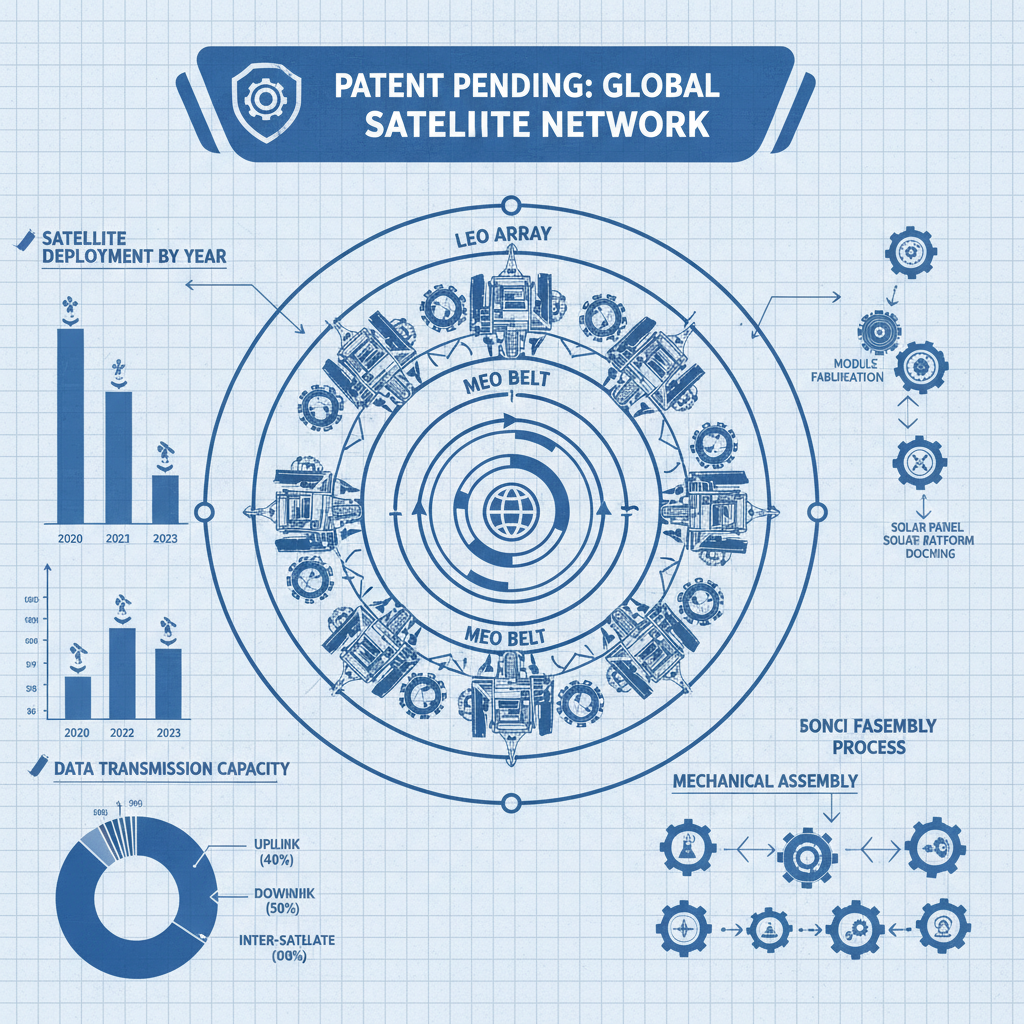
LEO (Low Earth Orbit) satellites offer low latency and high resolution but have limited coverage. MEO (Medium Earth Orbit) provides wider coverage and longer dwell times, suitable for navigation systems. GEO (Geostationary Orbit) satellites remain fixed over a specific point on Earth, providing continuous coverage but with higher latency. Choosing the right orbit depends on the specific application – communication, Earth observation, or navigation – and the trade-offs between coverage, latency, and cost.
Space debris is a major concern, and several measures are being taken to mitigate it. These include designing satellites for end-of-life de-orbiting, actively removing existing debris using robotic missions, and improving tracking and collision avoidance systems. International collaborations and stricter regulations are also crucial for preventing the creation of new debris. The development of passivation techniques to deplete residual energy sources on decommissioned satellites is also key.
Small businesses can leverage spacety satellite data in various ways, such as precision agriculture (monitoring crop health), logistics and supply chain management (tracking shipments), environmental monitoring (assessing risks and compliance), and market research (identifying potential opportunities). Cloud-based platforms are making spacety satellite data more accessible and affordable. Businesses can also partner with data analytics companies to extract actionable insights from this data.
Conclusion
Look, spacety satellite is complicated. There’s a lot of engineering, a lot of money, and a lot of risk involved. It's not just about launching a box into space and hoping for the best. It’s about understanding the materials, the environment, and the needs of the end-user.
Ultimately, whether this thing works or not, the worker will know the moment he tightens the screw. That's what I always tell the young engineers. You can run all the simulations you want, but until you've seen it built, tested, and deployed in the real world, you don't really know if it's going to fly. And honestly? That’s what makes this job interesting.