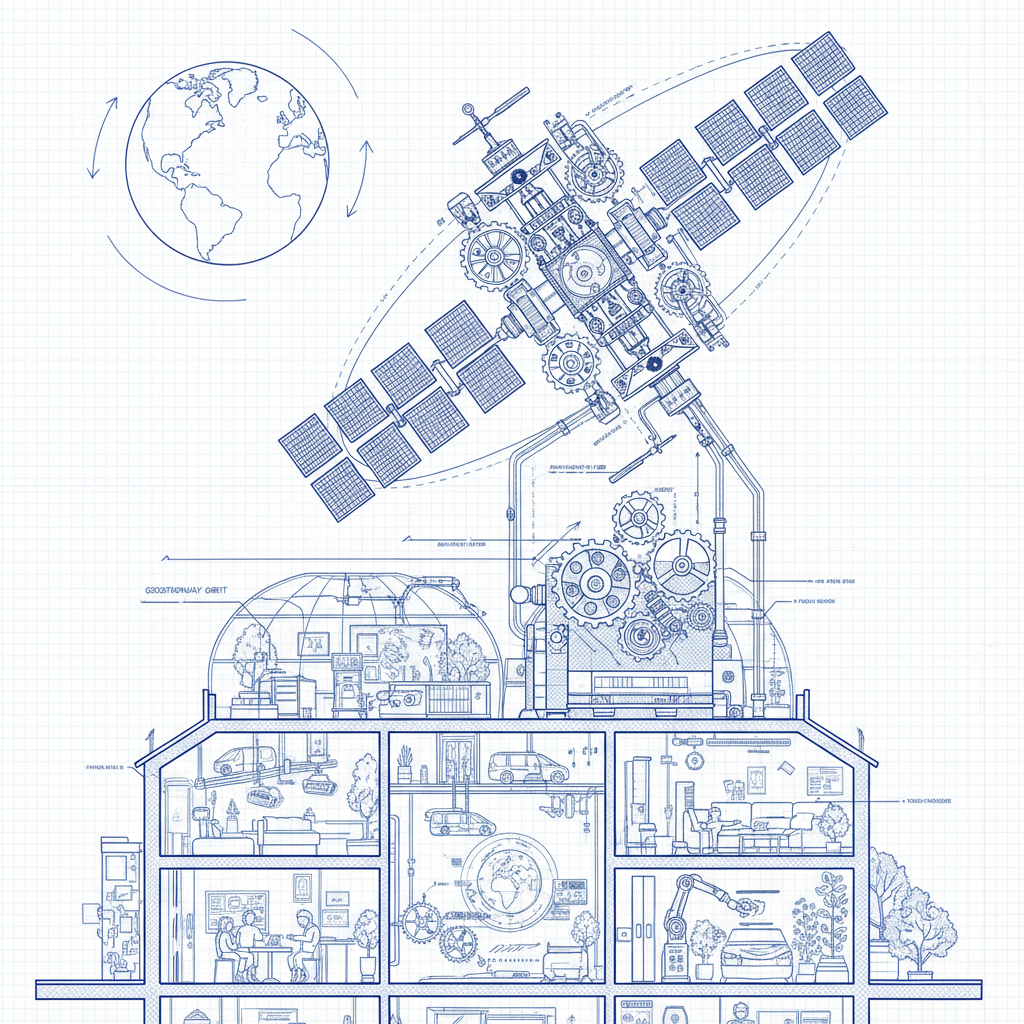
Geostationary orbit is a remarkable achievement of space engineering, offering a unique vantage point for a multitude of crucial applications. This specific orbit, approximately 35,786 kilometers (22,236 miles) above the Earth’s equator, allows satellites to remain in a fixed position relative to a point on the ground. This seemingly simple characteristic unlocks a wealth of possibilities, transforming how we communicate, navigate, and monitor our planet.
The importance of geostationary orbit extends far beyond technological curiosity. It’s the backbone of modern telecommunications, enabling global television broadcasting, telephone services, and high-speed internet access. Furthermore, it's instrumental in weather forecasting, providing continuous, real-time imagery and data crucial for predicting and mitigating the effects of severe weather events. The United Nations estimates that over 4 billion people rely on satellite-based services originating from this orbit for essential communication needs.
Understanding geostationary orbit is fundamental for anyone involved in space technology, telecommunications, meteorology, or even disaster management. Its unique properties, while offering significant advantages, also present unique challenges. Exploring these aspects allows for continued innovation and optimal utilization of this critical resource, ultimately benefiting societies worldwide.
Introduction to geostationary orbit
Geostationary orbit isn't just a location in space; it's a critical infrastructure supporting a vast array of modern technologies. Its unique stationary position relative to Earth allows for continuous communication and observation, making it invaluable for services we often take for granted. Maintaining this orbit, however, requires constant monitoring and adjustments to counteract gravitational forces and solar radiation pressure.
The development of geostationary orbit represents a significant milestone in space exploration and engineering. Initially conceived as a solution for global communications, its applications have expanded exponentially, impacting everything from weather forecasting and disaster relief to scientific research and military operations. Investments in geostationary infrastructure continue to be substantial, reflecting its enduring importance in the 21st century.
Defining geostationary orbit
Simply put, geostationary orbit is a circular orbit located approximately 35,786 kilometers (22,236 miles) above the Earth's equator. A satellite in this orbit travels at the same speed as the Earth’s rotation, resulting in the satellite appearing stationary when viewed from the ground. This "geosynchronous" relationship is crucial for its numerous applications.
The concept is directly linked to the demands of modern communication. Early communication satellites required complex tracking systems to maintain a connection with ground stations. Geostationary orbit eliminates this need, allowing for fixed antenna positions and significantly reducing infrastructure costs. This capability was particularly vital in establishing reliable global communication networks.
The precision required to achieve and maintain geostationary orbit is remarkable. Even slight deviations in velocity or positioning can cause a satellite to drift, impacting its functionality. Therefore, sophisticated onboard propulsion systems and ground-based tracking and control are essential for ensuring long-term operational stability.
Key Characteristics of geostationary orbit
One of the defining characteristics of geostationary orbit is its fixed position relative to Earth. This allows for continuous coverage of a specific geographic region. Another key feature is the relatively low signal latency, crucial for real-time communication applications. However, the high altitude also means a weaker signal strength, requiring larger antennas and more powerful transmitters.
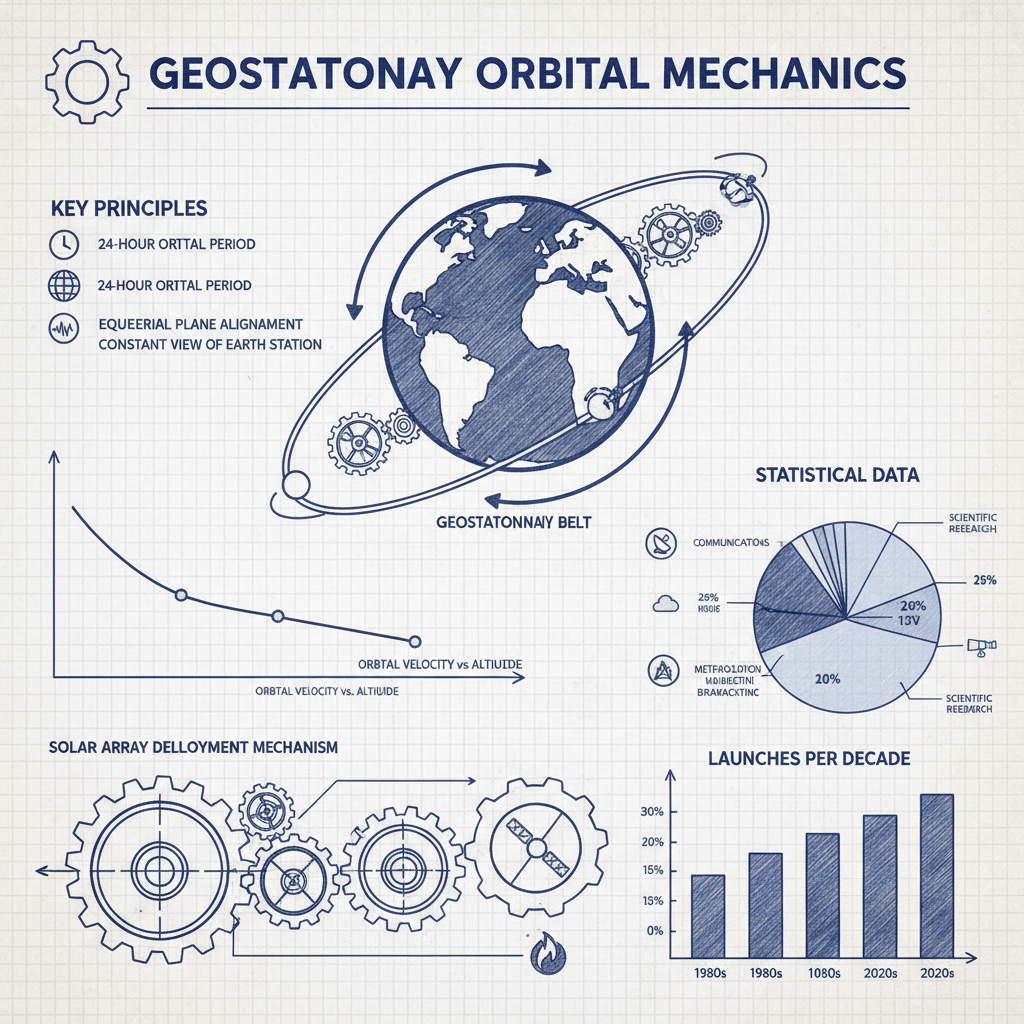
The orbital period of a geostationary satellite is exactly 24 hours, matching the Earth’s rotational period. This synchronicity is achieved by careful calculations of orbital velocity and altitude. Furthermore, the orbit is located in the Earth’s equatorial plane, ensuring the satellite remains above the equator. The limited "orbital slots" available in geostationary orbit are managed internationally to avoid interference between satellites.
Maintaining a stable geostationary orbit requires constant adjustments due to gravitational influences from the Sun, Moon, and Earth. These perturbations can cause satellites to drift, so they need station-keeping maneuvers, using onboard thrusters, to remain in their designated positions. The lifespan of a geostationary satellite is limited by the amount of propellant available for these maneuvers.
Practical Applications of geostationary orbit
The applications of geostationary orbit are remarkably diverse. Perhaps the most well-known is in broadcasting, where satellites deliver television and radio signals to millions of homes. Beyond broadcasting, geostationary satellites are vital for telecommunications, providing internet access, telephone services, and data transmission, particularly in remote areas where terrestrial infrastructure is limited.
Geostationary Orbit Application Breakdown
Global Impact and Benefits of geostationary orbit
The impact of geostationary orbit is truly global, reaching even the most remote corners of the world. In post-disaster relief operations, satellites provide critical communication links when terrestrial infrastructure is destroyed. They facilitate coordination of rescue efforts and enable vital information to reach affected populations. Furthermore, they support early warning systems for natural disasters, saving countless lives.
Geostationary satellites also play a crucial role in monitoring environmental changes, such as deforestation, climate patterns, and ocean currents. This data is essential for understanding and addressing global challenges. In remote industrial zones, such as offshore oil platforms or mining operations, satellite communication provides a reliable lifeline, ensuring safety and operational efficiency.
Future of geostationary orbit
The future of geostationary orbit is marked by ongoing innovation. High-throughput satellites (HTS) are increasing bandwidth capacity, enabling faster internet speeds and more data-intensive applications. New materials and propulsion systems are being developed to extend satellite lifespans and reduce operational costs. The integration of artificial intelligence (AI) is also poised to revolutionize satellite operations, enabling autonomous control and optimized resource allocation.
A significant trend is the move towards smaller, more agile satellites – known as SmallSats – that can be launched more frequently and at lower cost. While many SmallSats operate in Low Earth Orbit (LEO), some are being designed for geostationary orbit to provide specialized services. Furthermore, the development of in-space servicing, refurbishment, and manufacturing (ISRM) technologies promises to extend the lifespan of existing satellites and create new opportunities for space-based industries.
The convergence of geostationary orbit with emerging technologies like 5G and the Internet of Things (IoT) will further expand its applications, creating a truly interconnected world. These advancements will not only benefit commercial enterprises but also address critical global challenges related to connectivity, sustainability, and disaster resilience.
Challenges and Mitigation Strategies in geostationary orbit
Despite its many advantages, geostationary orbit faces several challenges. Space debris is a growing concern, as collisions with even small objects can damage or destroy satellites. The limited orbital slots are becoming increasingly crowded, leading to potential interference. The high cost of launching and operating satellites remains a significant barrier to entry.
Mitigation strategies include improved space debris tracking and removal technologies, international collaboration on spectrum allocation, and the development of more efficient launch systems. Innovative propulsion systems, such as electric propulsion, can reduce propellant consumption and extend satellite lifespans. Furthermore, the increasing use of standardized satellite platforms and software can lower development costs.
Addressing these challenges requires a concerted effort from governments, industry, and researchers. Investing in sustainable space practices and fostering international cooperation are essential for ensuring the long-term viability of geostationary orbit. A proactive approach to space debris mitigation and responsible use of orbital resources will safeguard this critical infrastructure for future generations.
Summary of Challenges and Mitigation Strategies in Geostationary Orbit
| Challenge Area |
Specific Issue |
Mitigation Strategy |
Implementation Difficulty (1-10) |
| Space Debris |
Risk of collisions with operational satellites |
Enhanced tracking, debris removal technologies, passivation of end-of-life satellites |
8 |
| Orbital Congestion |
Limited orbital slots, potential for interference |
International spectrum allocation, efficient orbital use planning |
7 |
| High Costs |
Launch costs, satellite construction, operation & maintenance |
Reusable launch vehicles, standardized satellite platforms, in-space servicing |
6 |
| Satellite Lifespan |
Limited propellant for station-keeping, component degradation |
Electric propulsion, radiation hardening, in-space refurbishment |
5 |
| Cybersecurity Threats |
Potential for satellite hijacking or data breaches |
Robust encryption, intrusion detection systems, secure communication protocols |
7 |
| Regulatory Challenges |
Lack of clear international regulations for space activities |
Development of comprehensive space laws and policies, international cooperation |
9 |
FAQS
Geostationary orbit offers continuous coverage of a specific area, eliminating the need for tracking antennas. Its relatively low latency is critical for real-time communication. Unlike Low Earth Orbit (LEO) satellites, fewer geostationary satellites are needed to cover a large region, simplifying network management. While LEO offers lower signal delays, it necessitates a constellation of satellites to achieve similar coverage and constant connection to a point on earth.
Space debris poses a significant threat to geostationary satellites. Even small pieces of debris traveling at high velocities can cause catastrophic damage upon impact. Operators constantly monitor debris fields and perform collision avoidance maneuvers to mitigate this risk. However, these maneuvers consume valuable propellant, shortening the satellite’s lifespan. Mitigation efforts also include designing satellites to be passivated at end-of-life, minimizing the creation of new debris.
Maintaining a satellite’s position requires regular station-keeping maneuvers to counteract gravitational perturbations from the Sun, Moon, and Earth. These maneuvers consume propellant, which is a limiting factor in satellite lifespan. Additionally, solar radiation pressure can also cause drift, demanding constant adjustments. Accurate orbit determination and precise thruster control are crucial for maintaining the desired position.
The increasing density of satellites in geostationary orbit heightens the risk of signal interference. As more satellites occupy the limited orbital slots, the probability of overlapping signals increases. International regulations and careful frequency planning are essential for minimizing interference. Techniques like beamforming and polarization control are also employed to reduce signal overlap and enhance transmission quality.
High-Throughput Satellites (HTS) utilize advanced technologies like spot beams and frequency reuse to deliver significantly higher bandwidth capacity compared to traditional satellites. This increased capacity translates to faster internet speeds, lower costs, and improved connectivity for end-users. HTS are particularly beneficial for serving areas with limited terrestrial infrastructure, such as rural communities and remote regions.
In-space servicing (IS) involves robotic missions to repair, refuel, or upgrade satellites in orbit. Refueling, in particular, can significantly extend a satellite's lifespan by replenishing its propellant supply. IS also offers the possibility of upgrading obsolete components, enhancing satellite capabilities without requiring a full replacement. While still in its early stages, IS promises to revolutionize satellite operations and reduce space debris.
Conclusion
Geostationary orbit represents a cornerstone of modern technological infrastructure, providing essential services ranging from communication and broadcasting to weather forecasting and disaster relief. Its unique characteristics – continuous coverage, relatively low latency, and a fixed position – have made it indispensable for countless applications. Understanding the intricacies of this orbit, its benefits, and its challenges, is crucial for continued innovation and responsible space utilization.
Looking ahead, advancements in satellite technology, coupled with proactive space debris mitigation strategies and international collaboration, will ensure the long-term sustainability of geostationary orbit. Its role will only become more critical as the demand for connectivity and data continues to grow. To learn more about geostationary orbit and its transformative potential, visit our website: www.space-navi.com.