Satellite constellations represent a revolutionary shift in space technology, moving beyond single, high-cost satellites to networks of smaller, interconnected spacecraft. This paradigm shift is driven by the increasing demand for global connectivity, real-time data access, and resilient communication infrastructure. Understanding satellite constellation technology is crucial for businesses, governments, and individuals alike, as it underpins advancements in areas ranging from broadband internet access and environmental monitoring to disaster response and national security. The ability to deploy and manage these constellations efficiently and effectively is rapidly becoming a key differentiator in the 21st century.
The global relevance of satellite constellation is undeniable, with significant implications for bridging the digital divide and fostering economic growth. According to the United Nations, approximately 37% of the global population remains offline, largely due to a lack of infrastructure. Satellite constellations offer a viable solution for providing internet access to remote and underserved regions, fostering education, healthcare, and economic opportunities. The World Bank estimates that expanding broadband access can contribute significantly to GDP growth in developing countries. Furthermore, the ISO standards are evolving to address the challenges of space debris mitigation and sustainable space operations, critical aspects of responsible satellite constellation development.
This technology is not merely about connectivity; it's about democratizing access to information and empowering communities. The increasing affordability and scalability of small satellites, coupled with advancements in launch capabilities, are driving down costs and making satellite constellations a more accessible solution for a wider range of applications. Understanding the intricacies of these systems – from orbit mechanics and inter-satellite links to ground station infrastructure and regulatory frameworks – is paramount for harnessing their full potential.
Introduction to Satellite Constellation
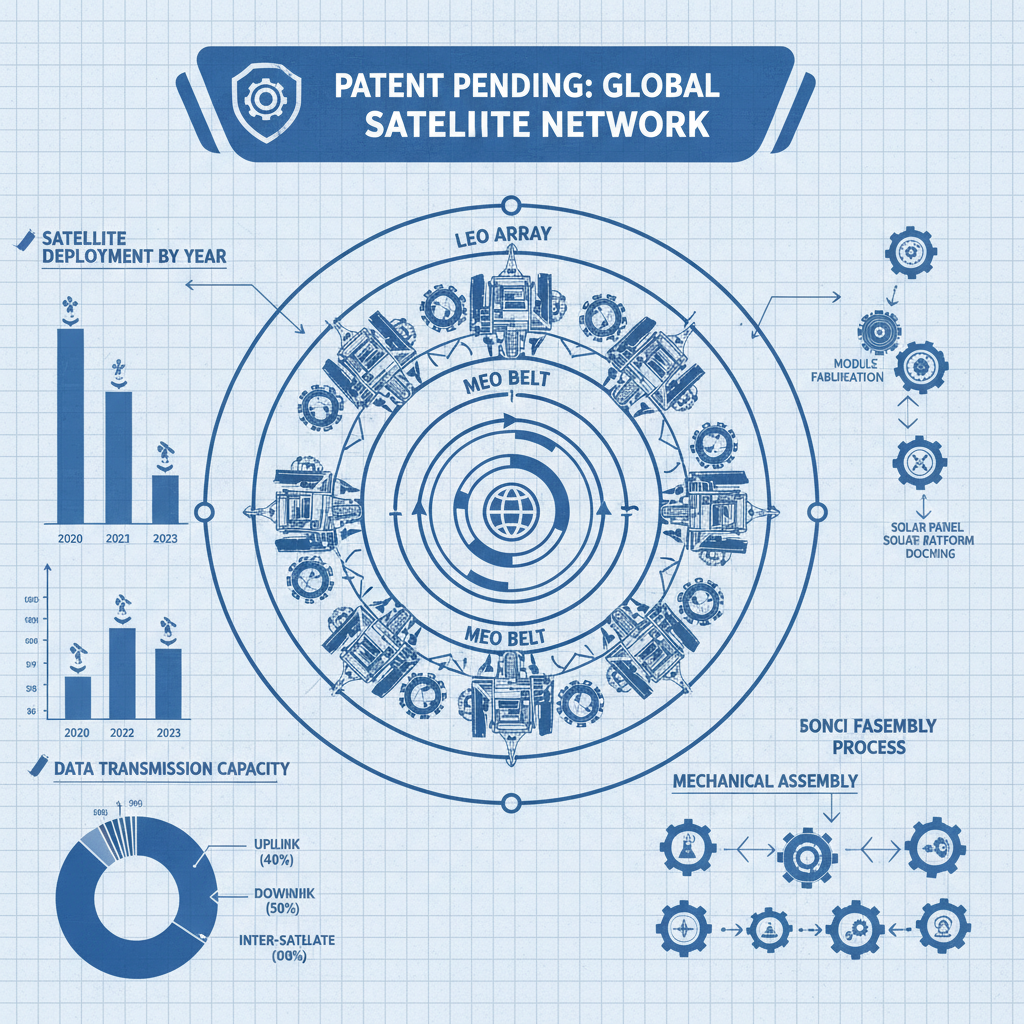
A satellite constellation is fundamentally a group of satellites working together to provide continuous coverage of a geographical area. Unlike traditional geostationary satellites, which orbit at a fixed point above the equator, constellations utilize a variety of orbital configurations – Low Earth Orbit (LEO), Medium Earth Orbit (MEO), and even Geostationary Orbit (GEO) – to achieve broader coverage and lower latency. This distributed architecture makes them ideal for applications requiring real-time data and global reach.
The emergence of satellite constellations is directly linked to growing demand from various sectors. The modern industry is increasingly reliant on consistent connectivity for operations, remote monitoring, and data transmission. Humanitarian needs, such as disaster relief and emergency communications, also benefit greatly from the rapid deployment and broad coverage that constellations offer. This convergence of technological advancements and societal needs is driving rapid innovation and investment in the field.
Defining Satellite Constellation
Simply put, a satellite constellation is a network of multiple satellites orbiting Earth in a coordinated manner. These satellites communicate with each other and with ground stations to provide a range of services, including communication, Earth observation, navigation, and scientific research. The key difference between a constellation and a single satellite lies in its redundancy and continuous coverage capabilities. If one satellite in a constellation fails, the others can continue to provide service, ensuring reliability.
The connection to modern industry is profound. Sectors like agriculture utilize constellations for precision farming, monitoring crop health, and optimizing irrigation. The maritime industry relies on them for tracking vessels and ensuring safe navigation. Financial institutions use them for secure data transmission and real-time market monitoring. The benefits extend beyond commercial applications, playing a vital role in humanitarian efforts and environmental protection.
These networks are designed to overcome the limitations of single-satellite systems, offering improved availability, lower latency, and increased bandwidth. By strategically distributing satellites across different orbital planes, constellations can ensure constant coverage, even in challenging geographical locations.
Core Components of a Satellite Constellation
Several core components underpin the functionality of a satellite constellation. Firstly, the satellites themselves, often employing advanced technologies like phased array antennas and inter-satellite links. Secondly, a robust ground station network is essential for commanding the satellites and receiving data. These stations are strategically located around the globe to ensure continuous communication. Thirdly, sophisticated software and algorithms are required to manage the constellation, optimize satellite orbits, and allocate resources efficiently.
Beyond the hardware and software, a critical component is the operational infrastructure – the people and processes responsible for monitoring, controlling, and maintaining the constellation. This includes mission control centers, data processing facilities, and cybersecurity measures to protect against threats. Finally, regulatory compliance and spectrum management are crucial aspects, ensuring that the constellation operates within established legal frameworks and does not interfere with other space-based systems.
The interplay between these components is what defines the overall performance and reliability of a satellite constellation. A well-designed and maintained constellation can deliver significant benefits across a wide range of applications, while neglecting any one component can lead to operational issues and reduced effectiveness.
Key Factors Influencing Performance
Several key factors directly impact the performance of a satellite constellation. Durability is paramount, considering the harsh environment of space. Satellites must be designed to withstand radiation, temperature fluctuations, and micrometeoroid impacts. Scalability is crucial for meeting growing demand and expanding coverage. The ability to easily add new satellites to the constellation without disrupting existing operations is essential.
Cost Efficiency is a major driver of innovation, influencing satellite design, launch methods, and operational strategies. Lowering the cost per bit transmitted is vital for making satellite services accessible to a wider audience. Latency, or the time delay in data transmission, is critical for applications requiring real-time responsiveness, such as online gaming and autonomous vehicles. Constellations employing LEO satellites generally offer lower latency than those in GEO.
Performance Metrics of Different satellite constellation Approaches
Global Applications and Use Cases
The applications of satellite constellation are incredibly diverse. In post-disaster relief operations, they provide critical communication infrastructure when terrestrial networks are down, enabling emergency responders to coordinate efforts and deliver aid effectively. In remote industrial zones, such as offshore oil rigs and mining operations, they offer reliable connectivity for remote monitoring, data analysis, and personnel communication.
The agricultural sector benefits immensely from satellite constellation. High-resolution imagery and data analytics provide insights into crop health, soil conditions, and irrigation needs, enabling farmers to optimize yields and reduce waste. Furthermore, environmental monitoring applications leverage constellations to track deforestation, monitor pollution levels, and assess the impact of climate change.
Advantages and Long-Term Value
The advantages of satellite constellations are compelling. Tangible benefits include reduced costs compared to traditional satellite systems, increased sustainability through the use of smaller, more efficient satellites, and a significantly improved social impact by bridging the digital divide. Reliability is also a key advantage, as constellations offer redundancy and resilience against individual satellite failures.
Beyond the practical benefits, satellite constellations inspire emotional resonance. Providing access to information empowers individuals and fosters a sense of safety and dignity. The innovation driving the development of these systems fuels economic growth and strengthens trust in technology. This convergence of practical and emotional benefits underscores the long-term value of satellite constellation.
Future Trends and Innovations
The future of satellite constellation is poised for significant advancements. Upcoming technologies include the development of optical inter-satellite links, which will dramatically increase data transfer rates and reduce latency. New materials and manufacturing techniques, such as 3D printing, will lower satellite costs and accelerate production. Policy changes focusing on space debris mitigation and spectrum allocation will be crucial for ensuring the long-term sustainability of these systems.
Green energy solutions, such as solar-powered satellites and reusable launch vehicles, are gaining traction, reducing the environmental impact of space operations. Digital transformation initiatives, leveraging artificial intelligence and machine learning, will optimize constellation management and enhance data analytics capabilities. Automation and robotic servicing will further reduce operational costs and extend the lifespan of satellites.
Ultimately, these trends point towards a future where satellite constellations are even more accessible, affordable, and sustainable, playing an increasingly vital role in addressing global challenges.
Challenges and Solutions
Despite their potential, satellite constellations face several challenges. Space debris is a growing concern, posing a collision risk to operational satellites. Spectrum allocation is another hurdle, as demand for radio frequencies continues to increase. Regulatory frameworks need to evolve to accommodate the rapid deployment and operation of large constellations.
Innovative approaches are being developed to address these challenges. Active debris removal technologies are being explored to clear space junk. Advanced spectrum sharing techniques can maximize the efficient use of available frequencies. International cooperation and standardized regulations are essential for fostering a sustainable space environment.
Furthermore, resilient constellation designs, incorporating redundancy and fault tolerance, can mitigate the impact of satellite failures and ensure continued service. Investing in cybersecurity measures is paramount to protect against hacking and data breaches.
Core Challenges & Proposed Solutions in Satellite Constellation Development
| Challenge Area |
Impact Level (1-10) |
Proposed Solution |
Implementation Difficulty (1-10) |
| Space Debris Mitigation |
9 |
Active Debris Removal & Responsible Disposal |
8 |
| Spectrum Congestion |
7 |
Dynamic Spectrum Allocation & Sharing Techniques |
6 |
| Regulatory Compliance |
6 |
International Standardization & Harmonized Regulations |
7 |
| Cybersecurity Threats |
8 |
Robust Encryption & Intrusion Detection Systems |
5 |
| Constellation Management Complexity |
7 |
AI-Powered Orbit Optimization & Resource Allocation |
6 |
| Launch Costs & Accessibility |
5 |
Reusable Launch Vehicles & Rideshare Programs |
7 |
FAQS
Satellite constellations offer significantly lower latency due to their proximity to Earth, enabling real-time applications. They provide broader coverage, especially in polar regions, and are more resilient to failures due to their distributed architecture. Constellations also offer greater bandwidth capacity, supporting higher data rates for diverse applications. While geostationary satellites have a broader footprint from a single vantage point, constellations overcome these limitations through their networked design.
The orbital altitude dramatically affects performance. Lower Earth Orbit (LEO) constellations provide the lowest latency but require a larger number of satellites for global coverage. Medium Earth Orbit (MEO) constellations offer a balance between latency and coverage. Geostationary Orbit (GEO) constellations offer broad coverage but suffer from higher latency. The specific orbital inclination also influences coverage patterns and visibility from ground stations.
Space debris poses a significant collision risk to operational satellites, potentially creating a cascading effect. Operators are addressing this through responsible disposal practices, such as deorbiting satellites at the end of their life and designing satellites to burn up upon reentry. Active debris removal technologies are also being developed, alongside adherence to international guidelines for space situational awareness and collision avoidance.
Ground stations are critical for communicating with the satellites, receiving data, and sending commands. A strategically located network of ground stations is essential for maintaining continuous connectivity with the constellation. Advances in ground station technology, such as software-defined radios and automated antenna tracking, are improving efficiency and reducing costs.
Regulatory bodies are working to modernize frameworks to address the unique challenges posed by large constellations. Key areas of focus include spectrum allocation, space debris mitigation, and collision avoidance. International cooperation is crucial for establishing harmonized regulations that promote responsible space operations and prevent interference.
Inter-satellite links (ISLs) allow satellites within a constellation to communicate directly with each other, without relying on ground stations. This reduces latency, increases data throughput, and enhances resilience by enabling data to be routed around failed or congested ground stations. ISLs are particularly important for constellations providing global coverage, as they minimize the need for extensive ground infrastructure.
Conclusion
Satellite constellations represent a transformative technology with the potential to revolutionize connectivity, Earth observation, and a wide range of other applications. Their ability to provide global coverage, low latency, and increased bandwidth makes them an essential component of the modern digital infrastructure. From disaster relief and precision agriculture to environmental monitoring and scientific research, the benefits of these systems are far-reaching and impactful.
Looking ahead, continued innovation in satellite technology, coupled with supportive regulatory frameworks and international collaboration, will be crucial for realizing the full potential of satellite constellations. Investing in research and development, promoting sustainable space practices, and ensuring equitable access to these technologies will be essential for shaping a future where connectivity and information are available to all. Visit our website at space-navi.com to learn more about the latest advancements in satellite constellation technology and how they are shaping the future.