synthetic aperture radar (sar) is a powerful remote sensing technology that has revolutionized Earth observation and beyond. Its ability to create high-resolution images regardless of weather conditions or time of day makes it invaluable for a wide range of applications, from monitoring environmental changes to supporting disaster relief efforts. Understanding the principles and capabilities of synthetic aperture radar (sar) is becoming increasingly crucial for researchers, policymakers, and industries alike.
The global relevance of sar stems from its unique ability to penetrate clouds, fog, and even rain, providing data where optical sensors fall short. According to the United Nations Office for Disaster Risk Reduction (UNDRR), the frequency and intensity of natural disasters are increasing, highlighting the need for robust monitoring systems. Synthetic aperture radar provides critical insights for risk assessment, early warning systems, and post-disaster damage evaluation. The World Bank estimates that investing in resilient infrastructure, informed by technologies like sar, can significantly reduce economic losses from disasters.
This technology addresses the challenge of consistent, reliable Earth observation, providing actionable intelligence even in the most challenging environments. Traditional optical remote sensing is limited by atmospheric conditions and sunlight availability, while sar overcomes these limitations, delivering consistent and detailed information vital for informed decision-making.
Introduction to Synthetic Aperture Radar (sar)
Synthetic aperture radar (sar) is a form of radar imaging that utilizes the motion of the radar antenna over a target region to synthesize a large aperture antenna, effectively increasing the resolution of the image. Unlike optical sensors that rely on visible light, sar uses microwave radiation, allowing it to operate day and night and penetrate cloud cover. This makes it a particularly valuable tool for monitoring dynamic environments and regions with frequent inclement weather.
The development of sar has been pivotal in addressing critical needs in areas such as environmental monitoring, disaster management, and national security. Its ability to detect subtle changes on the Earth’s surface, like ground deformation or vegetation stress, provides valuable data for understanding and mitigating environmental risks. It's increasingly integrated into modern industry and plays a crucial role in humanitarian efforts globally.
The Core Principles of sar Operation
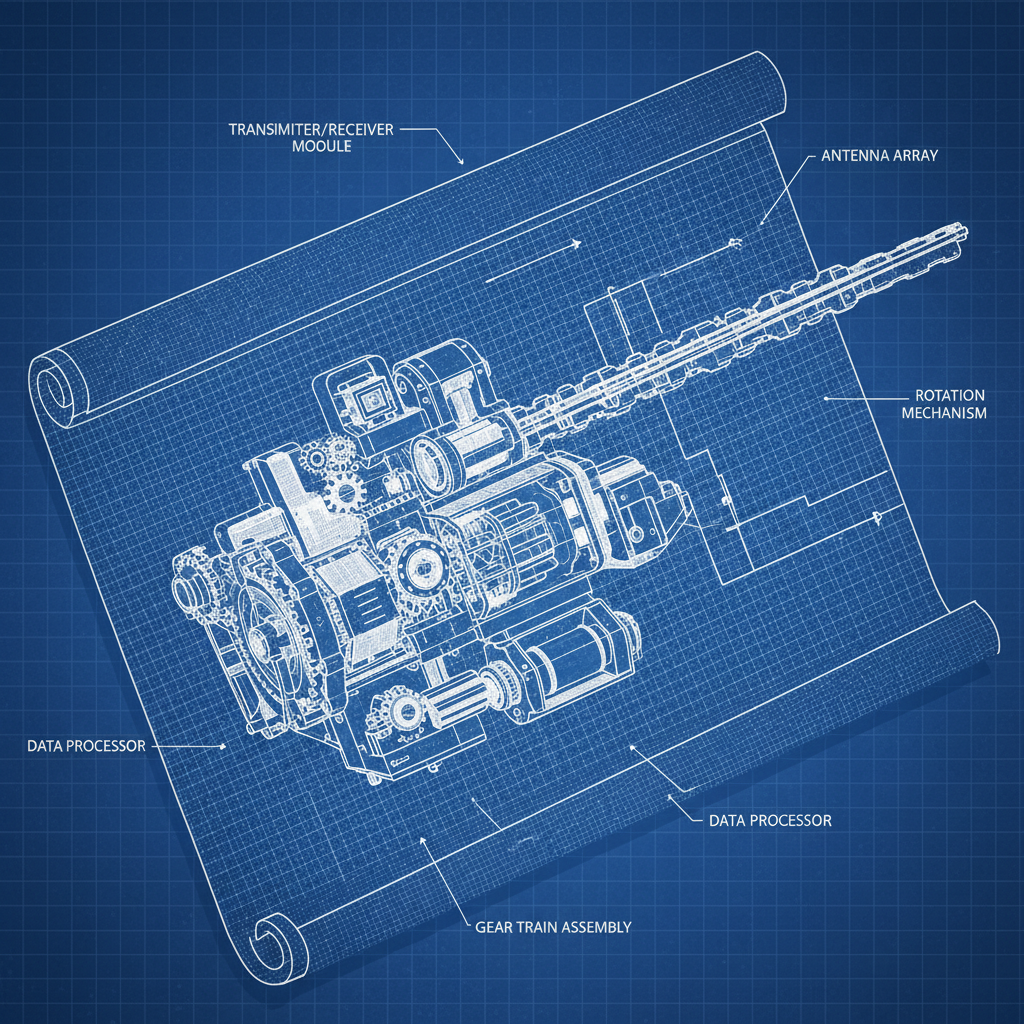
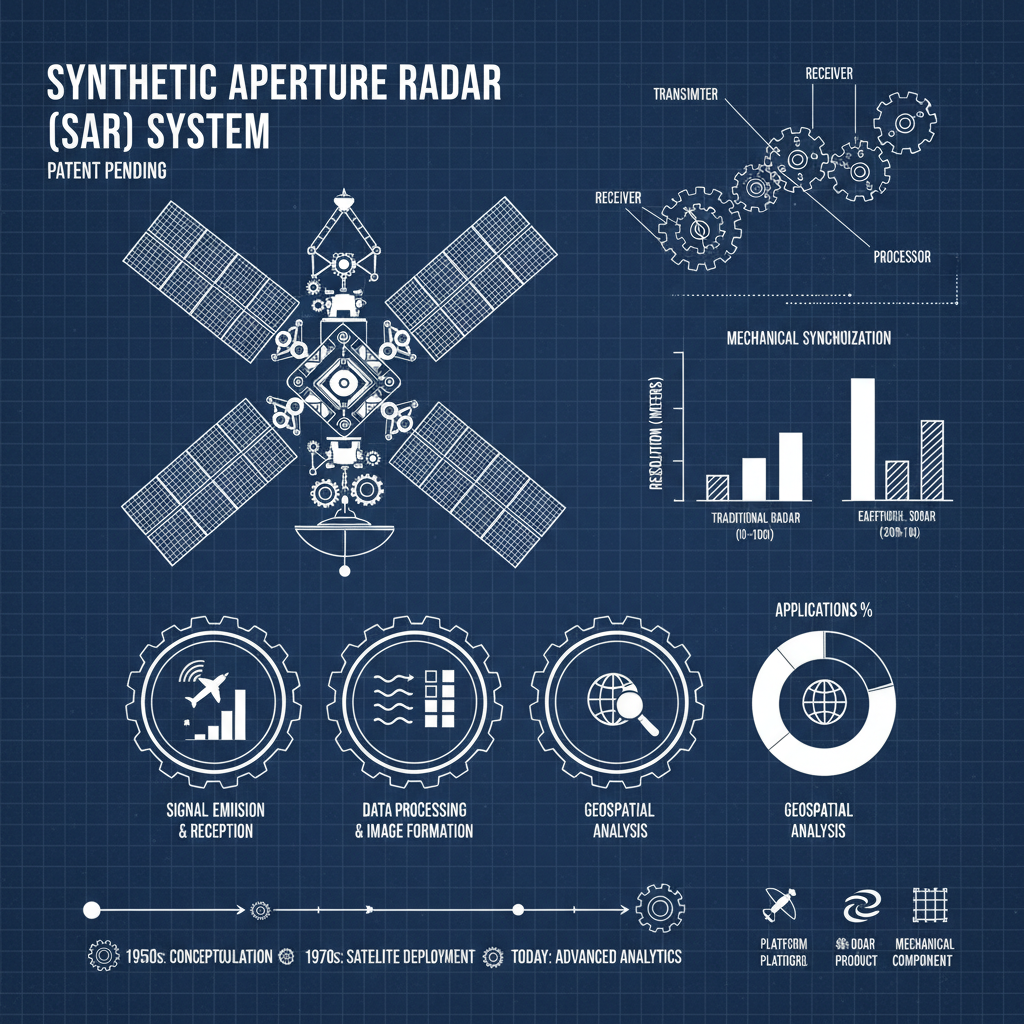
The fundamental principle behind sar lies in coherent signal processing. The radar transmits a microwave signal and then receives the backscattered signal from the target. By precisely measuring the time delay and phase of the return signal, the distance and characteristics of the target can be determined. The ‘synthetic aperture’ is created by combining multiple radar returns collected as the sensor moves along its flight path.
This process is akin to creating a much larger antenna than physically exists, resulting in significantly improved spatial resolution. The longer the synthetic aperture, the higher the resolution of the image. Advanced signal processing algorithms are then used to reconstruct the image from the collected data. The choice of radar frequency also impacts the sar’s penetration depth and sensitivity to different surface features.
Essentially, sar transforms the movement of the sensor into a larger, virtual antenna, overcoming the limitations of traditional radar systems.
Key Components & Factors Influencing sar Performance
Several key factors determine the performance and capabilities of a sar system. First, the radar frequency influences penetration depth and sensitivity; lower frequencies penetrate further but offer lower resolution, while higher frequencies provide higher resolution but are more susceptible to atmospheric attenuation. Second, the polarization of the transmitted and received signals affects the type of information gathered – horizontal polarization is sensitive to surface roughness, while vertical polarization is sensitive to dielectric properties.
Another critical factor is the spatial resolution, determined by the synthetic aperture length and the radar wavelength. Higher resolution images require longer synthetic apertures and shorter wavelengths. Furthermore, the incidence angle of the radar beam affects the geometric distortions in the image – steeper incidence angles result in greater distortions. Finally, the quality of the signal processing algorithms is crucial for accurate image reconstruction and feature extraction.
The precision of the orbit determination of the sar satellite or aircraft is also crucial, as even small errors in position can lead to significant geometric errors in the final image.
Diverse Applications of Synthetic Aperture Radar
The applications of synthetic aperture radar are remarkably diverse and span numerous industries and domains. In agriculture, sar imagery is used to monitor crop health, estimate yields, and assess soil moisture levels. In forestry, it can map forest cover, assess biomass, and detect illegal logging activities.
In the oil and gas industry, sar is used to monitor pipelines, detect oil spills, and assess ground stability. For geological surveys, it can identify potential mineral deposits and map geological formations. In disaster management, as previously mentioned, it provides invaluable data for flood mapping, landslide detection, and damage assessment after earthquakes and hurricanes.
Furthermore, sar plays a key role in maritime surveillance, detecting ships, monitoring sea ice, and identifying oil slicks. It's also used in defense and security applications for target detection and reconnaissance.
Comparison of sar Methods
The Advantages and Long-Term Value of sar Technology
The tangible benefits of sar are substantial. Its all-weather, day-night capabilities translate to consistent data acquisition, reducing reliance on favorable weather conditions. This consistency lowers costs associated with repeated failed acquisition attempts and improves the reliability of monitoring programs.
From a sustainability perspective, sar contributes to informed resource management, supports sustainable agriculture, and enhances disaster preparedness, minimizing environmental and economic impacts. Socially, sar empowers communities with timely information for risk mitigation and disaster response, promoting safety and resilience. The increased trust in data-driven decision-making fosters innovation and collaboration across various sectors.
Future Trends and Innovation in sar Systems
The future of sar is marked by exciting innovations. Small sar satellites (smallsats) are gaining prominence, offering more frequent revisit times and lower costs compared to traditional large satellite systems. These constellations enable near-real-time monitoring of dynamic events. Artificial intelligence (AI) and machine learning (ML) are being integrated into sar data processing, automating feature extraction, enhancing image classification, and improving change detection.
Another emerging trend is the development of multi-frequency and multi-polarization sar systems, providing richer and more detailed information about the target environment. These advancements are poised to unlock new applications in areas such as precision agriculture, autonomous navigation, and environmental monitoring.
Challenges and Solutions in sar Implementation
Despite its advantages, sar implementation faces certain challenges. Data processing can be computationally intensive and require specialized expertise. Geometric distortions and speckle noise can affect image quality and interpretation. The high cost of sar data, particularly high-resolution imagery, can be a barrier to entry for some users.
Solutions include developing more efficient processing algorithms, utilizing advanced filtering techniques to reduce speckle noise, and promoting data sharing initiatives to lower costs. Cloud-based sar processing platforms are also emerging, providing access to powerful computing resources and specialized software tools. Furthermore, the increasing availability of open-source sar data and software is democratizing access to this valuable technology.
Investing in training and education programs to build a skilled workforce is also crucial for overcoming these challenges and maximizing the benefits of sar technology.
Summary of sar Implementation Challenges and Solutions
| Challenge |
Impact |
Potential Solution |
Implementation Difficulty (1-10) |
| Computational Complexity |
Slow processing times, high infrastructure costs |
Cloud-based processing, optimized algorithms |
7 |
| Speckle Noise |
Reduced image clarity, inaccurate feature extraction |
Advanced filtering techniques, multi-look processing |
6 |
| Geometric Distortion |
Inaccurate spatial measurements, mapping errors |
Precise orbit determination, geometric correction algorithms |
8 |
| Data Cost |
Limited accessibility for researchers and smaller organizations |
Open data initiatives, data sharing platforms |
5 |
| Expertise Requirements |
Shortage of skilled professionals in sar data analysis |
Training programs, educational resources |
7 |
| Integration Challenges |
Difficulty integrating sar data with existing GIS and analysis workflows |
Standardized data formats, interoperable software tools |
6 |
FAQS
Sar offers several key advantages. It can penetrate clouds and operate at night, providing data regardless of weather conditions or lighting. It’s also sensitive to surface roughness and dielectric properties, revealing information not visible in optical images. This makes it ideal for monitoring areas with frequent cloud cover, conducting all-weather surveillance, and detecting subtle changes on the Earth’s surface. Essentially, sar provides consistent data acquisition where optical imagery cannot.
The resolution of sar imagery varies depending on the system’s characteristics and processing techniques. Current systems can achieve resolutions ranging from sub-meter to several meters. Higher resolution generally requires longer synthetic apertures and shorter wavelengths. Small sar satellites are now offering resolutions of around 1-3 meters, while advanced systems can achieve sub-meter resolution.
The polarization of the transmitted and received radar signal significantly influences the type of information gathered. Horizontal polarization is sensitive to surface roughness, providing insights into features like waves or terrain irregularities. Vertical polarization is sensitive to dielectric properties, revealing information about moisture content and vegetation structure. Combining different polarization configurations (dual or quad-polarization) provides a more comprehensive understanding of the target environment.
Sar is crucial in disaster management for flood mapping, landslide detection, earthquake damage assessment, and monitoring volcanic activity. Its ability to penetrate clouds allows for rapid assessment of affected areas, even during adverse weather conditions. Sar data can also be used to track displaced populations, identify damaged infrastructure, and guide relief efforts.
Interferometric sar (InSAR) is a technique that uses two or more sar images acquired at slightly different times to measure ground deformation with millimeter-level accuracy. This differs from standard sar, which primarily focuses on creating images of the Earth’s surface. InSAR is widely used for monitoring landslides, volcanoes, ground subsidence, and glacier movements.
Future trends include the proliferation of small sar satellite constellations for increased revisit times, the integration of AI and machine learning for automated data processing, and the development of multi-frequency and multi-polarization systems for richer data acquisition. We’re also seeing growing interest in real-time sar data processing and the development of cloud-based platforms for easy access and analysis.
Conclusion
Synthetic aperture radar (sar) represents a transformative technology in the field of remote sensing, providing unparalleled capabilities for Earth observation and monitoring. Its all-weather, day-night operation, combined with its sensitivity to surface properties, makes it invaluable for a wide range of applications, from environmental monitoring and disaster management to security and resource management. The ongoing advancements in sar technology, including smaller satellites, AI integration, and improved processing techniques, are poised to unlock even greater potential.
Looking ahead, continued investment in sar research and development, coupled with initiatives to promote data accessibility and education, will be crucial for maximizing its impact. By embracing this powerful technology, we can gain deeper insights into our planet, mitigate risks, and build a more sustainable future. Visit our website at www.space-navi.com to learn more about our sar solutions.