VSAT, or Very Small Aperture Terminal, networks have revolutionized communication access globally, particularly in remote and underserved areas. Understanding what is vsat network is crucial in today's interconnected world, as it provides a reliable and independent communication infrastructure capable of bridging the digital divide. This technology allows for data, voice, and video transmission where traditional infrastructure like fiber optic cables or cellular towers are impractical or cost-prohibitive.
The increasing demand for connectivity, driven by globalization and the growth of remote operations in industries like oil and gas, mining, and maritime, fuels the relevance of VSAT. According to the UN, over 2.2 billion people worldwide still lack access to the internet, highlighting the significant role what is vsat network can play in achieving universal access. VSAT offers a rapid deployment solution, often bypassing lengthy permitting and infrastructure development processes.
Ultimately, grasping the fundamentals of what is vsat network is essential for anyone involved in telecommunications, disaster relief, remote operations, or simply seeking to understand how modern communication networks function. The benefits extend beyond connectivity, fostering economic development, education, and improved quality of life.
Introduction to what is vsat network
A Very Small Aperture Terminal (VSAT) network is a satellite communication system designed to provide connectivity to remote locations that are difficult or expensive to reach with terrestrial infrastructure. Essentially, it's a two-way satellite ground station with a small antenna, used to transmit and receive data from a communications satellite orbiting the Earth. what is vsat network allows organizations to create private networks independent of local telecommunications providers.
VSAT systems aren't about replacing all traditional communication methods; rather, they complement existing infrastructure, offering a vital link where others fall short. They are especially critical in industries requiring always-on connectivity, such as emergency response, oil and gas exploration, and maritime operations. Understanding the benefits and applications of what is vsat network is becoming increasingly important as our world becomes more interconnected.
Defining what is vsat network
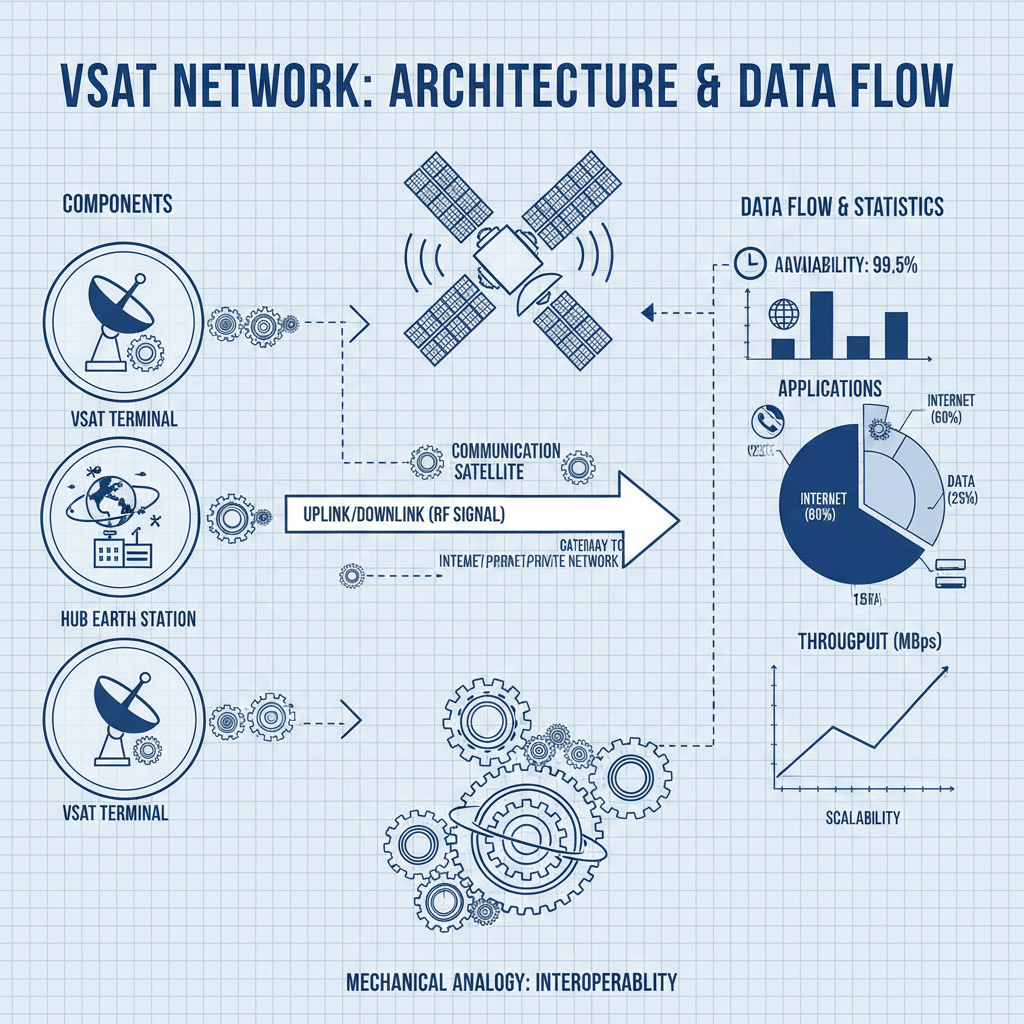
At its core, what is vsat network is a method of providing digital telecommunications via satellite. Unlike traditional satellite TV, which is typically one-way (broadcast), VSAT is a two-way system allowing for interactive data exchange. This interactivity is achieved through a hub station, also known as a Network Operations Center (NOC), which controls the communication between the VSAT terminals and the satellite.
The connection process begins when a VSAT terminal transmits a signal to a geostationary satellite. The satellite then relays that signal to the hub station, and vice-versa. This enables communication between multiple VSAT terminals, forming a network. The versatility of what is vsat network makes it invaluable in sectors requiring dependable and wide-reaching connectivity.
This capability is particularly impactful in addressing the digital divide. For communities lacking access to terrestrial infrastructure, what is vsat network provides essential access to education, healthcare, and economic opportunities. It's a technology that transcends geographical limitations, empowering those previously disconnected.
Core Components of a what is vsat network
A complete what is vsat network comprises several key elements. The most visible is the VSAT terminal itself – a small satellite dish and transceiver. However, the system is far more complex, involving a geostationary satellite acting as a relay point, and a Network Operations Center (NOC) – the central control hub.
The satellite's role is crucial, receiving signals from VSAT terminals and retransmitting them to the NOC or other terminals. The NOC manages network traffic, monitors performance, and handles billing. Additionally, the network relies on modulation and coding schemes to ensure efficient and reliable data transmission despite atmospheric interference. These components work synergistically to provide seamless connectivity.
Further components include the upconverter and downconverter, which prepare signals for transmission to the satellite and convert received signals for use by the terminal. The LNB (Low-Noise Block downconverter) is also essential, amplifying the weak signals received from the satellite. The combination of these elements facilitates robust and reliable communication through what is vsat network.
Key Factors of what is vsat network
Several core factors define the effectiveness and suitability of a what is vsat network. These encompass bandwidth capabilities, latency, reliability, security, and cost-effectiveness. Bandwidth, the amount of data that can be transmitted per unit of time, dictates the types of applications that can be supported.
Latency, the delay in data transmission, is a critical consideration, particularly for real-time applications like video conferencing. Reliability is paramount, as outages can disrupt critical operations. Security measures, including encryption, are vital to protect sensitive data. And finally, cost-effectiveness must be balanced against performance requirements to ensure a sustainable solution.
Global Applications of what is vsat network
The applications of what is vsat network are incredibly diverse and span across numerous industries and geographies. In remote oil and gas fields, it provides critical communication for monitoring operations and ensuring worker safety. Maritime vessels rely on VSAT for crew welfare, navigation, and operational efficiency.
In disaster relief operations, what is vsat network is often the first line of communication, enabling emergency responders to coordinate efforts and provide vital assistance. It's also widely used in the mining industry to connect remote sites and facilitate real-time data analysis. Furthermore, VSAT is playing an increasingly important role in connecting rural schools and healthcare facilities, bridging the digital divide.
Geographically, VSAT networks are prevalent in regions with limited terrestrial infrastructure, such as Africa, South America, and parts of Asia. However, its adaptability also makes it valuable in developed countries for specialized applications requiring secure and reliable communication in challenging environments.
Advantages of what is vsat network
The benefits of deploying what is vsat network are substantial. A primary advantage is its rapid deployability – a VSAT terminal can be installed and operational much faster than traditional infrastructure. This speed is crucial in emergency situations or for projects with tight deadlines.
VSAT networks also offer scalability, allowing organizations to easily add or remove terminals as needed. This flexibility ensures that communication capacity aligns with evolving requirements. Furthermore, the inherent independence from local infrastructure provides a level of resilience and security that other solutions may lack.
Future Trends in what is vsat network
The future of what is vsat network is being shaped by several key trends. The emergence of High Throughput Satellites (HTS) is dramatically increasing bandwidth capacity and reducing costs. Low Earth Orbit (LEO) satellite constellations, such as Starlink, are further disrupting the market with lower latency and higher speeds.
Software-Defined Networking (SDN) and Network Function Virtualization (NFV) are also gaining traction, enabling more flexible and agile network management. Integration with 5G networks is expected to further enhance VSAT capabilities, providing seamless connectivity across multiple platforms.
Sustainability is another growing focus, with efforts to reduce the environmental impact of satellite operations and develop more energy-efficient VSAT terminals. As demand for global connectivity continues to soar, what is vsat network will undoubtedly remain a vital component of the communication landscape.
Challenges and Solutions in VSAT Network Deployment
Despite its many advantages, deploying and maintaining a what is vsat network presents certain challenges. Rain fade, the signal degradation caused by heavy rainfall, can temporarily disrupt connectivity. High initial investment costs, including the purchase of terminals and satellite capacity, can be a barrier to entry.
Security threats, such as hacking and interference, also require ongoing vigilance. Addressing these challenges requires employing techniques such as adaptive coding and modulation to mitigate rain fade, exploring cost-sharing models or leasing options to reduce upfront expenses, and implementing robust security protocols.
Innovative solutions, such as using multiple satellites for redundancy and employing advanced beamforming technology to focus signals, are also helping to overcome these limitations. Continued investment in research and development will be crucial to further enhance the reliability, affordability, and security of what is vsat network.
Overview of Key VSAT Network Challenges and Mitigation Strategies
| Challenge |
Impact |
Mitigation Strategy |
Implementation Cost (1-10) |
| Rain Fade |
Signal Degradation, Intermittent Connectivity |
Adaptive Coding & Modulation (ACM) |
4 |
| High Initial Costs |
Barrier to Entry for Smaller Organizations |
Leasing Options, Shared Capacity |
6 |
| Security Vulnerabilities |
Data Breaches, Service Disruption |
Encryption, Firewall Implementation |
7 |
| Latency |
Delays in Real-Time Applications |
LEO Satellite Constellations |
8 |
| Limited Bandwidth |
Restricted Application Support |
HTS Satellites, Bandwidth Optimization |
5 |
| Remote Site Maintenance |
High Travel Costs, Downtime |
Remote Monitoring, Local Technician Training |
3 |
FAQS
While both utilize satellites, VSAT is a two-way communication system, enabling interactive data exchange, unlike traditional satellite TV, which is primarily a one-way broadcast service. VSAT requires a hub station to manage network traffic and provide connectivity, whereas satellite TV relies on direct broadcast from the satellite to individual receivers. This interactivity makes what is vsat network suitable for applications requiring data transmission and communication, while satellite TV is focused on content delivery.
Bandwidth for a VSAT connection varies widely based on the satellite, terminal size, and service plan. Typical bandwidth ranges from 2 Mbps to 10 Mbps for shared services, while dedicated services can provide significantly higher speeds, up to 100 Mbps or more. However, it's crucial to remember that bandwidth is often shared among multiple users, affecting performance during peak hours. The emergence of HTS satellites is drastically increasing available bandwidth and lowering costs for what is vsat network.
Rain fade occurs when heavy rainfall absorbs and scatters the satellite signal, weakening its strength and potentially disrupting connectivity. The impact of rain fade depends on the frequency band used, the satellite's power, and the terminal's sensitivity. To mitigate rain fade, VSAT systems employ techniques like adaptive coding and modulation (ACM), which dynamically adjust the signal parameters to maintain a stable connection. Using higher frequency bands can also improve resilience to rain fade, but may require larger antennas.
VSAT networks can be highly secure, but require proper implementation of security protocols. Encryption is essential to protect data transmitted over the satellite link. Additionally, physical security measures at the hub station and VSAT terminals are crucial to prevent unauthorized access. Many VSAT service providers offer security features as part of their service packages, including firewalls, intrusion detection systems, and virtual private networks (VPNs) to ensure data confidentiality and integrity.
VSAT is extensively used in the maritime industry for various applications, including crew welfare (internet access, VoIP), vessel tracking, navigation, remote monitoring of ship systems, and business-critical operations. It enables real-time communication between vessels and shore-based offices, improving efficiency and safety. VSAT also supports video conferencing, telemedicine, and entertainment services for crew members, enhancing their quality of life at sea. what is vsat network provides reliable connectivity even in remote ocean locations.
The cost of deploying a VSAT network varies significantly based on factors such as the number of terminals, bandwidth requirements, satellite capacity, and installation complexity. Initial costs include the purchase or lease of VSAT terminals, installation fees, and satellite access charges. Ongoing costs include monthly service fees, maintenance, and support. Leasing options can reduce upfront investment, while shared bandwidth plans offer a more cost-effective solution for lower usage requirements. Detailed quotes should be obtained from VSAT service providers to determine accurate costs.
Conclusion
In conclusion, what is vsat network represents a powerful and versatile communication solution, particularly valuable in bridging the digital divide and providing connectivity to remote and underserved areas. Its ability to deliver reliable, secure, and scalable communication makes it essential for a diverse range of industries, including oil and gas, maritime, mining, and disaster relief. Understanding the core components, applications, and future trends of VSAT is crucial for organizations seeking to optimize their communication infrastructure and remain competitive in today's interconnected world.
Looking ahead, the continued development of HTS satellites, LEO constellations, and advanced networking technologies will further enhance the capabilities and affordability of what is vsat network. Investing in VSAT infrastructure and expertise is not just a technological upgrade; it's an investment in connectivity, opportunity, and resilience. For more information and to explore tailored VSAT solutions, visit our website: www.space-navi.com