Satellite bus cost is a crucial consideration in the space industry, impacting mission feasibility, return on investment, and the overall accessibility of space technologies. Understanding the various factors that contribute to these costs – from manufacturing and launch to operations and end-of-life disposal – is paramount for both established space agencies and emerging private companies. This knowledge allows for informed decision-making and strategic planning in an increasingly competitive landscape.
The global space economy is experiencing rapid growth, driven by increasing demand for satellite-based services such as communication, Earth observation, and navigation. This growth necessitates a deeper understanding of how to optimize satellite bus cost to ensure sustainable and scalable space infrastructure. Fluctuations in materials pricing, technological advancements, and geopolitical factors all play a role in shaping the overall financial landscape.
Ultimately, managing satellite bus cost effectively enables wider access to space-based technologies, fostering innovation, and addressing critical global challenges related to connectivity, environmental monitoring, and disaster response.
Introduction to Satellite Bus Cost
The term 'satellite bus' refers to the foundational infrastructure of a satellite – the framework that houses and supports all the essential components like communication payloads, power systems, and attitude control. Understanding the satellite bus cost is critical because it represents a significant portion of the overall satellite development and deployment budget. satellite bus cost can vary dramatically depending on the satellite's size, complexity, and intended mission.
Effective cost management in this area isn't just about minimizing expenses; it’s about maximizing the value derived from each investment. Factors like component selection, manufacturing techniques, and launch options all contribute to the final price tag. This directly influences the viability of space-based projects and the ability to deliver essential services at affordable rates.
Defining Satellite Bus Cost
Satellite bus cost encompasses all expenses associated with the design, development, manufacture, testing, and integration of the satellite’s core infrastructure. This includes everything from the structural elements and propulsion systems to the thermal control and data handling systems. It's more than just the raw materials; it involves specialized engineering expertise, rigorous testing protocols, and quality control measures.
This cost is often categorized into direct costs (materials, labor, and manufacturing) and indirect costs (overhead, research and development, and program management). A comprehensive understanding of these cost components is essential for accurate budgeting and financial forecasting. It's often tied to the capability and lifespan of the satellite.
In the context of modern industry and humanitarian needs, minimizing satellite bus cost allows for the deployment of more satellites, increasing coverage and improving the responsiveness of space-based services, whether it's for disaster relief, environmental monitoring, or global communication access.
Core Components of Satellite Bus Cost
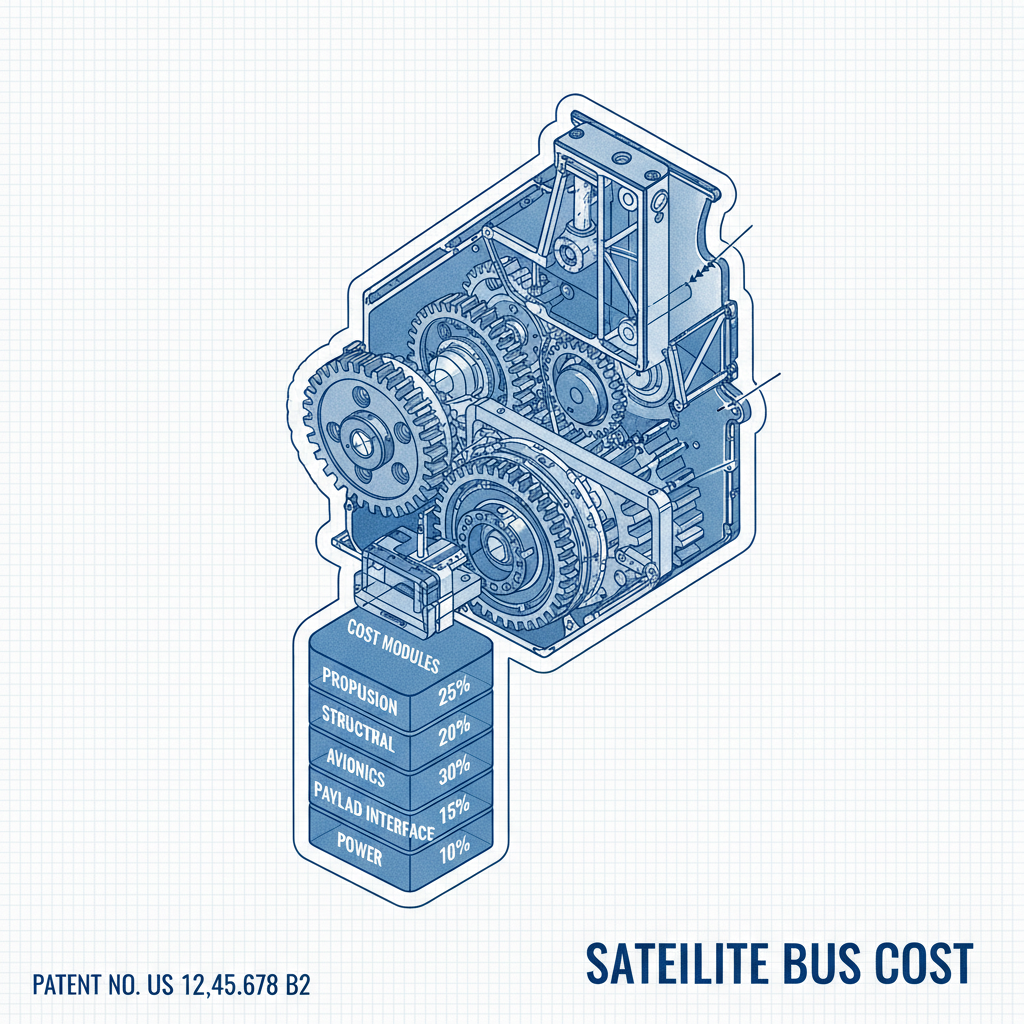
Several key components contribute significantly to the overall satellite bus cost. The first is the structure itself, built with lightweight yet durable materials like aluminum, carbon fiber, or composite materials, demanding precision engineering and testing. Next comes the propulsion system, which can range from simple chemical rockets to advanced electric propulsion systems, with varying costs and performance characteristics.
The power system, including solar panels, batteries, and power distribution units, is another substantial cost driver. The efficiency and reliability of these systems are paramount, and high-performance components come at a premium. Equally important is the thermal control system, vital for maintaining optimal operating temperatures in the harsh environment of space, adding further to the overall expense.
Finally, the command and data handling (C&DH) system, responsible for controlling the satellite’s functions and processing data, contributes a significant portion of the cost. Complex C&DH systems require sophisticated software and hardware, as well as extensive testing to ensure reliable operation. These components collectively determine the satellite’s capabilities and dictate the ultimate satellite bus cost.
Key Factors Influencing Cost
The satellite bus cost is impacted by a wide array of factors. The size and complexity of the satellite are primary drivers – larger satellites with more sophisticated payloads will inevitably be more expensive to build. The choice of materials also plays a critical role; higher-grade, lighter materials increase performance but add to the cost.
Manufacturing location and labor costs are another important consideration. Countries with lower labor costs may offer cost savings, but quality control and supply chain logistics need to be carefully managed. Furthermore, the level of customization required for the satellite bus influences the overall expense, with bespoke designs generally costing more than off-the-shelf solutions.
Satellite Bus Cost Breakdown by Method
Global Applications and Cost Implications
Satellite bus technology finds application across diverse fields, impacting cost considerations in each. In telecommunications, high-throughput satellites demand complex and expensive bus designs to support large bandwidth requirements. Earth observation satellites, used for environmental monitoring and disaster management, require robust and precise buses with advanced imaging capabilities, adding to their cost.
In remote industrial zones, satellite communication relies on cost-effective bus designs to provide reliable connectivity for operations. In post-disaster relief operations, rapid deployment of communication satellites hinges on minimizing bus cost to maximize the number of satellites available for emergency response. The specific application significantly influences the trade-offs between performance, features, and price.
Advantages of Optimized Satellite Bus Cost
Optimizing satellite bus cost delivers a multitude of benefits. Reduced costs translate directly into increased accessibility to space-based technologies, allowing more organizations and nations to participate in the space economy. Lower costs also stimulate innovation, encouraging the development of new satellite applications and services.
Improved financial viability enhances the sustainability of space programs, fostering long-term investment and growth. Beyond economic advantages, optimized satellite bus cost contributes to enhanced global connectivity, improved disaster response capabilities, and more effective environmental monitoring – ultimately improving the quality of life for people around the world.
Future Trends and Innovations in Cost Reduction
Several emerging trends promise to significantly reduce satellite bus cost. The increasing adoption of standardized satellite bus architectures and modular designs will enable economies of scale and streamline manufacturing processes. Advancements in electric propulsion systems, offering higher efficiency and lower fuel costs, are poised to become increasingly prevalent.
The use of artificial intelligence and machine learning for automated design and testing can further optimize efficiency and reduce development time. Furthermore, the growing emphasis on sustainability is driving the development of eco-friendly materials and processes, potentially lowering long-term costs associated with environmental compliance and disposal.
Digital transformation and automation will streamline operations, minimizing human error and reducing overall program expenses. The pursuit of these innovations represents a crucial step toward making space technologies more affordable and accessible for a wider range of applications.
FAQS
Several key factors contribute to satellite bus cost. These include the complexity of the mission, the required satellite lifespan, the choice of materials used in construction (such as lightweight alloys or composites), and the level of redundancy built into the systems to ensure reliability. Launch costs and stringent testing procedures also represent significant expenses.
Generally, larger satellites have substantially higher bus costs. This is due to the increased amount of materials required, the more complex engineering involved, and the need for more powerful and robust subsystems like power generation, thermal control, and propulsion. Scaling up a satellite bus isn't a linear process; costs often increase exponentially with size.
Launch costs represent a substantial portion of the overall satellite budget, often accounting for 20-50% of the total expense. The launch vehicle chosen, the orbit destination, and the satellite’s mass all influence the launch price. As launch technology evolves, with reusable rockets becoming more common, launch costs are gradually decreasing, but they remain a major consideration when assessing satellite bus cost.
Yes, increasingly, companies are adopting standardized satellite bus platforms, sometimes referred to as “satellite-as-a-service.” These pre-engineered platforms offer significant cost savings by leveraging economies of scale and reducing development time. Small satellite buses (CubeSats and SmallSats) also offer a cost-effective entry point into space, although they may have limited capabilities.
Employing COTS components can dramatically reduce satellite bus cost. These readily available parts are typically less expensive than custom-designed equivalents. However, it's crucial to carefully assess the reliability and radiation hardening of COTS components to ensure they meet the demanding requirements of the space environment. Trade-offs between cost and performance must be carefully considered.
Electric propulsion systems offer significant long-term cost savings compared to traditional chemical propulsion. While the initial investment in electric propulsion technology can be higher, the reduced fuel consumption and increased mission lifespan translate into lower overall operational costs. As the technology matures and becomes more widely adopted, its impact on reducing satellite bus cost will become increasingly pronounced.
Conclusion
In conclusion, satellite bus cost is a multifaceted issue with significant implications for the space industry and its ability to serve global needs. A deep understanding of the contributing factors, from materials selection and manufacturing techniques to launch options and system complexity, is essential for effective cost management. Optimizing these costs unlocks wider access to space-based technologies, fostering innovation, and addressing critical challenges.
Looking ahead, continued advancements in standardized architectures, electric propulsion, and automation hold the key to further reducing satellite bus cost and making space more accessible. By embracing these innovations, we can unlock the full potential of space to improve life on Earth and drive progress across a wide range of industries. For detailed information and cost analysis, visit our website: www.space-navi.com