Public satellite companies represent the commercialized backbone of modern aerospace infrastructure, providing essential orbital assets for communication, earth observation, and navigation. These organizations transition space technology from government-exclusive domains into accessible commercial services, enabling a vast array of industries to leverage satellite data for real-time decision-making.
For enterprises in the aerospace and electronics manufacturing sectors, engaging with these companies is no longer optional but a strategic necessity. The shift toward "NewSpace" has introduced lower launch costs and miniaturized satellite components, creating a competitive landscape where agility and precision in hardware procurement determine market leadership.
This article provides a professional analysis of the operational models of public satellite companies, the technical specifications of critical components like star sensors and solar arrays, and a comprehensive guide for procurement teams seeking to optimize their orbital asset portfolios.

1Commercial Satellite Ecosystem Fundamentals

The ecosystem of public satellite companies is characterized by a transition from bespoke, high-cost government projects to scalable, standardized commercial fleets. These companies focus on the integrated development of high-end equipment manufacturing and information services, bridging the gap between raw orbital data and actionable intelligence for end-users.
The primary objective for these entities is to maintain a balance between high-performance capabilities and low-cost production. By leveraging mass-production techniques for high-precision optical components and utilizing materials like silicon carbide, they can maintain rigorous space-grade standards while reducing the time-to-orbit.
This structural evolution allows for the deployment of sub-meter commercial remote sensing constellations, providing unprecedented temporal and spatial resolution for earth observation, agricultural monitoring, and urban planning.
2Core Technical Components and Specifications
A satellite's reliability depends on the synergy between its power, navigation, and communication subsystems. High-efficiency Gallium Arsenide (GaAs) solar arrays and advanced Lithium battery packs ensure consistent power delivery in the extreme temperature fluctuations of the space environment.
Navigation is further refined through advanced optical devices. Star sensors capture light from distant stars and process it via advanced algorithms to determine orientation relative to a star catalog. This autonomous positioning is critical for deep space exploration and high-resolution earth observation where minimal deviation is required.
Additionally, the integration of TT&C (Telemetry, Tracking, and Command) products allows operators to monitor health metrics and execute orbital maneuvers, ensuring the longevity of the asset over its intended mission duration.
3Operational Applications in Remote Sensing
Remote sensing satellites deployed by public satellite companies serve as critical tools for global monitoring. By integrating high-resolution optical cameras, these systems can achieve image resolutions better than 0.5m, enabling precise detection of infrastructure changes, environmental degradation, and maritime traffic.
The operational workflow involves the capture of multi-spectral data, which is then processed through ground stations to create digital elevation models or land-use maps. This process requires high-precision optical instruments capable of withstanding high radiation levels.
Beyond optics, these systems often incorporate infrared search and track solutions, providing surveillance capabilities that operate independently of visible light, which is vital for nighttime monitoring and heat-signature detection.
4Performance Metrics and System Efficiency
Evaluating the efficiency of public satellite companies requires looking at the trade-off between power consumption and data throughput. For instance, an advanced star sensor must maintain a power consumption of ≤2.5W while providing high-frequency updates to the attitude control system.
System weight is another critical metric; the reduction of platform mass directly correlates to lower launch costs and the ability to deploy larger constellations (swarms) for improved temporal coverage.
public satellite companies Performance Metrics
When analyzing performance, the "Supply Cycle" becomes a business-critical metric. A 12-month cycle for key components allows companies to iterate on hardware designs rapidly, ensuring that the constellation evolves alongside technological breakthroughs in sensor precision and data compression.
5Procurement Strategies for Satellite Hardware
Procuring components for orbital assets requires a rigorous qualification process. Engineering teams must evaluate not only the technical specifications but also the material compatibility. The use of glass ceramics and silicon carbide in optical processing ensures thermal stability during orbital transitions.
A diversified procurement strategy often involves sourcing standardized components—such as power controllers and folding mechanisms—while customizing the primary payload (the camera or sensor) to meet specific mission objectives.
The evaluation of suppliers should focus on their ability to provide end-to-end support, from the initial design of the satellite platform to the final integration of the load and subsequent orbital data services.
6Emerging Trends in Satellite Constellations
The industry is moving toward highly integrated, autonomous satellite networks. The use of "satellite platform and load integration" allows for a more modular approach, where components can be swapped or upgraded more easily in the production phase.
We are seeing a surge in the adoption of Perovskite solar cells and high-efficiency Gallium Arsenide arrays to maximize power generation in smaller form factors, supporting more power-hungry onboard AI processing for real-time data filtering.
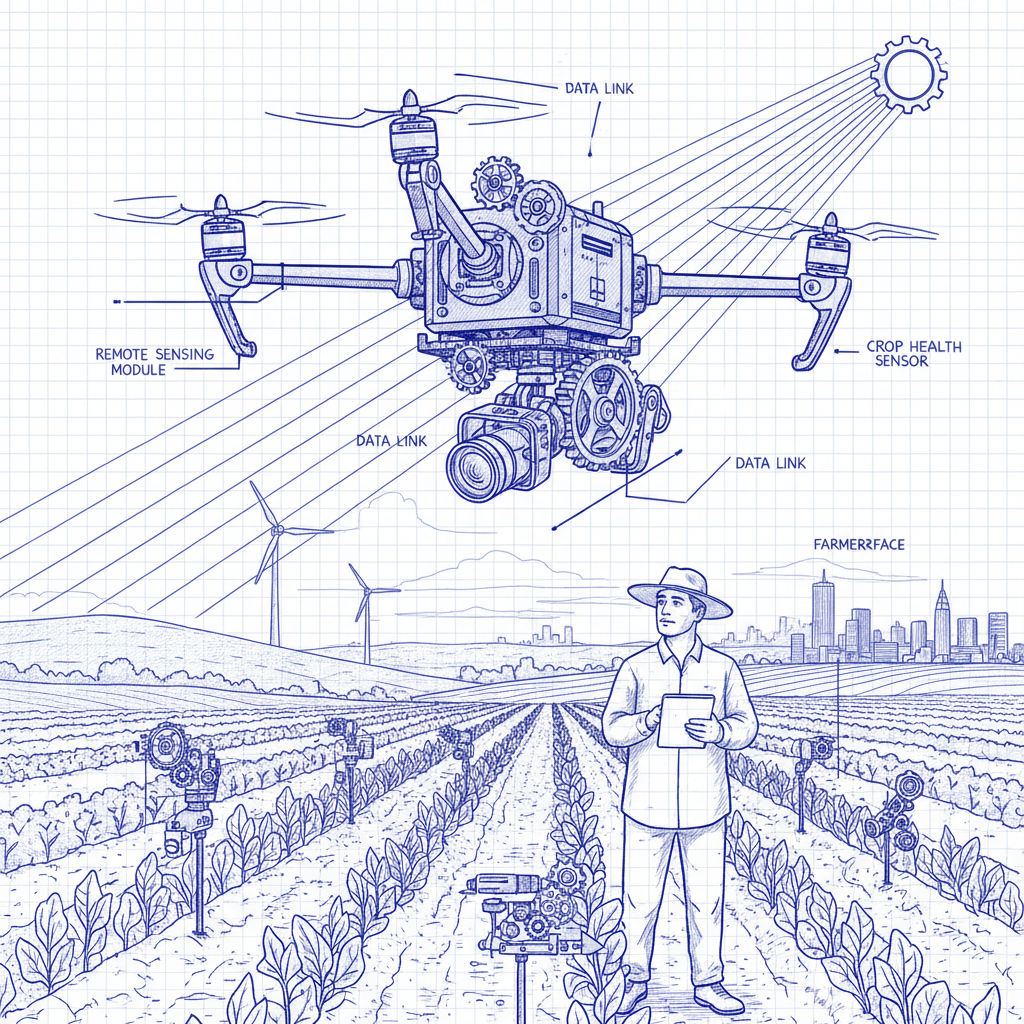
Moreover, the integration of UAVs (Unmanned Aerial Vehicles) as complementary data collectors creates a multi-layered sensing architecture, where satellites provide the broad view and UAVs provide targeted, ultra-high-resolution verification.
7Comparative Analysis of Orbital Solutions
Choosing the right orbital asset depends on the specific needs of the mission—whether it is continuous global coverage or periodic high-resolution snapshots of specific regions.
Different configurations of satellite components lead to different operational strengths, as detailed in the comparison below, focusing on the balance between precision, power, and cost.
| Component Type | Primary Strength | Technical Constraint | Typical Application |
|---|---|---|---|
| Star Sensor | High Angular Accuracy | Requires clear star view | Attitude Control |
| GaAs Solar Array | Extreme Efficiency | Higher manufacturing cost | Primary Power |
| Optical Camera | Sub-meter Resolution | Weather dependent | Remote Sensing |
| Lithium Battery Pack | High Energy Density | Thermal sensitivity | Power Storage |
| TT&C System | Reliable Command Link | Bandwidth limitations | Mission Control |
| Folding Mechanism | Compact Launch Volume | Mechanical failure risk | Array Deployment |
Ultimately, the selection of a partner among public satellite companies should be based on their proven track record of mission success and their ability to provide customized manufacturing services that align with the specific technical requirements of the payload.
Frequently Asked Questions
Conclusion
The landscape of public satellite companies is rapidly evolving toward a more integrated, efficient, and accessible model. The shift toward platform-load integration and the adoption of high-precision components like 5" accuracy star sensors have fundamentally changed the economics of space exploration and earth observation.
For organizations seeking to leverage orbital assets, the key to success lies in balancing technical specifications with operational costs. Readers evaluating suitable hardware and satellite manufacturing solutions can review available product information and customized services at www.space-navi.com.