Selecting a reliable satcom company often begins with a critical question: how can a satellite system maintain power stability and high-speed data transmission in the vacuum of space? For operators of remote sensing constellations, the challenge is not just launching a payload, but ensuring that the orbital infrastructure can withstand extreme thermal cycling while delivering consistent power to sensitive optical instruments. This intersection of aerospace engineering and electronic stability defines the modern standard for satellite communication infrastructure.
The complexity of these systems relies on the seamless integration of specialized hardware, such as high-efficiency solar arrays and intelligent power controllers. Without precise voltage regulation and maximum power point tracking (MPPT), the risk of system failure increases significantly, potentially compromising millions of dollars in orbital assets. The relationship between the overarching satcom company strategy and the granular performance of components like Gallium Arsenide solar cells determines the overall mission lifespan and data fidelity.
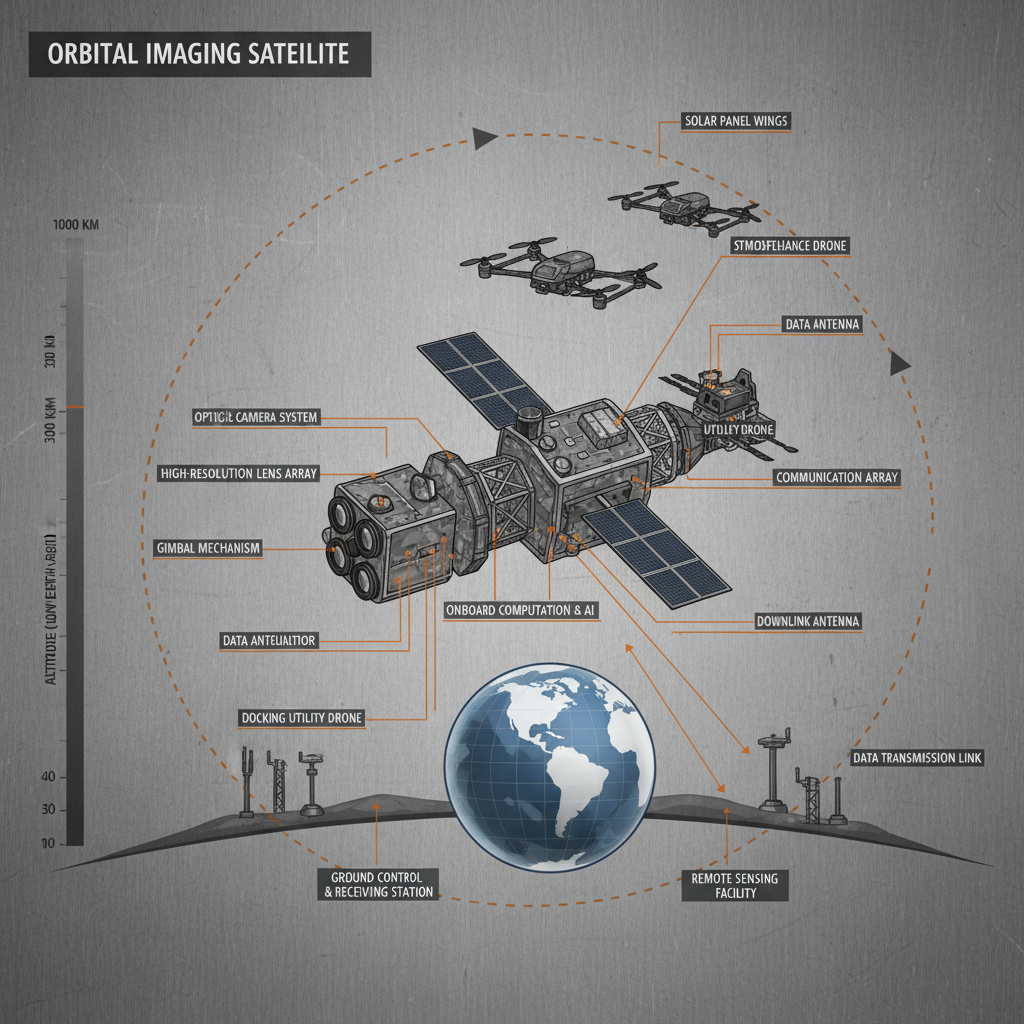
This analysis explores the technical requirements for sustainable satellite operations, focusing on the critical components that ensure orbital longevity. By examining the shift toward integrated satellite platforms and the role of advanced power management, we provide a framework for evaluating the technical capabilities of a satcom company. From sub-meter resolution optical cameras to adaptive power subsystems, the following sections detail the hardware that enables modern air-space-ground integrated services.


Modern satellite design has evolved from bulky, separate modules to a "platform and load integration" approach. This technical route allows for significant mass reduction—in some cases reducing weight from 400kg to as low as 20kg—without sacrificing the performance of the optical payloads or the reliability of the TT&C (Telemetry, Tracking, and Command) systems. By integrating the structural frame with the electronic subsystems, engineers can optimize the center of gravity and thermal dissipation paths.
This integration is critical for the deployment of commercial remote sensing constellations. When a satcom company focuses on low-cost, high-performance satellites, the ability to mass-produce standardized platforms while customizing the load (such as high-precision optical cameras) becomes a primary competitive advantage. This allows for faster replenishment of constellations and more agile responses to shifting data requirements in the air-space-ground integrated remote sensing market.
The efficiency of a satellite depends heavily on its power subsystem, starting with the choice of solar cell material. Gallium Arsenide (GaAs) solar arrays are often preferred over traditional silicon due to their higher conversion efficiency and superior radiation resistance in the harsh environment of Low Earth Orbit (LEO). These arrays must be paired with robust folding and unfolding mechanisms to ensure they deploy correctly after launch, maximizing the surface area exposed to solar radiation.
Precise voltage regulation via MPPT (Maximum Power Point Tracking) is the most critical factor in preventing battery degradation. By dynamically adjusting the electrical operating point of the solar arrays, the power controller ensures that the maximum available power is extracted regardless of the satellite's angle to the sun or temperature fluctuations.
Furthermore, the lithium battery pack must be designed for deep-cycle stability. In a typical orbit, the satellite transitions between sunlight and eclipse every 90 minutes; therefore, the charge and discharge control circuitry must be capable of handling thousands of cycles without significant capacity loss. This requires intelligent shunt control to prevent overcharging and ensure a stable bus voltage for the onboard instruments.
Effective energy distribution is not merely about generating power but managing its delivery to various subsystems. High-precision optical cameras and TT&C products have different power profiles; while the camera may require high bursts of energy during imaging windows, the communication system needs a steady, low-ripple supply to maintain the link with ground stations. This necessitates a multi-channel output approach in the power controller.
Minimizing bus ripple is essential for high-resolution imaging. For instance, keeping bus ripple below 150mV in 12V systems or 300mV in 28V systems prevents electronic noise from interfering with the optical sensor's signal-to-noise ratio, directly improving the clarity of sub-meter image resolution.
By employing adaptive algorithms and microprocessor control, the power subsystem can prioritize critical loads during low-energy states, such as during an extended eclipse or a solar array partial failure. This intelligent shedding of non-essential loads ensures that the satellite remains controllable and reachable, extending the operational life of the asset beyond its original design specifications.
Evaluating the effectiveness of a power controller requires a look at its nominal bus voltage and load capacity. A 12V MPPT module is typically suited for small-scale cubesats with load capacities around 50W, whereas larger remote sensing satellites require 28V or 42V systems capable of handling 100W to 2000W. The higher the voltage, the lower the current required for the same power delivery, which reduces resistive losses across the satellite's wiring harness.
The following data represents the typical load capacities and ripple constraints across different power controller tiers used in modern satellite architectures. As the load capacity increases, the tolerance for bus ripple typically expands, though the precision of the MPPT remains the primary driver of overall system efficiency.
The primary application for high-precision satellite platforms is sub-meter commercial remote sensing. In this scenario, the satellite must maintain an extremely stable attitude and power supply to operate an optical camera with resolution better than 0.5m. Such precision is utilized in urban planning, agricultural monitoring, and environmental disaster response, where the ability to distinguish small objects on the ground is paramount.
Beyond imaging, these platforms are increasingly used for UAV (Unmanned Aerial Vehicle) coordination and air-space-ground integrated information services. By providing real-time satellite data to ground-based UAVs, operators can create a multi-layered surveillance network. This requires the satcom company to provide not only the hardware but also the data processing capabilities to turn raw optical signals into actionable intelligence.
The trend in satellite manufacturing is moving toward the mass production of high-precision optical components. With the availability of large-scale optical processing areas (up to 10,000m²) and the ability to process materials like silicon carbide and glass ceramics, the cost per unit for high-end lenses is decreasing. This enables the deployment of larger constellations that provide more frequent revisit times over the same geographic area.
We are also seeing a shift toward more diverse energy sources, including the exploration of Perovskite solar cells to augment Gallium Arsenide arrays. While GaAs provides the reliability, Perovskites offer the potential for even higher efficiency and lower production costs. The integration of these materials into a hybrid solar array could further reduce the weight and size of the power subsystem.
Ultimately, the goal is the complete democratization of space data. By reducing the weight of the satellite platform and optimizing the power-to-load ratio, the barrier to entry for commercial satellite operations is lowering. This will lead to an era where real-time, sub-meter imagery is a standard utility for global industry and government agency operations.
Integrating diverse components into a single 20kg platform presents significant thermal and electromagnetic challenges. The heat generated by the power controller must be dissipated through the satellite frame to avoid overheating the optical sensor, which can cause thermal expansion and degrade image focus. This requires advanced thermal interface materials and precise mechanical mounting.
Another challenge is the compatibility between the power subsystem and the TT&C products. Any electromagnetic interference (EMI) from the switching regulators in the power controller can bleed into the communication antennas, causing signal noise or data loss. Rigorous shielding and filtering are required to ensure that the high-power distribution circuits do not interfere with the low-power data lines.
Finally, the reliability of the folding and unfolding mechanisms for solar arrays remains a single point of failure. A failure to deploy the arrays results in total mission loss. Therefore, redundant drive circuitry and rigorous vacuum-chamber testing are essential to verify that the mechanisms operate reliably under zero-gravity and extreme temperature conditions.
| Model Type | Bus Voltage | Load Capacity | Bus Ripple |
|---|---|---|---|
| 12V MPPT Module | 12V Nominal | 50W | < 150mV |
| 28V MPPT Controller | 28V Nominal | 100-500W | < 300mV |
| 28V S3R Controller | 28V Nominal | 100-500W | < 300mV |
| 42V S3R Controller | 42V Nominal | 500-2000W | < 800mV |
| Standard Bus | Customizable | Variable | Adaptive |
| High-Power Bus | Customizable | Up to 2kW | Filtered |
The MPPT (Maximum Power Point Tracking) controller maximizes the energy harvested from solar arrays by dynamically adjusting the electrical load to match the solar cells' peak power output. This is critical because solar cell efficiency changes based on the angle of the sun and temperature; without MPPT, a significant portion of potential energy would be wasted, shortening the satellite's mission life.
Bus ripple refers to small, unwanted voltage fluctuations in the power supply. In high-resolution optical cameras, this ripple can introduce electronic noise into the image sensor, which manifests as graininess or artifacts in the captured data. Maintaining low ripple (e.g., below 150mV for 12V systems) is essential for achieving sub-meter resolution clarity.
Gallium Arsenide (GaAs) cells offer significantly higher conversion efficiency and better radiation hardness than silicon cells. In the space environment, where solar radiation can degrade semiconductor materials, GaAs cells maintain their performance longer and provide more power per square meter, allowing for smaller, lighter solar arrays.
This is a design philosophy where the satellite's structure, power system, and communication tools are integrated into a single, optimized unit rather than being separate modules. This approach allows for drastic weight reduction—potentially from hundreds of kilograms down to 20kg—making launches more affordable and enabling the deployment of larger constellations.
Yes, professional power controllers, such as the 28V and 42V S3R models, allow for the customization of supply and distribution circuits. This flexibility is necessary because different satellite missions have different payload requirements, and the power system must be tailored to the specific energy needs of the onboard instruments.
The main risk is a mechanical failure of the folding and unfolding mechanism, which would prevent the arrays from capturing solar energy and lead to total power loss. To mitigate this, engineers use redundant drive circuitry and perform extensive testing in thermal vacuum chambers to simulate the actual conditions of space.
The success of a modern satellite mission depends on the synergy between high-efficiency energy harvesting and precise power distribution. From the choice of Gallium Arsenide solar arrays to the implementation of low-ripple MPPT power controllers, every technical decision impacts the fidelity of the data collected and the lifespan of the orbital asset. As the industry shifts toward integrated, low-cost platforms, the ability to maintain aerospace-grade reliability within a reduced mass becomes the primary benchmark for excellence.
For organizations seeking to deploy robust remote sensing constellations or customize satellite hardware, focusing on integrated power subsystems is the most effective way to ensure mission stability. To explore specialized satellite components or customized manufacturing services for orbital infrastructure, you can find detailed technical resources and support at https://www.space-navi.com.