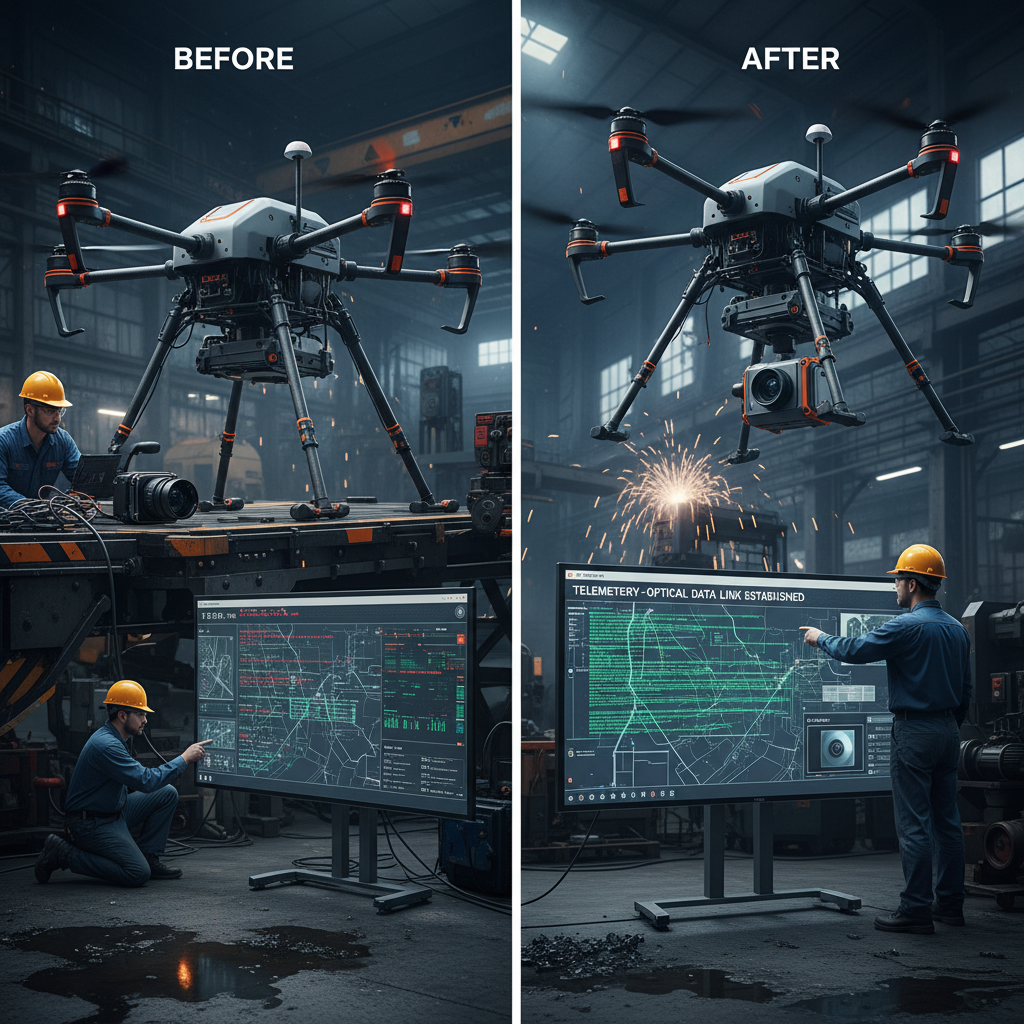
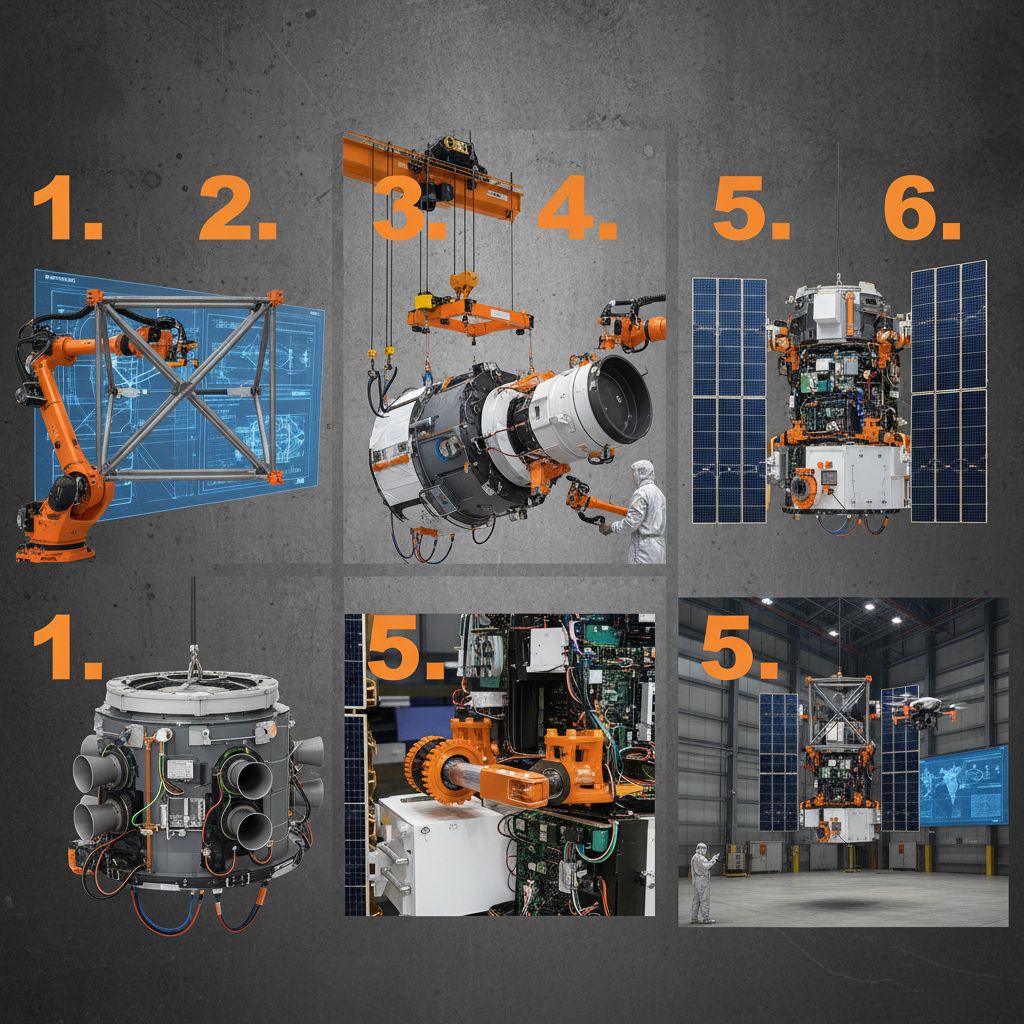
In the high-stakes arena of aerospace and satellite manufacturing, the ability to maintain peak operational efficiency through consistent system updates is not merely a convenience—it is a mission-critical requirement. As satellites and UAVs operate in some of the most hostile environments known to man, the software and firmware governing their Power Sub Systems and TT&C Products must evolve to counter unforeseen anomalies and optimize energy consumption.
Globally, the push toward "New Space" initiatives has led to an explosion of satellite constellations, where the cost of a physical hardware failure can reach millions of dollars. Consequently, remote system updates have become the primary lifeline for extending the lifespan of orbiting assets, allowing engineers to patch vulnerabilities, refine instrument calibration, and deploy new capabilities without needing to launch replacement hardware.
Understanding the mechanics of these updates allows manufacturers and operators to ensure maximum reliability across their fleet, from Gallium Arsenide Solar Arrays to complex Folding And Unfolding Mechanisms. By prioritizing a robust update framework, organizations can reduce downtime and ensure that their space-level components remain compatible with the ever-evolving standards of global communication and navigation networks.
The Critical Role of System Updates in Aerospace
In the realm of aerospace manufacturing, the stability of onboard software is as vital as the structural integrity of the chassis. Regular system updates ensure that Satellite Components and Power Controllers can adapt to the shifting thermal and radiation environments of low Earth orbit (LEO) and beyond. Without these updates, a minor logic error in a Folding And Unfolding Mechanism could lead to catastrophic deployment failure.
Furthermore, the integration of new communication protocols requires a seamless transition via software patches. By implementing systematic updates, manufacturers can ensure that their Antenna Products and TT&C Products remain synchronized with ground station upgrades, preventing signal loss and maintaining the high-fidelity data streams required for modern satellite data analysis.
Defining System Updates for Satellite Infrastructure
Within the context of aerospace engineering, system updates refer to the process of modifying the firmware, operating system, or application software of a space-borne asset. Unlike consumer electronics, these updates must be performed over extremely limited bandwidth and under strict power constraints, often utilizing highly encrypted telemetry links to prevent unauthorized access.
These updates are closely tied to the humanitarian and commercial needs of the modern era, such as enhancing the accuracy of Optical Cameras for disaster monitoring or optimizing the discharge cycles of a Lithium Battery Pack to extend mission longevity. By refining the logic that manages power distribution, updates can effectively "create" more energy for critical instruments.
Ultimately, a system update in this sector is a strategic tool for risk mitigation. It allows operators to implement "fail-safes" in real-time, ensuring that if a Space-Level Calcium-titanium-mineral Solar Cell degrades faster than expected, the Power Sub System can be reprogrammed to prioritize essential life-support or communication functions.
Core Components of a Robust Update Framework
The first pillar of effective system updates is redundancy and recovery. Before any new code is written to the primary flight computer, it is uploaded to a secondary "shadow" partition. This ensures that if the update fails or the system crashes during the reboot, the satellite can autonomously revert to the previous stable version, preventing the asset from becoming "space junk."
Scalability and Modularity are equally essential. Modern aerospace systems use a modular architecture where system updates can be targeted specifically at one component—such as the Gallium Arsenide Solar Arrays—without affecting the telemetry of the entire satellite. This reduces the risk of regression errors and minimizes the amount of data that must be transmitted over expensive satellite links.
Finally, security and authentication form the bedrock of the process. Given the strategic importance of satellites and UAVs, every update must be cryptographically signed and verified. This prevents malicious actors from injecting unauthorized code into the Power Controller or the Optical Camera, ensuring that the command-and-control chain remains inviolable.
Evaluating Update Performance Metrics
Measuring the success of system updates requires a combination of telemetry data and operational KPIs. We evaluate the "update efficiency" based on the time taken for deployment, the stability of the system post-patch, and the measurable improvement in component performance—such as the increased energy conversion rate in Calcium-titanium-mineral Solar Arrays.
By comparing different deployment methods, engineers can determine which update protocols offer the best balance between speed and safety. The following data illustrates the comparative ratings of various update methodologies used in modern aerospace assets.
Comparative Efficiency of Satellite System Updates
Global Applications in Space and UAV Operations
The practical application of system updates is most visible in the operation of global UAV fleets used for environmental monitoring and precision agriculture. In remote industrial zones, where physical access is impossible, over-the-air (OTA) updates allow for the instantaneous optimization of flight controllers and battery management systems, ensuring that UAVs can operate in extreme weather conditions without failure.
Similarly, in the context of international satellite cooperation, updates are used to synchronize data standards between different nations' ground stations. For example, in post-disaster relief operations, system updates can be pushed to Optical Cameras to enhance image resolution or change spectral bands, providing emergency responders with more accurate real-time intelligence on ground conditions.
Long-term Value and Strategic Advantages
The long-term value of a disciplined approach to system updates is primarily reflected in the drastic reduction of Total Cost of Ownership (TCO). By extending the operational life of a satellite by just two or three years through software optimization, an agency can save hundreds of millions of dollars in replacement launch costs.
Beyond the financial metrics, there is a profound emotional and logical angle: trust. Operators need absolute confidence that their Power Sub System will not fail during a critical maneuver. Regular, tested updates provide this peace of mind, ensuring that the hardware is always running the most secure and efficient logic available.
Moreover, the ability to update systems in orbit fosters a culture of continuous innovation. Manufacturers are no longer limited by the "frozen" state of technology at the time of launch; instead, they can evolve their products, turning a static piece of hardware into a dynamic platform that grows more capable over time.
Future Trends in Autonomous System Updates
Looking ahead, the trend is shifting toward AI-driven autonomous updates. Future satellites will not wait for a ground command to patch a bug; instead, onboard AI will monitor telemetry for anomalies and apply a pre-validated system update automatically. This will be crucial for deep-space missions where the communication lag makes real-time ground intervention impossible.
Digital transformation is also bringing "Digital Twins" into the fold. Before a system update is pushed to the actual satellite, it is run on a high-fidelity virtual replica on Earth. This allows engineers to simulate millions of edge-case scenarios, ensuring that the update will behave exactly as intended in the vacuum of space.
Additionally, the integration of green energy management will become a priority. Future updates will focus on "energy-aware" computing, where the system dynamically scales its performance based on the current output of the Calcium-titanium-mineral Solar Cell, maximizing efficiency and reducing the strain on the Lithium Battery Pack.
Comparative Analysis of Update Strategies Across Space Components
|
Component Category
|
Update Frequency
|
Risk Level
|
Primary Goal
|
| Power Controller |
Quarterly |
High |
Energy Optimization |
| Optical Camera |
Monthly |
Medium |
Image Processing |
| TT&C Products |
Bi-Annually |
Critical |
Comm Security |
| UAV Flight Logic |
Weekly |
Medium |
Stability/Navigation |
| Battery Management |
Semi-Annually |
High |
Cell Longevity |
| Folding Mechanism |
Rarely |
Extreme |
Mechanical Timing |
FAQS
Satellite updates face extreme constraints: very low bandwidth, high latency, and the inability to manually reset the device. A failed update on Earth can be fixed with a USB drive; a failed update in orbit can lead to the complete loss of a multi-million dollar asset. Therefore, aerospace updates require rigorous redundancy, delta-compression to save bandwidth, and autonomous fallback mechanisms to ensure the satellite remains reachable.
Yes. While the hardware remains the same, updates to the Power Sub System and Power Controllers can optimize the Maximum Power Point Tracking (MPPT) algorithms. By adjusting how the system handles voltage and current based on current solar radiation levels, updates can extract more usable energy from Calcium-titanium-mineral Solar Cells, effectively increasing the overall efficiency of the power system.
This is managed through "staged deployment" and "shadow partitioning." The update is first uploaded to a non-active memory bank. The system then performs a checksum verification. Only after the integrity is confirmed does the bootloader switch to the new version. If the system doesn't "check in" with ground control within a set timeframe post-update, a hardware watchdog timer triggers an automatic rollback to the previous stable version.
Yes, though it is high-risk. The motor controllers and timing sequences for folding mechanisms are software-defined. If telemetry suggests a mechanical hitch or unexpected resistance, engineers can push an update to adjust the torque limits or the timing of the unfolding sequence to prevent structural damage and ensure successful deployment.
Security is paramount. All updates are encrypted and signed using asymmetric cryptography. The satellite's onboard system verifies the digital signature against a stored public key before executing the update. This prevents "command injection" attacks where a malicious actor might try to hijack the satellite's Optical Camera or TT&C Products by mimicking a ground station update.
The frequency depends on the mission. High-utility assets like UAVs or LEO communication satellites may receive monthly updates to refine performance. Deep-space probes may only be updated once every few years. The general rule is to update when there is a measurable benefit in efficiency, a critical security patch, or a need to adapt to hardware degradation.
Conclusion
In conclusion, system updates represent the intersection of software agility and hardware endurance in the aerospace industry. From optimizing the output of Gallium Arsenide Solar Arrays to securing the telemetry of TT&C Products, the ability to evolve a system post-launch is the single most effective way to maximize mission ROI and ensure operational safety in the vacuum of space.
As we move toward an era of autonomous constellations and deep-space exploration, the sophistication of update frameworks will determine the success of our extraterrestrial ambitions. We encourage manufacturers and operators to invest in modular, secure, and AI-driven update protocols to future-proof their assets. For more industry-leading aerospace components and solutions, visit our website: www.space-navi.com