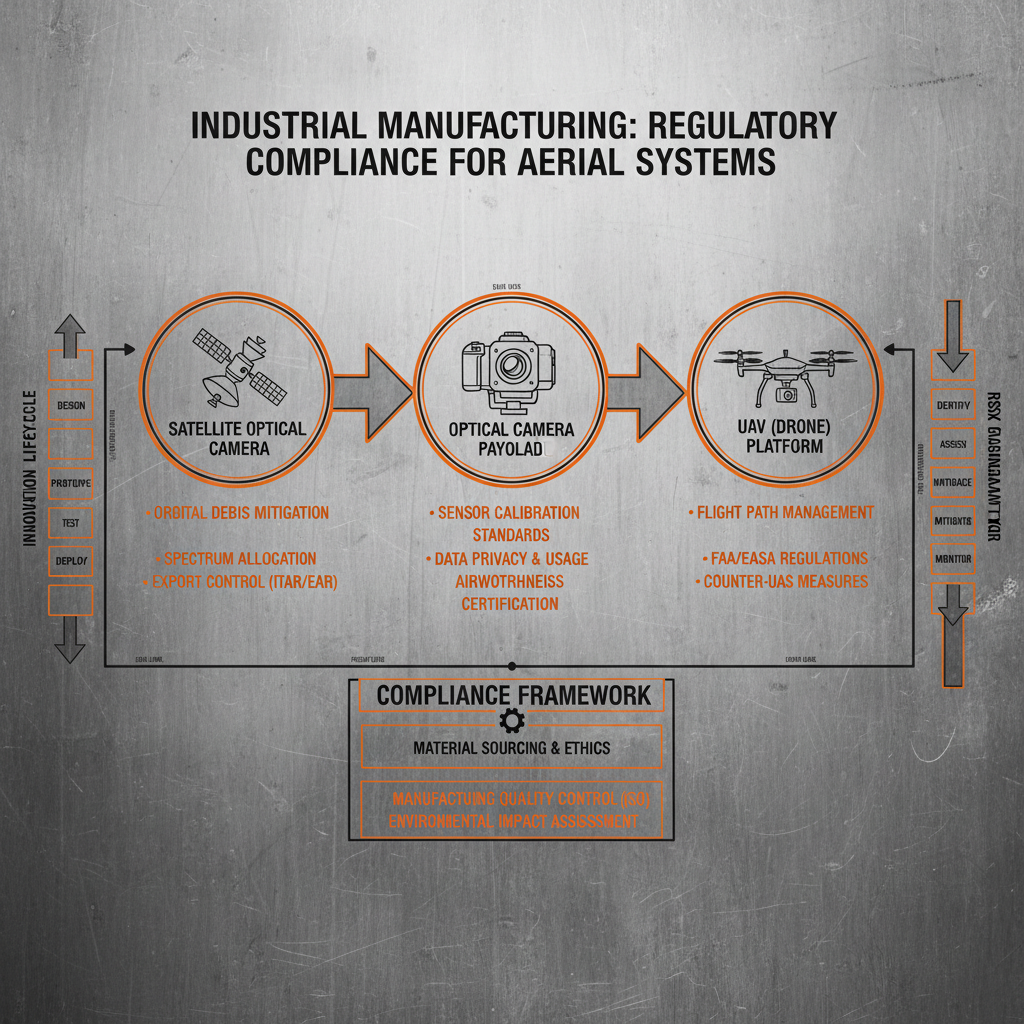
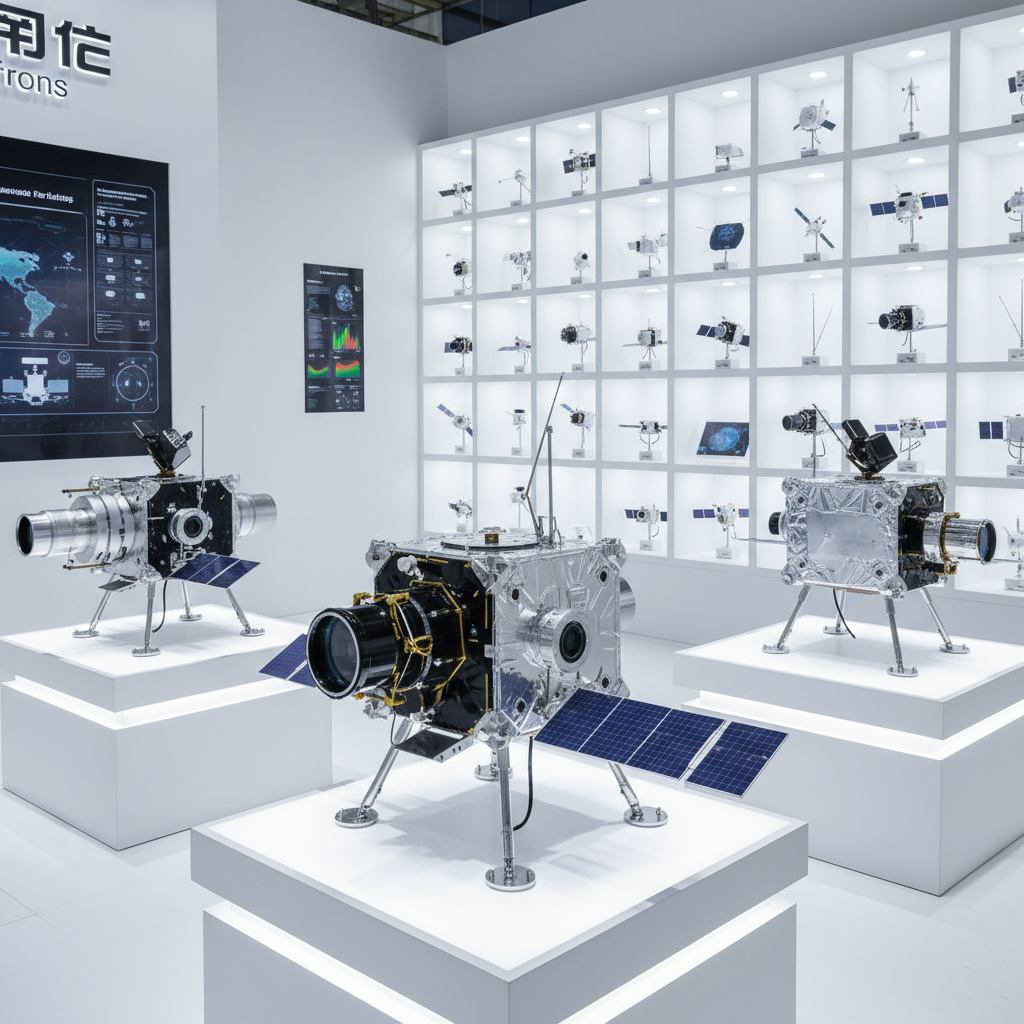
Navigating the complexities of aerospace manufacturing requires more than just engineering brilliance; it demands a rigorous adherence to compliance regulations to ensure mission success and orbital safety. In an industry where a single loose screw or an uncertified material can lead to catastrophic failure, these standards serve as the essential blueprint for reliability and risk mitigation across the global supply chain.
From the deployment of Gallium Arsenide Solar Arrays to the intricate calibration of TT&C Products, following established guidelines ensures that components can withstand the extreme thermal cycling and vacuum of space. Understanding these frameworks allows manufacturers to streamline their production processes, reduce costly rework, and gain the trust of international space agencies and private satellite operators.
Ultimately, the strategic integration of compliance regulations into the design phase transforms dry legal requirements into a competitive advantage. By prioritizing these standards, companies in the aerospace and electronic equipment sectors can accelerate their time-to-market while guaranteeing that their Satellite Components and Power Sub Systems meet the most stringent safety and performance benchmarks.
Global Significance of Aerospace Compliance Regulations
On a global scale, compliance regulations act as the universal language of quality. According to ISO and various international aerospace bodies, the standardization of parts—ranging from Lithium Battery Packs to Optical Cameras—reduces the probability of system failure by nearly 40% compared to non-standardized proprietary systems. This global alignment is crucial as satellite constellations become more complex and involve partnerships across multiple continents.
The challenge lies in the diverging requirements between different jurisdictions, such as the differences between ESA (European Space Agency) and NASA standards. For manufacturers of UAVs and Satellite Data systems, navigating these overlapping mandates is not merely a legal obligation but a critical operational necessity to prevent costly delays in launch schedules and ensure the longevity of assets in Low Earth Orbit (LEO).
Defining Compliance Regulations in Satellite Manufacturing
In the context of the aerospace and electronic equipment industry, compliance regulations are a set of codified technical standards, legal mandates, and safety protocols that govern the design, production, and testing of space-grade hardware. Unlike general commercial electronics, these regulations focus on "zero-fail" environments, addressing specific threats such as ionizing radiation, vacuum outgassing, and extreme thermal fluctuations.
These regulations bridge the gap between theoretical engineering and practical reliability. For instance, when developing a Power Controller or a Folding and Unfolding Mechanism, compliance ensures that every material used is compatible with the space environment and will not contaminate sensitive Optical Cameras or other instrument equipment through the release of volatile organic compounds.
Essentially, these frameworks transform complex safety requirements into actionable checklists. By adhering to these rules, manufacturers can guarantee that their Space-Level Calcium-titanium-mineral Solar Cells and other critical components will operate predictably for their intended mission lifespan, providing a layer of institutional trust between the vendor and the end-user.
Core Components of Regulatory Frameworks
One of the primary pillars of compliance regulations is material traceability. Every single gram of material used in a Satellite Component must be documented from its origin to its final installation. This ensures that if a defect is found in a batch of Gallium Arsenide, the manufacturer can immediately identify every satellite affected by that specific lot.
Environmental Stress Screening (ESS) represents the second critical component. This involves subjecting components, such as Lithium Battery Packs and Power Sub Systems, to rigorous vibration, thermal shock, and vacuum tests. Compliance here is not optional; it is the only way to verify that a product can survive the violent ascent of a launch vehicle and the harshness of the void.
Finally, documentation and quality assurance (QA) processes tie everything together. Detailed reporting on assembly procedures, technician certifications, and testing results forms the "Compliance Package." This package is often more valuable than the hardware itself during the procurement phase, as it proves that the product was built to the exact specifications required by international law and safety standards.
Practical Applications Across Space Hardware
The application of these standards varies depending on the component's function. For Antenna Products and TT&C Products, compliance focuses heavily on electromagnetic compatibility (EMC) to prevent signal interference. In contrast, for Calcium-titanium-mineral Solar Arrays, the focus shifts toward radiation hardening and efficiency degradation over time, ensuring the power supply remains stable for decades.
Real-world scenarios, such as the deployment of emergency communication satellites during global disasters, highlight the importance of these regulations. When a UAV or a small-sat is deployed rapidly, the pre-existing compliance of its components ensures that it integrates seamlessly with existing ground stations and does not interfere with other critical orbital assets.
Effectiveness of Compliance Regulations by Component Category
Long-Term Value of Standardized Certification
The long-term value of strictly adhering to compliance regulations extends far beyond avoiding fines. It builds an institutional legacy of reliability. When a manufacturer is known for consistent certification of its Power Sub Systems and Satellite Components, they reduce the insurance premiums for the satellite operator and increase the overall valuation of the mission.
From a sustainability perspective, standardized components enable easier decommissioning and space debris mitigation. By following end-of-life compliance rules, companies ensure that their satellites do not become hazards in orbit, fostering a sustainable space economy that protects the orbital environment for future generations of explorers and researchers.
Future Trends in Digital Compliance
The aerospace industry is currently shifting toward "Digital Compliance," where traditional paper trails are replaced by blockchain-enabled traceability. This innovation allows for the real-time verification of compliance regulations across a global supply chain, ensuring that a component's certification is immutable and instantly accessible to all stakeholders from the factory floor to the launch pad.
Furthermore, the integration of AI-driven predictive maintenance is redefining how we view compliance. Instead of static periodic checks, "Live Compliance" monitors the health of components like Lithium Battery Packs in real-time, alerting operators if a part begins to drift from its certified performance parameters, thereby preventing failure before it occurs.
Green energy mandates are also beginning to influence the sector. We are seeing new regulations focused on the "carbon footprint of launch" and the use of recyclable materials in Satellite Components, pushing the industry toward a more ecological approach to space exploration without compromising the rigorous safety standards already in place.
Overcoming Common Implementation Challenges
Many small-to-medium enterprises (SMEs) struggle with the sheer volume of compliance regulations, often viewing them as a bureaucratic hurdle rather than a quality tool. The initial cost of certification for a new Optical Camera or Power Controller can be prohibitive, leading some to under-invest in the necessary testing infrastructure.
The solution lies in the adoption of modular compliance frameworks. By designing components that meet the "highest common denominator" of international standards, manufacturers can create products that are globally compliant from the start, rather than redesigning them for every specific client or agency.
Additionally, fostering a "culture of compliance" within the engineering team is vital. When technicians understand the why behind the regulation—such as how a specific cleaning protocol prevents the fogging of a lens in space—they are more likely to adhere to the rules strictly, reducing the risk of human error during the assembly of complex Satellite Components.
Comparison of Compliance Implementation Across Product Categories
|
Product Category
|
Primary Regulation Focus
|
Certification Complexity
|
Risk Level if Non-Compliant
|
| Solar Arrays |
Radiation Resistance |
High |
Critical (Power Loss) |
| Battery Packs |
Thermal Stability |
Very High |
Extreme (Explosion) |
| Optical Cameras |
Outgassing/Cleanliness |
Medium |
High (Image Blur) |
| TT&C Products |
Frequency Allocation |
Medium |
High (Loss of Control) |
| Folding Mechanisms |
Mechanical Tolerance |
High |
Critical (Deployment Fail) |
| Satellite Data Sys |
Encryption Standards |
Medium |
Medium (Data Breach) |
FAQS
Space hardware operates in an environment where repair is virtually impossible. While a failed capacitor on a motherboard on Earth can be replaced in minutes, a similar failure in a Satellite Component can end a billion-dollar mission. Therefore, compliance regulations focus on extreme redundancy, radiation hardening, and rigorous stress testing to ensure "first-time-right" reliability.
You must adhere to specific standards such as NASA-STD or ECSS, which involve vacuum stability testing, thermal cycling, and strict material purity checks. It is recommended to use a certified third-party testing facility to validate that the battery pack can handle the acceleration forces of launch and the thermal extremes of orbit without degassing or overheating.
Yes, while there is significant overlap, different agencies have unique requirements for documentation and specific testing margins. For example, one agency may require a higher safety factor for mechanical loads in Folding Mechanisms. To mitigate this, manufacturers often design to the strictest available standard to ensure cross-agency compatibility.
Outgassing is the release of gas that was trapped in a material. In a vacuum, these gases can condense on cold surfaces, such as the lenses of an Optical Camera or sensitive mirrors, ruining the instrument. Compliance regulations mandate the use of low-outgassing materials (often verified via ASTM E595) to ensure the spacecraft remains clean internally.
Audits should be performed at every major milestone: after the Critical Design Review (CDR), during the production of the first flight model, and before final shipping. Continuous monitoring and periodic internal audits help ensure that the manufacturing process has not drifted from the certified baseline.
While traditional paper logs are still legally acceptable, digital traceability is rapidly becoming the industry expectation. Most top-tier aerospace firms now require digital twins or blockchain logs for critical components to ensure that the history of a part—from raw ore to finished Satellite Component—is transparent and unalterable.
Conclusion
In the high-stakes realm of aerospace and satellite manufacturing, compliance regulations are not merely obstacles; they are the foundation of safety and success. By integrating rigorous standards into every aspect of production—from the selection of Gallium Arsenide for solar cells to the final testing of power controllers—manufacturers can eliminate catastrophic risks and ensure the longevity of their assets in the harshest environment known to man.
As we move toward a new era of commercial space exploration and mega-constellations, the commitment to these standards will define the leaders of the industry. We encourage all manufacturers and engineers to view compliance as a continuous journey of improvement rather than a one-time certification. To learn more about high-reliability space components and our commitment to global standards, visit our website: www.space-navi.com.