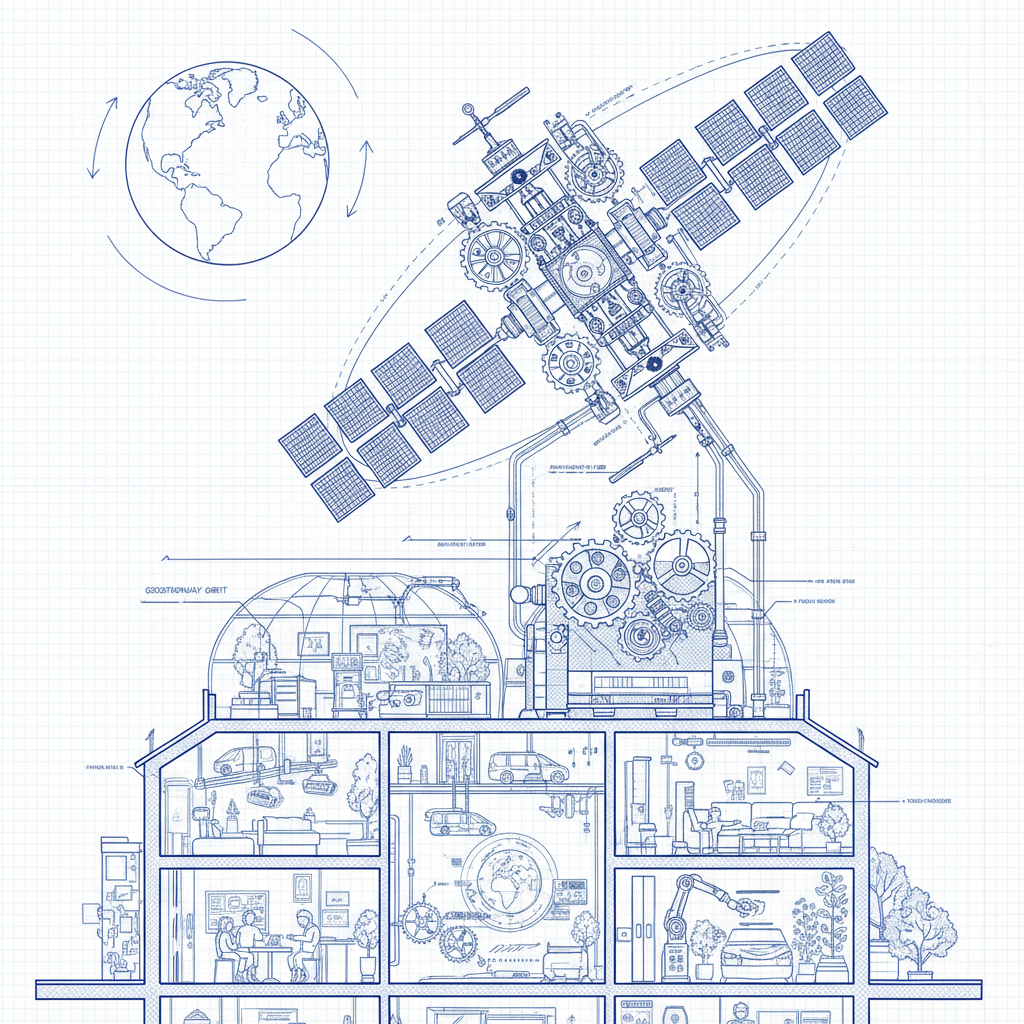
The development and deployment of robust and adaptable infrastructure are paramount in today's interconnected world. `platform satellite` solutions represent a significant leap forward in achieving this, offering scalable and rapidly deployable infrastructure for a multitude of applications. These solutions leverage innovative engineering and materials science to deliver resilient and cost-effective structures that address critical needs across diverse sectors, from disaster relief to remote industrial operations. Understanding the principles behind `platform satellite` is crucial for organizations seeking efficient and sustainable infrastructure solutions.
Globally, there is an increasing demand for infrastructure capable of responding swiftly to changing circumstances. Climate change, natural disasters, and geopolitical instability all contribute to a need for adaptable and resilient systems. The `platform satellite` approach directly addresses these challenges by providing a flexible alternative to traditional construction methods. This innovative strategy isn't just a technological advancement; it’s a fundamental shift in how we approach infrastructure development, allowing for faster response times and reduced logistical complexities.
The benefits extend beyond rapid deployment; they encompass long-term sustainability, reduced environmental impact, and improved accessibility. As organizations grapple with increasingly complex challenges, the principles of `platform satellite` will become increasingly important in facilitating effective and efficient solutions worldwide.
The Core Principles of platform satellite
At its heart, the concept of `platform satellite` centers around modularity and prefabrication. Rather than constructing infrastructure on-site from raw materials, these systems utilize pre-engineered components assembled in a controlled environment. This approach significantly reduces construction time, minimizes waste, and enhances quality control. The core design principles emphasize scalability, allowing for easy expansion or reconfiguration to meet evolving needs.
These systems aren’t limited to basic shelter; the inherent adaptability allows for complex configurations. From medical facilities and command centers to housing units and industrial workshops, the scope of `platform satellite` is remarkably versatile. This adaptability is critical for responding effectively to a wide range of challenges, particularly those encountered in remote or disaster-affected regions.
Global Relevance and Industry Context
The need for rapid and scalable infrastructure solutions is particularly acute in regions prone to natural disasters. According to the UN, the number of climate-related disasters has increased dramatically in recent decades, resulting in billions of dollars in damage and displacement. `platform satellite` provides a crucial response capability, enabling quick deployment of essential services and shelter in affected areas. Its adaptability also makes it invaluable in humanitarian crises, offering a dignified and safe environment for vulnerable populations.
Beyond disaster relief, `platform satellite` finds increasing application in industries such as mining, oil and gas, and construction, where remote site operations demand rapid infrastructure deployment. The World Bank highlights the infrastructure deficit in developing nations as a major impediment to economic growth. `platform satellite` addresses this gap by providing cost-effective and rapidly deployable infrastructure, facilitating investment and development in underserved areas.
The ISO standards for modular construction are also driving increased adoption. These standards ensure quality, safety, and interoperability, further establishing `platform satellite` as a reliable and sustainable infrastructure solution. The emphasis on prefabrication aligns with global sustainability goals, reducing construction waste and minimizing environmental impact.
Defining platform satellite: A Modern Solution
`platform satellite` can be simply defined as a rapidly deployable, modular infrastructure system built off-site and transported to the point of need. Unlike traditional construction, which is often time-consuming and resource-intensive, `platform satellite` leverages pre-engineered components and efficient assembly techniques. This approach results in significantly faster deployment times and reduced construction costs.
Its connection to modern industry stems from the increasing demand for agile and adaptable infrastructure solutions. Companies operating in dynamic environments need infrastructure that can be quickly deployed, reconfigured, and scaled to meet changing needs. `platform satellite` provides this flexibility, enabling organizations to respond effectively to market opportunities and operational challenges. This is especially relevant in scenarios requiring temporary or remote installations.
Furthermore, `platform satellite` aligns directly with humanitarian needs by providing immediate shelter, medical facilities, and essential services in disaster-stricken areas. Its modular nature allows for customized configurations to address specific needs, offering a dignified and sustainable solution for vulnerable populations. The efficiency and speed of deployment are invaluable in critical situations where time is of the essence.
Key Factors Driving platform satellite Effectiveness
Several core components contribute to the effectiveness of `platform satellite` solutions. Durability is paramount, ensuring structures can withstand harsh environmental conditions and provide long-term stability. High-quality materials and robust engineering designs are essential for achieving this.
Scalability is another key factor. The modular nature allows for easy expansion or reconfiguration to accommodate changing needs. Cost Efficiency is achieved through prefabrication and reduced on-site labor, resulting in lower overall construction costs. Portability simplifies transportation and deployment, especially to remote or difficult-to-access locations.
Performance Metrics of Various platform satellite Methods
Real-World Applications of platform satellite
`platform satellite` solutions are increasingly deployed in post-disaster relief operations, providing immediate shelter, medical facilities, and logistical support to affected communities. In remote industrial zones, such as mining camps or oil and gas facilities, these systems offer rapid and cost-effective accommodation and workspace solutions.
They are also utilized in humanitarian settings, offering dignified and sustainable housing for refugees and internally displaced persons. Furthermore, `platform satellite` plays a crucial role in rapid infrastructure deployment for temporary events, festivals, and emergency response exercises.
The Long-Term Value Proposition of platform satellite
The tangible benefits of `platform satellite` are numerous, including reduced construction costs, faster deployment times, and minimized environmental impact. From a sustainability perspective, the reduced waste associated with prefabrication and the potential for material reuse contribute to a circular economy. Socially, these solutions provide safe, dignified, and accessible infrastructure for vulnerable populations.
Beyond the practical advantages, `platform satellite` fosters innovation and trust. The speed and efficiency of deployment enhance operational resilience, while the quality and durability of the structures inspire confidence. The ability to adapt to changing needs ensures long-term value and reduces the risk of obsolescence.
Future Trends and Innovations in platform satellite
Several exciting trends are shaping the future of `platform satellite`. The integration of green energy solutions, such as solar panels and rainwater harvesting systems, is enhancing the sustainability of these systems. Digital transformation, including the use of Building Information Modeling (BIM) and smart sensors, is optimizing design, construction, and operation.
Automation and robotics are streamlining assembly processes, further reducing costs and improving efficiency. Materials science advancements, such as the development of lightweight and high-strength composites, are enhancing the performance and durability of `platform satellite` structures. These innovations are paving the way for even more sustainable, resilient, and adaptable infrastructure solutions.
Advancements in 3D printing and modular construction techniques will further refine and enhance `platform satellite` capabilities, opening new avenues for customization and rapid prototyping. The development of standardized connection systems will also improve interoperability and simplify integration with existing infrastructure.
FAQS
Compared to conventional construction, `platform satellite` offers significantly faster deployment times, reduced costs due to prefabrication, minimized environmental impact from waste reduction, and greater flexibility in adapting to changing needs. The controlled factory environment ensures higher quality control and reduces on-site disruptions. This makes it an ideal solution for urgent infrastructure demands, remote locations, or scenarios requiring rapid scalability.
The durability of `platform satellite` structures depends on the materials used and the specific design. However, utilizing high-quality, weather-resistant materials and robust engineering principles, they can achieve a lifespan comparable to conventionally built structures – often exceeding 20-30 years with proper maintenance. Many designs incorporate features to withstand extreme weather conditions, including wind, snow, and seismic activity.
Yes, `platform satellite` can be very cost-effective, especially when considering the total lifecycle costs. While the initial investment may be similar to traditional construction, the faster deployment, reduced labor costs, and minimized waste contribute to significant savings over time. The modular design also allows for easy expansion or repurposing, maximizing the return on investment.
Transporting `platform satellite` units typically involves standard shipping containers or flatbed trucks, making logistics relatively straightforward. The main challenge lies in ensuring proper site preparation and coordination of assembly teams. However, the modular nature simplifies the process, and minimal on-site construction expertise is required. Careful planning and efficient logistics management are crucial for successful deployment.
Absolutely. One of the key advantages of `platform satellite` is its high degree of customization. The modular design allows for flexible configurations to meet specific needs, including size, layout, and functionality. Internal finishes, insulation, and utilities can all be tailored to suit the intended application. This adaptability makes `platform satellite` a versatile solution for a wide range of projects.
`platform satellite` solutions inherently promote sustainability by reducing construction waste, minimizing on-site disruption, and utilizing materials efficiently. The prefabrication process allows for better control over material usage and waste management. Increasingly, manufacturers are incorporating sustainable materials and renewable energy technologies, like solar panels, to further enhance the environmental performance of these structures.
Conclusion
In conclusion, `platform satellite` represents a transformative approach to infrastructure development, offering a compelling combination of speed, cost-effectiveness, scalability, and sustainability. From disaster relief and remote industrial operations to humanitarian aid and temporary events, its applications are diverse and far-reaching. By embracing modularity, prefabrication, and innovative materials, `platform satellite` is poised to play an increasingly significant role in addressing the world’s growing infrastructure challenges.
Looking ahead, continued advancements in materials science, automation, and digital technologies will further enhance the capabilities and affordability of `platform satellite` solutions. Investing in research and development, promoting industry standards, and fostering collaboration between stakeholders are essential for realizing the full potential of this innovative approach. Visit our website at www.space-navi.com to learn more about how `platform satellite` can benefit your organization.