Satellite networking is rapidly becoming a cornerstone of modern communication, offering connectivity to areas previously unreachable by traditional terrestrial infrastructure. This technology transcends geographical limitations, enabling crucial services in remote regions, disaster zones, and increasingly, in everyday applications like internet access and data transfer. Understanding what is satellite in networking is vital for anyone involved in telecommunications, emergency response, or simply navigating an increasingly interconnected world.
Globally, the demand for robust and reliable communication is soaring, driven by factors like increasing mobile device usage, the rise of the Internet of Things (IoT), and the need for resilient infrastructure. According to the ITU (International Telecommunication Union), over 5.3 billion people are now using the internet, yet a significant portion of the global population – particularly in rural areas – remains unconnected. Satellite technology is uniquely positioned to bridge this digital divide.
The core benefit of understanding what is satellite in networking lies in its ability to provide ubiquitous coverage, independent of ground-based networks. This opens doors to innovation in areas such as precision agriculture, remote healthcare, and seamless connectivity for maritime and aviation industries, solidifying its position as a critical enabler of global progress.

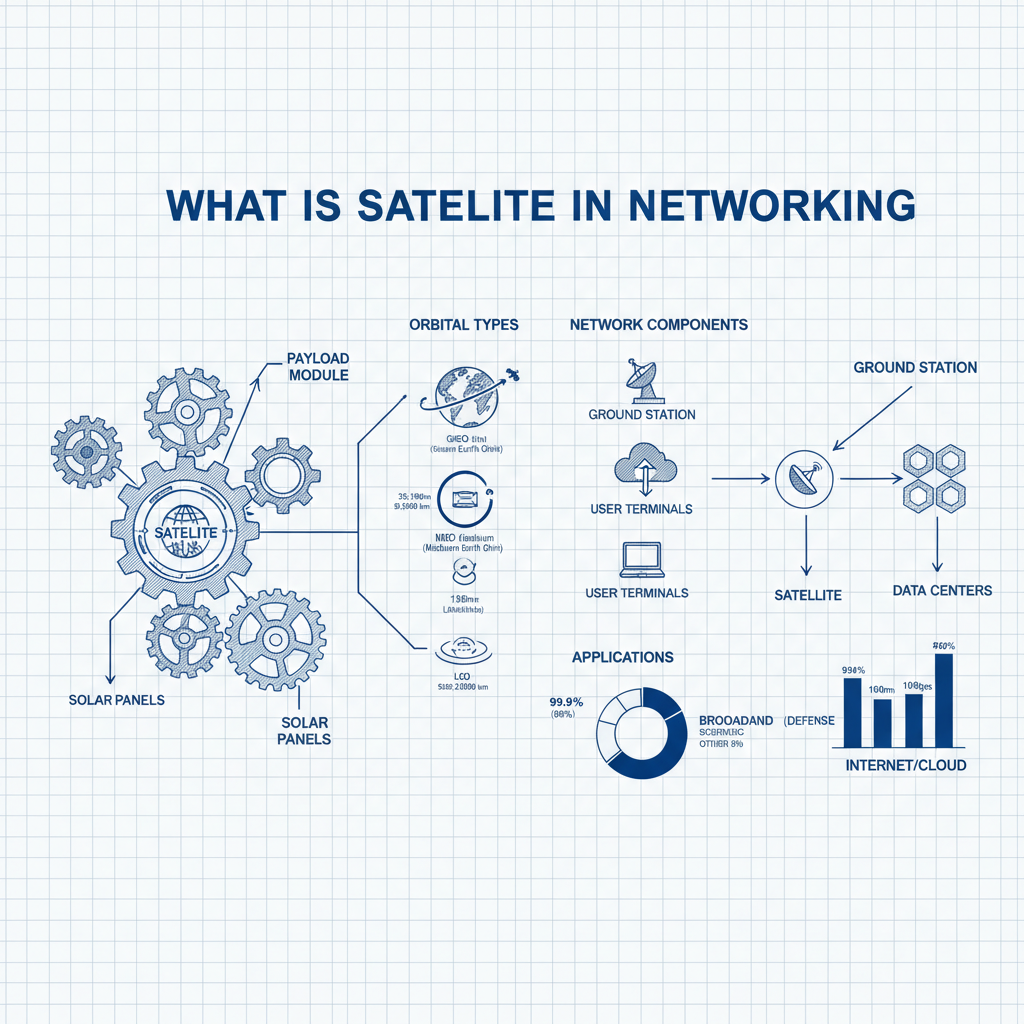
At its core, what is satellite in networking involves utilizing orbiting satellites to relay communication signals between different points on Earth. Unlike traditional networks that rely on physical cables and ground-based towers, satellite communication provides a wide area coverage, making it ideal for remote and inaccessible locations. This capability drastically expands communication possibilities across the globe.
The increasing sophistication of satellite technology is driving its adoption across numerous sectors. From providing internet access to ships at sea, to enabling real-time data transmission from oil rigs, to supporting disaster relief efforts, the applications of satellite networks are vast and continually evolving. The current trends point towards even more widespread usage with the emergence of Low Earth Orbit (LEO) satellite constellations.
LEO satellites orbit closest to Earth (500-2000km), offering low latency but requiring more satellites for global coverage. MEO (2000-35,786km) provide a balance between coverage and latency, while GEO (35,786km) offer wide coverage with a single satellite, but have higher latency due to the distance. These differences impact cost, complexity, and suitability for different applications when considering what is satellite in networking.
Weather, especially heavy rain and snow, can attenuate satellite signals, leading to signal degradation or outages. This is due to absorption and scattering of radio waves by atmospheric particles. Frequency bands and mitigation techniques like adaptive coding and modulation are used to minimize weather-related interference in what is satellite in networking systems.
Generally, fiber optic internet offers significantly higher speeds and lower latency than satellite internet. However, advancements in LEO satellite technology are closing the gap. New LEO constellations are aiming to deliver speeds comparable to terrestrial broadband, although latency can still be higher than fiber in some cases. The performance of what is satellite in networking is rapidly improving.
Ground stations (Earth stations) act as the interface between the satellite network and end-users. They transmit signals to the satellite (uplink) and receive signals from the satellite (downlink). They also handle signal processing, network management, and data routing within the what is satellite in networking infrastructure.
Satellite communication can be vulnerable to interference and interception, but several security measures can be implemented. These include encryption, spread spectrum techniques, and robust authentication protocols. Ongoing research focuses on developing even more secure satellite communication systems to protect sensitive data and prevent unauthorized access in the realm of what is satellite in networking.
Operating a satellite network requires obtaining licenses from national and international regulatory bodies, such as the ITU and the FCC. These licenses govern spectrum allocation, orbital slots, and network operation. Compliance with regulations is crucial to avoid interference and ensure responsible use of the shared space resource when deploying what is satellite in networking.
In conclusion, what is satellite in networking represents a transformative technology, offering ubiquitous connectivity, resilience, and numerous benefits across a wide range of industries and applications. From bridging the digital divide to supporting critical infrastructure and disaster relief, satellite networks are playing an increasingly vital role in shaping our interconnected world. Understanding its core components, advantages, and future trends is paramount for navigating this evolving landscape.
Looking ahead, continued innovation in satellite technology, coupled with supportive policies and collaborative efforts, will unlock even greater potential. By embracing these advancements, we can harness the power of satellite networks to create a more connected, resilient, and equitable future for all. Visit our website at www.space-navi.com to learn more and explore the possibilities.