Exploring Ocean Health with Chlorophyll Satellite Data and its Diverse Applications
Understanding Chlorophyll Satellite Data and its Applications
Chlorophyll satellite data plays a crucial role in monitoring ocean health and understanding global ecosystems. By measuring the concentration of chlorophyll-a, a pigment found in phytoplankton, scientists can assess primary productivity, track algal blooms, and monitor changes in marine environments. This data is invaluable for a wide range of applications, from fisheries management to climate change research. Space-navi.com provides access to and analysis of this vital information, supporting informed decision-making for a sustainable future. Understanding and utilizing this data is becoming increasingly important as we face growing environmental challenges.

What is Chlorophyll and Why Monitor it from Space?
Chlorophyll-a is the primary photosynthetic pigment in phytoplankton, microscopic plant-like organisms that form the base of the marine food web. The amount of chlorophyll present is directly related to the abundance of phytoplankton. Monitoring chlorophyll concentrations from space offers a synoptic view – a broad, large-scale perspective – that is impossible to achieve with traditional ship-based measurements. Satellites equipped with ocean color sensors detect the wavelengths of light absorbed and reflected by water, allowing scientists to estimate chlorophyll-a concentrations. This allows for consistent, long-term monitoring of ocean productivity globally. Space-navi.com's expertise in processing this data makes it accessible and useful for various applications.
Key Benefit: Satellite monitoring provides a comprehensive and continuous view of ocean chlorophyll-a concentrations, enabling large-scale assessments of marine productivity and environmental changes.
Key Satellites and Sensors Used for Chlorophyll Data Collection
Several satellite missions are dedicated to monitoring ocean color and collecting chlorophyll data. Some prominent examples include: MODIS (Moderate Resolution Imaging Spectroradiometer) on the Terra and Aqua satellites, VIIRS (Visible Infrared Imaging Radiometer Suite) on the Suomi NPP and NOAA-20 satellites, and Sentinel-3's OLCI (Ocean and Land Colour Instrument). Each sensor has different spatial resolutions and spectral bands, impacting the accuracy and coverage of the data. Space-navi.com integrates data from multiple sources to provide a more complete and reliable picture of chlorophyll distribution.
Satellite Sensor Comparison:
• MODIS: High temporal resolution (daily), moderate spatial resolution (1km).
• VIIRS: Improved sensitivity in coastal waters, moderate spatial resolution (750m).
• OLCI: High spectral resolution, moderate spatial resolution (300m).
Applications of Chlorophyll Satellite Data
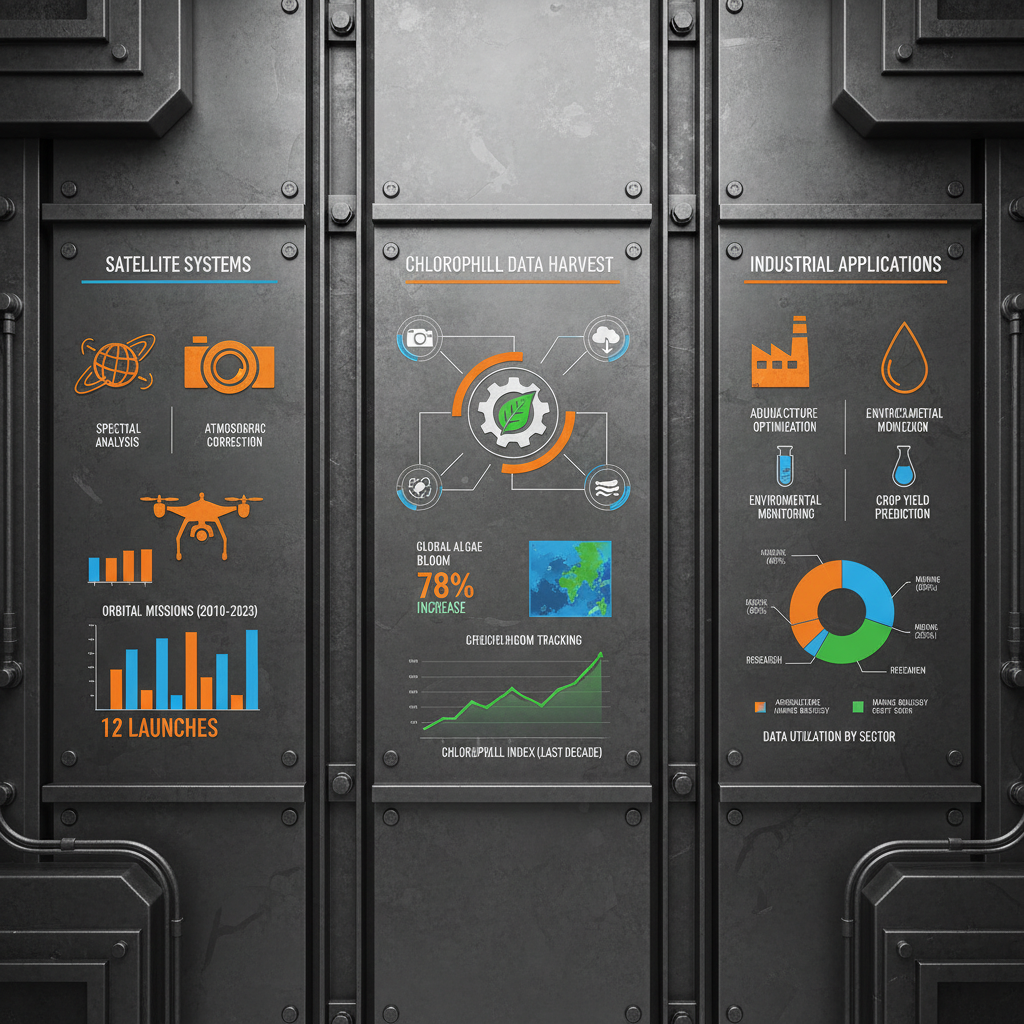
The applications of chlorophyll satellite data are diverse and far-reaching. These include: monitoring harmful algal blooms (HABs), assessing the impact of climate change on marine ecosystems, tracking ocean currents and upwelling, supporting fisheries management by identifying productive fishing grounds, and validating ocean models. Researchers use this data to study carbon cycling, assess water quality, and understand the complex interactions within marine environments. Space-navi.com provides specialized tools and data services to cater to the needs of researchers and professionals in these fields.
Challenges and Future Directions in Chlorophyll Data Analysis
Analyzing chlorophyll satellite data isn’t without its challenges. Atmospheric correction – removing the effects of the atmosphere on the satellite signal – is a crucial but complex step. Variations in water clarity, cloud cover, and sensor calibration can all introduce uncertainties. Future advancements include the development of new sensors with improved spectral resolution and sensitivity, as well as the integration of artificial intelligence and machine learning techniques for more accurate data processing and analysis. Space-navi.com is dedicated to staying at the forefront of these advancements to provide the most reliable and insightful data products.
Conclusion: Empowering Marine Science with Chlorophyll Data
Chlorophyll satellite data provides an essential tool for understanding and monitoring our oceans. From tracking harmful algal blooms to assessing the impact of climate change, this data is critical for informed decision-making and sustainable resource management. Space-navi.com is committed to providing access to high-quality chlorophyll data and advanced analytical tools, empowering researchers and professionals to address the challenges facing our marine environments.
Frequently Asked Questions (FAQs)
What is atmospheric correction and why is it important?
Atmospheric correction is the process of removing the effects of the atmosphere (scattering and absorption of light) from satellite data. This is crucial because the atmosphere distorts the signal reflected from the ocean surface, leading to inaccurate estimates of chlorophyll concentrations. Without proper atmospheric correction, the data would be significantly biased and unreliable. Various algorithms and models are used to perform this correction, taking into account factors like aerosol levels, water vapor, and ozone concentration.
How does cloud cover affect chlorophyll data?
Cloud cover is a major challenge in ocean color remote sensing. Clouds block the satellite's view of the ocean surface, resulting in missing data. Scientists employ various techniques to minimize the impact of clouds, such as using cloud masking algorithms to identify and remove cloudy pixels, or using data from multiple satellites to fill gaps in coverage. The availability of cloud-free data is crucial for accurate and reliable chlorophyll mapping.
What are some limitations of using satellite data to measure chlorophyll?
While incredibly valuable, satellite-based chlorophyll measurements have limitations. They provide an estimate of chlorophyll concentration in the surface layer of the ocean and may not accurately reflect conditions at deeper depths. Additionally, the spatial resolution of some satellites may be too coarse for certain applications. Sensor calibration and atmospheric correction errors can also introduce uncertainties. Combining satellite data with in-situ measurements (from ships and buoys) is often necessary to validate and refine the results.
Where can I access chlorophyll satellite data and analysis tools?
Several organizations provide access to chlorophyll satellite data, including NASA, NOAA, and the European Space Agency. Space-navi.com offers a user-friendly platform for accessing and analyzing this data, with a range of tools and visualizations designed for both researchers and professionals. We provide data processing, customized analyses, and expert support to help you unlock the full potential of chlorophyll data.