Thermal vacuum testing was conducted on both the Qualification Model (QM) and Flight Model (FM) of KAUSAT-5 under high-vacuum conditions: the temperature range for the QM was set from -15℃ to 45℃, while that for the FM was from -10℃ to 35℃.
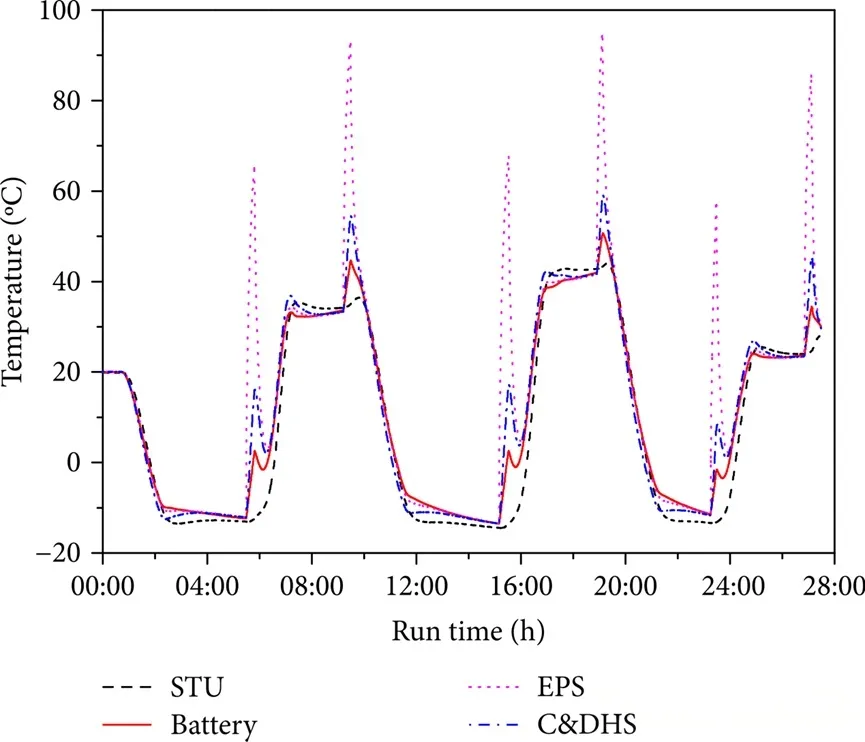
The thermal vacuum qualification test for the QM was carried out over three cycles (Figure 1). The test revealed a performance risk associated with the regulator on the Electrical Power Subsystem (EPS) board due to overheating; therefore, a regulator with low heat dissipation was substituted in the FM.
Figure 1 Thermal Vacuum Qualification Test Results for Key Components of the QM
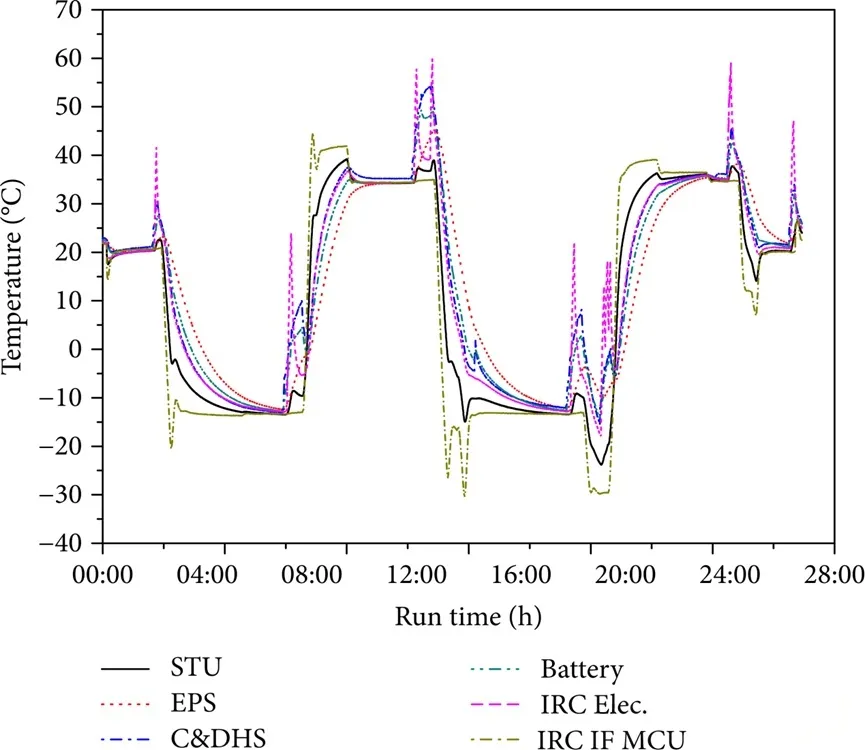
The thermal vacuum test for the FM was performed over two cycles, which verified that all satellite functions—including deployment functions—operated normally. In addition, thermocouples were attached to temperature-sensitive equipment to collect data by monitoring temperature variations throughout the thermal vacuum testing process. Figure 2 shows the temperature variation trends from the thermal vacuum acceptance test of the KAUSAT-5 FM.
Figure 2 Thermal Vacuum Acceptance Test Results for Key Components of the FM
The temperature-sensitive components of KAUSAT-5 include the battery, infrared camera, S-band transmitter module, EPS board, and the microcontroller of the Command and Data Handling Subsystem (C&DHS). The tests confirmed that the temperature variations of all components fell within the allowable range. Meanwhile, functional testing visually verified the successful deployment of the antenna and solar panels, as well as the normal operation of all satellite functions.