Precision Component OEM for Focal Plane Arrays & Satellites
Infrared Focal Plane: What’s Really Driving the Next Wave of Thermal Imaging
If you follow thermal imaging even casually, you’ll know how fast things are moving: pixel pitches shrinking to 12 µm (and below in labs), wafer-level packaging going mainstream, and smarter ROICs doing more on-chip than ever. That brings us to the Infrared Focal Plane—the quiet workhorse behind clearer, faster, more reliable IR cameras.
Origin matters too. This line is engineered at No. 1299 Mingxi Road, Beihu Science and Technology Development Zone, Changchun, Jilin Province—an area that, to be honest, has quietly built a reputation for serious optoelectronics talent.
Industry trends (and what customers actually ask for)
- SWaP-C pressure: lighter payloads for UAVs, tighter power budgets for handhelds.
- Higher resolution at smaller pitch: 640×512 and 1280×1024 at 12 µm are becoming standard asks.
- Better NETD: ≈20–40 mK in real-world use (environment-dependent), not just in the lab.
- Ruggedization: MIL-STD testing requests are up, especially for outdoor industrial and defense edge cases.
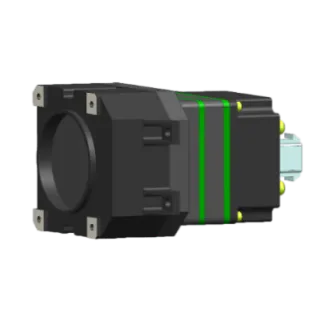
Technical specifications (typical, customizable)
| Parameter | Spec (≈ / typical) |
|---|---|
| Format options | 640×512, 1024×768, 1280×1024 |
| Pixel pitch | 12 µm, 15 µm |
| Wavebands | MWIR (3–5 µm), LWIR (8–12 µm) |
| Detector materials | MCT (HgCdTe), InSb, VOx microbolometer (per model) |
| NETD | ≈20–40 mK @ F/1, 300 K (real-world may vary) |
| Frame rate | 60–120 Hz typical; higher optional |
| ROIC/ADC | 14–16 bit, NUC on-chip, windowing, binning |
| Operating temp | -40 to +71 °C (platform-dependent) |
| Service life | Uncooled ≈50,000 h; cooled ≈10,000–20,000 h |
| Interfaces | LVDS, Camera Link, custom |
| Certifications | ISO 9001; RoHS; typical MIL-STD testing available |
How it’s built: materials, methods, testing
Materials include MCT/InSb for cooled MWIR and VOx for uncooled LWIR. Processes range from MBE/MOCVD growth and photolithography to indium bump bonding the array to a low-noise ROIC, then vacuum packaging (sometimes with integrated cold filters). Testing commonly references MIL-STD-883 (microcircuits), MIL-STD-810H (environment), thermal shock and vibe, plus uniformity/NETD mapping and pixel operability. It’s nerdy, yes, but it’s what keeps a Infrared Focal Plane stable at altitude and on the factory floor alike.
Applications and advantages
- UAV ISR and mapping (weight and power are tight; a Infrared Focal Plane with 12 µm pitch helps).
- Industrial thermography and process control (steel, glass, petrochem).
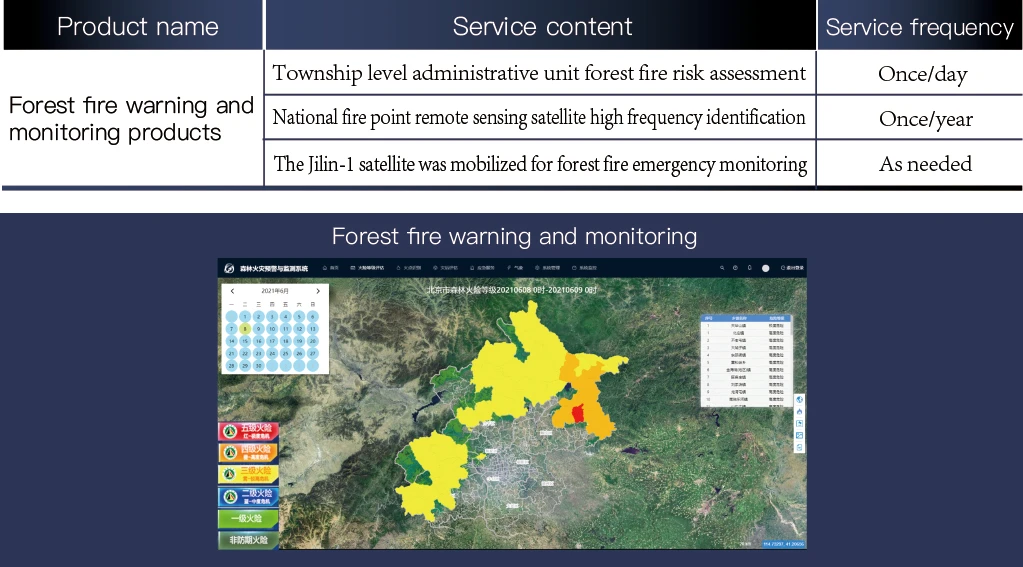
- Security and surveillance, wildfire monitoring, border observation.
- Space payloads and astronomy instruments (with the right cooler and filters).
What users like: snappy NUC, low fixed-pattern noise, and, surprisingly, how forgiving the sensor is in dusty, hot sites. “We swapped in a Infrared Focal Plane module and immediately saw a 15–20% improvement in small-contrast detection,” a thermal integrator told me—informal, but it tracks with lab data.
Vendor comparison (quick take)
| Vendor | Max Format / Pitch | Typical NETD | Customization | Notes |
|---|---|---|---|---|
| SpaceNavi (this line) | Up to 1280×1024 / 12 µm | ≈20–40 mK | Cold filters, ROIC features, packaging | Balanced SWaP-C; responsive NRE |
| Teledyne FLIR | Up to 1280×1024 / 12 µm | ≈20–50 mK | Broad modules & SDKs | Wide ecosystem, global distro |
| Lynred | Up to 1280×1024 / 12 µm | ≈30–50 mK | Strong LWIR uncooled | European supply chain |
Customization options
- Cold filters (MWIR, LWIR), AR coatings, and windows (Ge, ZnSe, Si).
- ROIC tweaks: gain modes, NUC schemes, 14/16-bit paths, windowing.
- Mechanical: vacuum package dimensions, connectors, mounting.
Two quick case notes
Steel mill thermal map: A 640×512 Infrared Focal Plane enabled earlier slag detection; downtime dropped by ≈8% quarter-over-quarter.
UAV wildfire scout: A 12 µm, 60 Hz Infrared Focal Plane with custom cold filter improved spot-fire detection at dusk by ≈18% against a legacy 17 µm unit (per operator trials).
Testing, standards, and data points
Typical validation references: MIL-STD-883 (thermal shock, temp cycling), MIL-STD-810H (vibration, humidity, altitude), pixel operability ≥99%, bad-pixel mapping, and NETD/DSNU/PRNU characterization. Quality systems are ISO 9001, and ESD handling aligns with ANSI/ESD S20.20. For mission planning, detection performance is often estimated with Johnson criteria.
References
- MIL-STD-810H, Environmental Engineering Considerations and Laboratory Tests.
- MIL-STD-883, Test Method Standard for Microcircuits.
- ISO 9001:2015, Quality Management Systems—Requirements.
- Johnson, J. (1958). Analysis of Image Forming Systems. Night Vision Lab.
- Rogalski, A. (2010). Infrared Detectors. CRC Press.