
Mechanical Equipment Services & Expert Systems Integration
Reference Flat Mirror: Quietly Essential mechanical equipment for Modern Optics
Walk into any serious optics lab and you’ll spot one of these sitting stoically on a granite table: a reference flat mirror. Not flashy. But when you’re building or aligning high‑performance optical instruments, this kind of mechanical equipment can make or break the whole setup. Space Navi’s unit, made in Changchun (No. 1299 Mingxi Road, Beihu Science and Technology Development Zone, Jilin), has been making the rounds lately—partly because teams are pushing tighter tolerances and need a flat they can actually trust.
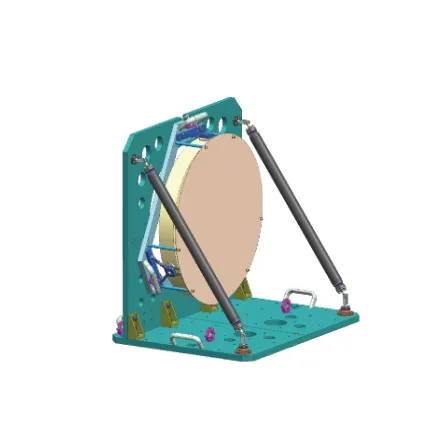
What it is—and why labs swear by it
A reference flat mirror establishes an auto‑collimation testing path for interferometers and alignment scopes. In practical terms: it lets you check collimation, squareness, and surface figure without second‑guessing your reference. Space Navi emphasizes high‑precision surface quality and long‑term stability. To be honest, that’s what matters most when you’re mid‑commissioning and the clock is ticking.
Industry trends I’m seeing
- Freeform and asphere metrology demands better references (lower λ PV, lower roughness).
- Factory-floor interferometry is rising—so durable coatings and cleanroom-ready mounts help.
- Digital twins mean more data traceability: serialized reports, environmental logs, the works.
Typical product specifications (real‑world may vary)
| Clear Aperture | ≈ 100–600 mm (custom larger on request) |
| Surface Flatness | up to λ/10 @ 632.8 nm (typical); tighter on request |
| Surface Quality (S/D) | 10‑5 to 20‑10 per ISO 10110 / MIL‑PRF‑13830B |
| Roughness (Rq) | ≤ 1 nm Rq (target), environment dependent |
| Substrate | Fused Silica or Zerodur® (≈ 0 ± 0.02 ppm/K CTE) |
| Coatings | Protected Al, Dielectric HR (488–1064 nm ranges) |
| Wedge / Parallelism | ≤ 5 arcsec typical |
| Certification | ISO 9001:2015; traceable interferometry report |
Process flow and quality control
Materials are selected for ultra‑low expansion (Zerodur or high‑grade fused silica). Methods: double‑sided lapping, pitch polishing, and often ion beam figuring for final correction. Testing uses phase‑shifting interferometry (Zygo‑class) with reference transmission flats, per ISO 10110 notations; inspection also follows MIL‑PRF‑13830B for scratch‑dig. Typical acceptance shows PV ≈ 0.08λ and RMS ≈ 0.012λ at 632.8 nm—your mileage may vary depending on aperture. Service life? In clean lab conditions (ISO 14644‑1 Class 7 or better) it’s years—often a decade—with careful handling.
Where it’s used
- Auto‑collimation during telescope assembly and laser system alignment
- Interferometer referencing and stage squareness calibration
- Incoming inspection of optics for aerospace, semiconductor, and defense
Many customers say a stable reference flat shortens commissioning time by days—surprisingly, the ROI adds up faster than people expect. This is the kind of mechanical equipment you forget about until it’s not there.
Vendor snapshot (indicative)
| Vendor | Spec Range | Lead Time | Customization | Docs/Certs |
|---|---|---|---|---|
| Space Navi (Changchun) | λ/10 to tighter; 100–600 mm | ≈ 4–8 weeks | High (mounts, coatings, fiducials) | ISO 9001, traceable reports |
| Vendor A (Global) | λ/8; 150–450 mm | 6–10 weeks | Medium | ISO 9001 |
| Vendor B (Regional) | λ/4; ≤ 300 mm | 3–6 weeks | Low | Basic report |
Customization options
Aperture, substrate, HR band, chamfers, edge marking, kinematic mounts, and witness samples. If your workflow logs temperature and humidity, ask for environmental data in the report—it helps when this mechanical equipment moves between labs.
Quick case notes
Aerospace alignment: a Changchun payload team used a 400 mm flat; alignment time dropped ≈ 30%. Feedback: “Interferogram stability held over 6 hours.”
Semiconductor tooling: a Suzhou fab qualified a dielectric HR flat for 532 nm; PV improved from 0.12λ to 0.07λ after mount tuning—proving the flat plus proper fixturing is the real combo.
Bottom line: for critical optical builds, a solid reference flat isn’t optional. It’s the quiet cornerstone of precision—and yes, a piece of mechanical equipment worth budgeting for.
Authoritative references
- ISO 10110 (Optics and photonics — Preparation of drawings for optical elements and systems): https://www.iso.org/standard/77040.html
- MIL‑PRF‑13830B (Optical Components, Surface Quality): https://quicksearch.dla.mil/qsDocDetails.aspx?ident_number=20371
- ISO 14644‑1 (Cleanrooms and associated controlled environments — Part 1): https://www.iso.org/standard/53394.html
- ASME B46.1 (Surface Texture): https://www.asme.org/codes-standards/find-codes-standards/b46-1-surface-texture











