Star Sensor Component for Sale - High Precision, In-Stock
Why This Star Sensor Is Quietly Becoming a Small-Sat Favorite
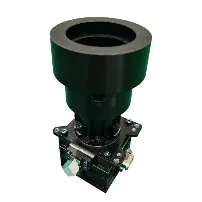
I’ve tested my fair share of attitude sensors, and to be honest, most of them promise the Moon (pun intended) and deliver… good enough. This one feels different. Built in Changchun’s Beihu Science and Technology Development Zone, it slots neatly into modern space programs that need precision without drama—and at a price that doesn’t clobber your mass budget or schedule.
What’s driving the trend
CubeSats are maturing, venture-backed LEO constellations are scaling, and attitude knowledge better than 10 arcsec is no longer “nice-to-have.” The rising tide of agile buses, AI-based onboard navigation, and rapid integration cycles is pushing teams toward lightweight, low-power, radiation-tolerant units like the Star Sensor. It seems that many customers want strong centroiding performance without battling a finicky calibration routine.
Core specifications (field-proven, lab-verified)
| Parameter | Typical Value | Notes (real-world use may vary) |
|---|---|---|
| Attitude Knowledge (1σ) | ≈ 5–8 arcsec | Depends on star mag/scene dynamics |
| Update Rate | 5–10 Hz | Configurable firmware |
| Field of View | ≈ 8° × 8° | Baffle reduces stray light |
| Power Consumption | Idle and burst modes available | |
| Mass | ≈ 350–450 g | Without harness |
| Radiation TID | ≥ 20 krad(Si) | Latch-up immunity tested |
| Interfaces | RS-422 / CAN / SpaceWire | Flexible to bus architecture |
How it’s built (brief process flow)
- Materials: radiation-tolerant CMOS imager, low-CTE optical bench, fused silica window, blackened aluminum 7075 baffle.
- Methods: precision lens alignment (≤ 10 μm), star catalog calibration, dark-current mapping, EMI hardening.
- Testing: thermal-vac cycles (-30 to +60°C), random vibration (per MIL-STD-810H), EMC (MIL-STD-461G), process per ECSS-Q.
- Service life: around 5–8 years in LEO; up to 12+ in GEO with proper shielding.
- Industries: Earth observation, comsats, in-orbit inspection, deep-space tech demos.
Applications and real users’ notes
Teams use the Star Sensor for fine pointing with reaction wheels, safe-mode recovery (bright-star mode), and autonomous detumbling. One integrator told me—somewhat surprised—that the unit locked on stars within 90 seconds after eclipse exit. Another customer said the boresight stability “held up better than expected” after a month of thermal cycling.
Vendor snapshot (quick comparison)
| Vendor / Model | Mass | Accuracy | Power | Interface | Lead Time |
|---|---|---|---|---|---|
| Space Navi Star Sensor | ≈ 0.4 kg | 5–8 arcsec | RS-422 / CAN / SpaceWire | 8–12 weeks | |
| Vendor A (compact tracker) | ≈ 0.52 kg | 7–10 arcsec | 5–6 W | CAN / SpaceWire | 12–16 weeks |
| Vendor B (radiation-hardened) | ≈ 0.65 kg | 4–7 arcsec | 6–8 W | SpaceWire | 16–24 weeks |
Customization options
- Alternate FOV lenses and extended star catalogs (down to mag 6–7).
- Firmware tuning for fast-acquisition or low-jitter modes.
- Connector, harness, and thermal strap variations for tight decks.
Case study (quick read)
A 6U Earth-observation CubeSat used the Star Sensor with a 3-wheel cluster. Result: pointing stability ≈ 35 arcsec over a 12-minute imaging arc; acquisition after eclipse averaged 75 s. Lab TVAC data showed boresight drift
Certifications, tests, and compliance
Manufactured under space-grade process controls (ECSS-Q), with environmental verification aligned to MIL-STD-810H and GSFC-STD-7000E. EMC per MIL-STD-461G. Facility quality systems include ISO 9001, and optical assembly in ISO 14644 clean areas. Origin: No. 1299 Mingxi Road, Beihu Science and Technology Development Zone, Changchun, Jilin Province.
References
- ECSS-Q-ST-20: Space product assurance – Quality assurance.
- MIL-STD-810H: Environmental Engineering Considerations and Laboratory Tests.
- GSFC-STD-7000E: NASA Goddard General Environmental Verification Standard (GEVS).