Satellite Platform for Remote Sensing: Modular & Scalable
Flight Platform (Jilin‑1PT01A): a nimble workhorse for business missions
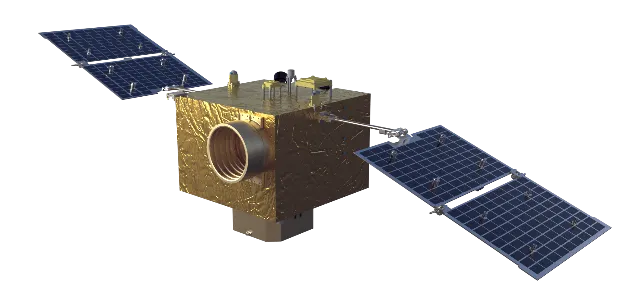
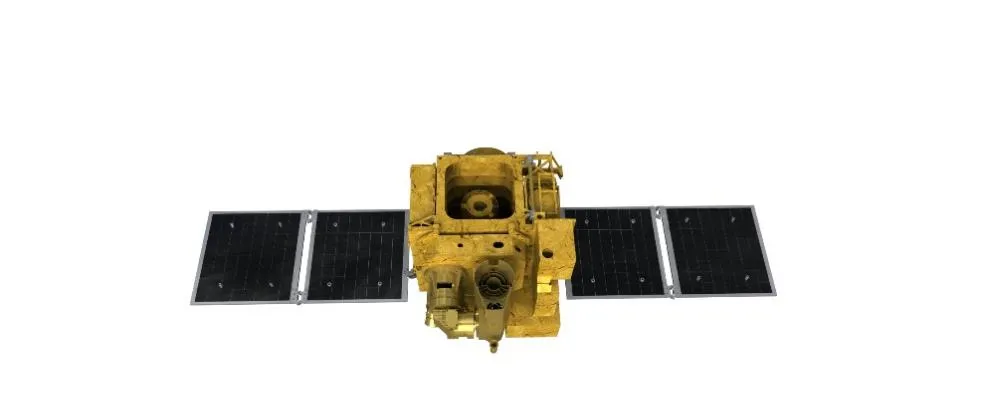
If you’ve been tracking smallsat hardware, you’ve probably heard the chatter: commercial teams want a satellite platform that’s flexible without being fussy. Space‑Navi’s Flight Platform—Jilin‑1PT01A—lands squarely in that sweet spot. It’s a 20 kg‑class multi‑mission bus that supports long‑term three‑axis operations for remote sensing, comms, navigation—you name it. I’ve seen customers light up when a bus gets out of the way and lets the payload sing; this one, surprisingly, does exactly that.
Why the market is shifting
The smallsat trend is clear: faster cycles, modular interfaces, and realistic performance at sensible budgets. Teams are asking for dependable ADCS, higher downlink (X‑band, ideally), and honest lead times. The satellite platform discussed here leans into that: multi‑function, reliable, and designed for rapid development from a facility in Changchun, Jilin Province (No. 1299 Mingxi Road, Beihu Science and Technology Development Zone). To be honest, speed plus discipline is a rare combo.
Core specifications (real‑world values may vary)
| Mass (bus) | ≈20 kg |
| Payload capacity | up to ≈10 kg |
| Power (EOL) | ≈60–120 W, Li‑ion battery ≈120 Wh |
| ADCS | 3‑axis, reaction wheels + magnetorquers; star tracker + sun sensors; pointing ≤0.1° (3σ), stability ≈0.005°/s |
| Comms | S‑band TT&C up to ≈2 Mbps; X‑band payload downlink up to ≈150 Mbps |
| Onboard data | ARM/LEON‑class OBC, ≈256 GB storage, optional AES‑256 encryption |
| Thermal | Passive + heaters; TVAC qualified |
| Orbit & life | LEO 500–700 km; ≈3–5 years (mission‑dependent) |
| Form factor | ≈40×40×60 cm; multiple deployer/adapter options |
Materials, methods, and testing
Structure: aluminum 6061/7075 frames with CFRP panels; radiation‑tolerant EEE parts with conformal coating (IPC‑CC‑830). Harnessing per ECSS‑Q‑ST‑70 series; workmanship checked to IPC‑A‑610/620. Thermal surface finishes selected by orbit beta angle—yes, the unglamorous details matter.
Verification: vibe and shock per NASA GEVS/MIL‑STD‑1540; EMC to MIL‑STD‑461; TVAC to ECSS‑E‑ST‑10‑03; cleanliness ISO 8. Representative data from a recent lot: pointing stability ≈0.005°/s over 1 orbit; X‑band throughput sustained ≈120 Mbps with 1‑m ground antenna; TID margin ≈20–30 krad(Si) behind typical shielding—your mileage will vary with orbit.
Service life: designed for 3–5 years in LEO, assuming routine power/thermal budgeting and debris‑aware EOL planning (passivation, controlled decay where feasible).
Application scenarios
- Remote sensing: sub‑meter‑class targeting support, multispectral agriculture, disaster assessment.
- Communications: X‑band data relay, S‑band TT&C, store‑and‑forward IoT.
- Navigation/augmentation experiments and small GNSS reflectometry payloads.
Vendor snapshot (indicative)
| Vendor / Bus | Mass class | X‑band downlink | Pointing (3σ) | Lead time | Notes |
|---|---|---|---|---|---|
| Space‑Navi Flight Platform (Jilin‑1PT01A) | ≈20 kg | up to ≈150 Mbps | ≤0.1° | ≈6–9 months | Multi‑mission, rapid integration |
| Vendor X (EU 20–25 kg class) | 20–25 kg | ≈50–150 Mbps | ≈0.2–0.5° | ≈9–12 months | CubeSat‑heritage bus |
| Vendor Y (US ≈25 kg class) | ≈25 kg | ≈100–200 Mbps | ≈0.1–0.3° | ≥12 months | High TRL, higher cost |
Customization and integration
Interfaces: mechanical rings/rails, payload power lines (5/12/28 V), LVDS/SpaceWire/CAN. Optional secured links, ground segment integration, and ITU coordination support for X/S‑band filings. Many customers say the documentation is refreshingly clear—small thing, big impact.
Case notes and feedback
- Agri‑imaging pathfinder: sub‑2.5 m multispectral, weekly revisits; “from PDR to orbit in ~8 months,” the PM told me—quicker than they expected.
- Emergency data ferry: store‑and‑forward tests after floods; teams praised the stable attitude during long ground passes.
Compliance and credentials
Built under ISO 9001 quality systems; environmental tests aligned with ECSS and NASA GEVS; EMC to MIL‑STD‑461. Debris mitigation consistent with IADC/ISO guidelines. Frankly, that’s the baseline you want in a satellite platform you’ll trust with real revenue.
Authoritative citations