
- Afrikaans
- Albanian
- Amharic
- Arabic
- Armenian
- Azerbaijani
- Basque
- Belarusian
- Bengali
- Bosnian
- Bulgarian
- Catalan
- Cebuano
- China
- Corsican
- Croatian
- Czech
- Danish
- Dutch
- English
- Esperanto
- Estonian
- Finnish
- French
- Frisian
- Galician
- Georgian
- German
- Greek
- Gujarati
- Haitian Creole
- hausa
- hawaiian
- Hebrew
- Hindi
- Miao
- Hungarian
- Icelandic
- igbo
- Indonesian
- irish
- Italian
- Japanese
- Javanese
- Kannada
- kazakh
- Khmer
- Rwandese
- Korean
- Kurdish
- Kyrgyz
- Lao
- Latin
- Latvian
- Lithuanian
- Luxembourgish
- Macedonian
- Malgashi
- Malay
- Malayalam
- Maltese
- Maori
- Marathi
- Mongolian
- Myanmar
- Nepali
- Norwegian
- Norwegian
- Occitan
- Pashto
- Persian
- Polish
- Portuguese
- Punjabi
- Romanian
- Russian
- Samoan
- Scottish Gaelic
- Serbian
- Sesotho
- Shona
- Sindhi
- Sinhala
- Slovak
- Slovenian
- Somali
- Spanish
- Sundanese
- Swahili
- Swedish
- Tagalog
- Tajik
- Tamil
- Tatar
- Telugu
- Thai
- Turkish
- Turkmen
- Ukrainian
- Urdu
- Uighur
- Uzbek
- Vietnamese
- Welsh
- Bantu
- Yiddish
- Yoruba
- Zulu
LEO Satellite Life-Cycle Cost Breakdown (Part 2): Manufacturing and Testing Phase
Introduction
If the design and R&D phase sets the cost baseline for LEO satellites, then the manufacturing and testing phase represents cost realization. These two phases convert designs into flight-ready satellites and together account for 60%–70% of total cost—making them the primary battlefield for cost control in commercial aerospace. This paper details the cost structure, key processes, and optimization paths for manufacturing and testing.
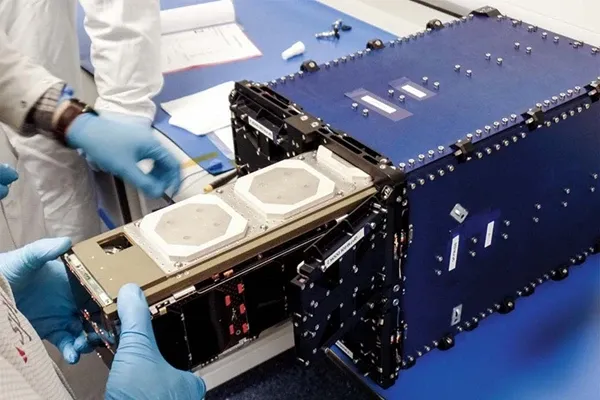
I. Manufacturing Phase: Cost Transformation from Blueprint to Satellite
The manufacturing phase covers raw material procurement, component processing, system integration, assembly, and checkout. As the largest contributor to satellite cost, it directly determines the final price.
1. Cost Composition and Scale
Manufacturing costs consist of:
- Raw materials: 18%–22% of total manufacturing cost, including rare metals (molybdenum, tungsten, titanium), semiconductor materials (silicon, germanium), and carbon fiber composites.
- Components and parts: 35%–40% (the single largest cost item), including chips, sensors, connectors, batteries, and electronic components. Space-grade radiation-hardened chips and high-precision sensors are particularly expensive.
- System integration, assembly and test checkout: 30%–35%, including subsystem assembly, electrical connections, software loading, and initial functional verification. All work is performed in cleanrooms with strict process requirements.
2. Core Cost Drivers
- Production scale: Mass production drastically reduces unit cost. For custom satellites, the platform and payload each account for 50% of cost. In mass production, the platform share drops to 30%, and ideally to 20%.
- Manufacturing processes: Higher automation reduces labor cost and improves yield. Manual assembly yields ~85%; automated lines exceed 95%.
- Supply chain efficiency: Bulk purchasing or domestic substitution of key components reduces costs by 15%–25%, while reliance on imports or custom parts sharply increases expenses.
II. Testing Phase: Cost Investment for Reliability Assurance
Testing is the final quality gate before launch, including unit, system, environmental, and pre-launch tests. It accounts for 15%–20% of total satellite cost. While it does not directly enhance performance, it is critical to avoiding launch failures and reducing operational risks.
1. Cost Composition and Key Processes
Major testing cost items:
- AIT (Assembly, Integration, and Testing): Approximately $720,000—the largest single testing category. It includes environmental reliability tests such as vibration (launch environment), thermal vacuum (TVAC, space extreme temperature and vacuum), and radiation testing.
- Functional testing: Verifies normal operation of all subsystems, including communication link testing, AOCS functional testing, and power system charge-discharge testing. It accounts for 30%–40% of testing cost.
- Launch site testing: Final verification and checks to ensure satellite‑rocket compatibility, representing 10%–15% of testing cost.
For reference, thermal vacuum (TVAC) testing averages $5,000 per test run, with total project testing cost scaled by test quantity and standards.
2. Core Cost Drivers
- Test standards: Space‑grade requirements are far stricter than terrestrial products. More extreme parameters and longer durations increase cost.
- Test coverage: 100% functional and environmental coverage costs 50%–60% more than sampling tests.
- Test equipment: Rental and usage of large facilities (thermal vacuum chambers, vibration shakers) represent major fixed costs.
III. Cost Optimization Paths for Manufacturing and Testing
-
Large-scale production and automated manufacturingEstablish dedicated satellite factories with assembly lines scaling from dozens to hundreds or thousands of units per year. Automation and 3D printing reduce labor, improve efficiency, and boost yield.
-
Supply chain integration and domestic substitutionConsolidate upstream and downstream supply chains with long-term bulk agreements. Substitute imports with domestic components (radiation-hardened chips, star trackers, thrusters) to lower costs and supply chain risks.
-
Test flow optimization and simulation-based testingAdopt a tiered “unit–subsystem–system” test flow to eliminate redundant testing. Expand simulation and digital twins to replace some physical environmental tests, reducing testing costs by 20%–30%.
-
Modular testing and standardized interfacesTest each subsystem individually before delivery; only system-level integration testing is performed after assembly. Standardized interfaces reduce compatibility testing time and cost.
IV. Industry Case: Starlink’s Low-Cost Manufacturing and Testing Logic
SpaceX’s Starlink achieves manufacturing costs near $500,000 per satellite through:
- Mass production: Thousands of units per year, bulk component purchasing, and automated lines.
- Simplified design: Standardized platforms with minimal custom parts to speed assembly.
- Lean testing: Reduced non-core testing; some ground validation replaced by on-orbit verification.
This model provides a clear reference: cost optimization in manufacturing and testing relies on scaling + standardization + efficiency gains. Through process and technological innovation, unit cost is minimized while reliability is preserved.











