
Component OEM | Space-Grade Focal Plane Array for Satellites
Field notes on the Infrared Focal Plane: what’s hot, what’s real
If you work around electro-optics, you’ve felt it: the quiet but relentless evolution of thermal imaging. To be honest, some of the hype is overblown; yet where it counts—noise, uniformity, and reliability—the Infrared Focal Plane is getting measurably better. Many customers say they can now push detection ranges without ballooning SWaP-C, which, in the field, is what actually matters.
Industry trends I’m seeing
- Pixel pitch creeping down (12 μm → 10 μm), but not at the expense of NETD—surprisingly, some lots are ≈25 mK at F/1.
- More mixed portfolios: cooled MCT/InSb for reach; uncooled VOx for endurance and cost.
- Vendors are opening up custom ROIC features (multi-gain, on-chip NUC), albeit with longer lead times.
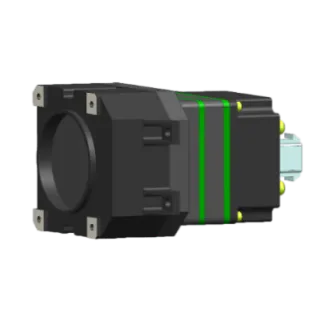
Specifications at a glance
| Parameter | MWIR Cooled (MCT) | LWIR Uncooled (VOx) |
|---|---|---|
| Array formats | 640×512, 1024×1024 | 640×480, 1280×1024 (select) |
| Pixel pitch | 10–15 μm | 12 μm (≈) |
| Spectral band | 3–5 μm | 8–14 μm |
| NETD (typ.) | ≤25–30 mK @ F/1, 300 K | ≤40–50 mK @ F/1, 300 K (real-world use may vary) |
| Frame rate | 60–120 Hz | 30–60 Hz |
| Cooling | Integrated Stirling cooler | Uncooled microbolometer |
How it’s built (process flow)
Materials: HgCdTe (MCT) or InSb for cooled, VOx or a‑Si for uncooled. Methods: MBE/MOCVD epitaxy → photolithography → indium bump hybridization to ROIC → passivation → vacuum packaging with getter; for cooled devices, dewar + micro-Stirling integration. Calibration: multi-point NUC, DSNU/PRNU correction, then NETD verification per ASTM E1543. Environmental screening follows MIL‑STD‑810 (vibe, thermal cycling) and device-level MIL‑STD‑883. Typical service life: cooled ≈20,000 h MTBF (cooler-dependent), uncooled >100,000 h.
Where the Infrared Focal Plane shines
- Defense ISR, border surveillance, UAV gimbals (MWIR reach, fast frame rates)
- Industrial thermography, power line inspection, process monitoring (LWIR endurance)
- Scientific imaging—hyperspectral coupling and low-flux astronomy, occasionally
Advantages customers mention: low NETD at smaller pitch, robust vacuum packages, and firmware hooks for on-the-fly NUC. One integrator told me their false alarm rate dropped by “about a third” after switching arrays—partly better uniformity, partly smarter gain staging.
Vendor snapshot and customization
SpaceNavi manufactures in Changchun (No. 1299 Mingxi Road, Beihu Science and Technology Development Zone, Jilin Province) with ISO 9001 quality controls. Customizations: pixel pitch selection, ROIC windowing/multi-gain, cold filter options, and application-level NUC maps. Lead time depends on cooler allocation—just being realistic.
| Vendor | Pixel pitch | Min. NETD | Certs | Lead time | Customization |
|---|---|---|---|---|---|
| SpaceNavi | 10–12 μm | ≈25–30 mK | ISO 9001 | 6–12 weeks | High (ROIC+filters) |
| Vendor A | 12–17 μm | ≈35–50 mK | ISO 9001/14001 | 10–20 weeks | Medium |
| Vendor B | 8–12 μm (select) | ≤25 mK | AS9100 | 12–24 weeks | High (ASIC-level) |
Mini case studies (condensed)
Infrared Focal Plane in a UAV gimbal: replacing a 17 μm LWIR with a 12 μm MWIR cooled array increased DRI ranges by ≈30% at equivalent payload mass; NETD improved from ~45 mK to ~28 mK. In a steel mill, swapping to a 12 μm VOx array stabilized long-term drift (post-NUC) to
Compliance, testing, and data
- NETD verification per ASTM E1543; temperature cycling to JEDEC JESD22-A104.
- Environmental: MIL‑STD‑810H vibe/thermal shock; device screening per MIL‑STD‑883.
- Quality system: ISO 9001:2015. Ask for recent lot Cpk and RMA stats; it’s worth it.
Final take
If you need range and temporal fidelity, go cooled; if you need uptime and cost control, uncooled still rules. Either way, a well-calibrated Infrared Focal Plane with disciplined screening beats a spec sheet warrior every time.
Authoritative citations











