
Camera Mirrors: Precision Optics, Lightweight, Custom Builds
Sitall Reflection Mirror: what’s really happening in high-precision optics
If you work with Camera Mirrors, you already know the stakes: thermal drift, coating stability, and delivery times that make or break projects. The Sitall Reflection Mirror, built in No. 1299 Mingxi Road,Beihu Science and Technology Developmeent Zone,Changchun,Jilin Province, leans into that reality with robotic CNC, ion-beam figuring, and old-school craft polishing where it still matters. Honestly, it’s a solid mix.
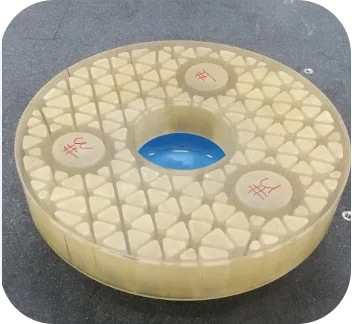
Industry trends (and what clients are actually asking for)
Three forces keep popping up: ultra-low expansion substrates, better asphere control, and coatings that survive field life. Sitall glass‑ceramic is hot because its CTE is close to zero, which helps maintain figure in satellites, machine vision lines, and even cinema rigs. Surprisingly, more teams request asymmetric aspheres to shrink optical trains—so production needs deterministic methods (IBF) plus metrology that doesn’t blink.
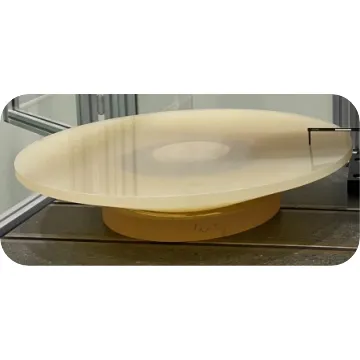
Process flow, materials, and test regime
Materials: Sitall glass‑ceramic core (for low CTE), with Al, protected Ag, or dielectric HR coatings depending on band (VIS–NIR–MWIR). Methods: robotic CNC roughing, precision milling for weight relief, pitch polishing for mid‑spatials, then ion‑beam figuring to dial in λ/10 (or better) form on real parts. Metrology: Fizeau interferometry, surface roughness via white‑light interferometer, and coating durability to ISO 9211‑4; optical surface quality per MIL‑PRF‑13830B. Environmental screens use IEC 60068 series; space programs often ask for GEVS. Service life is project‑dependent, but many customers say 10+ years in labs/observatories is realistic; LEO missions follow their own maintenance/recoat cadence.
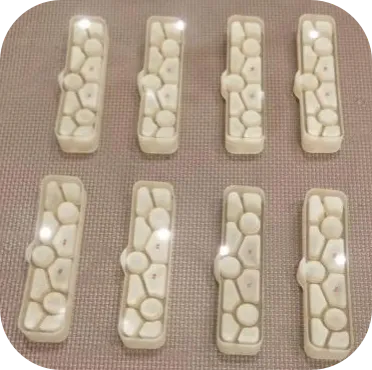
Core specifications (typical)
| Parameter | Typical value (≈) | Notes |
|---|---|---|
| Substrate | Sitall glass‑ceramic, ultra‑low CTE | Real‑world CTE near 0 ±0.15×10⁻⁶/K |
| Clear aperture | 50–1,200 mm (custom larger) | Batch or one‑off |
| Form accuracy | ≈ λ/10 PV @632.8 nm; RMS 10–15 nm | IBF finish; size dependent |
| Surface roughness | Ra ≤ 0.8 nm | White‑light interferometer |
| Coatings | Al+SiO2; protected Ag; dielectric HR | Reflectivity up to 99.5% (band‑limited) |
| Operating temp | ≈ −40 to +80 °C (typical) | Mission‑dependent |
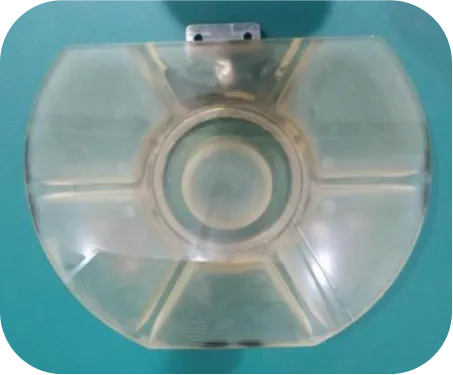
Where these mirrors actually get used
- Satellite and aerial imaging telescopes (temperature swings, tight MTF targets)
- Machine vision and LiDAR scanners (fast sweep, low mid‑spatials)
- Cinema beam‑splitter rigs and optical benches (color‑neutral coatings)
- Metrology flats and autocollimation setups
Case 1: Earth‑observation payload (≈350 mm asphere). After five thermal‑vac cycles, form change was within 25 nm RMS; image chain saw ≈8% MTF stability gain versus an aluminum surrogate. Case 2: Factory line mirror (200 mm line‑scan). Customer reported ~12% throughput improvement and fewer re‑calibrations—small change, big mood lift for ops.
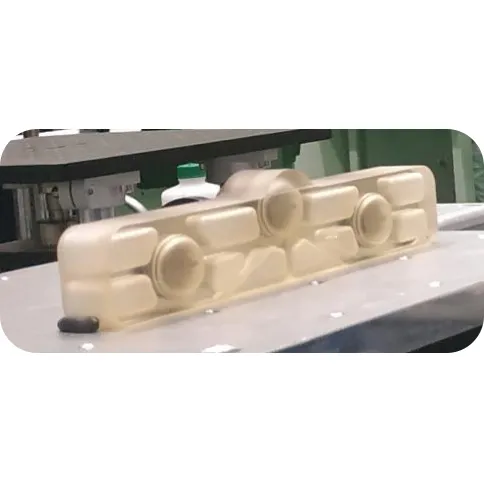
Vendor snapshot (quick comparison)
| Vendor | Max aperture | Form (PV) | Lead time | Certs (typ.) | Notes |
|---|---|---|---|---|---|
| Space‑Navi Sitall | ≈1,200 mm | ≈ λ/10 | 6–12 wks | ISO 9001 (req.), ISO 7 cleanroom (≈) | Deep customization, IBF |
| Vendor B | ≈600 mm | ≈ λ/4 | 12–20 wks | ISO 9001 | Good volume pricing |
| Vendor C (EU) | ≈1,000 mm | ≈ λ/8 | 14–24 wks | ISO 9001, 14001 | Premium pricing |
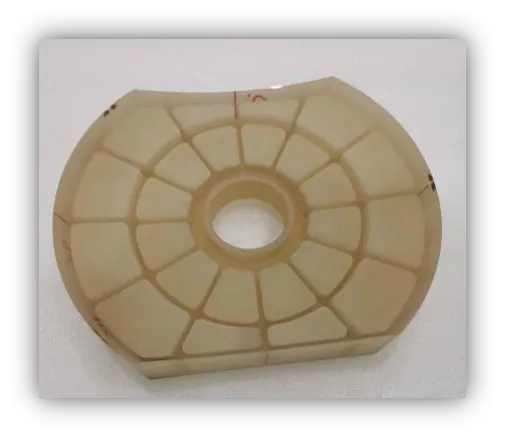
Customization menu (the short version)
- Asymmetric/aspherical departures; lightweighting patterns
- Band‑specific coatings: VIS, NIR, SWIR/MWIR; polarization‑sensitive options
- Mounting interfaces, mass targets, and CTE‑matched cells
- Documentation per ISO 10110; CoC with interferograms and roughness maps
What users tell us
“It seems that the mirror holds figure better after thermal excursions.” Another customer mentioned fewer ghosts with the dielectric HR stack—small but noticeable in HDR scenes. To be honest, real‑world use may vary, but the feedback points to stable alignment and less babysitting. If you’re speccing Camera Mirrors into a schedule‑squeezed program, that’s the whole game.
Compliance, data, and hand‑off
Each lot ships with interferograms, coating test results (adhesion/abrasion to ISO 9211‑4 or MIL‑PRF‑13830B), and environmental screening data when specified. On request: RoHS statements, material CTE curves, and vibration reports aligned to GEVS or IEC 60068‑2. For procurement, reference drawings using ISO 10110 notation—it saves email ping‑pong.
References
- ISO 10110-1: Preparation of drawings for optical elements and systems. https://www.iso.org/standard/62209.html
- ISO 9211-4: Optical coatings—Specific test methods. https://www.iso.org/standard/55962.html
- MIL-PRF-13830B: Optical Components for Fire Control Instruments. https://quicksearch.dla.mil/
- IEC 60068-2 series: Environmental testing (vibration, shock, thermal). https://www.iec.ch/standards
- NASA GSFC-STD-7000 (GEVS): Environmental Verification. https://standards.nasa.gov/
- OHARA CLEARCERAM-Z technical data (ULE glass‑ceramic, CTE context). https://www.oharacorp.com/











