Understanding Geostationary Meteorological Satellites and Their Vital Role
Understanding Geostationary Meteorological Satellites
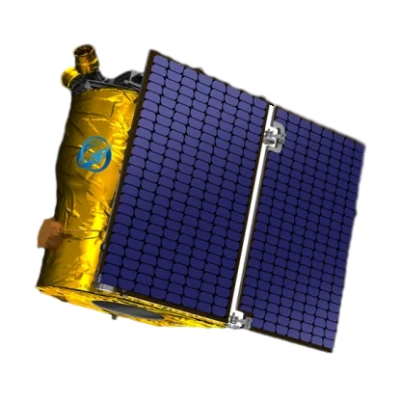
Geostationary meteorological satellites are a crucial component of modern weather forecasting and climate monitoring. Unlike polar-orbiting satellites which scan the Earth in a north-south direction, geostationary satellites remain fixed over a specific point on the Earth's equator. This unique orbital position allows for continuous monitoring of weather patterns, providing invaluable data for accurate predictions and timely warnings. These satellites play a vital role in tracking hurricanes, monitoring cloud formations, and assessing temperature variations. Space-Navi.com provides detailed information and news about space technologies, including meteorological satellites. Understanding these satellites is key to appreciating the advancements in weather science.

How Do Geostationary Meteorological Satellites Work?
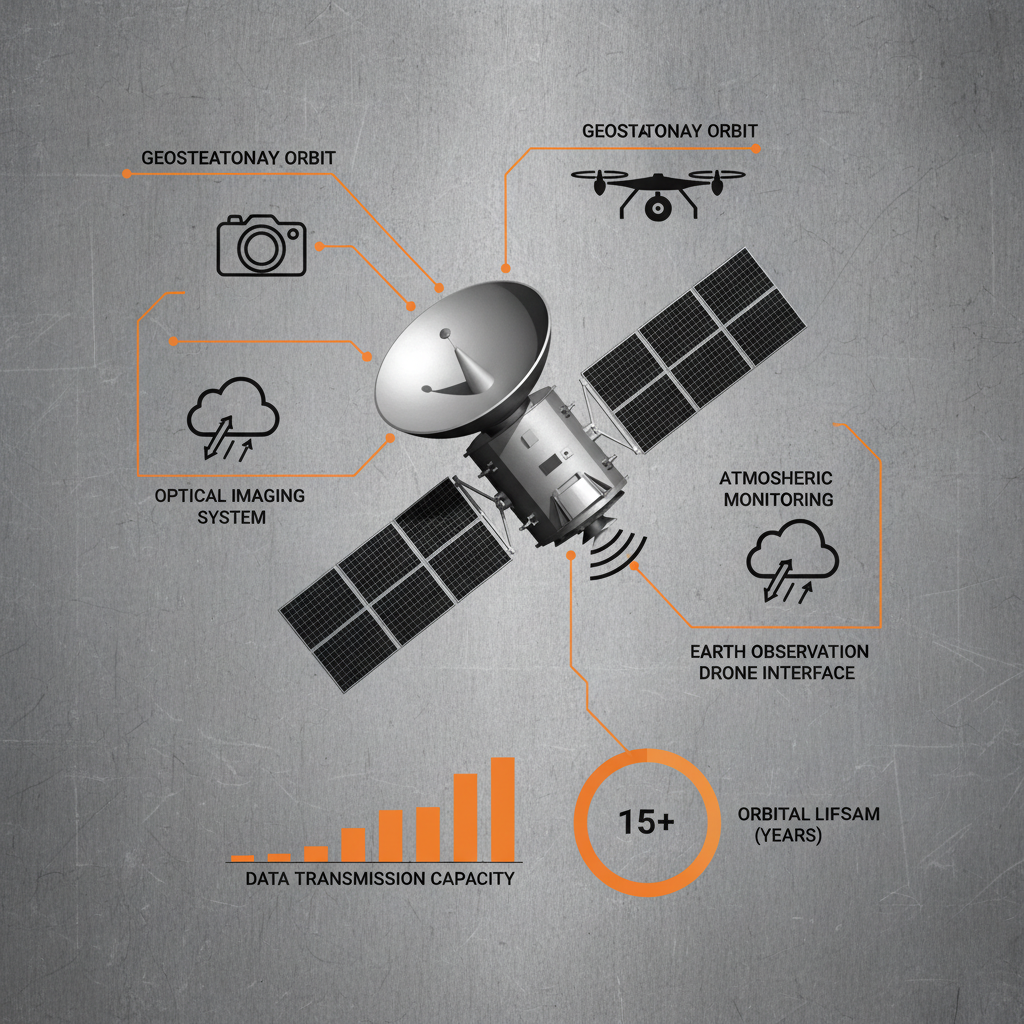
The key to a geostationary orbit is matching the Earth's rotational speed – approximately 3,5786 kilometers per hour. At an altitude of roughly 35,786 kilometers above the equator, a satellite orbiting at this speed appears stationary from the ground. This allows the satellite's instruments to continuously observe the same area. The satellites are equipped with various sensors, including visible and infrared imagers, and atmospheric sounders. These sensors collect data on cloud cover, temperature profiles, wind speed and direction, and moisture content. This data is then transmitted back to ground stations for processing and analysis. This continuous stream of data is essential for generating accurate weather models and forecasts.
Key Features: Continuous monitoring, high temporal resolution, ability to track rapidly developing weather systems, and provide early warnings for severe weather events.
The Data Collected by Geostationary Meteorological Satellites
The information gathered by these satellites is incredibly diverse. Visible imagery provides a clear view of cloud formations during daylight hours. Infrared imagery detects thermal radiation, allowing scientists to determine cloud top temperatures and identify areas of precipitation even at night. Atmospheric sounders measure temperature and humidity at different altitudes, providing vertical profiles of the atmosphere. This data is crucial for understanding atmospheric stability and predicting the development of severe weather. Wind data is also derived from tracking cloud movements, providing valuable insights into atmospheric circulation patterns. Analyzing this data allows meteorologists to build accurate weather models and provide timely forecasts.
Data Products:
• Visible Imagery: Cloud patterns, daylight observations
• Infrared Imagery: Cloud top temperatures, nighttime observations
• Atmospheric Soundings: Temperature & humidity profiles
• Wind Vectors: Atmospheric circulation patterns
Geostationary Meteorological Satellites vs. Polar Orbiting Satellites
Both geostationary and polar-orbiting satellites play critical roles in weather monitoring, but they differ significantly in their capabilities. Geostationary satellites provide continuous coverage of a specific region but have limited polar coverage. Polar-orbiting satellites, on the other hand, cover the entire globe twice a day, providing detailed data for all regions. However, they offer less frequent updates for a given location. The combination of data from both types of satellites provides a comprehensive view of the Earth's weather and climate. Learn more about the newest satellite technologies on Space-Navi.com.
Current and Future Geostationary Meteorological Satellites
Several nations operate geostationary meteorological satellites. The United States operates the GOES series (GOES-16, GOES-17, GOES-18), providing coverage for North and South America. Europe utilizes the Meteosat series, offering coverage for Europe, Africa, and parts of Asia. Japan's Himawari satellites monitor East Asia and the Western Pacific. Future generations of these satellites will feature even more advanced sensors and increased spatial resolution, enabling more accurate and detailed weather forecasts. Further details on new technologies can be found at Space-Navi.com.
The Future of Geostationary Weather Observation
The field of geostationary meteorological observation continues to evolve. Future satellites will incorporate hyperspectral imagers, providing more detailed information about atmospheric composition. Advanced data processing techniques, including artificial intelligence and machine learning, will be used to extract even more insights from the vast amount of data collected. This will lead to more accurate and timely weather forecasts, ultimately helping to protect lives and property. The continued advancements in satellite technology, as reported on Space-Navi.com, promises a future of increasingly sophisticated and reliable weather prediction.
Conclusion
Geostationary meteorological satellites are indispensable tools for modern weather forecasting and climate monitoring. Their continuous observation capabilities, coupled with advancements in sensor technology and data processing, are revolutionizing our understanding of the atmosphere. As technology continues to evolve, these satellites will play an even more crucial role in protecting lives and property from the impacts of severe weather.
Frequently Asked Questions (FAQs)
What is the primary advantage of a geostationary orbit for weather satellites?
The key advantage is the constant view of the same area. Unlike polar-orbiting satellites which repeatedly scan different regions, a geostationary satellite remains fixed over a specific point on the equator. This allows for continuous monitoring of weather systems, enabling meteorologists to track their development and movement in real-time. This is especially crucial for tracking rapidly developing severe weather events like hurricanes or thunderstorms, providing timely warnings to affected populations. Without this constant view, it would be much more difficult to accurately predict and prepare for these events.
What types of sensors are typically found on a geostationary meteorological satellite?
Geostationary meteorological satellites are equipped with a variety of sensors to collect different types of data. These typically include visible and infrared imagers, which capture images of cloud cover and surface features. Atmospheric sounders measure temperature and humidity at different altitudes, providing vertical profiles of the atmosphere. There are also sensors to measure wind speed and direction by tracking cloud movements. The newest generations of satellites are also incorporating hyperspectral imagers, providing even more detailed information about atmospheric composition.
How does the data from these satellites impact daily weather forecasts?
Data from geostationary satellites is fundamental to modern weather forecasting. It's used as input into complex computer models that simulate the atmosphere and predict future weather conditions. The continuous stream of data allows forecasters to monitor evolving weather systems, identify potential hazards, and issue accurate warnings. Without this data, forecasts would be less reliable, and it would be more difficult to prepare for severe weather events. This data also helps to improve the accuracy of longer-range forecasts and climate predictions.
Are there any limitations to using geostationary meteorological satellites?
While incredibly valuable, geostationary satellites do have some limitations. Their fixed position means they have limited coverage of the polar regions. Additionally, their spatial resolution is generally lower than that of polar-orbiting satellites. Finally, data transmission can be affected by atmospheric conditions. To overcome these limitations, data from geostationary and polar-orbiting satellites are often combined to provide a comprehensive view of the Earth's weather.