
Exploring Solar Power Satellite Technology for a Sustainable Energy Future
Harnessing the Sun: A Deep Dive into Solar Power Satellite Technology
The quest for clean, sustainable energy has led to increasingly innovative solutions, and among the most ambitious is the concept of Solar Power Satellites (SPS). These massive space-based structures aim to collect solar energy and wirelessly transmit it to Earth, offering a potentially limitless source of clean power. This article will explore the core principles, challenges, advancements, and potential benefits of SPS technology, offering a comprehensive look into this exciting frontier of energy production. Understanding SPS requires considering the vast resources and technological hurdles, but the potential rewards are transformative for global energy security.

How Solar Power Satellites Work: A Breakdown
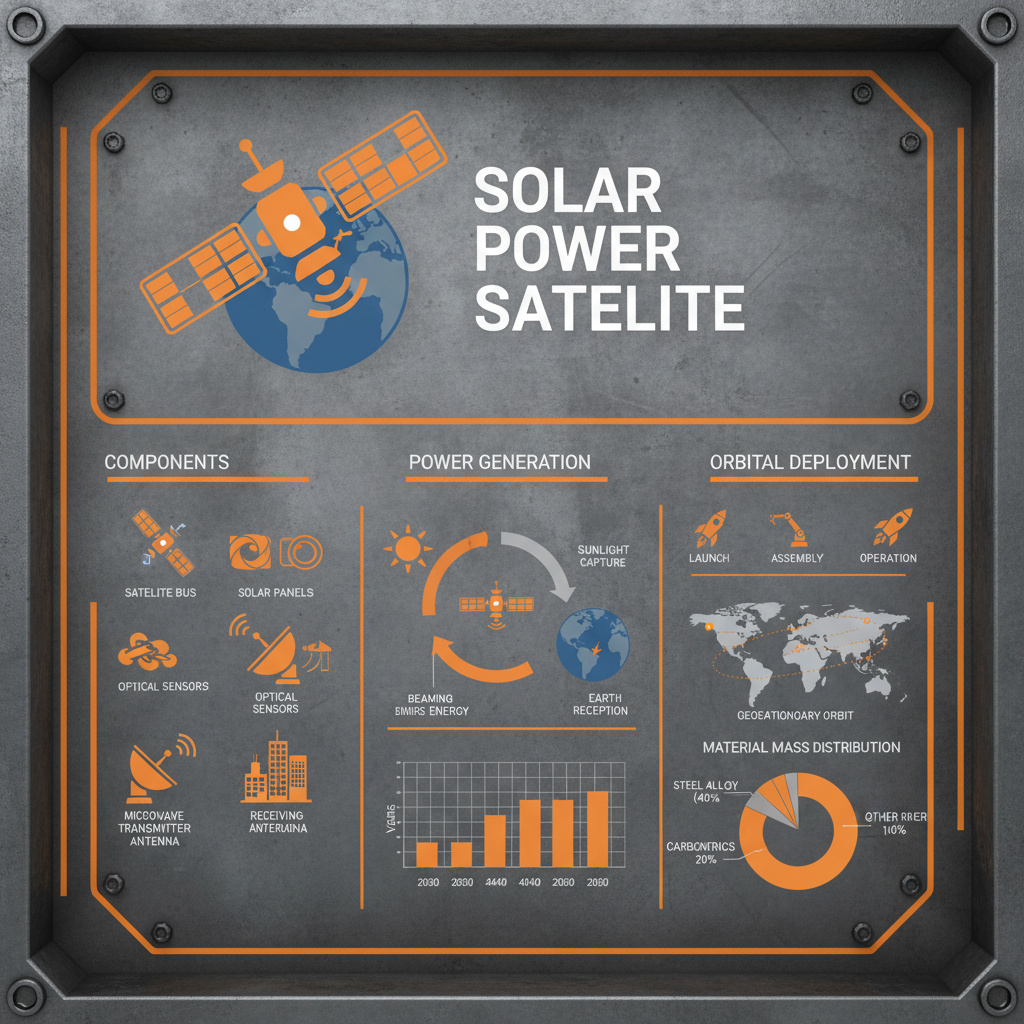
At its core, an SPS operates on a straightforward principle: collect solar energy in space, where it's far more intense and consistent than on Earth, and transmit it wirelessly to receiving stations on the ground. A typical SPS would consist of large solar arrays to capture sunlight, converting it into electricity. This electricity is then converted into microwaves or lasers for transmission to a rectenna – a receiving antenna – on Earth. These rectennas would convert the wireless energy back into usable electricity. The key advantage of space-based solar power is the uninterrupted sunlight, avoiding the day/night cycle and weather-related interruptions experienced by terrestrial solar farms. The efficiency of each component - solar capture, energy conversion, transmission, and reception - is crucial to the viability of SPS.
Key Components: Large solar arrays, energy conversion systems, microwave or laser transmitters, and ground-based rectennas.
The Challenges Facing Solar Power Satellite Development
Despite the immense potential, developing and deploying SPS technology faces significant hurdles. The initial cost of launching such massive structures into space is astronomical. Furthermore, concerns exist regarding the safety of transmitting high-energy microwaves or lasers through the atmosphere, and potential interference with other communication systems. The sheer scale of SPS construction necessitates developing new robotics and in-space assembly techniques. Managing space debris and ensuring the long-term reliability of space-based components are also critical considerations. Overcoming these challenges will require substantial investment in research, development, and international collaboration.
Major Challenges:
• High Launch Costs
• Wireless Power Transmission Safety
• In-Space Assembly Complexity
• Space Debris Mitigation
Solar Power Satellite: Different Approaches & Technologies
Various designs and technologies are being explored for SPS. One approach involves constructing massive, modular structures in geostationary orbit (GEO), approximately 36,000 kilometers above Earth. Another concept utilizes smaller, distributed satellites in lower Earth orbit (LEO), offering potentially lower launch costs and faster deployment. Different transmission methods are also under consideration. Microwave transmission, while proven, requires large rectennas. Laser transmission offers higher energy density but faces atmospheric absorption and safety concerns. Materials science plays a critical role, with research focused on lightweight, high-efficiency solar cells and durable, radiation-resistant components. The optimal approach will depend on advancements in materials, robotics, and wireless power transmission technology.
The Potential Benefits of Solar Power Satellites
If successfully developed, SPS technology could revolutionize global energy production. It offers a clean, sustainable, and virtually inexhaustible energy source. SPS could significantly reduce our reliance on fossil fuels, mitigating climate change and improving air quality. The consistent energy supply would enhance grid stability and reliability. Furthermore, SPS could provide energy to remote or underserved regions, promoting economic development and improving quality of life. While the challenges are substantial, the potential benefits of SPS are too significant to ignore. Organizations like Space-Navi are actively involved in exploring and promoting this innovative technology.
The Future Outlook for Solar Power Satellite Technology
The development of SPS is a long-term endeavor, but momentum is building. Advancements in reusable rocket technology, robotics, and wireless power transmission are paving the way for future progress. International collaboration and government funding are crucial to accelerating research and development. While widespread deployment of SPS is still decades away, continued investment and innovation could unlock a truly transformative energy solution. Exploring the potential of space-based solar power is not just about developing a new energy source; it's about investing in a more sustainable and secure future for all.
Conclusion: A Bold Vision for the Future of Energy
Solar Power Satellites represent a bold and ambitious vision for the future of energy. While significant challenges remain, the potential benefits – a clean, sustainable, and abundant energy source – are compelling. Ongoing research, technological advancements, and international collaboration will be key to realizing this vision and unlocking a new era of energy independence.
Frequently Asked Questions (FAQs)
What is the current status of Solar Power Satellite development?
While full-scale SPS deployment is still years away, significant progress is being made. Several countries, including Japan, China, and the US, are actively investing in SPS research and development. Recent advancements in reusable rocket technology and wireless power transmission have renewed interest in the technology. Demonstration projects are underway to test key components and assess the feasibility of SPS. Several companies are also working on innovative SPS designs and technologies. For the latest developments, resources like Space-Navi offer valuable insights.
Are there any environmental concerns associated with Solar Power Satellites?
Environmental concerns include the potential impact of launching large numbers of rockets into space, the risk of space debris, and the effects of microwave or laser transmission on the atmosphere and wildlife. Researchers are actively working to mitigate these concerns through the development of environmentally friendly rocket fuels, debris mitigation strategies, and careful selection of transmission frequencies and power levels. Comprehensive environmental impact assessments are crucial before large-scale SPS deployment.
How efficient is wireless power transmission from space?
The efficiency of wireless power transmission is a critical factor in SPS viability. Microwave transmission currently achieves efficiencies of around 80-90% over short distances. However, efficiency decreases with distance and atmospheric conditions. Laser transmission offers higher potential efficiency, but is more susceptible to atmospheric absorption and scattering. Ongoing research is focused on improving transmission technologies and optimizing rectenna designs to maximize overall energy delivery efficiency.
What role does international collaboration play in the development of SPS?
The development of SPS is a massive undertaking that requires significant resources and expertise. International collaboration is essential to share knowledge, pool resources, and accelerate progress. Collaborative efforts can help to address the technical challenges, establish safety standards, and promote global adoption of SPS technology. Organizations and governments are increasingly recognizing the importance of international cooperation in this field.











