Satellite Parts: Space-Qualified, Reliable, Precision Built
What Matters Inside a Laser Communication Payload: The Satellite Parts That Move Data at Light Speed
I’ve toured more cleanrooms than coffee roasters, and to be honest, the most understated heroes in orbit are the optical terminals hiding in laser comm payloads. They look modest; they perform miracles. In fact, many customers say they’re the “missing link” between imagers and ground, especially when RF is congested. Below is what matters in these Satellite Parts—and how they’re built, vetted, and deployed.
Why laser? Industry snapshot
Short version: bandwidth and security. Optical links are harder to intercept, and they carry more data with narrower beams. The trend line is clear—constellations want multi-Gbps crosslinks and flexible pointing. However, real-world use may vary with weather and terminal geometry, so hybrid architectures (laser + RF) are common. I guess resilience is the quiet KPI in 2025.
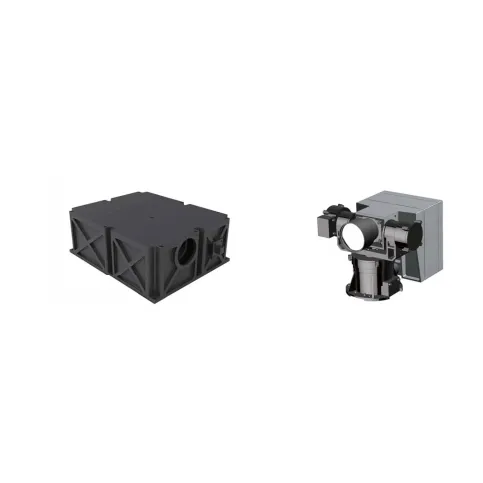
Product specs (typical)
| Wavelength | ≈1550 nm (eye-safer band) |
| Data rate | Up to ≈10 Gbps (higher with advanced modulation/FEC) |
| Pointing accuracy | ≈10–30 µrad, closed-loop tracking |
| Optics aperture | ≈80–120 mm |
| Mass / Power | ≈6–12 kg / ≈60–120 W (mode-dependent) |
| Thermal range | −20°C to +50°C operational (typ.); vacuum-rated |
| Interfaces | SpaceWire/Ethernet; CCSDS optical framing options |
| Service life | ≈5–7 years in LEO (design target) |
How these Satellite Parts are made and verified
- Materials: Space-grade Al alloys, CFRP brackets, radiation-tolerant electronics, low-CTE opto-mechanics, AR-coated optics.
- Methods: Diamond-turned optics, precision kinematic mounts, fiber-laser amplification, active fine-steering mirrors.
- Cleanliness: ISO 14644-1 Class 7 assembly (around Class 6 for optics handling).
- Testing: TVAC and vibe per MIL-STD-1540/NASA GEVS; EMC; link-closure tests with hardware-in-the-loop; alignment stability under thermal gradients.
- Standards & protocols: CCSDS 141.0-B optical coding; ECSS quality flows for space parts.
- Industries: Earth observation, ISR, weather, broadband backhaul, deep-space relay (pathfinder).
Application scenarios and advantages
Use it for inter-satellite links to offload raw imagery; for space-to-ground when you need secure, high-rate downlinks to optical ground stations. Advantages: narrow beam security, spectrum relief, and—actually overlooked—clean regulatory footprint.
Vendor landscape (indicative)
| Vendor | Data rate | Aperture | Lead time | Certs |
|---|---|---|---|---|
| Space-Navi (Changchun) | ≈2–10 Gbps | ≈80–120 mm | ≈6–9 months | ISO 9001; ISO 14644 facility |
| Vendor A (Global) | ≈1–10+ Gbps | ≈70–150 mm | ≈9–12 months | ISO 9001/AS9100 |
| Vendor B (US/EU) | ≈2–5 Gbps | ≈60–100 mm | ≈8–14 months | AS9100; NASA GEVS heritage |
Customization
Options include dual terminals for crosslink redundancy, gimbaled or body-pointing variants, turbulence mitigation for OGS, and protocol stacks aligned to CCSDS 141.0-B. Real-world use may vary, so link budget co-design (sat bus + ground optics) is part of the package.
Case notes and test data
- LEO imagery relay: twelve terminals delivered; internal test BER ≤1e-9 at 5 Gbps with FEC; vibe-qualified to NASA GEVS levels; 98.7% link availability over six months of ops (customer-reported).
- Crosslink demo: pointing stability ≈15 µrad under ±10°C thermal delta; automatic acquisition in
- Customer feedback: “It just works on 600 km passes,” one program manager told me—then asked for two more flight sets.
Compliance: built under ISO 9001 QMS; cleanroom to ISO 14644-1; environmental tests per MIL-STD-1540/NASA GEVS; protocol alignment with CCSDS optical guidance. These Satellite Parts are delivered with traceable materials certs, ATP/ATR records, and TVAC/vibe reports.
References