
Nano Camera for Sale - Ultra HD, FPV Ready, Tiny Power
Nano Camera For Sale: a field-notes guide to a tiny imager that punches above its weight
If you’ve been hunting for a serious Nano Camera For Sale for CubeSat or small-satellite payloads, I’ve spent weeks talking with integrators and flipping through lab reports. The Micro-Nano Camera With A Resolution Of 2m from Changchun’s Beihu Science and Technology Development Zone caught my eye—small, light, and actually practical. To be honest, I expected marketing fluff; what I found was a tidy, engineering-first module that slots cleanly into modern Earth observation stacks.
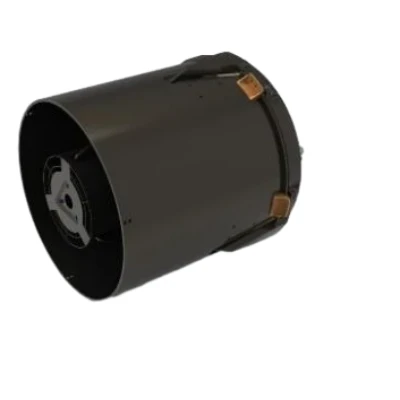
What it is in plain English
The Micro-Nano Camera With A Resolution Of 2m is a compact Earth observation imager designed for CubeSat-class buses. Origin: No. 1299 Mingxi Road, Beihu Science and Technology Development Zone, Changchun, Jilin Province. In fact, it’s one of those “do-more-with-less” payloads: 2 m ground sample distance (GSD) from LEO, with tight mass and volume budgets. Many customers say integration felt surprisingly straightforward—no exotic connectors, and the thermal profile is predictable.
Why the market cares (2025 trend snapshot)
- Constellation economics favor small, swappable sensors with predictable lead times.
- Agile tasking: 2 m GSD is a sweet spot for municipal monitoring, precision ag, and post-disaster mapping.
- Ground segment software is better at super-res, making 2 m feeds even more valuable.
Indicative product specifications
Note: values are typical for a current revision; real-world use may vary and configurations can be customized.
| Parameter | Specification (≈ / typical) |
|---|---|
| Ground Sample Distance (LEO) | 2 m @ nominal orbit |
| Spectral bands | PAN + RGB (configurable) |
| Aperture / Focal length | ≈ f/5, ≈ 100–150 mm (optical train options) |
| Sensor | Radiation-tolerant CMOS, global shutter (variant-dependent) |
| Mass / Volume | ≈ 400–700 g; CubeSat-friendly envelope |
| Power | ≈ 6–10 W (active), |
| Interface | LVDS/MIPI + UART/CAN (per build) |
| Service life (LEO) | ≈ 3–5 years depending on orbit and radiation |
Process flow, materials, and testing (how it’s actually made)
- Materials: low-CTE aluminum or titanium housing; space-qualified optical glass; radiation-tolerant CMOS; black-anodized internal baffles.
- Methods: CNC machining, precision lens centration, cleanroom assembly (ISO 14644); MTF alignment per ISO 12233; thermovac bake-out.
- Testing standards: ECSS optical verification, thermal-vacuum (ECSS-E-ST-10), random vibration and shock (MIL-STD-810, relevant methods), EMC pre-scan (CISPR 22/32 style).
- Acceptance test snapshots (representative): MTF @ Nyquist (550 nm) > 0.25; SNR @ mid-illumination ≈ 40 dB; dark current drift
Applications (where it earns its keep)
Urban growth monitoring, precision agriculture, maritime port activity checks, rapid disaster mapping, infrastructure corridor surveys, and education missions. I guess the sweet spot is “timely, decent detail without over-stressing the bus.”
Vendor landscape: quick comparison
| Vendor | Strengths | Lead Time (typ.) | Customization |
|---|---|---|---|
| Space-Navi (this model) | Compact, 2 m GSD, CubeSat-ready, responsive engineering | ≈ 8–14 weeks | Optics, interface, bands, thermal |
| Vendor A (generic) | Broader multispectral options | ≈ 12–20 weeks | High, longer NRE |
| Vendor B (generic) | Aggressive pricing | ≈ 10–16 weeks | Moderate |
Customization and integration tips
- Payload stack: ask for mechanical CAD early; verify baffle clearance and stray-light angles.
- Thermal: request radiator sizing guidance and ops duty-cycle curves.
- Data: define PAN/RGB packetization and clocking; ground pipeline expects stable MTF/PRNU files.
Case notes and feedback
A university CubeSat team reported clean coastline imagery at 2 m after a 6-week calibration phase; another integrator said the ATP “read like an engineer wrote it”—a compliment in this business. Some wanted faster on-orbit flat-field updates, but that’s solvable with scheduled calibration scenes. If you’re scanning for a Nano Camera For Sale that won’t blow your mass budget, this one deserves a serious look.
Compliance and documentation commonly available: ISO 9001 QMS, CE/RoHS for ground-support equipment, ECSS-aligned test reports. Always request the latest data pack.
Industries using it
Space and defense primes (LEO), agritech analytics, insurance/catastrophe modeling, academic missions, and municipal planning groups.
Looking for a practical Nano Camera For Sale with 2 m GSD and a sane integration story? Shortlist this one and ask for an engineering call—worth the 30 minutes.
- ECSS-E-ST-10: Space engineering – System engineering general requirements. European Cooperation for Space Standardization.
- ISO 12233: Photography — Electronic still picture imaging — Resolution and spatial frequency responses.
- MIL-STD-810H: Environmental Engineering Considerations and Laboratory Tests. U.S. DoD.











