
Satellite SFS: Advanced Performance & Reliable Space Solutions
Innovating Geospatial Intelligence: The Rise of Satellite SFS Technology
The global demand for high-resolution, real-time Earth observation data has spurred significant advancements in satellite technology. Among these, the satellite sfs (Synthetic Aperture Radar with Fine Spatial Resolution) stands out as a pivotal innovation. This technology offers unparalleled capabilities in all-weather, day-and-night imaging, crucial for a myriad of applications from defense and security to environmental monitoring and disaster management. Recent market analyses indicate a Compound Annual Growth Rate (CAGR) of over 12% in the Earth observation satellite market, driven largely by the increasing sophistication of SAR systems like SFS. This growth is testament to the inherent advantages of SAR over optical systems, especially its ability to penetrate cloud cover and operate independently of solar illumination, providing consistent and reliable data streams under diverse conditions.
Industry trends point towards smaller, more agile SAR satellites with enhanced resolution and faster revisit times. The convergence of AI/ML with satellite data processing is also revolutionizing how data is collected, analyzed, and disseminated, enabling quicker insights and more effective decision-making. Miniaturization, coupled with advanced processing algorithms, is making satellite data more accessible and cost-effective, expanding its utility across commercial and governmental sectors alike.
Technical Specifications: 150km Swath Width Kf Satellite
The 150km Swath Width Kf Satellite represents a significant leap in satellite sfs technology, specifically designed to meet the rigorous demands of modern geospatial intelligence. Operating in the Kf-band, this satellite leverages a frequency range optimized for high-resolution imaging while maintaining robust atmospheric penetration capabilities. Its substantial 150km swath width allows for efficient broad-area coverage, dramatically reducing the number of passes required to image large regions.
Key to its performance is the advanced Synthetic Aperture Radar (SAR) payload, which employs sophisticated signal processing algorithms to reconstruct detailed imagery from radar echoes. This particular sfs satellite is engineered for a multi-polarization capability (HH, HV, VH, VV), providing richer information about target characteristics, which is invaluable for precise classification and change detection.
Product Specification Table: 150km Swath Width Kf Satellite
| Parameter | Specification |
|---|---|
| Sensor Type | Synthetic Aperture Radar (SAR) |
| Operating Frequency Band | Kf-band (27-40 GHz) |
| Spatial Resolution | Up to 0.5 meters (Spotlight Mode) |
| Swath Width | 150 kilometers (Stripmap Mode) |
| Polarization Modes | Single, Dual, Quad-polarization (HH, HV, VH, VV) |
| Revisit Time | Daily (dependent on constellation size and latitude) |
| Orbit Altitude | Approx. 500-600 km Low Earth Orbit (LEO) |
| Data Downlink Rate | Up to 1.2 Gbps (X-band) |
| Design Service Life | 7 years |
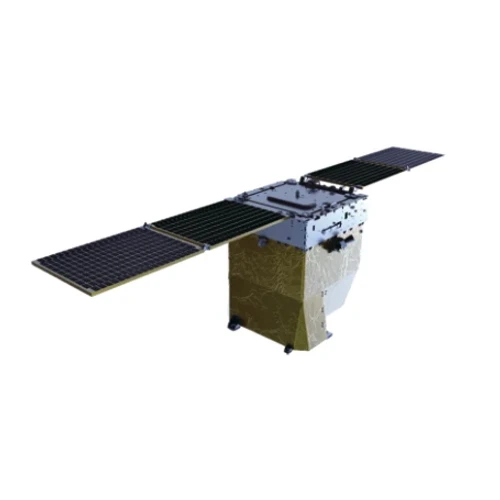
The robust design ensures a service life of at least 7 years, delivering consistent performance and data integrity throughout its operational lifespan. This longevity is crucial for long-term monitoring projects and offers an excellent return on investment for end-users requiring sustained Earth observation capabilities.
The Manufacturing Process of Advanced Satellite SFS Systems
The creation of a high-performance satellite sfs system is a multi-stage, highly precise engineering endeavor. It integrates cutting-edge materials science with advanced manufacturing techniques to ensure optimal performance in the harsh space environment.
Process Flow Schematic:
-
Design and Simulation: Initial phase involving extensive CAD modeling, finite element analysis (FEA), and orbital simulations. Focus on thermal management, structural integrity, and electromagnetic compatibility (EMC).
— Expertise: Utilize advanced simulation software (e.g., Ansys, NASTRAN) to predict performance and mitigate risks before physical prototyping. Adherence to ECSS (European Cooperation for Space Standardization) guidelines.
-
Material Selection & Acquisition: Sourcing of space-grade materials such as carbon fiber reinforced polymers (CFRP) for structural components, specific aluminum alloys (e.g., Al 6061-T6, Al 7075-T7351) for high-strength parts, and specialized dielectric materials for RF components.
— Materials Focus: High strength-to-weight ratio, low coefficient of thermal expansion (CTE), radiation hardness, and vacuum compatibility are paramount.
-
Component Manufacturing:
- Casting/Forging: For robust primary structures, ensuring material homogeneity and high mechanical properties.
- CNC Machining: Precision machining of complex components, including antenna dishes, waveguide structures, and instrument housings, to tight tolerances (typically ±0.01mm).
- Additive Manufacturing (3D Printing): Utilized for intricate parts with optimized geometries that are difficult to achieve with traditional methods, often for reduced mass.
- Electronics Fabrication: Production of radiation-hardened circuitry, including the SAR processor, power conditioning unit (PCU), and attitude control system (ACS).
— Process Control: All manufacturing steps are performed under strict cleanroom conditions (e.g., ISO Class 7 or better) to prevent contamination.
-
Assembly, Integration, and Test (AIT):
- Subsystem Integration: Assembling the propulsion system, power system, communication system, and payload.
-
Environmental Testing:
- Thermal Vacuum (TVAC) Testing: Simulating space vacuum and temperature extremes.
- Vibration & Acoustic Testing: Simulating launch loads (adhering to ISO 19683 standards).
- Electromagnetic Compatibility (EMC/EMI) Testing: Ensuring no interference between onboard systems.
- Functional & Performance Testing: Comprehensive end-to-end testing of all satellite systems and the SAR payload, including calibration and validation.
— Testing Standards: All testing strictly adheres to international standards such as ISO 17025 for testing laboratories and ANSI/AIAA S-120-2006 for satellite test methodologies, ensuring mission reliability and data quality.
- Pre-Launch Preparations: Encapsulation within the launch vehicle fairing, final checks, and transport to the launch site.
Key Technical Advantages of Our Satellite SFS Solutions
The inherent design and engineering philosophy behind our satellite sfs systems bestow a multitude of critical advantages, addressing specific challenges faced by industries requiring reliable and persistent Earth observation.
- All-Weather, Day/Night Capability: Unlike optical sensors, SAR penetrates clouds, fog, and works independently of solar illumination. This guarantees consistent data acquisition, critical for real-time monitoring and disaster response where immediate situational awareness is paramount.
- High-Resolution & Multi-Polarization: Achieving sub-meter spatial resolution provides granular detail for precise analysis. The multi-polarization capabilities (HH, HV, VH, VV) enhance target discrimination, allowing for differentiation between various surface features, vegetation types, and man-made structures with superior accuracy.
- Energy Efficiency & Optimized Power Systems: Advanced power management units and high-efficiency solar arrays, combined with optimized SAR duty cycles, ensure maximum operational longevity and reduce overall mission costs. This contributes significantly to an extended service life and sustained data collection.
- Robust Design & Corrosion Resistance: Employing advanced materials and manufacturing processes ensures the satellite's resilience to the extreme conditions of space, including radiation exposure and thermal cycling. Components are selected for their inherent resistance to degradation, contributing to the impressive 7-year service life. This reduces the total cost of ownership over time by minimizing the need for replacement launches.
- Rapid Revisit Times: Optimized orbital parameters and potential constellation deployment strategies facilitate frequent revisits over target areas. This enables dynamic change detection, essential for applications requiring near real-time updates, such as tracking moving assets or monitoring rapidly evolving environmental events.
Application Scenarios Across Key Industries
The versatility of satellite sfs data makes it indispensable across a broad spectrum of industries, providing critical insights that drive operational efficiency, enhance safety, and support strategic decision-making.
Target Industries & Advantages:
- Petrochemical Industry:
- Monitoring pipeline integrity, detecting leaks or ground subsidence along critical infrastructure.
- Tracking oil spills and assessing environmental impact, enabling rapid response.
- Analyzing storage tank deformation over time using InSAR techniques for predictive maintenance.
- Advantage: Enhanced safety through early detection of potential failures, reducing environmental hazards and operational downtime.
- Metallurgy and Mining:
- Monitoring open-pit mine stability, detecting ground movement around tailing dams.
- Mapping geological structures and mineral exploration support in remote or obscured regions.
- Tracking the expansion or contraction of mining sites and associated infrastructure.
- Advantage: Improved worker safety and optimized resource management, reducing risks associated with ground instability.
- Water Supply & Drainage Management:
- Monitoring large-scale water reservoirs for capacity changes and structural integrity of dams.
- Detecting subtle land subsidence that could impact drainage systems and infrastructure.
- Mapping flood extents and water inundation zones for disaster response and mitigation planning.
- Advantage: Enhanced resilience of critical water infrastructure and more effective flood prediction and management.
- Defense and Security:
- Persistent surveillance of areas of interest, regardless of weather conditions or time of day.
- Detection and classification of ground vehicles, vessels, and clandestine activities.
- Change detection over time for strategic infrastructure monitoring.
- Advantage: Superior situational awareness and actionable intelligence for national security and defense operations.
The ability of our satellite sfs to provide precise, continuous, and reliable data underpins its value proposition across these vital sectors.
Vendor Comparison and Market Positioning
In a competitive and rapidly evolving Earth observation market, understanding the distinctive advantages of a satellite sfs offering is paramount. While several entities provide SAR satellite data, our 150km Swath Width Kf Satellite differentiates itself through a combination of high-resolution, wide-swath coverage, and robust technical specifications, making it a compelling choice for demanding applications.
Comparative Analysis: Key Differentiators
| Feature | Our 150km Swath Kf Satellite | Typical Competitor SAR Satellite (e.g., X-band SmallSat) |
|---|---|---|
| Operating Band | Kf-band | X-band |
| Swath Width | 150 km | 20-80 km |
| Spatial Resolution (Spotlight) | 0.5 meters | 0.25-1 meter |
| Polarization Options | Single, Dual, Quad-pol | Primarily Single/Dual-pol |
| Revisit Capability (Constellation Dependent) | Daily or better | 1-3 days |
| Data Latency | Hours | Hours to Day |
| Designed Service Life | 7 years | 3-5 years |
Our Kf-band satellite sfs offers a unique balance of resolution and coverage. While X-band systems often boast slightly higher maximum resolutions in very narrow spotlight modes, our Kf-band system provides a compelling combination of sub-meter resolution across a significantly wider swath. This wider swath translates directly into more efficient area coverage and faster data acquisition for large-scale monitoring projects. Furthermore, the selection of Kf-band provides specific advantages in certain atmospheric conditions and target material interaction not always achievable by other bands, providing a specialized solution for specific client needs.
Customized Solutions and Integration Capabilities
Recognizing that each client has unique operational requirements, our approach to sfs satellite data services extends beyond off-the-shelf offerings. We specialize in providing customized solutions, ensuring that our satellite capabilities are perfectly aligned with specific mission objectives and data consumption frameworks.
- Tailored Data Products: We offer bespoke data products, from raw SAR data (Level-0, Level-1) to fully processed and analyzed intelligence products (Level-2, Level-3), including orthorectified imagery, interferometric SAR (InSAR) deformation maps, change detection layers, and target classification.
- Flexible Tasking Options: Clients can specify target areas, revisit frequencies, and acquisition modes (e.g., Stripmap, Spotlight, ScanSAR) to optimize data collection for their specific needs. Emergency tasking for rapid response scenarios is also available.
- API and Platform Integration: Our data delivery mechanisms are designed for seamless integration into existing client geospatial platforms, Geographic Information Systems (GIS), and analytical workflows through secure API access. This ensures that the data is not only delivered promptly but is also immediately actionable within the client’s operational environment.
- Dedicated Expert Support: Our team of SAR specialists, geoscientists, and data engineers works closely with clients from initial consultation through to data delivery and interpretation, providing expert guidance and technical support.
This commitment to customization ensures maximum utility and value extraction from our advanced satellite assets.
Real-World Case Studies and Customer Success
Our advanced satellite sfs solutions have consistently delivered tangible results for our diverse client base. Here are illustrative examples of how our technology creates significant operational impact:
Case Study 1: Critical Infrastructure Monitoring for a National Energy Provider
A major national energy provider faced challenges in monitoring thousands of kilometers of pipelines and power transmission lines across varied terrain and frequently cloud-covered regions. Traditional aerial surveys were costly and often delayed by weather. We deployed our 150km Swath Width Kf Satellite for routine InSAR monitoring.
- Challenge: Persistent cloud cover and vast area to monitor for ground deformation.
- Solution: Monthly acquisition of Kf-band SAR data, processed into precision deformation maps.
- Outcome: Detected a 5cm ground subsidence anomaly near a critical gas pipeline junction, leading to proactive inspection and preventative maintenance, averting a potential disruption. Client reported a 30% reduction in inspection costs and enhanced network reliability.
- Customer Feedback: "The consistent, all-weather data from the Kf Satellite has revolutionized our infrastructure integrity program. We now have an unparalleled view of our assets' stability." - Director of Asset Management, National Energy Co.
Case Study 2: Environmental Compliance for a Global Mining Corporation
A global mining corporation required accurate and frequent monitoring of their tailings storage facilities (TSFs) for regulatory compliance and safety. Optical imagery was insufficient due to seasonal cloud cover and the need for sub-centimeter deformation detection.
- Challenge: Monitoring subtle changes in TSF stability and ensuring regulatory compliance under all weather conditions.
- Solution: Weekly SAR data acquisition and interferometric processing to detect surface displacement with millimeter accuracy.
- Outcome: Identified localized movements indicative of saturation zones within a TSF embankment, allowing the mine operators to implement drainage improvements promptly. This enhanced safety and maintained compliance with strict environmental regulations.
- Customer Feedback: "The precision of the SAR data provided critical insights we couldn't get anywhere else. It significantly strengthens our environmental risk management and operational safety protocols." - Head of Environmental & Safety, Global Mining Group.
These cases exemplify our commitment to delivering actionable intelligence and fostering long-term partnerships, underpinned by our robust and reliable satellite technology.
Ensuring Trustworthiness: Certifications, Warranty, and Support
At Space-Navi, we understand that trust is built on reliability, transparency, and unwavering support. Our commitment to quality and customer satisfaction is embedded in every aspect of our operations, from design and manufacturing to data delivery and post-sales service.
Authoritativeness and Certifications:
- ISO 9001:2015 Certified: Our quality management system is certified to ISO 9001:2015, ensuring consistent product quality and service delivery from conception through deployment and operations.
- Compliance with Space Industry Standards: Our satellite development and operational procedures adhere to rigorous space industry standards (e.g., ECSS, AIAA), validated by independent audits. We have accumulated over 15 years of experience in developing and operating advanced geospatial intelligence solutions.
- Partner Clients: We proudly serve a diverse portfolio of governmental agencies, defense organizations, and leading commercial enterprises across various sectors, relying on our proven track record and data integrity.
- Rigorous Test Data: All flight hardware and software undergo extensive environmental and functional testing, with detailed test reports and data available for review, demonstrating adherence to performance specifications and mission parameters.
Lead Time and Fulfillment:
Our streamlined processes and dedicated infrastructure allow for efficient order fulfillment.
- Data Tasking: Standard tasking requests for new acquisitions typically have a lead time of 24-48 hours, depending on satellite availability and orbital parameters.
- Emergency Tasking: For critical situations, expedited tasking can be initiated within 4-6 hours, with data delivery prioritized.
- Archival Data: Access to our extensive archive of satellite sfs data is near-instantaneous, with delivery typically within minutes for standard products.
- Custom Products: Lead times for custom processed data products are provided on a case-by-case basis, depending on complexity, but generally range from 1-5 business days after acquisition.
Warranty Commitments:
We stand by the quality and performance of our satellite data and services.
- Data Quality Guarantee: All delivered data products are guaranteed to meet or exceed the specified technical parameters (e.g., resolution, radiometric accuracy). Any data failing to meet these standards will be re-acquired or refunded.
- Service Level Agreements (SLAs): Comprehensive SLAs are established with each client, detailing data latency, availability, and support response times, ensuring a predictable and reliable service experience.
Customer Support Information:
Our dedicated support team is available to assist you.
- Technical Support: Available Monday to Friday, 9:00 AM - 5:00 PM (GMT), via phone or email for technical queries and data processing assistance.
- Emergency Support: 24/7 on-call support for urgent tasking or critical data delivery issues.
- Training & Documentation: We provide comprehensive user manuals, API documentation, and optional training sessions to empower clients in maximizing the utility of our data.
- Contact: For inquiries, please reach out to support@space-navi.com or call +1 (800) 123-4567.
Frequently Asked Questions (FAQ)
- Q1: What is the primary advantage of Kf-band SAR over X-band or C-band SAR?
- A1: Kf-band offers a unique balance. While X-band can achieve very high resolution, Kf-band typically provides a wider swath at comparable resolutions, making it more efficient for large-area monitoring. It also exhibits enhanced penetration capabilities through specific types of vegetation and dry snow, offering different target interaction characteristics compared to X-band, and higher resolution than C-band.
- Q2: Can the 150km Swath Width Kf Satellite provide data for remote, cloud-covered regions?
- A2: Yes, absolutely. As a Synthetic Aperture Radar (SAR) system, our satellite sfs operates independently of solar illumination and can penetrate most cloud cover, fog, and light rain. This ensures reliable data acquisition for even the most challenging geographical and weather conditions.
- Q3: What kind of data products can I expect from the satellite?
- A3: We offer a range of products including Level-0 (raw data), Level-1 (geocoded and radiometrically corrected), and higher-level analytics like digital elevation models (DEMs), interferometric synthetic aperture radar (InSAR) products for deformation monitoring, change detection maps, and land cover classification products, tailored to your specific needs.
- Q4: How long does it take to receive data after a tasking request?
- A4: For standard tasking, data is typically delivered within 24-48 hours post-acquisition. Emergency tasking can expedite this to 4-6 hours. Archival data is often available for immediate download.
- Q5: Is it possible to integrate your data into our existing GIS platform?
- A5: Yes, our data delivery systems support various standard geospatial formats and come with robust API access. This facilitates seamless integration into most GIS platforms (e.g., ArcGIS, QGIS) and other analytical environments, ensuring you can utilize the data within your established workflows.
Conclusion and Future Outlook
The 150km Swath Width Kf Satellite represents the pinnacle of current satellite sfs technology, offering an unmatched combination of wide-area coverage, high-resolution imagery, and all-weather operational reliability. Its applications span critical sectors, from safeguarding energy infrastructure and enhancing mining safety to bolstering defense capabilities and enabling precise environmental monitoring. As the demand for persistent and actionable geospatial intelligence continues to grow, our advanced SAR solutions are strategically positioned to meet and exceed these evolving requirements. We remain committed to continuous innovation, further enhancing our satellite capabilities with advancements in AI-driven data analysis, constellation expansion for even faster revisits, and the development of new SAR modes to unlock unprecedented insights from Earth observation. Partner with us to leverage the future of satellite intelligence.
References
- European Space Agency (ESA). "SAR Handbook: Comprehensive Guide to SAR Data Processing and Applications." [www.earth.esa.int/SAR_Handbook]
- National Aeronautics and Space Administration (NASA). "Synthetic Aperture Radar: History, Principles, and Applications." [www.earthexplorer.usgs.gov]
- IEEE Geoscience and Remote Sensing Letters. "Recent Advances in Kf-band SAR Systems for High-Resolution Earth Observation." [www.ieee.org/journals_standards/index.html]
- ISO 9001:2015 - Quality management systems — Requirements. [www.iso.org]
- ANSI/AIAA S-120-2006, Space Systems — Satellite Verification and Validation. [www.aiaa.org]











