Remote Sensing Data: Processed & Analyzed for Actionable Insights
Industry Trends in Geospatial Intelligence and remote sensing data
The global landscape of geospatial intelligence is undergoing a profound transformation, driven by an exponential increase in the availability and sophistication of remote sensing data. This evolution is characterized by several key trends. Firstly, there is a clear shift towards higher spatial, spectral, and temporal resolutions, enabling unprecedented detail and more frequent monitoring of Earth's surface. The proliferation of small satellite constellations and cube-sats, often referred to as "NewSpace," has significantly lowered the cost of data acquisition and increased revisit rates, making near real-time monitoring a tangible reality for diverse industries.
Secondly, the integration of diverse sensor types—ranging from optical (multispectral, hyperspectral) and Synthetic Aperture Radar (SAR) to LiDAR and thermal infrared—is creating a multi-modal data environment. This fusion allows for more comprehensive analysis, overcoming limitations inherent in single-sensor approaches. For instance, SAR data's ability to penetrate cloud cover and operate independently of solar illumination complements optical imagery, providing continuous monitoring capabilities critical for regions with persistent cloud cover or for tracking nocturnal activities.
Thirdly, the advancements in artificial intelligence (AI) and machine learning (ML), particularly deep learning, are revolutionizing the processing and interpretation of `satellite remote sensing data`. These technologies enable automated feature extraction, object detection, change detection, and predictive modeling at scales previously unimaginable. This greatly enhances the efficiency of `data manipulation` and the speed at which raw data can be transformed into actionable `processed data` and intelligence. Fourthly, the demand for sophisticated `time series analysis` is soaring across sectors. Businesses and governmental agencies are increasingly seeking to understand temporal dynamics, track long-term trends, and forecast future events, moving beyond static snapshots to dynamic, predictive insights.
Finally, the commercialization of `processed data` and analytical platforms is democratizing access to complex geospatial insights. Cloud-based solutions and API-driven services are making it easier for non-specialists to integrate `remote sensing data` into their existing workflows, fostering innovation across sectors from energy and finance to agriculture and urban planning. These trends collectively underscore the critical role that advanced `remote sensing data` plays in enhancing decision-making, optimizing operations, and mitigating risks in an increasingly data-driven world.
The Processing Flow of Remote Sensing Data: From Raw Acquisition to Actionable Intelligence
The "manufacturing" process of remote sensing data refers to the complex pipeline that transforms raw electromagnetic signals captured by sensors into high-value, actionable `processed data`. This process is analogous to a sophisticated industrial workflow, albeit dealing with information rather than physical materials. Our approach ensures data integrity, accuracy, and fitness-for-purpose, adhering to rigorous quality control standards throughout.
1. Data Acquisition (Product Materials)
The fundamental "materials" for `remote sensing data` are the raw signals captured by various sensor platforms. This includes `satellite remote sensing data` from constellations such as Sentinel-1/2, Landsat, MODIS, PlanetScope, Maxar, and ICEYE (SAR), alongside aerial imagery, LiDAR point clouds, and data from unmanned aerial vehicles (UAVs). Each sensor type offers unique spectral, spatial, and temporal characteristics crucial for different applications.
- Optical Data: Multispectral (e.g., RGB, NIR, SWIR bands), Hyperspectral (hundreds of narrow bands). Used for land cover classification, vegetation health, urban monitoring.
- SAR Data: Coherent radar pulses, providing information on surface roughness, dielectric properties, and deformation, crucial for all-weather, day/night monitoring.
- LiDAR Data: Active sensor emitting laser pulses to create highly accurate 3D point clouds, essential for digital elevation models, canopy height modeling, and infrastructure inspection.
- Thermal Infrared Data: Measures heat emitted from surfaces, useful for temperature mapping, energy efficiency assessments, and environmental monitoring.
2. Data Processing Pipeline (Manufacturing Processes)
This stage is akin to the "manufacturing" of the data, involving a series of sophisticated computational steps to refine raw data into usable formats. Our robust infrastructure employs high-performance computing and scalable cloud architectures to manage vast datasets efficiently.
- Level 0/1 Preprocessing: Initial radiometric and geometric corrections. This includes conversion of digital numbers (DNs) to radiance or reflectance, sensor calibration, and preliminary georeferencing.
- Atmospheric Correction: Removal of atmospheric effects (haze, aerosols, water vapor) from optical imagery to ensure accurate surface reflectance values, critical for quantitative analysis and `time series analysis`. This involves advanced radiative transfer models (e.g., MODTRAN, FLAASH).
- Orthorectification: Geometric correction to remove distortions caused by terrain variations and sensor perspective. This creates a planimetrically accurate image, typically using precise Digital Elevation Models (DEMs) and Ground Control Points (GCPs). This is analogous to precision CNC machining in its demand for accuracy.
- Data Fusion and Mosaicking: Combining multiple images or different sensor types to create seamless, large-area coverages or multi-modal datasets. This involves careful color balancing and radiometric normalization.
- Feature Extraction & `Data Manipulation`: Applying advanced algorithms, often AI/ML-driven, to extract specific features, such as building footprints, road networks, vegetation types, or land cover changes. This phase involves extensive `data manipulation` to derive meaningful information from the raw signals.
- Derivation of Value-Added Products: Generation of specific `processed data` products like Normalized Difference Vegetation Index (NDVI), water masks, impervious surface maps, or surface deformation maps (from InSAR).
- Geospatial Analysis: Performing spatial queries, proximity analysis, change detection, and more complex `time series analysis` to identify trends, anomalies, and patterns over time.
3. Quality Assurance and Testing Standards
Ensuring the reliability of `processed data` is paramount. Our testing standards mirror the rigor found in high-precision manufacturing, applying ISO standards for geospatial information. This is where our commitment to excellence in data quality is validated.
- Radiometric Accuracy: Conformance to established radiance/reflectance standards, typically assessed against vicarious calibration sites.
- Geometric Accuracy: Measured via Root Mean Square Error (RMSE) against high-accuracy ground control points. Our products typically achieve sub-pixel accuracy, often within 0.5-1.5 meters for high-resolution `satellite remote sensing data`, complying with standards like the National Standard for Spatial Data Accuracy (NSSDA) equivalent to ANSI standards for positional accuracy.
- Temporal Consistency: For `time series analysis`, ensuring consistent processing chains and calibration across different acquisition dates to enable accurate change detection.
- Data Validation & Verification: Independent validation using ground truth data, expert interpretation, and cross-sensor comparisons. Compliance with ISO 19157 (Data Quality) and ISO 19115 (Metadata) is strictly enforced.
4. Service Life and Target Industries
While `remote sensing data` itself doesn't have a physical service life, its relevance and utility are determined by its currency, accessibility, and the long-term archival integrity. Our data archives ensure historical context for comprehensive `time series analysis`.
- Data Archival: Secure, redundant storage of all `processed data` ensures long-term availability for retrospective analysis and future use.
- Data Refresh Cycles: Tailored to client needs, ranging from daily updates for critical infrastructure monitoring to quarterly or annual updates for slower-changing phenomena.
Our solutions are critical for diverse target industries, extending beyond traditional geospatial users:
- Energy (Petrochemical, Renewables): Monitoring pipelines for integrity, identifying encroachment, tracking solar farm performance, assessing wind farm sites, and monitoring environmental impact of drilling operations.
- Finance & Insurance: Portfolio monitoring for real estate and infrastructure, assessing catastrophe risk, verifying asset existence and condition for investment decisions, and providing insights for commodity markets based on agricultural output or industrial activity.
- Mining & Metallurgy: Monitoring subsidence, tailings dam stability, operational footprints, and environmental compliance.
- Water Supply & Drainage: Detecting leaks in water infrastructure, monitoring reservoir levels, assessing flood risks, and managing urban drainage systems.
- Logistics & Supply Chain: Optimizing routes, monitoring port activity, tracking asset movement, and assessing infrastructure development.
5. Advantages in Typical Application Scenarios
The advantages of our rigorously `processed data` translate directly into tangible benefits for our clients, mirroring the precision and reliability expected from advanced materials:
- Enhanced Operational Efficiency: Automated monitoring reduces manual inspection costs by up to 60%, allowing resources to be reallocated to critical tasks.
- Proactive Risk Mitigation: Early detection of anomalies (e.g., ground deformation, unauthorized construction) can prevent catastrophic failures, leading to significant cost savings in damage repair and liability. For instance, `time series analysis` of SAR data can detect pipeline deformation before it becomes critical.
- Optimized Resource Management: Precise insights into land use, vegetation health, or infrastructure condition enable smarter allocation of resources, leading to savings in energy consumption (e.g., efficient routing) and raw material usage.
- Strategic Decision-Making: Comprehensive, data-backed insights provide a competitive edge in investment, market analysis, and long-term planning. For example, understanding construction progress through `satellite remote sensing data` can inform real estate investment strategies.
- Environmental Compliance & Sustainability: Demonstrable advantages in monitoring environmental impact, ensuring regulatory compliance, and supporting sustainability initiatives through accurate land cover change detection and ecosystem health assessment.
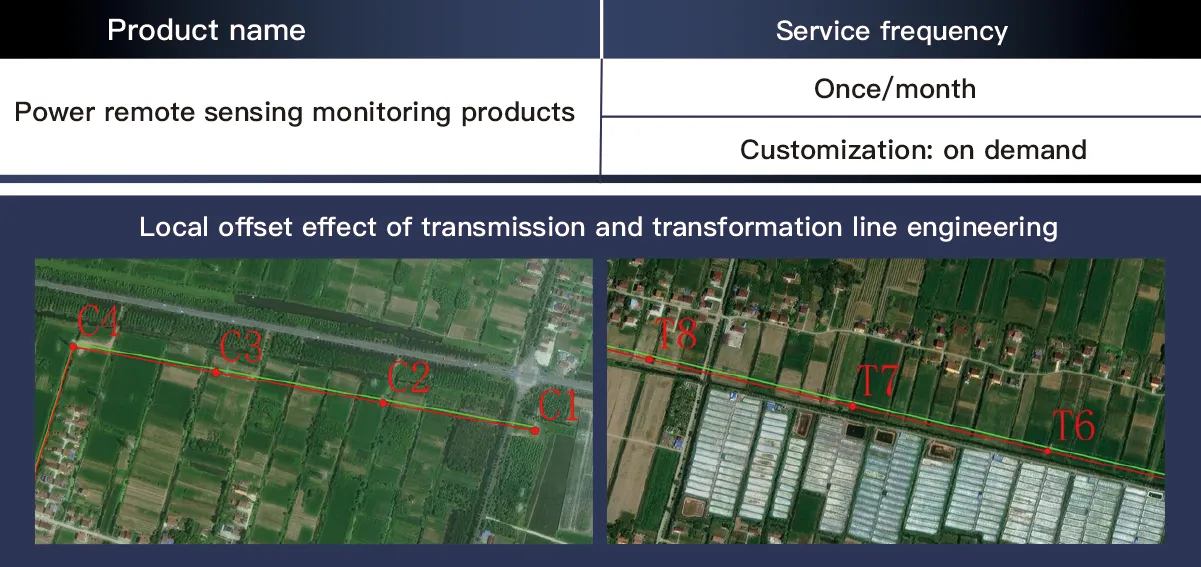
Figure 1: Illustrative workflow for remote sensing data acquisition, processing, and application in various industries.
Technical Specifications and Parameters of Processed Remote Sensing Data
The utility of `processed data` is directly tied to its technical specifications. Our `remote sensing data` products are meticulously designed and delivered with parameters that meet stringent industry requirements, ensuring suitability for sophisticated analytical tasks.
Key Data Parameters
- Spatial Resolution: The smallest discernible feature on the ground. Ranges from sub-meter (e.g., 0.3m for Maxar WorldView) to tens of meters (e.g., 10m for Sentinel-2). Critical for detailed mapping and object detection.
- Spectral Resolution: The number and width of spectral bands captured. Multispectral (e.g., 4-12 bands) vs. Hyperspectral (hundreds of bands). Determines the ability to differentiate materials and land cover types.
- Temporal Resolution (Revisit Rate): How frequently a sensor can acquire data over the same area. Varies from daily (e.g., PlanetScope) to several days or weeks (e.g., Sentinel-1/2). Essential for `time series analysis` and dynamic change detection.
- Radiometric Resolution: The sensor's ability to distinguish between subtle differences in signal intensity, typically expressed in bits (e.g., 8-bit, 12-bit, 16-bit). Higher radiometric resolution allows for more nuanced analysis.
- Geometric Accuracy: The precision of geographic positioning, typically quantified by RMSE (Root Mean Square Error). Our standard is less than 1.5 meters RMSE for high-resolution products.
- Data Format: Common formats include GeoTIFF, NetCDF, HDF5, JPEG2000, and GIS-ready vector formats (Shapefile, GeoJSON).
Product Specification Table: High-Resolution Satellite Data Packages
Below is a representative overview of typical specifications for our high-resolution `satellite remote sensing data` packages, reflecting the `processed data` quality and precision required by our clients.
| Parameter | "Precision" Package | "Advanced" Package | "Premium" Package |
|---|---|---|---|
| Spatial Resolution (Optical) | 0.5m - 0.8m | 0.3m - 0.5m | <0.3m (Stereo/Tri-Stereo) |
| Temporal Resolution (Revisit) | 1-3 days (tasking) | <24 hours (with tasking) | Hourly to Daily (constellation-dependent) |
| Spectral Bands | 4-8 (Visible, NIR) | 8-12 (Visible, NIR, SWIR) | 12+ (Visible, NIR, SWIR, Red Edge) |
| Geometric Accuracy (RMSE) | <3.0m CE90 | <1.5m CE90 | <0.5m CE90 (Ortho-ready) |
| Radiometric Resolution | 11-bit | 12-bit | 16-bit |
| Delivery Format | GeoTIFF, JPEG2000 | GeoTIFF, NetCDF, Shapefile | GeoTIFF, NetCDF, HDF5, GeoJSON |
| Typical Applications | General mapping, Land cover classification | Detailed asset monitoring, Change detection | Precision agriculture, Urban analytics, Infrastructure inspection |
Note: CE90 refers to Circular Error 90%, meaning 90% of the points will fall within the specified error radius.
Application Scenarios for Advanced Remote Sensing Data
The versatility of remote sensing data translates into a myriad of critical applications across numerous B2B sectors. Our `processed data` empowers decision-makers with spatial intelligence that drives efficiency, mitigates risk, and informs strategic investments.
- Energy Sector (Oil & Gas, Renewables):
- Pipeline Monitoring: Utilizing `satellite remote sensing data` (especially SAR Interferometry - InSAR) for detecting ground deformation (subsidence, uplift) along pipeline corridors, identifying potential leaks, and monitoring encroachment by unauthorized construction. `Time series analysis` is crucial here for tracking subtle movements over time, providing early warnings.
- Site Selection & Environmental Impact Assessment: Assessing optimal locations for solar farms, wind turbines, or new well sites, including terrain analysis, land cover mapping, and monitoring environmental changes post-construction.
- Asset Integrity & Maintenance: Monitoring the structural integrity of platforms, refineries, and storage tanks for changes in surface characteristics or thermal anomalies using optical and thermal `remote sensing data`.
- Financial Services & Investment:
- Real Estate & Infrastructure Development: Tracking construction progress, assessing property value changes based on surrounding infrastructure development, and monitoring urban sprawl. `Data manipulation` of land use classifications provides valuable insights for market analysis.
- Commodity Trading: Estimating agricultural yields, tracking mining activity, and monitoring global shipping traffic (port congestion) to inform investment strategies in commodity markets. For instance, `time series analysis` of crop health indicators (NDVI) can predict harvest outcomes.
- Insurance Risk Assessment: Assessing flood risk, wildfire exposure, and post-catastrophe damage assessment for claims processing.
- Mining & Raw Materials:
- Tailings Dam Monitoring: Using InSAR to detect subtle ground movements and structural changes in tailings dams, a critical safety and environmental application.
- Mine Expansion & Rehabilitation: Mapping changes in mine footprint, assessing vegetation recovery, and monitoring environmental compliance during and after operations.
- Urban Planning & Smart Cities:
- Urban Growth Monitoring: Tracking urban expansion, population density changes, and infrastructure development.
- Environmental Quality: Monitoring air quality indicators (e.g., NO2, SO2 from satellite), heat islands, and green space distribution.
Technical Advantages of Our Remote Sensing Data Solutions
Our commitment to delivering superior `processed data` is underpinned by a series of technical advantages that set our solutions apart. These advantages ensure not only high-quality data but also actionable insights tailored to complex B2B needs.
- Multi-Sensor Fusion & Advanced AI/ML: We integrate data from various sensor types (optical, SAR, LiDAR) and leverage cutting-edge AI/ML algorithms for automated feature extraction, change detection, and predictive analytics. This significantly enhances the accuracy and richness of insights derived from raw `remote sensing data`. For example, combining SAR's all-weather capability with optical's spectral richness provides a robust and comprehensive monitoring solution.
- Scalable Cloud Infrastructure: Our data processing pipeline runs on a highly scalable cloud infrastructure, enabling the rapid processing of petabytes of `satellite remote sensing data`. This ensures that even large-scale, global monitoring projects can be handled efficiently, delivering `processed data` in a timely manner.
- Proprietary `Data Manipulation` Algorithms: Beyond standard corrections, we employ proprietary algorithms for advanced atmospheric correction, precise orthorectification, and noise reduction, especially for SAR data. This results in cleaner, more accurate, and consistent `processed data` suitable for quantitative analysis, particularly for demanding `time series analysis`.
- High Temporal Resolution for `Time Series Analysis`: Access to diverse satellite constellations allows us to offer unmatched temporal resolution. This capability is critical for `time series analysis` applications such as monitoring construction progress, tracking industrial activity, or assessing environmental changes with high frequency and precision.
- Robust Data Validation & Quality Control: Every `processed data` product undergoes rigorous quality assurance, including independent validation against ground truth data and adherence to international geospatial data standards (e.g., ISO 19157). This ensures the utmost reliability and trustworthiness of our deliverables.
- Expertise in Industry-Specific Analytics: Our team comprises geospatial scientists and industry specialists with deep domain knowledge in energy, finance, and infrastructure. This enables us to translate raw `remote sensing data` into highly relevant, industry-specific insights and metrics, moving beyond generic maps to actionable intelligence.
Vendor Comparison: Evaluating Providers of Remote Sensing Data Services
Choosing the right vendor for `remote sensing data` services is a critical strategic decision for businesses seeking to leverage geospatial intelligence. A thorough comparison should consider not only raw data access but also processing capabilities, analytical depth, and customer support. Our offerings stand out by focusing on high-value `processed data` and tailored solutions.
Comparative Analysis of Key Remote Sensing Data Service Providers
| Feature/Provider | Our Solution (Space-Navi) | Generic Data Provider A (Raw Data Focus) | Generic Analytics Platform B (Self-Service) |
|---|---|---|---|
| Primary Offering | Custom `Processed Data` & Analytical Insights | Raw `satellite remote sensing data` archive | Toolbox for `data manipulation` & visualization |
| Data Sources | Multi-sensor (Optical, SAR, LiDAR); Global Coverage; Partner Network | Single/Limited sensor types; Public/Commercial archives | Aggregated public data; Limited commercial integration |
| Processing & Algorithms | Advanced AI/ML, proprietary algorithms for `data manipulation` and `time series analysis` | Basic geometric/radiometric correction only | User-driven tools, limited advanced AI/ML |
| Output Deliverable | Actionable reports, dashboards, API-ready `processed data` | Raw imagery files (e.g., GeoTIFF) | Visualizations, basic analytics, user-exported data |
| Customization | High: Tailored solutions, specific KPIs, API integration | Low: Standard product catalog | Medium: Configurable dashboards/queries |
| Domain Expertise | Deep industry-specific knowledge (Energy, Finance) | General geospatial knowledge | Technical platform knowledge |
| Support & Service | Dedicated account management, technical support, consulting | Basic technical support for data access | Online documentation, community forum, limited direct support |
The above table highlights our strength in delivering high-value, tailored `processed data` and analytics, distinguishing us from raw data providers and generic self-service platforms.
Customized Solutions for Remote Sensing Data Integration
Recognizing that off-the-shelf solutions rarely address the full spectrum of complex business challenges, we specialize in developing highly customized `remote sensing data` solutions. Our approach begins with a deep understanding of our client's operational workflows, strategic objectives, and existing IT infrastructure.
Our customization capabilities extend to:
- Tailored Data Product Development: We can design and deliver bespoke `processed data` products. This includes specific feature extraction (e.g., custom object classes), unique change detection parameters, or specialized indices relevant to niche applications. For example, for an energy client, we developed a proprietary algorithm for identifying vegetation encroachment along transmission lines that also estimates tree height and species, optimizing pruning schedules.
- API Integration & Workflow Automation: Our `processed data` can be delivered directly into client systems via robust APIs, ensuring seamless integration with existing GIS, ERP, or asset management platforms. We automate data fetching, `data manipulation`, and analytical workflows to minimize manual intervention and maximize operational efficiency.
- Custom Analytics and Dashboards: Beyond raw `processed data` delivery, we develop interactive dashboards and analytical tools that visualize key performance indicators (KPIs) derived from `remote sensing data`. These dashboards are designed to meet specific reporting requirements and facilitate intuitive decision-making, often incorporating `time series analysis` to track trends.
- Multi-Source Data Fusion: We excel in fusing `satellite remote sensing data` with ground-based sensor data, historical records, and client-specific proprietary datasets. This creates a holistic view that enhances the accuracy and predictive power of our models. For instance, combining satellite-derived ground deformation with in-situ tiltmeter readings for critical infrastructure monitoring.
- Expert Consultation & Model Development: Our team of geospatial engineers and data scientists works collaboratively with clients to refine analytical models, validate results, and evolve solutions as business needs change. This partnership ensures that the `remote sensing data` continuously provides maximum value.
By providing deeply integrated and customized solutions, we ensure that the power of `remote sensing data` is fully harnessed to solve unique industry challenges and drive measurable business outcomes.
Application Case Studies: Real-World Impact of Remote Sensing Data
Case Study 1: Energy Infrastructure Integrity Monitoring
Client: A leading international oil and gas pipeline operator with over 10,000 km of high-pressure pipelines across diverse terrains.
Challenge: The client faced significant operational risks and high inspection costs due to ground movement, illegal tapping attempts, and environmental degradation affecting their extensive pipeline network. Traditional ground-based inspections were costly, time-consuming, and often dangerous in remote areas.
Solution: We implemented a continuous monitoring solution utilizing `satellite remote sensing data`, specifically a blend of high-resolution optical imagery for encroachment detection and C-band SAR (Sentinel-1) for InSAR-based ground deformation analysis. Our `processed data` pipeline generated weekly deformation maps with sub-centimeter accuracy and daily change detection alerts for new construction or activity near pipelines.
Results:
- Cost Reduction: Reduced ground inspection costs by approximately 45% within the first year by focusing resources on high-risk areas identified by `remote sensing data`.
- Risk Mitigation: Detected 12 critical ground deformation events (subsidence >5cm/year) and 37 instances of unauthorized construction activity within a 1km buffer of pipelines, preventing potential ruptures and significant environmental damage. The `time series analysis` of deformation allowed for proactive maintenance scheduling.
- Operational Efficiency: Enabled proactive maintenance scheduling and enhanced emergency response capabilities through near real-time alerts delivered via a custom API integrated into their asset management system.
Case Study 2: Financial Portfolio Monitoring for Real Estate Investment
Client: A global real estate investment fund managing a multi-billion-dollar portfolio across North America and Europe.
Challenge: The client needed real-time, objective insights into construction progress, occupancy rates, and surrounding infrastructure development for thousands of commercial and residential properties in their portfolio. Traditional methods relied on sporadic site visits and often subjective local reports, leading to information asymmetry and delayed decision-making.
Solution: We provided an integrated platform leveraging `satellite remote sensing data` (PlanetScope for daily monitoring, Maxar for high-resolution detail) coupled with AI-driven `data manipulation` and `time series analysis`. The solution automatically detected new construction starts, tracked progress (e.g., foundation, structural, completion phases), estimated building footprints, and monitored parking lot occupancy as a proxy for commercial activity. Data was delivered as quantifiable metrics and interactive dashboards.
Results:
- Enhanced Investment Decisions: Provided independent verification of development milestones, allowing for more timely investment and divestment decisions. Identified a 15% discrepancy in reported vs. actual construction progress across a sample portfolio, leading to renegotiated terms.
- Market Intelligence: Enabled the fund to monitor competitor activity and emerging development trends in target markets, giving them a competitive edge in site selection.
- Operational Oversight: Reduced reliance on costly and infrequent site visits, leading to an estimated 30% saving in operational overhead for portfolio monitoring.
Trust and Transparency: FAQs, Lead Times, Warranty & Support
Frequently Asked Questions (FAQ)
- Q: What is the typical turnaround time for `remote sensing data` requests?
A: For archive data, delivery is typically within 24-48 hours. For new acquisitions or complex `processed data` solutions, lead times range from 3-10 business days, depending on sensor availability, cloud cover, and processing complexity. Urgent requests can often be expedited. - Q: How do you ensure the accuracy of your `processed data`?
A: We employ a multi-stage quality assurance protocol, including rigorous radiometric and geometric corrections, independent validation against ground truth, and adherence to ISO 19157 data quality standards. Our algorithms for `data manipulation` are continuously refined and tested. - Q: Can your solutions integrate with our existing GIS platform?
A: Absolutely. Our `processed data` and analytical insights are designed for seamless integration via standard geospatial formats (GeoTIFF, Shapefile, GeoJSON) and robust APIs compatible with most enterprise GIS, ERP, and BI systems. - Q: Do you offer trial access or demonstration projects?
A: Yes, for qualified B2B clients, we offer pilot projects or data samples to demonstrate the value and capabilities of our `remote sensing data` solutions. Please contact our sales team to discuss your specific requirements. - Q: What types of `satellite remote sensing data` do you use?
A: We leverage a diverse array of global satellite constellations, including high-resolution optical (e.g., Maxar, PlanetScope), SAR (e.g., Sentinel-1, ICEYE), and publicly available datasets (e.g., Sentinel-2, Landsat), allowing us to select the optimal data source for each unique application.
Lead Time & Fulfillment Details
Our streamlined fulfillment process ensures timely delivery of `processed data` and insights:
- Standard Data Products: Typically delivered within 1-3 business days post-order confirmation.
- New Tasking Orders (Optical/SAR): Subject to satellite availability and weather conditions, with typical fulfillment within 3-7 business days for acquisition, followed by 2-3 business days for processing.
- Custom Analytical Solutions: Project timelines are defined post-scoping phase, with clear milestones and regular communication. Initial `processed data` delivery for validation typically within 2-4 weeks.
- Data Delivery: Via secure cloud transfer (SFTP, AWS S3, Google Cloud Storage) or direct API integration.
Warranty & Service Level Agreements (SLAs)
We stand behind the quality and reliability of our `remote sensing data` products and services:
- Data Accuracy Warranty: We guarantee that our `processed data` meets the specified technical parameters (e.g., geometric accuracy, spatial resolution) as outlined in our product specifications and agreed-upon SLAs. Any discrepancy reported within 30 days of delivery will be investigated and rectified.
- Service Uptime Guarantee: For API-driven services and hosted platforms, we offer an uptime guarantee of 99.5% or higher, with clearly defined service credits for any deviation (as per signed SLA).
- Data Consistency: For `time series analysis` products, we ensure radiometric and geometric consistency across acquisitions to enable accurate temporal change detection.
Customer Support & After-Sales Service
Our commitment extends beyond data delivery. We provide comprehensive support to ensure our clients maximize the value of their `remote sensing data` investments:
- Dedicated Account Manager: Each client is assigned a dedicated account manager for personalized communication and strategic guidance.
- Technical Support: Our team of geospatial experts is available to assist with data integration, technical queries, and troubleshooting. Support is available via phone, email, and a dedicated client portal during business hours (Mon-Fri, 9 AM - 5 PM local time, with extended hours for premium support plans). Response times are guaranteed within 4-8 business hours for critical issues.
- Training & Documentation: We provide comprehensive documentation, user guides, and tailored training sessions to empower client teams in utilizing our `processed data` and platforms effectively.
- Feedback Loop: We actively solicit client feedback to continuously improve our products and services, fostering long-term partnerships.
References
- European Space Agency. (2023). Copernicus Sentinel Data. Retrieved from https://sentinel.esa.int/
- National Research Council. (2007). Observing the Earth from Space: How Scientists Use Satellites to Study Our World. The National Academies Press.
- Food and Agriculture Organization of the United Nations. (2020). Remote sensing for agricultural monitoring: a review. Retrieved from https://www.fao.org/geospatial/news/detail/en/c/1269384/
- ISO 19157:2013. Geographic information -- Data quality. International Organization for Standardization.
- United States Geological Survey. (2023). Landsat Missions. Retrieved from https://www.usgs.gov/core-science-systems/nli/landsat
- Planet Labs Inc. (2023). Planet Imagery & Data. Retrieved from https://www.planet.com/products/basemaps-monitoring/
- Ferretti, A., Monti, F., Novali, F., & Perfetti, N. (2011). InSAR for Pipeline Monitoring. Geocarto International, 26(1), 5-18.