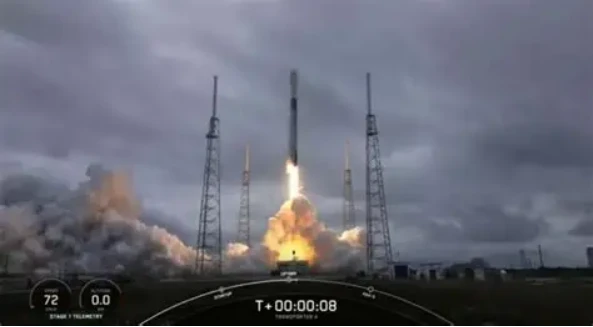
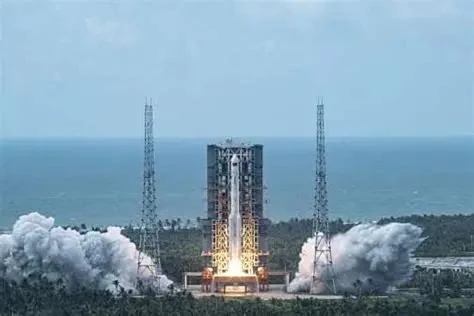
The orbital inclination of a satellite (the angle between the orbital plane and the equatorial plane) directly determines launch efficiency, and the two types of launch sites differ significantly in their adaptability:
For example:
- To launch a geostationary orbit (GEO) satellite (inclination 0°), the platform can be moved to waters near the equator (e.g., the equatorial doldrums). The rocket can enter orbit directly without consuming fuel to adjust the inclination, increasing fuel efficiency by 10%-15%.
- To launch a polar orbit satellite (inclination 90°), the platform can be relocated to high-latitude waters, avoiding rocket overflight over populated land areas.
-
When launching polar orbit satellites, it is necessary to consider whether the rocket trajectory will pass over land. For instance, Vandenberg Space Force Base, located on the U.S. West Coast, is suitable for polar orbits because its trajectory can directly traverse the Pacific Ocean.
- Offshore Platforms: Advantage lies in being "far from densely populated areas" — in the event of a launch failure, rocket debris will most likely fall into the ocean, posing no threat to human life or property on land. However, the disadvantage is "higher difficulty in maritime rescue": in cases of fuel leakage, fires, or other accidents, reliance on supporting rescue vessels results in slower response times compared to land.
- Land Launch Sites: Require "designation of fixed no-fly zones and evacuation ranges" — residents within 50-100km of the site must be evacuated before launch, and the rocket trajectory must avoid key areas such as cities and airports. The advantage, however, is a mature land-based rescue system (e.g., fire trucks and ambulances can arrive quickly), enabling timely handling of failures.
- Offshore Platforms: Core focus is "preventing marine pollution" — leakage of rocket fuels (e.g., kerosene, liquid oxygen) may contaminate seawater. Therefore, platforms must be equipped with fuel recovery devices, and marine debris must be cleared after launch. Additionally, ecologically sensitive marine areas (e.g., coral reefs, fishing grounds) must be avoided.
- Land Launch Sites: Core focus is "reducing impacts on terrestrial ecosystems" — the site must be far from nature reserves and arable land. High-temperature gas and noise generated during launch must be controlled through deflector trenches and noise insulation facilities (e.g., the Wenchang Launch Site uses seawater-cooled deflector trenches to reduce thermal pollution).
Orbital adaptability, safety, and environmental compliance determine "whether a site can be used," while operational costs and mission scenarios determine "whether it should be used."