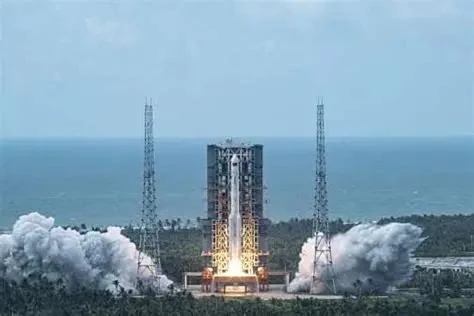
From core positioning and technical design to orbital adaptability, cost, and mission scenarios, we have sorted out the multiple differences between offshore launch platforms and land launch sites—but these differences do not represent an "either-or" choice. Instead, they complement each other by "leveraging their respective strengths" within the aerospace launch system.
Offshore launch platforms are not intended to replace land launch sites; rather, they serve as a "flexible supplement"—addressing the shortcomings of land launch sites in terms of orbital inclination limitations and geographical constraints, while adapting to high-flexibility and special-orbit launch requirements. Meanwhile, land launch sites, with their advantages of "stability, efficiency, and low cost," remain the mainstay for manned spaceflight, deep space exploration, and mass commercial launches.
The combination of the two can form an all-scenario aerospace launch system (e.g., SpaceX in the United States is exploring offshore launch technology to meet the multi-inclination needs of Starlink satellites). In the future, with the development of commercial spaceflight, "land-sea coordination" will become an important trend in aerospace launches, providing optimal solutions for different types of launch missions.