
Nano Camera for Sale: HD FPV, Ultra-Compact - Why Choose It?
Micro‑Nano Camera With A Resolution Of 2m: Field Notes From a Fast-Moving Market
If you’re scanning the market for a nano camera for sale, here’s the inside track. I’ve been speaking with CubeSat integrators and component buyers all year, and one theme keeps popping up: small cameras now punch way above their weight. The Micro‑Nano Camera With A Resolution Of 2m is a good example—lean, light, and surprisingly sharp. In fact, it’s becoming a staple in Earth observation payloads where launch mass is precious and timelines are tight.
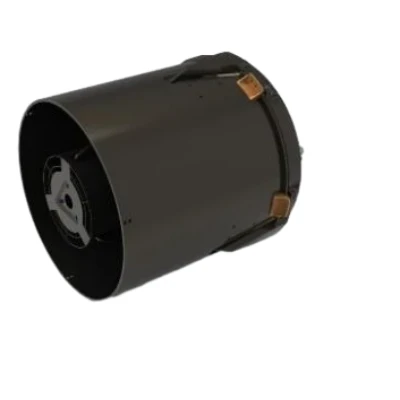
Industry Snapshot
Commercial EO constellations are trending smaller, faster, and more agile. Customers want 2 m GSD-class optics that fit CubeSat buses without sacrificing data quality. Many customers say reliability now matters more than sheer pixel count—if you can survive LEO for 3+ years and deliver stable MTF, you’re in business. This camera seems to sit in that sweet spot.
Indicative Specifications
| Product name | Micro‑Nano Camera With A Resolution Of 2m |
| Ground Sample Distance (GSD) | ≈2 m @ typical LEO altitudes (real‑world use may vary) |
| Optics | Precision glass optics, low‑scatter coatings; stray‑light baffles |
| Sensor | Radiation‑tolerant CMOS, global shutter (configurable) |
| Mass / Size | Around sub‑kilogram class; CubeSat‑friendly envelope |
| Interfaces | Standard digital video + payload power rails (customizable) |
| Operating temp | LEO‑qualified thermal range with passive/active control options |
Process Flow, Materials, and Testing
- Materials: radiation‑tolerant CMOS die; aluminum alloy or CFRP structures; AR‑coated optical glass; blackened baffles.
- Methods: precision polishing, cleanroom assembly (≈ISO 7), optical alignment and boresight verification.
- Testing: MTF and SFR per ISO 12233; thermal‑vacuum per ECSS‑Q‑ST‑70/GEVS guidance; random vibration and shock; EMC checks (MIL‑STD‑461 methodologies).
- Service life: commonly engineered for ≈3–5 years in LEO, depending on duty cycle and radiation environment.
- Industries: EO constellations, agriculture/forestry mapping, disaster response, smart city monitoring, maritime domain awareness.
Application Scenarios and a Quick Case
Typical use cases include wide‑area monitoring, taskable regional imaging, and cross‑cueing with AIS or SAR. One integrator shared a telling anecdote: a 6U CubeSat using a 2 m GSD optical block captured a post‑storm flooding sequence that, after simple ortho, let analysts estimate inundation over several districts within hours. Not cinematic, but operationally gold.
Advantages We’re Seeing
- Small size, light weight—lower launch costs and easier thermal management.
- High resolution for the class—2 m is a practical balance of coverage and detail.
- CubeSat compatibility—clean mechanical and electrical integration.
- Customization pathway—spectral filters, mechanical interfaces, and data pipelines are tweakable.
Vendor Comparison (condensed)
| Vendor | GSD (approx.) | Mass | Lead Time | Standards Support |
|---|---|---|---|---|
| Space‑Navi 2m Micro‑Nano | ≈2 m | Sub‑kg class | ≈8–16 weeks (project‑dependent) | ISO 12233 testing; ECSS/GEVS‑style qual |
| Vendor B (generic) | 3–5 m | ≈1–2 kg | 12–20 weeks | Basic thermal/vibe |
| Vendor C (generic) | ≈1.5–2.5 m | ≈1 kg | 10–14 weeks | EMC + limited TVAC |
Customization & Support
Options typically include spectral filters (VIS/NIR), interface boards, and line‑item documentation for AIT. Buyers of nano camera for sale solutions often request on‑orbit calibration scripts and boresight files; those are available on request in many programs.
Customer Feedback, Certifications
It seems that teams appreciate the straightforward integration and consistent MTF numbers. Third‑party labs commonly reference ISO 12233 for resolution testing; environmental campaigns align with ECSS and NASA GEVS guidance. To be honest, paperwork matters: ask for test matrices, lot‑level QC summaries, and radiometric characterization notes before PDR.
Origin: No. 1299 Mingxi Road,Beihu Science and Technology Development Zone,Changchun,Jilin Province.
If you’re shortlisting a nano camera for sale for a 3U–12U platform, this 2 m unit deserves a look—tight spec, sensible mass, and a realistic qualification story.
References
- ISO 12233: Photography — Resolution and spatial frequency response. https://www.iso.org/standard/77876.html
- ECSS: Space product assurance and engineering standards. https://ecss.nl/
- NASA GEVS: General Environmental Verification Standard. https://standards.nasa.gov/
- CubeSat Design Specification (Cal Poly). https://www.cubesat.org/











