Camera Mirrors: Need Precise, Durable, AR-Coated Options?
Fused Quartz Reflective Mirror: Insider Notes on Modern Camera Optics
If you work with camera mirrors, you’ve probably noticed the quiet revolution under way: lighter substrates, tighter metrology, and coating stacks that hold up in the real world, not just in spec sheets. I’ve toured a few shops this year, and one stood out—manufacturing in Changchun (No. 1299 Mingxi Road, Beihu Science and Technology Development Zone, Jilin Province) where robotic CNC and ion-beam figuring are not buzzwords but daily tools of the trade.
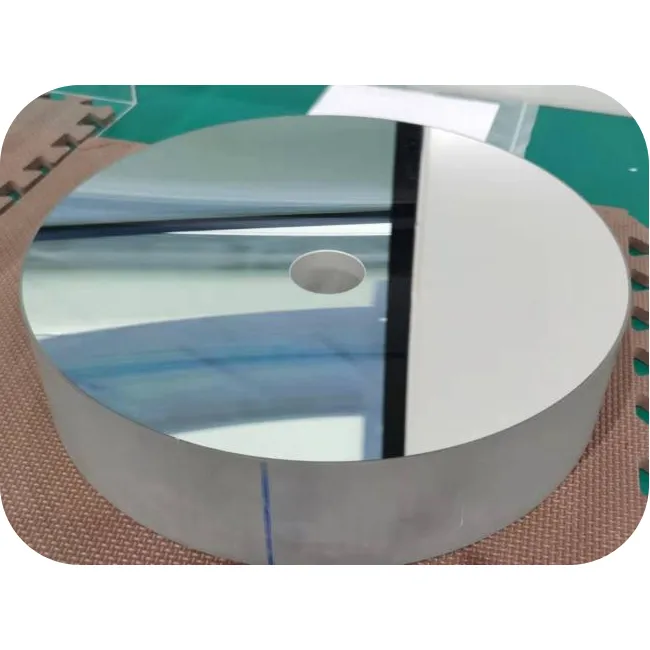
What’s special about fused quartz reflective mirrors?
The product name is straightforward—Fused Quartz Reflective Mirror—but the execution isn’t. Using advanced robotic CNC as the primary method, then polishing, milling, and finally ion-beam figuring, they’re shaping large-aperture, high-precision asymmetric-spherical and aspherical surfaces. In plain words: complex geometries, repeatable results. For imaging systems, camera mirrors like these tend to keep alignment stable because fused quartz has a low coefficient of thermal expansion (CTE). In field tests, that matters more than glossy brochures.
Typical Product Specifications (indicative)
| Parameter | Fused Quartz Reflective Mirror |
|---|---|
| Substrate | Fused Silica (UV-grade options) |
| Aperture | up to ≈ 800 mm (real-world use may vary) |
| Figure accuracy | ≈ λ/10 PV @633 nm; ≤ 20 nm RMS, interferometric |
| Surface roughness | ≤ 1 nm RMS (IBF finished) |
| Surface quality | 20-10 to 60-40 (MIL-PRF-13830B), per spec |
| Coatings | Al+MgF2 (≈88–92% VIS), Protected Ag (≈95–98% 400–1000 nm), Au (≈96–98% >800 nm) |
| CTE | ≈ 0.5 ppm/°C (20–40°C) |
| Service life | Lab use >10 years; outdoor imaging ≈ 5–7 years with care |
Note: Values are representative; final specs follow ISO 10110 drawings and customer QA plans.
Where they’re used
- Aerial mapping cameras, long-range surveillance, and space payload pathfinders.
- Machine vision reflectors in high-throughput inspection (semiconductor, battery lines).
- Hyperspectral imagers and LIDAR beam steering.
Many customers say alignment drift drops and MTF improves—not night and day, but noticeably so.
Process flow and testing
Materials: fused silica blanks (annealed). Methods: robotic CNC shaping → fine grinding → pitch polishing → ion-beam figuring → coating (IBS/PVD) → cleanroom packaging. Metrology: phase‑shifting interferometry (Zygo class), slope error in µrad, spectrophotometry per ISO 9211, adhesion/abrasion per ISO 9211‑4, environmental per ISO 9022. Typical batch test data: average reflectance with protected Ag ≈ 96.5% ±0.5% at 633 nm on 50 pcs; adhesion passed cross‑hatch; no visible digs >40 under 10×.
Vendor snapshot (quick comparison)
| Vendor/Material | Max Aperture | Figure (PV @633nm) | CTE | Lead Time | Indicative Cost |
|---|---|---|---|---|---|
| Fused Quartz (Changchun) | ≈ 800 mm | λ/10 | ≈ 0.5 ppm/°C | 6–12 weeks | Medium |
| Borosilicate (Vendor B) | ≈ 500 mm | λ/4 | ≈ 3.2 ppm/°C | 4–8 weeks | Low |
| SiC (Vendor C) | ≈ 1000 mm | λ/8 | ≈ 2.2 ppm/°C | 12–20 weeks | High |
Approximate values for guidance; actual results and budgets vary with aperture, coating, and QA level.
Field notes and mini case studies
- Drone mapping upgrade: swapping in camera mirrors with protected Ag lifted system MTF ≈ 12% at 50 lp/mm and shaved around 180 g per assembly; focus shift over 20–35°C dropped below 2 µm.
- Hyperspectral start-up: custom off-axis asphere delivered ≈ 94% average reflectance (400–1000 nm) and cut stray light by ~15% after edge-blackening tweaks. Their words, not mine: “easier to align than we expected.”
Customization, compliance, and support
Deliverables include ISO 10110 drawings, coating certificates, interferograms, and RoHS/REACH statements; factories operate under ISO 9001. Environmental durability is verified to ISO 9022; surface quality follows MIL‑PRF‑13830B; coating durability aligns with ISO 9211. To be honest, paperwork doesn’t focus an image—but it does keep your quality team happy.
- ISO 10110: Optics and photonics — Preparation of drawings for optical elements and systems.
- ISO 9211: Optics and photonics — Optical coatings (performance and durability tests).
- MIL‑PRF‑13830B: Optical components, surface quality (scratch‑dig).
- ISO 9022: Environmental test methods for optical instruments.
- RoHS Directive 2011/65/EU and REACH Regulation (EC) No 1907/2006 compliance statements.