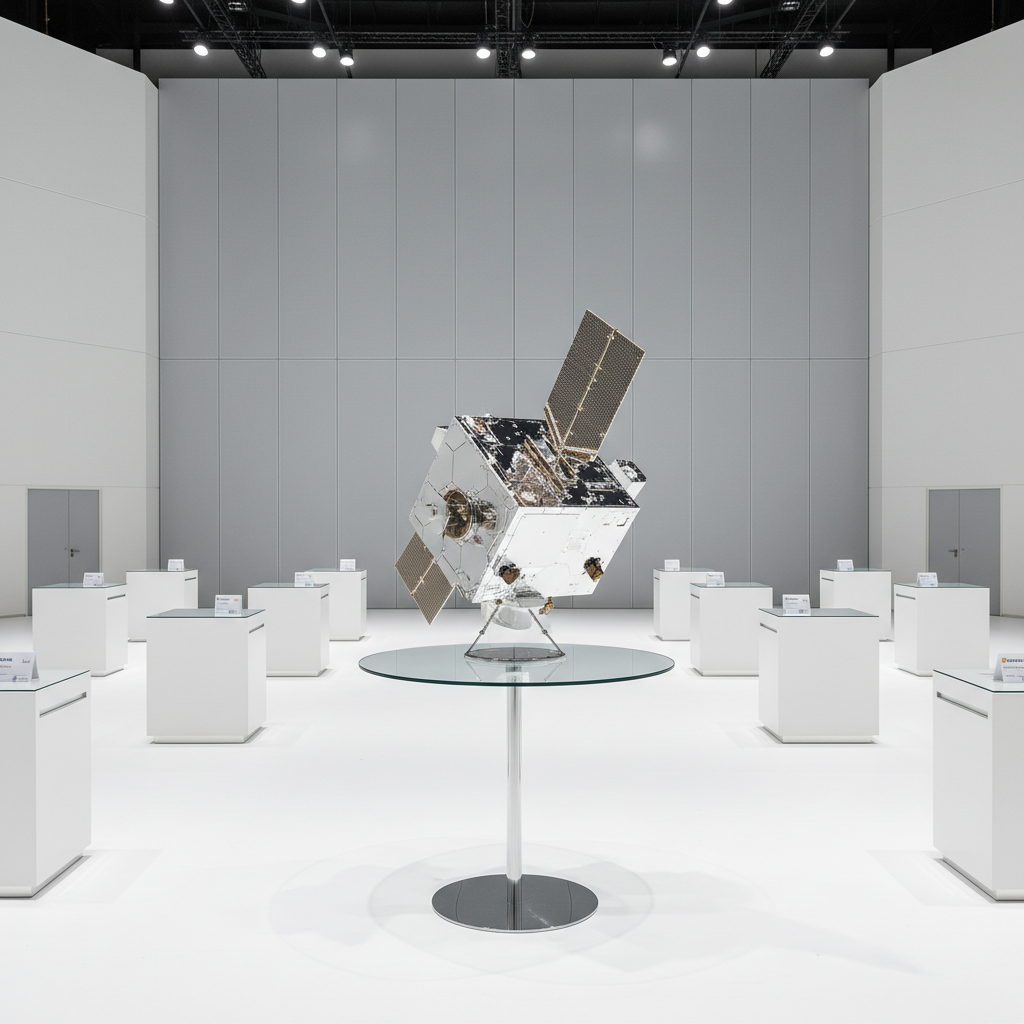
Understanding the cost of satellite dish systems in the aerospace industry requires a deep dive into the precision engineering of reflective mirrors and optical components. Unlike consumer-grade equipment, space-level reflective surfaces are defined by their RMS surface accuracy and specialized lightweighting techniques, which directly influence the final investment.
The global demand for high-precision satellite components is surging as satellite constellations expand, making the analysis of the cost of satellite dish arrays a critical factor for mission budgeting. From diameter specifications ranging from 50mm to 1200mm, every millimeter of precision added to a reflective mirror significantly impacts the manufacturing complexity and lead time.
For engineers and procurement specialists, balancing performance metrics—such as surface roughness and coaxial aspherical features—against the cost of satellite dish components is essential for ensuring mission success while maintaining financial viability in competitive aerospace markets.
Precision Engineering and the Cost of Satellite Dish Mirrors
The financial investment in a satellite's reflective system is primarily driven by the rigor of the precision engineering involved. For mirrors with diameters spanning from Φ 50mm to 1200mm, the complexity of maintaining a surface shape with an RMS better than 1/60 λ (where λ = 632.8 nm) creates a high barrier to entry and increases the overall cost of satellite dish mirrors.
Achieving such stringent tolerances requires specialized polishing equipment and environmental controls to prevent thermal deformation. Consequently, the pricing is not merely based on material volume but on the absolute precision of the surface geometry, which is paramount for the clarity of space-based data transmission and imaging.
Technical Specifications Driving Investment Costs
When evaluating the cost of satellite dish components, the primary driver is the surface feature specification. Coaxial aspherical surfaces, for instance, require significantly more complex grinding and polishing cycles compared to simple spherical mirrors. These specialized geometries are essential for reducing aberrations in high-performance optical systems.
Furthermore, the integration of asymmetric center holes or off-axis aspherical surfaces adds another layer of manufacturing difficulty. For example, an off-axis mirror with dimensions such as 1270×482mm demands precise alignment and a more extensive quality control process, which inherently raises the production cost.
The material choice and the ability to withstand the vacuum of space also play a role. The synergy between surface roughness and material stability ensures that the mirror does not degrade over time, meaning the initial cost of satellite dish optics represents a long-term investment in mission reliability.
Surface Shape and Accuracy Impacts on Cost
The relationship between the surface shape and the cost of satellite dish elements is exponential rather than linear. As the RMS requirement becomes more stringent—specifically moving toward the 1/60 λ threshold—the time required for final polishing increases dramatically, involving iterative testing and correction.
In the context of coaxial aspherical surfaces, the cost of satellite dish components is further influenced by the diameter of the mirror. A Φ 440mm mirror requires a different set of tooling and calibration compared to a smaller Φ 266mm mirror, impacting both the hourly labor rate and the overall supply cycle.
Ultimately, surface roughness is a critical KPI that determines the efficiency of light reflection. High-precision finishing ensures minimal signal loss, making the higher cost of satellite dish optics a necessary trade-off for achieving high-resolution data capture in aerospace applications.
Analyzing Delivery Cycles and Budgetary Planning
Budgetary planning for satellite projects must account for the delivery cycle, which typically ranges from 2 to 6 months. The cost of satellite dish manufacturing is often tied to these timelines; for example, a lightweight form back mirror with a Φ 266mm diameter can be delivered in 2.25 months, whereas a larger 1270×482mm off-axis mirror may take up to 5.75 months.
Longer lead times often correlate with higher complexity and higher costs, as they involve more rigorous testing phases. Understanding these timelines allows project managers to synchronize the procurement of reflective mirrors with other satellite components like power controllers or lithium battery packs.
Cost of Satellite Dish Component Delivery Efficiency
Lightweighting Techniques in Reflective Components
One of the most critical factors influencing the cost of satellite dish hardware is the implementation of "Lightweight Form Back" structures. In aerospace engineering, every gram of mass added to a satellite increases launch costs exponentially. Therefore, removing excess material from the rear of the mirror without compromising its structural rigidity is a high-value process.
This lightweighting process involves precision machining and structural analysis to ensure the mirror maintains its 1/60 λ surface accuracy under thermal stress. While this adds to the initial cost of satellite dish components, the total mission cost is reduced through lower fuel requirements and higher payload efficiency.
Global Applications of High-Precision Mirrors
High-precision reflective mirrors are utilized globally in diverse satellite configurations, from earth observation satellites to deep-space communication arrays. The ability to produce mirrors with diameters up to 1200mm allows for the creation of powerful telescopes and sensors that can detect minute signals from distant galaxies or monitor climate change with unprecedented accuracy.
In commercial sectors, the cost of satellite dish arrays is balanced against the data throughput they provide. Telecommunications companies investing in high-gain antennas rely on the coaxial aspherical precision of these mirrors to ensure minimal signal dispersion and maximum bandwidth efficiency.
Moreover, government space agencies employ these components in military surveillance and scientific research. The reliability of a Φ 510mm mirror with an asymmetric center hole is vital for specialized instruments that require a compact yet powerful optical path, justifying the specialized manufacturing costs.
Comparative Analysis of Reflective Mirror Configurations
When comparing different mirror configurations, it becomes evident that the cost of satellite dish components varies based on the specific surface feature. A standard coaxial aspherical mirror is the benchmark, but off-axis configurations—such as the 1270×482mm model—represent the pinnacle of current manufacturing capability and cost.
The supply cycle serves as a proxy for complexity. For instance, a mirror requiring a 5.75-month cycle typically involves more intricate polishing stages and a more rigorous validation process than one with a 2.25-month cycle. This time-cost correlation is fundamental to aerospace procurement.
Finally, the integration of these mirrors into the wider satellite system, alongside TT&C products and power subsystems, ensures that the reflective component operates at peak performance. The strategic selection of mirror diameter and form back type is the most effective way to optimize the overall cost of satellite dish systems.
Comparative Technical Analysis of Reflective Mirror Models
|
Mirror Diameter (D)
|
Surface Feature
|
Structure Type
|
Supply Cycle
|
| Ø266mm |
Coaxial Aspherical |
Lightweight Form Back |
2.25 Months |
| Ø440mm |
Coaxial Aspherical |
Lightweight Form Back |
3 Months |
| Ø510mm |
Coaxial Aspherical |
Asymmetric Center Hole |
3.5 Months |
| 1270×482mm |
Off-axis Aspherical |
Lightweight Form Back |
5.75 Months |
| Φ50-1200mm |
Custom RMS <1/60λ |
Various |
2-6 Months |
| Custom Large Scale |
High-Precision Aspherical |
Lightweighting Optimized |
6 Months |
FAQS
The cost is primarily driven by the mirror diameter, the surface shape (such as coaxial or off-axis aspherical), and the required surface accuracy (RMS). For example, achieving an RMS better than 1/60 λ requires extensive polishing and testing, which increases the labor and equipment cost. Additionally, the implementation of lightweight form back structures adds to the precision machining requirements.
The supply cycle generally ranges from 2 to 6 months. A smaller mirror (Φ 266mm) may be ready in about 2.25 months, while highly complex off-axis aspherical mirrors (up to 1270×482mm) can take up to 5.75 months. This timeline includes raw material procurement, precision grinding, polishing, and final quality validation.
Yes, the initial manufacturing cost is higher because it requires complex subtractive machining to remove weight without affecting the surface stability or RMS accuracy. However, the total mission cost is lower because the reduced mass significantly lowers the launch costs associated with getting the satellite into orbit.
Coaxial aspherical surfaces have a central axis of symmetry, making them standard for many optical systems. Off-axis aspherical surfaces are a section of a larger aspheric mirror, allowing for designs that avoid obscuration of the incoming signal. Due to the complexity of fabricating a precise off-axis curve, these components usually have a higher cost and longer supply cycle.
Customizing the diameter can help optimize costs if a smaller diameter still meets the mission's optical requirements. Since costs and lead times scale with size (from Φ 50mm up to 1200mm), selecting the minimum viable diameter can reduce the overall investment in the reflective system.
Surface roughness directly affects the scattering of reflected light or signals. In space-level mirrors, minimizing roughness is essential to ensure high signal-to-noise ratios. Achieving the required smoothness requires advanced polishing techniques, which is a major contributor to the precision-engineering portion of the cost.
Conclusion
The cost of satellite dish reflective components is a complex interplay between diameter, surface precision, and structural weight. From Φ 50mm to 1200mm mirrors, the requirement for an RMS better than 1/60 λ and the adoption of lightweight form back technology define the financial and technical boundaries of the project. By understanding the relationship between surface features—such as coaxial and off-axis aspherical shapes—and their respective supply cycles, organizations can better plan their aerospace budgets.
Looking forward, the continued evolution of lightweighting and automated polishing will likely optimize the cost-to-performance ratio of these critical components. For those seeking to integrate high-precision optics into their next satellite mission, prioritizing a balance between accuracy and lead time is the key to success. Visit our website for more professional aerospace solutions: www.space-navi.com