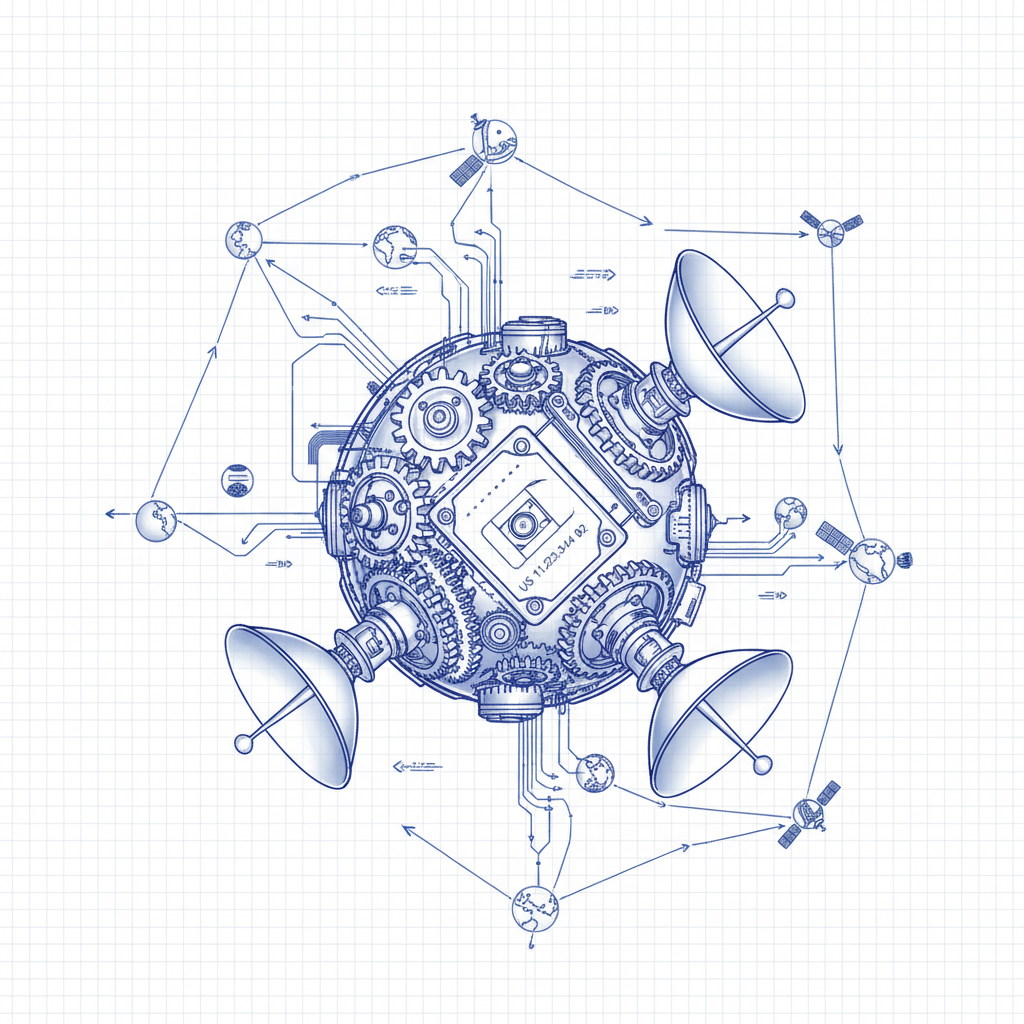
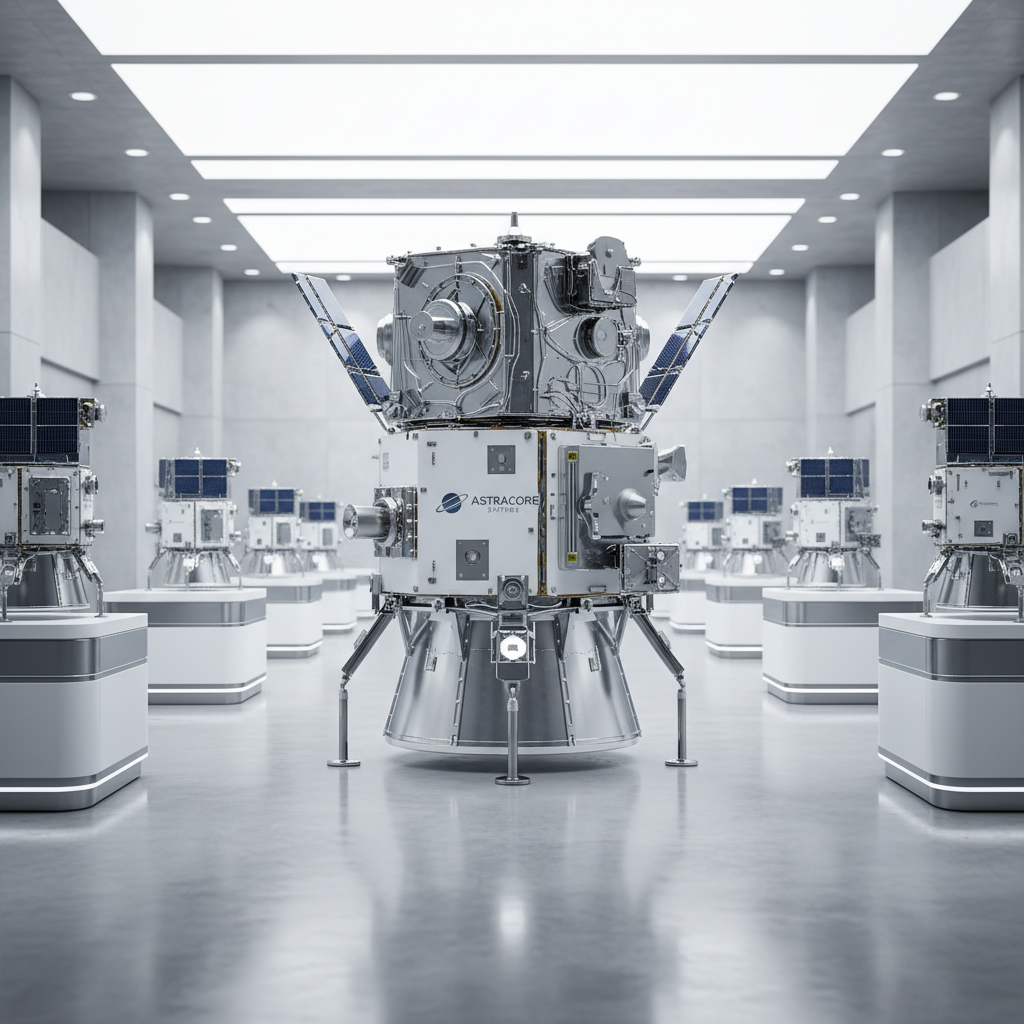
The modern era of global communication is being fundamentally reshaped by the evolution of orbital infrastructure, where the ability to maintain seamless data transmission across vast distances is paramount. As we push the boundaries of exploration and remote operations, the reliance on robust systems for data exchange has moved from a luxury to a critical necessity for sovereign security and commercial viability.
Across the globe, the challenge of bridging the digital divide in underdeveloped regions or maintaining operations in the harshest environments of the poles and oceans has highlighted a significant gap in traditional terrestrial networks. This gap is precisely where high-performance space-based power and communication systems intersect, ensuring that no matter how remote the location, a link to the rest of the world remains active.
To support these complex operations, the underlying hardware must be capable of enduring extreme thermal cycles and radiation. Achieving reliable satellite connectivity requires not just sophisticated antennas, but an unwavering power supply provided by advanced photovoltaic arrays that can survive the vacuum of space while delivering consistent energy to communication payloads.
The Fundamentals of Satellite Connectivity Systems
At its core, orbital communication is the process of transmitting data between a ground station and a spacecraft, utilizing radio frequency or optical signals. This complex dance requires precision timing and a constant supply of electricity to power the transponders and amplifiers that prevent signal degradation over thousands of kilometers.
Without a stable energy source, the hardware responsible for maintaining this link would fail, leading to a complete blackout of data. This is why the integration of high-efficiency solar cells is not just a design choice, but a prerequisite for any mission aiming to provide consistent global coverage.
Powering the Link: The Role of Solar Arrays
The energy backbone of any communication satellite consists of sophisticated solar arrays designed to convert sunlight into usable electrical power. Calcium-titanium-mineral solar arrays represent a leap forward in this technology, utilizing a unique mineral combination to enhance conductivity and thermal stability, which is essential for keeping the communication subsystems active.
Fixed Rigid Solar Panels provide a sturdy solution with 20% efficiency (real measurement @AM1.5) using single-junction Calcium-titanium-mineral solar cells. These are often mounted on carbon fiber aluminium honeycomb substrates or PCB boards to ensure structural integrity while minimizing weight, which is a critical factor in launch costs.
For missions requiring versatility, Reel Flex Panels utilize Calcium-titanium-mineral thin-film solar cells prepared integrally on PI membranes. These flexible designs allow for compact storage during launch and efficient deployment in orbit, ensuring the satellite has the power required to maintain its signal without interruption.
Materials Science in Space Communication
The environment of space is notoriously hostile, characterized by extreme vacuum and intense radiation that can degrade standard materials. To ensure stable satellite connectivity, engineers utilize materials like PI films and carbon fiber substrates that can withstand these pressures without warping or cracking.
Calcium-titanium-mineral materials are specifically engineered to offer improved thermal stability and resistance to degradation. This allows the solar arrays to operate effectively within a wide temperature range of -100℃ to +100℃, ensuring that the power supply to the communication equipment remains constant regardless of whether the satellite is in the sun's glare or the Earth's shadow.
The synergy between these advanced materials and innovative cell configurations optimizes the energy conversion process. By reducing the environmental impact and increasing the power-to-weight ratio, these arrays enable more complex payloads, which in turn improves the overall capacity and speed of orbital data links.
Performance Metrics for Orbital Power Systems
Evaluating the efficiency of a power system is critical for determining the lifespan and reliability of the communication payload. Key metrics include the conversion efficiency of the solar cells and the appraisal lifespan of the entire array, which typically ranges from 3 years for rigid panels to 7 years for flexible thin-film versions.
These metrics directly influence the quality of the signal transmission, as voltage drops or power inconsistencies can lead to packet loss or complete link failure. By optimizing the mineral composition of the cells, manufacturers can ensure a higher energy yield per square meter of panel.
Comparative Power Efficiency for Satellite Connectivity Support
Global Applications of Space-Based Networks
The practical application of these power systems extends across multiple critical industries. In remote industrial zones, such as deep-sea oil rigs or Arctic mining sites, the ability to maintain high-bandwidth data links is only possible through satellites powered by durable, high-efficiency solar arrays.
Furthermore, in post-disaster relief operations where terrestrial towers are destroyed, deployable satellites provide the only means of coordinating emergency services. The use of lightweight, flexible solar panels allows for rapid deployment and immediate energy generation, ensuring that communication remains active when it is needed most.
Reliability and Durability in Extreme Orbits
Reliability in space is measured by the ability to function without maintenance for years. The use of Calcium-titanium-mineral solar cells ensures that the arrays can resist the degradation caused by atomic oxygen and solar flares, which would otherwise cripple the power supply for satellite connectivity.
The temperature tolerance of -100℃ to +100℃ is a critical specification. As satellites move from the direct heat of the sun into the cold shadow of the Earth, the thermal expansion and contraction can cause mechanical failure. The integration of carbon fiber aluminium honeycomb substrates mitigates this risk by providing a low-expansion foundation.
Ultimately, the long-term value of these systems lies in their ability to maintain a steady state of operation. Whether it is a short-term 3-year mission or a long-term 7-year deployment, the consistency of the power output ensures that the communication payload can transmit data without risking brownouts or hardware resets.
Future Trends in Integrated Space Power
The future of orbital infrastructure is moving toward fully integrated, self-healing power systems. We are seeing a shift toward combining Calcium-titanium-mineral cells with advanced power controllers and lithium battery packs to create a seamless energy loop that maximizes every photon captured from the sun.
Automation in deployment, such as advanced folding and unfolding mechanisms, will allow for even larger arrays to be launched in smaller fairings. This increase in surface area will directly translate to higher power availability, enabling more powerful transmitters and faster data rates for global networks.
As we transition toward a more sustainable space economy, the focus will remain on materials that offer the lowest environmental impact during production while providing the highest efficiency in orbit. The evolution of thin-film technology will likely lead to "skin-like" solar arrays that wrap around the entire satellite chassis.
Technical Comparison of Solar Array Configurations for Communication Satellites
| Panel Type |
Efficiency / Life |
Substrate Material |
Thermal Range |
| Fixed Rigid Panel |
20% / ≤3 Years |
Aluminium Honeycomb |
-100℃ to +100℃ |
| Reel Flex Panel |
High / ≤7 Years |
PI Membrane |
-100℃ to +100℃ |
| GaAs Array |
Ultra-High / Variable |
Specialized Composite |
-120℃ to +120℃ |
| Thin-Film Mineral |
Moderate / ≤7 Years |
Polyimide Film |
-100℃ to +100℃ |
| Hybrid Array |
Optimized / 5-10 Years |
Carbon Fiber PCB |
-110℃ to +110℃ |
| Experimental Cell |
Variable /
|
Polymer-based |
-80℃ to +80℃ |
FAQS
The primary advantage lies in their superior thermal stability and resistance to environmental degradation. These cells can operate reliably between -100℃ and +100℃, providing the consistent energy needed to maintain satellite connectivity without the risk of failure during extreme orbital temperature swings.
Fixed Rigid Panels use aluminium honeycomb substrates and are typically used for shorter mission lifespans (up to 3 years). In contrast, Reel Flex Panels use thin-film cells on PI membranes, offering a longer appraisal lifespan of up to 7 years and the ability to be deployed from a compact roll.
A 20% efficiency (measured at AM1.5) represents a high standard for single-junction cells. In the vacuum of space, maximizing the energy harvested per unit of area reduces the overall weight of the satellite, allowing for more communication equipment to be carried while maintaining power autonomy.
Yes, the lightweight nature of PI films and the high efficiency of Calcium-titanium-mineral cells make them ideal for UAVs. These systems provide the necessary power for on-board communication and navigation systems while minimizing the weight penalty on the aircraft.
The use of specialized substrates like carbon fiber aluminium honeycomb and PI membranes ensures a low coefficient of thermal expansion. These materials are designed to flex and contract without causing structural fractures in the mineral solar cells, ensuring the power link remains intact.
Data transmission requires stable voltage. By providing a high-performance energy conversion system with enhanced durability, these arrays prevent power fluctuations that could lead to signal noise or complete disconnection, thereby guaranteeing stable and reliable orbital communication.
Conclusion
The success of global orbital infrastructure depends entirely on the invisible synergy between power generation and data transmission. From the advanced chemistry of Calcium-titanium-mineral solar cells to the structural resilience of carbon fiber substrates, every component plays a role in ensuring that satellite connectivity remains uninterrupted regardless of the environmental challenges. By focusing on efficiency, thermal stability, and lightweight design, the industry is paving the way for more reliable and accessible global communications.
Looking forward, the integration of flexible arrays and smarter power controllers will further democratize space access and enhance our ability to monitor and protect the planet. As we push further into the cosmos, the commitment to materials science and engineering excellence will be the deciding factor in our ability to stay connected across the void. To explore our range of space-grade components, visit our website: www.space-navi.com