- Afrikaans
- Albanian
- Amharic
- Arabic
- Armenian
- Azerbaijani
- Basque
- Belarusian
- Bengali
- Bosnian
- Bulgarian
- Catalan
- Cebuano
- China
- Corsican
- Croatian
- Czech
- Danish
- Dutch
- English
- Esperanto
- Estonian
- Finnish
- French
- Frisian
- Galician
- Georgian
- German
- Greek
- Gujarati
- Haitian Creole
- hausa
- hawaiian
- Hebrew
- Hindi
- Miao
- Hungarian
- Icelandic
- igbo
- Indonesian
- irish
- Italian
- Japanese
- Javanese
- Kannada
- kazakh
- Khmer
- Rwandese
- Korean
- Kurdish
- Kyrgyz
- Lao
- Latin
- Latvian
- Lithuanian
- Luxembourgish
- Macedonian
- Malgashi
- Malay
- Malayalam
- Maltese
- Maori
- Marathi
- Mongolian
- Myanmar
- Nepali
- Norwegian
- Norwegian
- Occitan
- Pashto
- Persian
- Polish
- Portuguese
- Punjabi
- Romanian
- Russian
- Samoan
- Scottish Gaelic
- Serbian
- Sesotho
- Shona
- Sindhi
- Sinhala
- Slovak
- Slovenian
- Somali
- Spanish
- Sundanese
- Swahili
- Swedish
- Tagalog
- Tajik
- Tamil
- Tatar
- Telugu
- Thai
- Turkish
- Turkmen
- Ukrainian
- Urdu
- Uighur
- Uzbek
- Vietnamese
- Welsh
- Bantu
- Yiddish
- Yoruba
- Zulu
A Comprehensive Analysis of the Composition of Low Earth Orbit Satellite Systems: Core Components Under a Modular Architecture
Introduction
Amid the rapid development of commercial aerospace, Low Earth Orbit (LEO) satellites have emerged as core carriers in fields such as satellite internet and remote sensing monitoring, thanks to their advantages of low latency and wide coverage. As complex spacecraft systems, their modular design philosophy not only determines operational efficiency but also impacts the whole-life cycle costs. This paper provides a full breakdown of the overall architecture and core subsystems of LEO satellites, unraveling the underlying logic of their stable operation.
I. Overall Architecture of LEO Satellites: Dual-Core Collaboration Between Payload and Satellite Bus
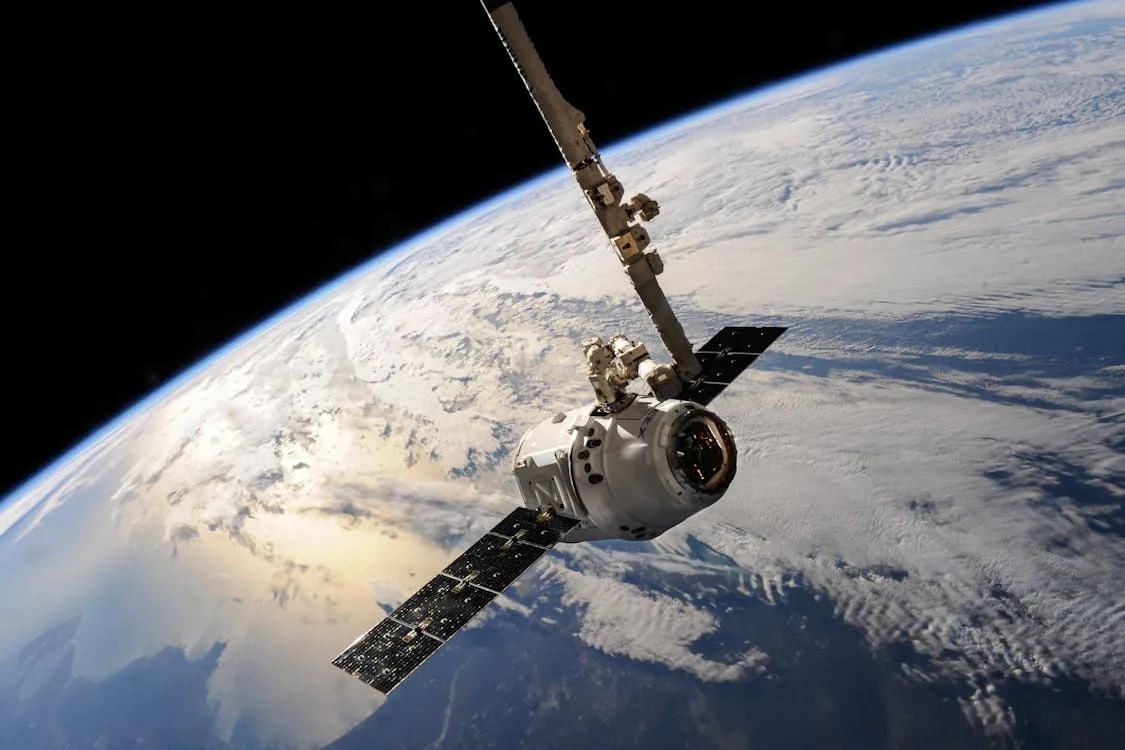
The core design principle of LEO satellites centers on "function-focused and robust support", with the overall architecture divided into two core parts: the Payload and the Satellite Bus.
The payload is the mission execution core of a satellite, directly defining its application value. It is primarily responsible for core functions such as communication, remote sensing and navigation—for instance, signal relaying in communication satellites and image acquisition in remote sensing satellites. Its performance parameters are tailored precisely to the requirements of specific application scenarios. The satellite bus serves as the support and service guarantee, providing the basic conditions for the stable operation of the payload. It covers critical functions including energy supply, attitude control and structural support, acting as the satellite's "logistics support system".
In terms of specifications, LEO satellites vary greatly in weight. Small satellites typically weigh less than 200 kg, with a payload ratio of over 40%. Medium and large LEO satellites represented by Starlink V2.0 Mini weigh approximately 790 kg and adopt a highly integrated modular design, achieving an optimal balance between functionality and weight.
II. Seven Core Subsystems: Key Units with Dedicated Responsibilities
Based on functional characteristics, the satellite bus and payload can be further broken down into seven core subsystems, which collaborate with one another to cope with the harsh space environment:
- Communication Payload System: The core hub of satellite communication, comprising antenna transponders, on-board digital processing payloads, inter-satellite laser payloads, etc. It is responsible for signal transmission with ground terminals, gateway stations and other satellites.
- Electrical Power System (EPS): The power source of a satellite, consisting of solar panels, energy storage batteries and power control units, ensuring power supply under all operating conditions.
- Attitude and Orbit Control System (AOCS): The navigation and control system of a satellite. It ensures precise satellite pointing and orbital stability through attitude sensors, actuators and control algorithms.
- Structural and Mechanism System: The skeletal support of a satellite, including the main load-bearing structure, housing, solar panel support structures, etc., providing mechanical protection and a mounting foundation.
- Thermal Control System (TCS): The temperature regulator of a satellite. It maintains the stable operation of internal equipment under extreme temperature differences through thermal control coatings, heat pipes, radiators and other components.
- Command and Data Handling System (C&DH): The brain center of a satellite, composed of an on-board computer and data storage devices, responsible for command processing, data management and status monitoring.
- Propulsion System: The orbit adjuster of a satellite, including thrusters, propellant tanks and other components, used for orbit maintenance, attitude adjustment and deorbiting operations.
Among them, the communication payload system directly determines the core mission capability of a satellite, the electrical power system is the foundation of its operation, and the attitude and orbit control system affects the accuracy of mission execution. Together, the three form the core functional triangle of LEO satellites.
III. System Design Trends from a Commercial Aerospace Perspective
Currently, the design of LEO satellite systems is evolving toward the direction of high integration, low cost and high reliability. Modular and standardized design has become the mainstream, enabling mass production through a unified platform architecture; the application of lightweight materials (e.g., carbon fiber composites) and high-efficiency devices (e.g., gallium arsenide solar cells) continues to optimize the payload ratio; the implementation of new technologies such as inter-satellite laser communication has further improved the communication efficiency of satellite networks.
For commercial aerospace enterprises, the core of system design lies in balancing performance and cost—not only meeting the stringent requirements of the space environment but also reducing manufacturing costs through technological innovation and large-scale production, laying a solid foundation for the large-scale deployment of satellite internet.