Advancing Agricultural Practices Through Effective Satellite Use in Agriculture
Satellite Use in Agriculture: A Comprehensive Overview
Modern agriculture is increasingly reliant on technology to enhance efficiency, optimize yields, and promote sustainable practices. Among these technologies, satellite technology plays a crucial and expanding role. From precision farming to crop health monitoring and disaster management, satellites provide a wealth of data that empowers farmers and agricultural professionals. This article will explore the various applications of satellite technology in agriculture, outlining the benefits, challenges, and future trends. Understanding satellite use in agriculture is essential for anyone seeking to improve agricultural outcomes and sustainability.
The Core Benefits of Satellite Technology in Agriculture
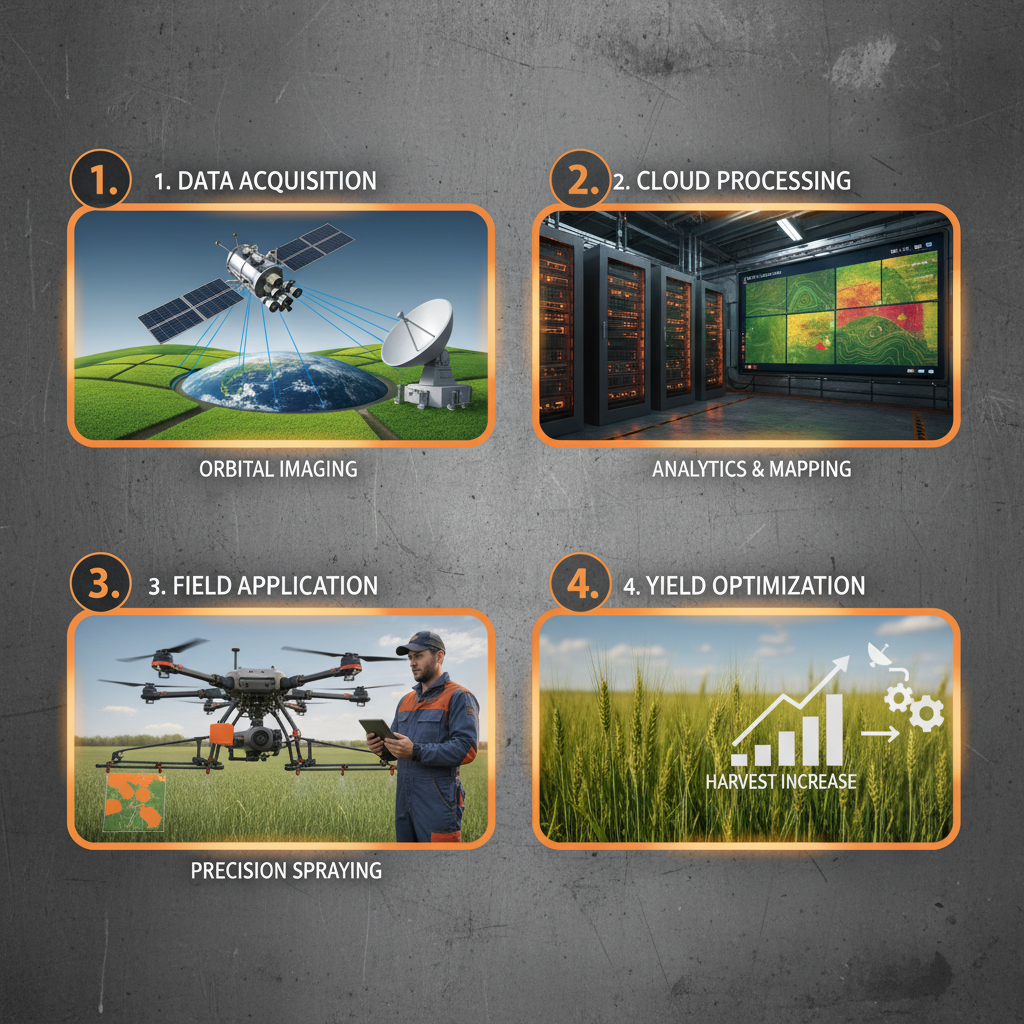
The implementation of satellite technology in agriculture delivers numerous advantages. Primarily, it enables precision farming – the practice of applying inputs (water, fertilizer, pesticides) only where and when needed. This reduces waste, lowers costs, and minimizes environmental impact. Satellites offer large-scale monitoring capabilities, providing a comprehensive view of fields and farms that is difficult, if not impossible, to achieve through traditional methods. Moreover, the data collected can be analyzed to identify patterns, predict yields, and make informed decisions about crop management. Space-Navi provides solutions helping unlock these benefits.
Key Advantages: Improved resource efficiency, reduced environmental impact, increased crop yields, enhanced decision-making, and better risk management.
Specific Applications of Satellite Technology in Farming
The applications of satellite technology in agriculture are diverse and continually expanding. Crop health monitoring, using indices like NDVI (Normalized Difference Vegetation Index), allows farmers to identify areas of stress or disease. Yield prediction models, based on satellite imagery and historical data, help optimize harvesting schedules and manage supply chains. Irrigation management utilizes satellite data to assess soil moisture levels and determine optimal watering strategies. Furthermore, satellites aid in livestock monitoring, tracking animal movements and grazing patterns. These applications contribute to a more efficient, sustainable, and profitable agricultural sector.
Key Applications:
• Crop health monitoring (NDVI)
• Yield prediction
• Irrigation management
• Livestock monitoring
Satellite Data Types Used in Agriculture
Different types of satellite data cater to specific agricultural needs. Optical imagery, like that from Landsat and Sentinel-2, provides visible and near-infrared data used for crop identification and health assessment. Radar imagery, such as from Sentinel-1, penetrates clouds and vegetation, offering data independent of weather conditions and useful for soil moisture mapping. Hyperspectral imagery captures a wider range of the electromagnetic spectrum, enabling more detailed analysis of crop composition and stress levels. Combining these data types provides a comprehensive view of agricultural landscapes.
Challenges and Future Trends in Satellite Agriculture
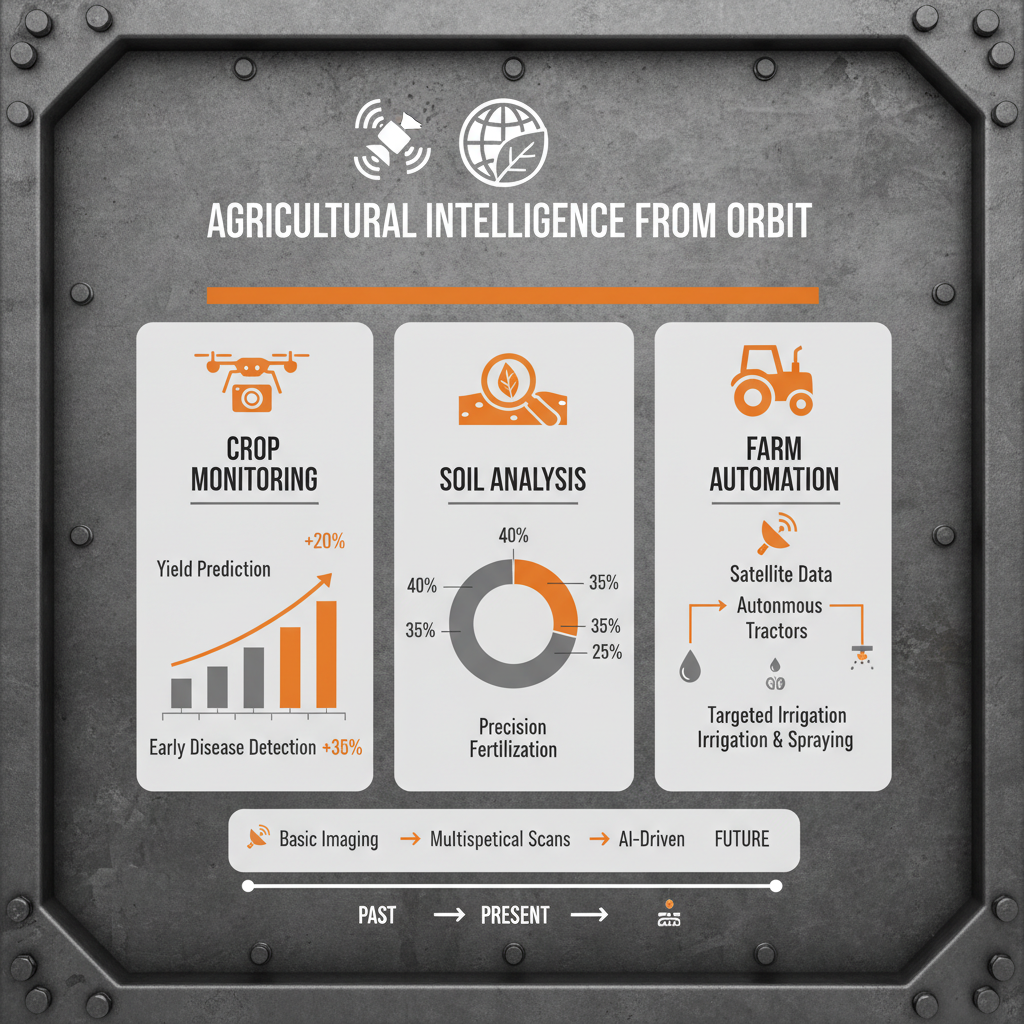
Despite the numerous benefits, challenges remain. The cost of satellite imagery and data processing can be prohibitive for small farmers. Data interpretation requires specialized expertise. Cloud cover can hinder optical imagery acquisition. However, these challenges are being addressed through innovations like lower-cost satellite constellations (e.g., Planet Labs), cloud-based data processing platforms, and the development of user-friendly analytical tools. Future trends include the integration of satellite data with other technologies like drones and IoT sensors, the use of artificial intelligence for automated data analysis, and the development of more precise and actionable insights for farmers. Space-Navi is positioned to drive these advancements.
Conclusion: Embracing the Future of Agriculture with Satellites
Satellite technology is revolutionizing agriculture, offering unparalleled opportunities to enhance efficiency, sustainability, and profitability. As technology continues to evolve and become more accessible, its adoption will undoubtedly accelerate, transforming the way we produce food. Investing in satellite-based solutions is not just a technological upgrade; it’s an investment in the future of agriculture. Space-Navi is dedicated to providing innovative solutions that empower farmers to harness the full potential of satellite technology.
Frequently Asked Questions (FAQs)
What is NDVI and how is it used in agriculture?
NDVI (Normalized Difference Vegetation Index) is a simple but effective index used to assess plant health and vigor. It's calculated from the visible and near-infrared light reflected by vegetation. Healthy plants reflect more near-infrared light and absorb more visible light, resulting in a higher NDVI value. Farmers use NDVI maps, derived from satellite imagery, to identify areas of stress, monitor crop growth, and optimize fertilizer application. Lower NDVI values often indicate stressed or unhealthy vegetation, prompting further investigation.
How accurate are yield predictions based on satellite data?
The accuracy of yield predictions varies depending on the crop type, geographic location, and the sophistication of the prediction model. However, with advanced algorithms and the integration of satellite data with other sources (e.g., weather data, historical yields), prediction accuracy can be quite high, often within 10-20% of actual yields. Factors like unforeseen weather events or disease outbreaks can still impact accuracy, but satellite-based predictions provide a valuable tool for informed decision-making.
Can satellite technology help with precision irrigation?
Yes, absolutely. Satellites equipped with thermal sensors can measure land surface temperature, which is closely related to soil moisture content. This information, combined with other data sources, allows farmers to create detailed maps of soil moisture variability across their fields. Based on these maps, they can then apply irrigation water precisely where it’s needed, reducing water waste and improving crop yields. Some systems even automate irrigation based on real-time satellite data.