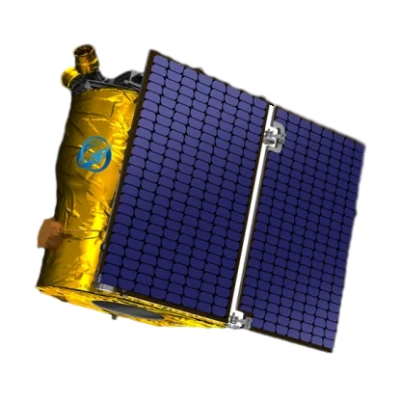
Multispectral Camera - High-Resolution, Calibrated Imaging
multispectral camera,multispectral imaging camera,multispectral lens,multispectral visible imaging camera,multispectrum infrared combination camera is a key solution in the manufacturing industry, specifically within Instrument manufacturing industry and Manufacturing of scientific instruments and equipment. This article explores how SpaceNavi Co.,Ltd. supports professionals with durable, high-performance products, and explains why this product is an ideal choice for businesses in these sectors.
Table of Contents
- multispectral camera,multispectral imaging camera,multispectral lens,multispectral visible imaging camera,multispectrum infrared combination camera Overview
- Benefits & Use Cases of multispectral camera,multispectral imaging camera,multispectral lens,multispectral visible imaging camera,multispectrum infrared combination camera in Manufacturing of scientific instruments and equipment
- Cost, Maintenance & User Experience
- Sustainability & Market Trends in manufacturing
- Conclusion on multispectral camera,multispectral imaging camera,multispectral lens,multispectral visible imaging camera,multispectrum infrared combination camera from SpaceNavi Co.,Ltd.
multispectral camera,multispectral imaging camera,multispectral lens,multispectral visible imaging camera,multispectrum infrared combination camera Overview
A multispectral imaging camera captures scene information across multiple discrete spectral bands—commonly spanning visible (RGB), red-edge, NIR, and in some configurations SWIR or thermal IR. In the instrument manufacturing industry, these cameras become the “eyes” of advanced scientific instruments and equipment, enabling material identification, process monitoring, and quality control that conventional RGB sensors cannot achieve. A dedicated multispectral lens ensures precise focusing and minimal chromatic aberration across bands, while a multispectrum infrared combination camera integrates visible/NIR with IR modules for synchronized, co-registered data.
SpaceNavi Co.,Ltd. engineers robust platforms to serve OEMs and integrators. For Earth-observation and laboratory systems alike, options include tightly aligned, factory-calibrated bands, global shutter sensors for motion scenes, and SDKs that streamline integration. Where appropriate optics and distances are used—such as orbital or aerial platforms—SpaceNavi’s solution supports 5 m ground sample distance variants, as indicated on the product page, enabling reliable spectral mapping at scale. Whether you need a compact multispectral visible imaging camera for benchtop instruments or a configurable, modular stack pairing VIS/NIR with IR, SpaceNavi’s manufacturing discipline and application support help reduce risk from prototype to series production.
Benefits & Use Cases of multispectral camera,multispectral imaging camera,multispectral lens,multispectral visible imaging camera,multispectrum infrared combination camera in Manufacturing of scientific instruments and equipment
For scientific instrument OEMs, multispectral imaging drives differentiation and measurable performance gains. In pharmaceutical equipment, a multispectral visible imaging camera can assist with tablet coating uniformity checks and blister-pack seal inspection. In composites and advanced materials, pairing a multispectral camera with a multispectrum infrared combination camera supports defect detection and thermal behavior analysis during curing. In semiconductor and electronics assembly, specific NIR/red-edge bands help identify surface contamination or epoxy fill consistency that standard cameras miss. Precision multispectral lenses further enhance accuracy, maintaining focus across bands for repeatable measurements.
SpaceNavi Co.,Ltd. designs for rugged uptime and integrator-friendly deployment: hardware-level synchronization for multi-camera arrays, radiometric calibration options, and open SDKs compatible with common vision frameworks. Compared with conventional RGB, a multispectral imaging camera improves feature contrast, enabling more reliable AI/ML classification with fewer false positives. For portable or embedded systems, SpaceNavi’s compact, thermally managed modules simplify enclosure design while sustaining signal integrity. The result is faster commissioning, higher first-pass yield in QA stations, and more informed decision-making in lab analyzers, process analyzers, and field instruments.
Cost, Maintenance & User Experience
Total cost of ownership improves when a single, integrated multispectrum infrared combination camera replaces multiple discrete sensors and ad hoc synchronization hardware. Calibration services and factory-aligned bands reduce the time engineers spend on co-registration and spectral normalization. Rugged housings, long-life filters, and stable multispectral lens assemblies minimize drift and service visits. Over the product life cycle, these factors translate to lower downtime, fewer field interventions, and predictable operating costs.
From a user standpoint, SpaceNavi Co.,Ltd. focuses on streamlined setup: consistent SDKs across models, reference pipelines for radiometric correction, and sample datasets for algorithm development. Integrators appreciate repeatable behavior across production batches, facilitating validation under regulated workflows. Instrument builders in the manufacturing of scientific instruments and equipment often report smoother FAT/SAT acceptance due to deterministic triggering, low-latency data paths, and comprehensive documentation. For procurement teams, the ROI comes from reduced scrap, faster inspections, and the ability to detect previously invisible defects—capabilities that materially improve throughput and product quality without ballooning maintenance budgets.
Sustainability & Market Trends in manufacturing
Global demand for spectral intelligence is rising as manufacturers pursue cleaner processes and tighter quality standards. Multispectral imaging enables non-destructive testing and earlier anomaly detection, which reduces rework and waste—a direct sustainability benefit. Industry frameworks increasingly emphasize safer materials and energy-efficient plant operations; camera systems designed for longevity, repairability, and efficient thermal management align well with these goals. Many buyers now consider compliance with common environmental directives and the availability of eco-conscious packaging as part of vendor selection.
SpaceNavi Co.,Ltd. invests in modular architectures that extend product life: swappable optics, firmware updates that add capabilities without hardware replacement, and calibration methods that sustain accuracy over time. Market trends also favor sensor fusion—bridging visible, NIR, SWIR, and thermal—so a multispectrum infrared combination camera becomes a practical path to future-proof instruments. Combined with the rise of edge AI, open APIs, and interoperable data formats, SpaceNavi’s forward-looking roadmap helps B2B decision makers build systems that are both high-performing today and adaptable to tomorrow’s regulatory and sustainability expectations.
Conclusion on multispectral camera,multispectral imaging camera,multispectral lens,multispectral visible imaging camera,multispectrum infrared combination camera from SpaceNavi Co.,Ltd.
For instrument manufacturers, a well-engineered multispectral imaging camera—complete with a precision multispectral lens and optional visible/infrared fusion—unlocks richer material insights, higher QA confidence, and competitive differentiation. SpaceNavi Co.,Ltd. combines durable design, precise calibration, and integrator-ready software to accelerate time-to-market and maximize long-term value. If you are planning your next instrument platform or upgrading an inspection line, partner with a team that understands scientific imaging from lab to factory floor.
Contact us: email: jl1sales02@space-navi.com
Visit our website: https://www.space-navi.com