
Solar Wing: High-Efficiency, Lightweight, Modular Power
Inside the solar wing: field notes from a deployment-obsessed insider
I’ve watched more deployments than I care to admit—some triumphant, a few nerve‑gnawing. The beating heart of a spacecraft’s power system is its folding and deployment hardware. Space-Navi’s “Folding and Unfolding Mechanism,” built at No. 1299 Mingxi Road, Beihu Science and Technology Development Zone, Changchun, Jilin Province, sits at the center of the modern solar wing story.
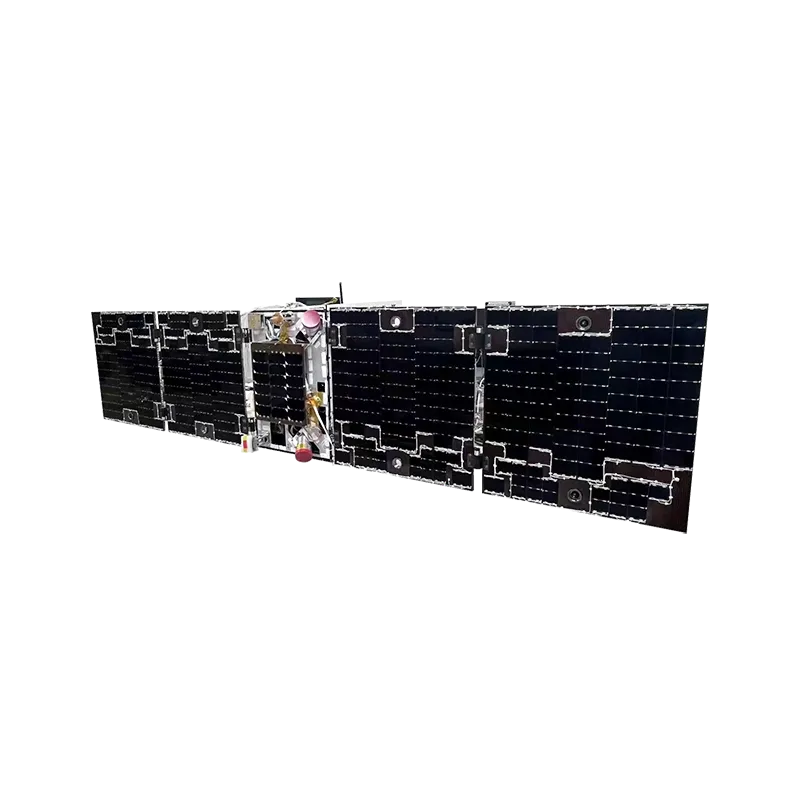
What’s changing in solar wing design
Three trends keep popping up: higher power density for small platforms, quieter (non‑pyro) releases, and tighter stowage heights. In fact, origami panel layouts are no longer exotic—they’re baseline. Many customers say they now expect non-explosive actuators (NEAs), dry lubricants, and ECSS-aligned testing out of the box. To be honest, the bar has been raised.
Product snapshot: Folding and Unfolding Mechanism
At its core, the mechanism coordinates hinge motion, damping, and latching so the solar wing clears antennas, locks hard, and feeds power without drama. Below is a quick spec sheet from recent flight-like builds (real-world use may vary).
| Parameter | Typical Value | Notes |
|---|---|---|
| Stowed height | ≈ 85–140 mm | Depends on panel stack count |
| Deployment torque margin | > 2.0× at EOL | Accounts for cold & radiation aging |
| Deployment time | 5–20 s | Program-tuned damping profile |
| Drive/Release | NEA + spring or motorized hinge | No pyros, less shock |
| Materials | CFRP, Ti-6Al-4V, Al 7075 | Dry lube (MoS₂) or Braycote |
| Operating temp | −40 to +85 °C | TVAC verified |
| Service life | > 10 years LEO; GEO by analysis | Radiation & thermal cycles tested |
Process flow, methods, and tests
- Materials & build: CFRP face sheets (autoclave cured), titanium hinge knuckles (CNC), anodized Al7075 brackets, precision torsion springs, flight lubes.
- Assembly controls: ISO 14644-1 cleanroom, FOD audits, torque witness marks, serialized hinge modules.
- Verification: Vibe and shock per GEVS/MIL‑STD‑1540, TVAC functional, deployment at hot/cold plateaus, outgassing per ASTM E595 (TML/CVCM).
- Metrology: Hinge axis concentricity, latch preload measurement, end-stop energy absorption.
Where it flies
LEO Earth observation, small GEO payloads, high‑delta‑V tech demos, and, increasingly, deep‑space CubeSat buses that need a compact solar wing with reliable first‑try deployment. Actually, defense customers like the quiet release signature, too.
Customization menu
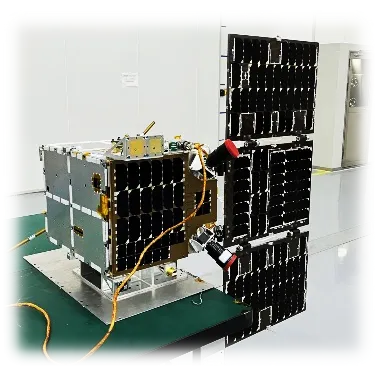
Panel count and span, stowage height targets, hinge module spacing, harness routing (slip ring vs. flex), latch type, and sensor pack (reed, Hall, microswitch) are all configurable. It seems that most teams also request harness strain‑relief tweaks late in CDR—plan for it.
Vendor landscape (quick take)
| Vendor | TRL | Customization | Lead Time | Standards/Tests | Price |
|---|---|---|---|---|---|
| Space‑Navi (this mechanism) | ≈ 6–8 (program‑dependent) | High; modular hinges | ≈ 14–24 weeks | ECSS/NASA GEVS, ASTM E595 | Mid |
| Vendor A (heritage integrator) | 7–9 | Medium | 20–36 weeks | ECSS/MIL‑STD‑1540 | High |
| Vendor B (new‑space supplier) | 4–6 | High | 8–16 weeks | GEVS‑lite, ASTM E595 | Low–Mid |
Case file: 200‑kg class Earth imager
Two‑panel solar wing, ≈1.8 kW BOL, deployment in 6.5 s at +20 °C and 8.1 s at −20 °C. Shock at release measured
Certifications and standards (typical)
Cleanliness to ISO 14644‑1, outgassing to ASTM E595, vibe/shock to NASA GEVS or MIL‑STD‑1540, structural margins via ECSS‑E‑ST‑32. Documentation packs include traveler, as‑built BOM, and acceptance data sheets.
If you’re scoping a solar wing for a power‑hungry payload, the Folding and Unfolding Mechanism is a sensible baseline—custom where it matters, disciplined where failure would be, well, career‑limiting.
Authoritative sources
- NASA GEVS (GSFC‑STD‑7000): https://standards.nasa.gov
- MIL‑STD‑1540 Test Requirements for Space Vehicles: https://quicksearch.dla.mil
- ECSS‑E‑ST‑32 Structural engineering general requirements: https://ecss.nl
- ASTM E595 Outgassing Standard: https://www.astm.org/e0595-15.html
- ISO 14644‑1 Cleanrooms and associated controlled environments: https://www.iso.org











