How Infrared Search and Track Enhances Detection Accuracy
The infrared search and track system is designed to detect and monitor objects by capturing thermal radiation emitted from their surfaces. Unlike traditional optical sensors, these instruments can operate effectively in low-light or obscured conditions. By converting infrared energy into electronic signals, the system provides continuous positional and movement information with high sensitivity. SpaceNavi Co., Ltd., leveraging its expertise in high-performance satellite optical payloads, applies similar principles in spaceborne remote sensing, ensuring precise data acquisition in challenging environments.
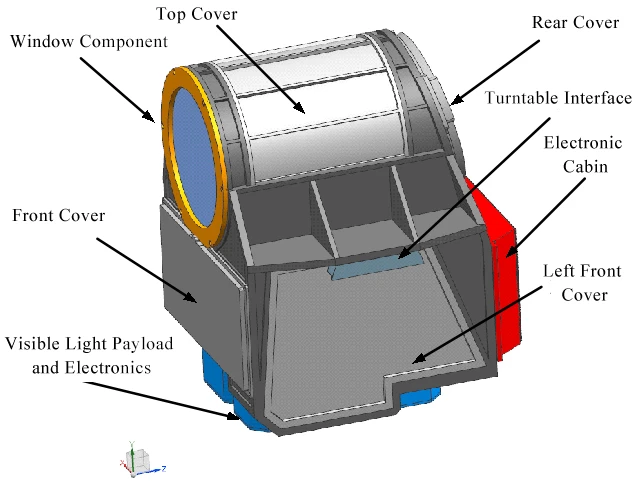
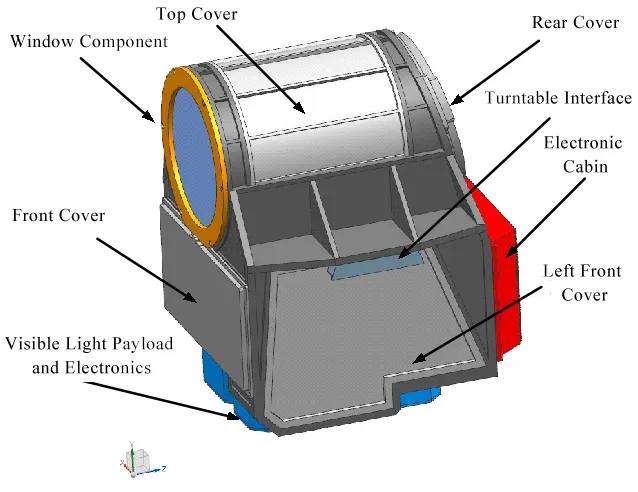
An essential component of this technology is the infrared search sensor, which scans a wide field of view to identify thermal targets. Integrated processing algorithms then analyze and track these signals in real time. The infrared search and track irst capability combines detection and tracking within a compact system, enabling rapid response and improved situational awareness. In research or experimental setups, engineers rely on this technology for accurate target identification and thermal mapping.
The infrared search and track system can also integrate with other instrumentation for enhanced performance. For example, combining it with high-resolution imaging sensors allows simultaneous spatial and thermal data collection. This integration is critical for scientific observations or remote sensing missions, where precision and reliability are paramount. SpaceNavi’s experience in satellite operation management and payload integration ensures that these instruments are designed for both stability and efficiency.
Understanding the infra red search and track working principle helps operators optimize detection parameters, such as sensor sensitivity, scanning speed, and thermal threshold. Proper calibration ensures consistent performance under varying environmental conditions, whether in laboratory settings or onboard satellites. By mastering these mechanisms, engineers can deploy systems capable of continuous monitoring with minimal error.
Mastering the infrared search and track principle is essential for accurate thermal detection and tracking in a variety of applications, from scientific research to advanced space observation missions.
Infrared Search and Track System in Satellite Observation
In satellite missions, precise detection and tracking of thermal targets are crucial for Earth observation and space monitoring. The infrared search and track system allows satellites to identify and monitor objects based on emitted thermal radiation, providing continuous positional and movement data. SpaceNavi Co., Ltd., leveraging years of experience in high-performance optical payloads, integrates these instruments into satellites to enhance situational awareness and data accuracy.
The infrared search capability enables satellites to scan wide areas efficiently, detecting targets under varying illumination and weather conditions. Coupled with onboard processing, the infrared search and track irst function allows real-time tracking and classification of moving objects, ensuring that high-value observations are captured with minimal delay. These features are essential for remote sensing applications where timing and precision are critical.
For satellite payloads, system integration is key. SpaceNavi designs infra red search and track instruments with modularity in mind, ensuring compatibility with imaging sensors, communication units, and power systems. The integration of the infrared search and track sensor with other satellite instruments provides a comprehensive monitoring platform, combining thermal detection with high-resolution optical imaging to maximize mission effectiveness.
In addition, calibration and stability are vital for spaceborne operations. The infrared search and track system is engineered to maintain accuracy across temperature variations, vibration, and orbital conditions. SpaceNavi’s approach to payload development emphasizes lightweight, efficient designs that do not compromise detection performance. Understanding the infrared search and track system principles allows engineers to fine-tune satellite instruments for optimal thermal target tracking, enhancing mission reliability and data quality.
Incorporating infrared search and track instruments in satellites ensures precise monitoring, reliable detection, and efficient data acquisition, making them indispensable tools for advanced Earth observation, scientific research, and remote sensing missions.
Infrared Search and Track Instrument Performance Advantages
High-performance detection and tracking are the cornerstones of modern satellite optical systems. The infrared search and track irst instrument provides precise thermal target identification with minimal latency, ensuring satellites maintain accurate orientation and monitoring even in challenging orbital conditions. SpaceNavi Co., Ltd., leveraging its expertise in satellite optical payloads, develops these instruments to deliver reliable performance while optimizing weight and power efficiency.
The system’s infrared search and track system incorporates advanced sensors and onboard processing algorithms, enabling real-time tracking of multiple thermal targets. Modular designs allow engineers to customize the instrument for specific mission requirements, such as varying fields of view, thermal sensitivity, and scanning speed. The infrared search capability ensures that satellites detect both stationary and moving objects, improving operational awareness and data collection accuracy.
Adjustments for space environment factors are critical. The infra red search and track instrument is engineered to maintain performance under temperature fluctuations, vibration, and radiation, reflecting SpaceNavi’s innovation-driven approach to satellite payload development. Calibration procedures guarantee consistent output, while lightweight optical designs reduce satellite mass without compromising detection quality. This makes the system suitable for both small satellites and larger observation platforms.
Integration flexibility is another advantage. The infrared search and track sensor can be combined with imaging systems, communication modules, and data processing units, creating a comprehensive payload solution. Engineers benefit from the understanding of the infrared search and track working principle, which allows fine-tuning for maximum accuracy and stability across various missions. This ensures satellites deliver reliable data, even in extended or complex observation campaigns.
The infrared search and track instrument represents a critical technological advantage for satellite missions. Its precision, modularity, and robustness enhance thermal target detection, support diverse mission profiles, and ensure reliable, high-quality data acquisition for scientific research and remote sensing operations.