Component for Sale: High-Precision Types incl. Star Sensor
Why the Star Sensor still sets the tone for precise attitude in smallsat missions
I’ve spent enough late nights in AIT bays to know pointing is where missions are won or lost. And, to be honest, a good Star Sensor can save a shaky control loop faster than any software patch. Here’s what’s really happening in the market—and why this unit from Changchun keeps popping up on bid sheets.
Industry pulse
Three currents define 2025: miniaturization (SWaP is king), autonomous recovery from “lost-in-space,” and radiation robustness without ballooning cost. Surprisingly, more CubeSat primes now spec dual independent Star Sensor units for redundancy, even on 6U buses. The logic: cheaper than failed imagery campaigns.
Core specifications (typical)
| Pointing accuracy (1σ) | ≈ 5–10 arcsec (real-world use may vary) |
| Update rate | 5–10 Hz |
| Field of view | ≈ 20° × 20° |
| Star magnitude limit | up to 6.5–7.0 mag |
| Interfaces | SpaceWire, RS‑422, CAN (configurable) |
| Power draw | ≈ 2.5 W typ., 3.5 W peak |
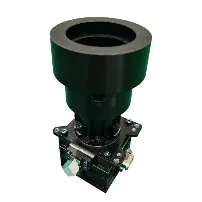
| Mass | ≈ 450 g incl. baffle |
| Lost‑in‑space recovery | ≤ 2 s; cold boot acquisition ≤ 5 s |
| Radiation, TID | ≥ 30 krad (Si) with shielding assumptions |
Process flow and build quality
Materials: CNC-machined Al 7075 housing, CFRP stray-light baffle, radiation-tolerant CMOS imager, low-CTE optical bench. Methods: hard black anodization, knife-edge baffle geometry, deep-sky catalog calibration, centroiding and pattern-matching firmware tuned for smear and hot pixels.
Testing: TVAC −35°C to +60°C (8 cycles), random vibe ≈ 10.5 grms, EMC to MIL‑STD‑461, environmental per ECSS‑Q‑ST‑20 and NASA GEVS. Typical service life: 5–7 years in LEO; up to ≈10 years in GEO with adequate shielding. Facility runs under ISO 9001:2015—nothing flashy, just disciplined.
Applications we’ve actually seen
- LEO Earth observation: two Star Sensor units feeding a Kalman filter, resulting in ≈ 40 arcsec payload stability.
- Lunar CubeSat: robust “lost-in-space” solves after starfield occlusions near the limb; recovery under 2 s.
- Upper stage demo: cold-soak to hot-soak transition—no noticeable bias jump after recal.
Vendor landscape (high-level)
| Vendor | Accuracy | Mass | Power | FOV | Lead time | Notes |
|---|---|---|---|---|---|---|
| Space‑Navi Star Sensor | ≈ 5–10 arcsec | ≈ 450 g | ≈ 2.5 W | 20°×20° | 8–12 weeks | Balanced SWaP; strong recovery behavior |
| Vendor A (CubeSat‑focused) | ≈ 10–15 arcsec | ≈ 300 g | ≈ 2.0 W | 15°×15° | 4–6 weeks | Great for tight buses; accuracy trade |
| Vendor B (Deep‑space proven) | ≈ 1–3 arcsec | ≈ 900 g | ≈ 6.0 W | 20°×20° | 20–30 weeks | Premium; price and lead time reflect that |
Customization options
Teams typically ask for: alternate FOV baffles, SpaceWire vs CAN pinouts, cold-plate mounting geometry, enhanced TID parts, and on‑orbit catalog update support. The Star Sensor firmware can expose centroid covariance and quality flags—handy for ADCS fusion.
What users keep telling me
“It just locks fast.” That’s the recurring feedback. Also, fewer false solves in bright limb conditions, likely due to their stray-light knife edges. One program manager did note they wanted clearer EMC data sheets—fair point, and reportedly improved.
Compliance, data points, and standards
- Certifications: ISO 9001:2015 facility.
- Standards: ECSS‑E‑ST‑50 (SpaceWire), ECSS‑Q‑ST‑20 (env), NASA GEVS GSFC‑STD‑7000, MIL‑STD‑461 (EMC).
- Sample tests: centroid RMS error ≈ 0.15 pix; catalog match confidence > 0.995 on typical starfields.
If you’re building for LEO imaging, the Star Sensor hits the sweet spot: credible accuracy, quick recovery, and timelines that won’t sink your schedule. And yes, it’s actually in stock more often than you’d expect.
- ECSS‑Q‑ST‑20C: Space product assurance—General requirements, https://ecss.nl/standard/ecss-q-st-20c/
- ECSS‑E‑ST‑50: Communications/SpaceWire, https://ecss.nl/standard/ecss-e-st-50/
- NASA GEVS (GSFC‑STD‑7000), https://standards.nasa.gov/standard/gsfc/gsfc-std-7000
- MIL‑STD‑461G: Electromagnetic Interference Control, https://assist.dla.mil/
- ISO 9001:2015 Quality Management Systems, https://www.iso.org/standard/62085.html