Understanding Different Collimator Types for Precision Applications
Collimator types play a crucial role in optical systems, enabling light beams to travel in parallel paths with minimal divergence. A collimator ensures accurate alignment for lasers, spectrometers, and fiber-optic communication devices. By focusing or shaping the light, collimators maintain high efficiency and stability in precision measurements. SpaceNavi Co., Ltd., with extensive experience in satellite optical payloads, integrates advanced optical devices to support high-performance remote sensing and imaging systems.
One common application is the fiber optic collimator, which aligns light from optical fibers into parallel beams with high precision. These devices are essential in fiber laser collimator setups, guaranteeing accurate beam delivery over long distances. Adjustable models, like the adjustable fiber collimator, allow fine-tuning for alignment, which is particularly useful in laboratory experiments or satellite instrument calibration. For missions requiring strong light intensity, a high power collimator ensures minimal divergence and reliable performance.
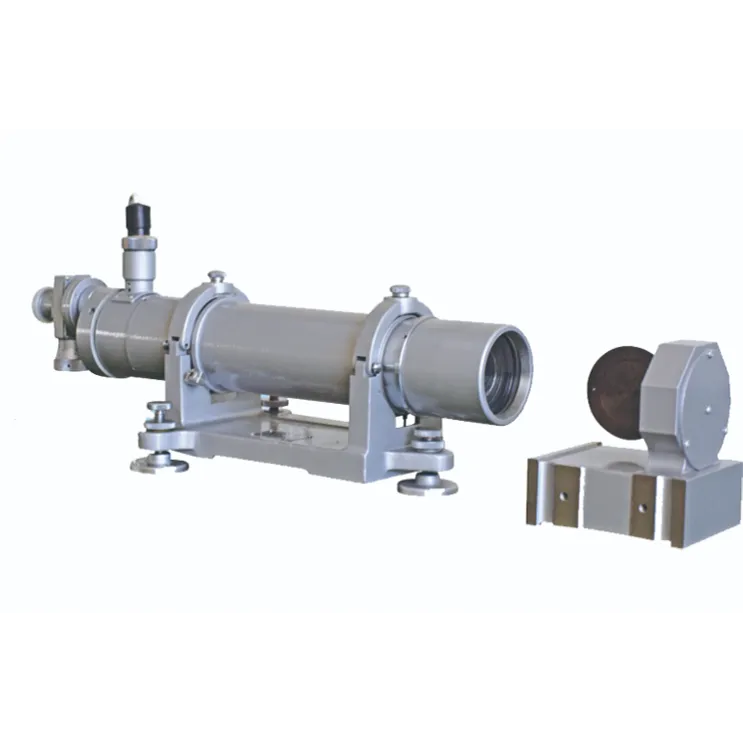
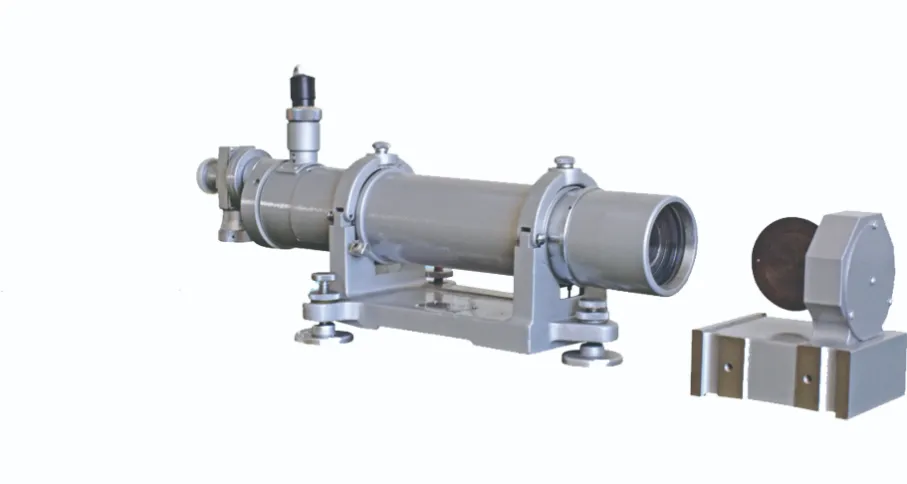
In spectroscopic instruments, the collimator of a spectroscope ensures that incoming light rays are parallel before reaching diffraction gratings or detectors. Proper collimation improves spectral resolution and measurement accuracy. SpaceNavi leverages its expertise in optical design to optimize both weight and efficiency, reflecting the company’s innovation-driven development strategy.
Collimators also vary in geometry. Beam collimator devices create uniform light beams, while infrared collimator setups are tuned for thermal or IR imaging sensors. By understanding the collimator function, engineers can select the appropriate type for satellites, fiber systems, or laboratory instruments, ensuring that light travels accurately and efficiently.
Mastering different collimator types allows precise control of light paths across multiple applications, from fiber-optic communication to spaceborne imaging systems, enhancing reliability and performance.
Collimator for Sale in Optical Instruments and Research
High-precision optical experiments rely on collimators to ensure parallel light propagation. A collimator for sale can serve various laboratory setups, from spectroscopy to laser alignment tasks, enabling researchers to maintain accurate measurements. SpaceNavi Co., Ltd., known for its satellite optical payloads, applies similar expertise in designing laboratory-grade collimators that balance stability, efficiency, and compactness for precise scientific applications.
In fiber-based experiments, a fiber collimator aligns light from optical fibers, minimizing beam divergence and ensuring consistent coupling efficiency. For applications needing adjustable focus, the adjustable collimator provides fine-tuning, allowing researchers to optimize beam alignment for different instruments. Similarly, dual fiber collimator setups facilitate simultaneous measurements or signal routing in complex experimental systems, improving versatility and data collection accuracy.
Laser experiments also benefit from laser diode collimator devices, which transform divergent laser outputs into uniform beams. This is essential for interferometry, optical trapping, or precision measurement applications where even minor deviations can impact results. In addition, optical collimator units designed for laboratory instruments are often modular, allowing easy integration with existing setups and rapid adaptation to changing experimental requirements.
Reflective designs, such as the reflective fiber collimator, enhance system efficiency by minimizing light loss and maintaining beam quality. In spectroscopic applications, the collimator of spectrometer ensures that light entering the diffraction system is parallel, improving resolution and accuracy. SpaceNavi leverages its knowledge from satellite optical payload development to optimize material selection, alignment tolerances, and thermal stability, providing reliable collimation in demanding research environments.
Collimators play a pivotal role in optical instrumentation and scientific research. Selecting the appropriate type, such as fiber collimator, adjustable collimator, or reflective collimator, ensures that light is precisely controlled, enhancing measurement accuracy and experiment repeatability. SpaceNavi’s experience in high-performance optical design makes their collimators a dependable choice for advanced laboratory and research applications.
High-Performance Collimator in Satellite Optical Payloads
In satellite missions, precise light collimation is essential for imaging, spectroscopy, and remote sensing instruments. A beam collimator ensures that light rays remain parallel, reducing optical aberrations and improving data quality. SpaceNavi Co., Ltd., leveraging years of experience in satellite optical payloads, integrates high-performance collimators to enhance spatial resolution and overall sensor efficiency in Earth observation and scientific missions.
For fiber-based satellite instruments, the fiber laser collimator enables accurate light delivery from laser sources to sensors or measurement modules. Adjustable solutions like the adjustable fiber collimator allow fine alignment during integration, ensuring optimal performance despite limited onboard space. In applications requiring infrared observation, an ir collimator or infrared collimator is used to guide thermal radiation accurately, maintaining sensor sensitivity under varying orbital conditions.
Large-aperture satellite instruments benefit from the large beam collimator, which maintains uniform illumination across extensive detectors, essential for high-resolution imaging or wide-area spectroscopic surveys. Reflective optical designs, such as the reflective fiber collimator, minimize light loss and maximize beam uniformity, which is critical for instruments observing faint or distant targets. SpaceNavi’s expertise in material selection, alignment tolerances, and onboard testing ensures these collimators perform reliably in the harsh space environment.
In addition, collimators like the tube collimator or parabolic collimator are often customized for specific satellite payloads. These designs allow precise control of light paths while optimizing weight and structural stability, aligning with SpaceNavi’s innovation-driven approach to satellite development. Understanding the collimator working principle allows engineers to design optical systems that maintain parallel beams, maximize sensor accuracy, and enable versatile mission applications.
High-performance collimators are critical components in satellite optical payloads, from fiber laser systems to infrared and large-aperture imaging instruments. By leveraging modular, adjustable, and reflective designs, SpaceNavi ensures satellites achieve precise optical alignment, superior data quality, and reliable operation throughout their mission lifecycle.