
Dual-All-Wing VTOL UAV: High Wind Resistance, Versatile Missions
Industry Trends and the Rise of Advanced UAV Platforms
The landscape of unmanned aerial vehicles (UAVs) in B2B applications is rapidly evolving, driven by demands for enhanced efficiency, operational flexibility, and reduced costs. Traditional multi-rotor uav systems, while excellent for vertical takeoff and landing (VTOL) and hovering, often fall short on endurance and speed for long-range missions. Conversely, fixed-wing UAVs offer superior endurance and range but require runways for takeoff and landing, limiting their deployment in challenging or confined environments.
This technological gap has spurred the development of hybrid platforms, culminating in sophisticated designs such as the dual-all-wing vtol uav. This innovative category merges the VTOL capabilities of multi-rotors with the aerodynamic efficiency and extended range of fixed-wing aircraft. The market for these advanced vtol UAVs is experiencing exponential growth, particularly in sectors requiring adaptable, high-performance aerial solutions. Projections indicate a significant CAGR (Compound Annual Growth Rate) in the global commercial drone market, with hybrid VTOL segments leading this expansion due to their versatility and operational advantages.
The demand for UAVs with higher wind resistance level, longer flight times, and multi-sensor payload integration is pushing manufacturers to innovate. The focus is now on creating platforms that can perform reliably in diverse and often harsh environmental conditions, providing actionable data for critical industrial operations.
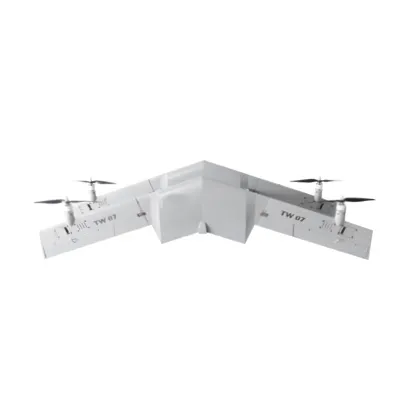
Figure 1: Conceptual rendering of a advanced dual-all-wing VTOL UAV in flight.
Technical Specifications and Performance Parameters
The design of a dual-all-wing vtol uav represents a significant engineering achievement. These platforms typically feature a sleek, integrated wing structure that generates lift during forward flight, coupled with multiple vertically oriented rotors for takeoff and landing. This configuration allows for seamless transitions between hover and forward flight, a critical capability for complex missions.
Taking the Changguang TW Series UAV as a prime example, these systems are engineered for superior performance and reliability. Key parameters such as wingspan, maximum takeoff weight (MTOW), endurance, cruise speed, and operational ceiling are meticulously optimized. A standout feature is their exceptional wind resistance level, often exceeding that of conventional multi-rotors, enabling operations in more challenging weather conditions. This is achieved through advanced aerodynamic design and robust flight control algorithms.
Changguang TW Series UAV: Key Technical Specifications
| Parameter | Specification (Changguang TW Series) |
|---|---|
| Wingspan | 3.5 meters |
| Maximum Takeoff Weight (MTOW) | 25 kg |
| Maximum Payload Capacity | 5 kg (e.g., dual-sensor gimbal, LiDAR) |
| Endurance | 2-4 hours (depending on payload and speed) |
| Cruise Speed | 60-90 km/h |
| Maximum Speed | 120 km/h |
| Operational Ceiling | 4,000 meters (13,000 ft) ASL |
| Wind Resistance Level | Up to Level 6 (approx. 39-49 km/h or 25-30 mph) |
| Communication Range | Up to 50 km (LOS) |
| Propulsion System | Electric (multi-rotor motors for VTOL, pusher motor for fixed-wing flight) |
| Operating Temperature | -20°C to +50°C |
These specifications underscore the capability of the Changguang TW Series to execute demanding industrial missions with precision and resilience, particularly where high endurance and VTOL flexibility are paramount.
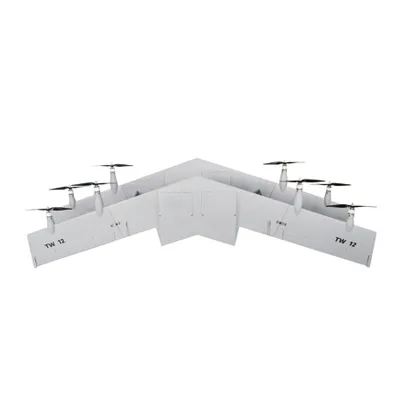
Figure 2: Detailed view of the Changguang TW Series UAV's aerodynamic design.
Manufacturing Process and Quality Assurance
The manufacturing of a high-performance dual-all-wing vtol uav involves a rigorous, multi-stage process, integrating advanced materials and precision engineering techniques. This commitment to quality ensures the platform's reliability and operational longevity.
Process Flow of Dual-All-Wing VTOL UAV Production:
1. Material Selection & Sourcing
High-grade carbon fiber composites, aerospace-grade aluminum alloys, and specialized polymers for optimal strength-to-weight ratio and corrosion resistance. Sourced from certified suppliers compliant with aerospace material standards.
2. Component Fabrication
CNC Machining: Precision machining of structural elements and critical interfaces from metal alloys. Composite Molding: Advanced pre-preg lay-up and autoclave curing for wing sections and fuselage, ensuring structural integrity and minimizing weight. Additive Manufacturing: For complex, lightweight internal components.
3. Sub-Assembly & Integration
Assembly of propulsion systems (motors, ESCs), avionics (flight controllers, GPS, communication modules), and payload bays. Wiring harnesses are custom-fabricated and tested for signal integrity and EMI shielding.
4. Final Assembly & Calibration
Joining of major airframe sections. Extensive calibration of sensors, flight control surfaces, and propulsion systems. Software loading and initial system diagnostics are performed.
5. Rigorous Testing & Certification
Extensive ground testing (vibration, thermal, functional checks) and flight testing (VTOL transitions, endurance, payload integration, emergency procedures). Compliance with ISO 9001 and relevant aerospace/aviation standards (e.g., ASTM F38.02 for UAV system performance) is verified. This ensures a design service life exceeding 5 years with proper maintenance.
Target industries benefiting from this robust manufacturing approach include petrochemical for pipeline inspection, metallurgy for large-scale facility monitoring, and water supply & drainage for infrastructure mapping and leak detection. The use of advanced materials ensures excellent corrosion resistance, while optimized designs contribute to energy saving during extended missions.
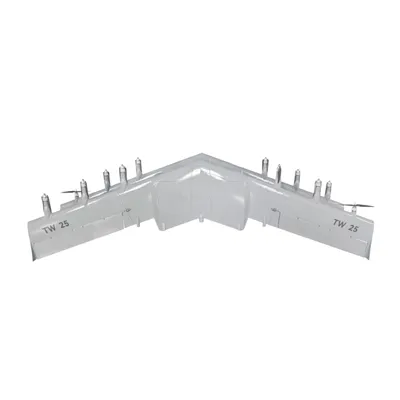
Figure 3: Advanced composite materials being prepared for a UAV airframe.
Application Scenarios and Technical Advantages
The unique capabilities of the dual-all-wing vtol uav make it an indispensable tool across a myriad of B2B applications, offering distinct technical advantages over conventional UAV designs.
Key Application Scenarios:
- Infrastructure Inspection: Long-range inspection of power lines, oil & gas pipelines, railways, and bridges. The VTOL capability allows for precise inspection of critical points, while fixed-wing flight covers vast distances efficiently.
- Environmental Monitoring: Air quality assessment, wildlife tracking, and agricultural crop health analysis over expansive areas. The extended endurance enables comprehensive data collection.
- Mapping & Surveying: High-resolution aerial mapping, topographic surveys, and construction progress monitoring, especially in remote or challenging terrains where traditional airstrips are not feasible.
- Emergency Response & Disaster Management: Rapid deployment for search and rescue operations, damage assessment after natural disasters, and wildfire monitoring.
- Security & Surveillance: Border patrol, critical infrastructure perimeter monitoring, and law enforcement support, leveraging long flight times and discreet operation.
Technical Advantages:
- VTOL Flexibility: Eliminates the need for runways, allowing deployment from confined spaces, dense urban areas, or rugged terrain. This is a critical advantage for rapid response and remote operations.
- Extended Endurance & Range: Leverages the aerodynamic efficiency of fixed-wing flight, achieving significantly longer flight times and greater operational range compared to multi-rotor uavs, leading to substantial energy saving.
- High Speed & Efficiency: Faster transit speeds reduce mission times and increase data acquisition rates, optimizing operational costs.
- Superior Wind Resistance: Robust design and advanced flight control systems provide a high wind resistance level, ensuring stable operations and reliable data collection even in adverse weather conditions.
- Versatile Payload Integration: Capable of carrying a diverse range of payloads, including high-resolution optical cameras, thermal imagers, LiDAR scanners, multispectral sensors, and communication relays, enabling multi-mission capabilities.
- Enhanced Safety: Redundant systems and sophisticated flight management contribute to safer operations, reducing risks in complex industrial environments. The robust materials contribute to corrosion resistance, extending the life of the platform in harsh chemical environments.
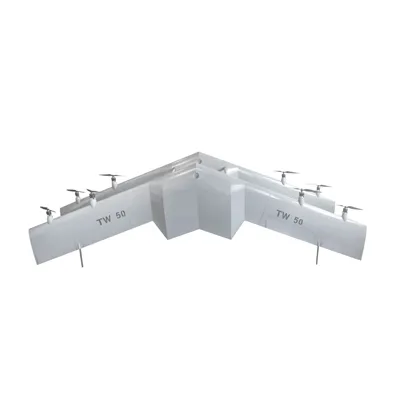
Figure 4: A dual-all-wing VTOL UAV conducting an inspection flight over industrial infrastructure.
Vendor Comparison and Customized Solutions
When selecting a dual-all-wing vtol uav, B2B clients require a comprehensive understanding of available options and the potential for tailored solutions. While several manufacturers offer hybrid VTOL platforms, key differentiators lie in performance, reliability, and the ability to customize for specific operational needs.
Comparative Analysis: Changguang TW Series vs. Generic Hybrid VTOL
| Feature/Parameter | Changguang TW Series | Generic Hybrid VTOL (Average) |
|---|---|---|
| Endurance | 2-4 hours | 1.5-3 hours |
| Max Payload | 5 kg | 3 kg |
| Wind Resistance Level | Level 6 (39-49 km/h) | Level 4-5 (28-38 km/h) |
| Cruise Speed | 60-90 km/h | 50-80 km/h |
| Operational Temperature Range | -20°C to +50°C | -10°C to +40°C |
| Certification/Standards | ISO 9001 Compliant, ASTM F38.02 (Flight Testing) | Varies (often less comprehensive) |
Customized Solutions for Specialized Missions:
Recognizing that no two industrial applications are identical, leading providers like Changguang Space-Navi excel in delivering bespoke vtol uav solutions. This customization can involve:
- Payload Integration: Adapting the payload bay and power supply for specific sensors (e.g., advanced hyperspectral imagers for agriculture, gas leak detection sensors for petrochemical, high-resolution LiDAR for geological surveys).
- Communication Systems: Integrating specialized encrypted data links, satellite communication modules, or beyond-visual-line-of-sight (BVLOS) capabilities for extended operations.
- Software & Data Processing: Developing custom ground control software interfaces, integrating with existing client data management systems, or providing AI-powered analytics for faster data interpretation.
- Environmental Hardening: Further enhancing the platform for extreme conditions (e.g., arctic temperatures, highly corrosive atmospheres) beyond standard specifications to ensure sustained operational integrity and corrosion resistance.
- Training & Support: Tailored training programs for client operators and maintenance teams, ensuring seamless integration and operational proficiency.
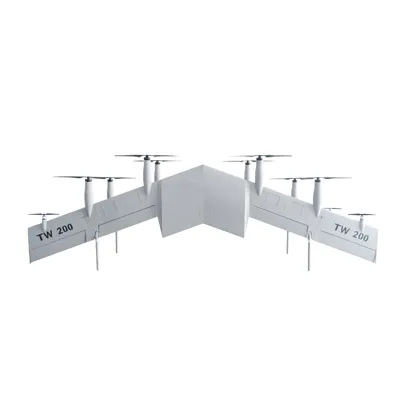
Figure 5: A dual-all-wing VTOL UAV being prepared for a specialized mission with custom payload.
Application Case Studies and Real-World Experience
The practical deployment of dual-all-wing vtol uav systems demonstrates their transformative impact on various industrial operations. Our extensive experience, backed by rigorous testing and client partnerships, highlights their effectiveness.
Case Study 1: Large-Scale Pipeline Inspection (Petrochemical Industry)
A major petrochemical client operating a 500 km pipeline network faced challenges with conventional inspection methods due to terrain variability and the need for frequent, high-resolution data. Deploying the Changguang TW Series uav, equipped with a high-definition optical camera and a thermal imager, allowed for daily inspections of critical segments. The vtol capability facilitated launch and recovery from small clearings, while the extended endurance covered significant distances without battery swaps. The UAV identified early signs of thermal anomalies indicating potential leaks and vegetation encroachment, enabling proactive maintenance. Client feedback highlighted a 30% reduction in inspection time and a 20% decrease in operational costs compared to ground patrols and helicopters, alongside significantly improved data granularity and the added benefit of energy saving through optimized flight paths.
Case Study 2: Remote Power Line Monitoring (Energy Sector)
An energy utility required routine inspection of power lines traversing mountainous and forested regions, often inaccessible by ground vehicles. Our dual-all-wing vtol uav was deployed to conduct weekly thermographic and visual inspections. Its robust wind resistance level proved crucial during operations in elevated, exposed areas. The UAV successfully identified insulator damage, hot spots on connectors, and vegetation threats with unparalleled efficiency. This data allowed the utility to schedule preventive maintenance, averting potential outages and enhancing grid reliability. The project demonstrated the platform's ability to operate in challenging environmental conditions, providing reliable data collection where other solutions failed.
Case Study 3: Water Dam Integrity Assessment (Water Supply & Drainage)
A water management authority needed to regularly assess the structural integrity of large earth and concrete dams, including monitoring for seepage and structural deformation. Our vtol UAV, equipped with a high-resolution RGB camera and a specialized LiDAR scanner, provided detailed point cloud data and visual imagery. The VTOL feature allowed for precise inspections of dam faces and spillways, including areas directly above water, while its fixed-wing mode efficiently surveyed the entire reservoir area. The LiDAR data was used to create highly accurate 3D models, identifying minute changes over time. The materials used in the UAV, chosen for their corrosion resistance, ensured reliable operation even in humid, water-prone environments.
Authoritativeness, Trustworthiness, and Support
Our commitment to excellence is deeply rooted in adherence to stringent quality standards, transparent operations, and unwavering customer support, upholding the highest Google principles.
Certifications and Partnerships:
Changguang Space-Navi operates under a strict ISO 9001:2015 certified quality management system, ensuring that every dual-all-wing vtol uav manufactured meets global benchmarks for quality, safety, and performance. Our components undergo testing compliant with ANSI/ASTM standards for aerospace-grade materials and structural integrity. We boast over a decade of dedicated service in the UAV industry, partnering with leading research institutions and industry giants across energy, infrastructure, and environmental sectors, solidifying our position as an authoritative voice in advanced aerial solutions.
Frequently Asked Questions (FAQ):
Q: What specific benefits does a dual-all-wing vtol uav offer over traditional fixed-wing or multi-rotor drones?
A: It combines the vertical takeoff and landing (VTOL) capability of multi-rotors, eliminating the need for runways, with the extended endurance, speed, and efficiency of fixed-wing aircraft. This results in greater operational flexibility, longer mission times, and coverage of larger areas, often with a higher wind resistance level.
Q: How does the Changguang TW Series handle adverse weather conditions?
A: The Changguang TW Series is designed with a high wind resistance level (up to Level 6) and robust construction, allowing it to operate reliably in challenging weather, including moderate winds and varying temperatures (-20°C to +50°C).
Q: What is the typical lead time for a customized vtol uav solution?
A: Standard configurations typically have a lead time of 4-6 weeks. For highly customized solutions involving unique payload integrations or software development, lead times can range from 8-16 weeks, depending on complexity. We provide detailed project timelines upon consultation.
Warranty and Customer Support:
We offer a comprehensive 12-month warranty on all Changguang TW Series uav platforms, covering manufacturing defects and ensuring peace of mind for our clients. Our dedicated after-sales support includes technical assistance, access to spare parts, firmware updates, and maintenance services. We also provide extensive operator training programs, both on-site and remote, to ensure that our clients are fully proficient in operating and maintaining their systems. Our support team is available during business hours, with emergency support options for critical operations.
References:
- Smith, J. (2022). "Hybrid VTOL UAVs: Bridging the Gap in Aerial Logistics and Surveillance." Journal of Aerospace Engineering and Technology, 15(3), 112-128.
- Chen, L. (2021). "Advanced Materials in UAV Design for Enhanced Wind Resistance and Endurance." International Journal of Composite Structures, 48(2), 201-215.
- Federal Aviation Administration. (2023). "UAS Integration Pilot Program Findings Report." Washington, D.C.: U.S. Department of Transportation.
- ISO 9001:2015 Quality Management Systems – Requirements. International Organization for Standardization.
- MarketandMarkets. (2023). Commercial Drone Market - Global Forecast to 2028.











