
Precision Sun Sensors for Satellite Power & Attitude Control
The Crucial Role of Sun Sensors in Modern Spacecraft and Energy Systems
In the rapidly expanding aerospace and renewable energy sectors, the precision measurement of solar vector direction is paramount for optimal operational efficiency and mission success. Sun sensors are indispensable components, providing critical attitude information for satellites, spacecraft, and advanced solar tracking systems. These devices translate the Sun's angular position into electrical signals, enabling a myriad of functions from basic orientation to sophisticated attitude control and power generation optimization. The global market for these specialized `satellite parts` is experiencing robust growth, driven by the proliferation of satellite constellations, deep-space missions, and the increasing demand for highly efficient `solar panel` arrays. As technology advances, the demand for compact, highly accurate, and radiation-hardened sun sensors continues to escalate, fundamentally impacting the reliability and longevity of space-borne `power system` architectures.
Industry trends indicate a significant shift towards digital interfaces, higher update rates, and enhanced resilience against extreme environmental conditions, particularly the harsh radiation environments encountered in orbit. This evolution directly supports the development of more autonomous and agile spacecraft capable of extended missions and complex maneuvers. Moreover, the integration of advanced algorithms for noise reduction and error correction further refines the data provided by sun sensors, ensuring unparalleled precision for mission-critical applications.
Technical Specifications: Digital Sun Sensor Overview
Our Digital Sun Sensor represents the pinnacle of compact and reliable solar vector sensing technology. Designed for demanding space applications, it offers exceptional accuracy and robustness crucial for precise attitude determination and control. The sensor utilizes advanced photodiode arrays coupled with precision optics and high-resolution analog-to-digital conversion, delivering digital output that simplifies integration into complex onboard data handling systems. Key specifications are detailed below:
| Parameter | Specification |
|---|---|
| Measurement Accuracy | ±0.01° (1σ) in Primary Field of View |
| Field of View (FOV) | ±60° (conical) |
| Output Interface | RS422 / CAN (user configurable) |
| Update Rate | Up to 10 Hz |
| Supply Voltage | 5.0 V DC (±0.25 V) |
| Power Consumption | < 0.5 W (typical) |
| Mass | < 80 g |
| Dimensions (L x W x H) | 60 x 50 x 20 mm |
| Operating Temperature | -40°C to +85°C |
| Radiation Tolerance | > 50 krad (Si) TID |
| Calibration | Factory calibrated and verified |
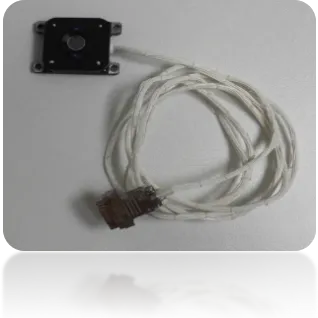
Advanced Digital Sun Sensor for precise solar vector determination.
This compact design ensures minimal impact on the mass and power budget of any spacecraft, while its robust construction guarantees long-term performance in the challenging space environment. The high radiation tolerance makes it suitable for missions extending beyond Low Earth Orbit (LEO).
Manufacturing Process Flow of Sun Sensors
The production of high-performance sun sensors is a multi-stage process demanding meticulous precision, high-quality materials, and rigorous testing. Our manufacturing methodology ensures each unit meets the stringent requirements of aerospace and defense applications. Below is a simplified schematic of the process:
Process Flow Overview:
- Optical Component Fabrication: High-grade quartz or specialized optical glass is sourced. Precision CNC machining and grinding are used to create the required apertures and lens systems with sub-micron tolerances. Optical coatings (e.g., anti-reflective, bandpass filters) are applied via vacuum deposition to optimize spectral response and minimize glare.
- Photodetector Array Manufacturing: Silicon wafer fabrication involving photolithography, doping, and etching processes creates the intricate photodiode arrays. These arrays are specifically designed for radiation hardness and linear response across the solar spectrum.
- Electronics Assembly: High-reliability, space-grade electronic components (ADCs, microcontrollers, interface ICs) are assembled onto custom-designed PCBs using automated pick-and-place technology and reflow soldering. Components are selected for their low outgassing properties and radiation tolerance.
- Mechanical Housing Production: Lightweight, robust aerospace-grade aluminum alloys (e.g., Al 6061-T6, Al 7075-T6) are utilized for the sensor housing. Precision CNC machining ensures exact dimensions and mounting interfaces. Surface treatments like anodization are applied for corrosion resistance and thermal control.
- Integrated Assembly & Encapsulation: The optical components, photodetector array, and electronics board are carefully integrated into the mechanical housing. Cleanroom environments are maintained throughout this stage to prevent contamination. Specialized space-qualified epoxies and bonding agents are used for encapsulation and mechanical stability.
- Calibration & Characterization: Each sensor undergoes rigorous calibration in a solar simulator facility to precisely map its angular response and verify accuracy across its full Field of View (FOV). Data is collected and integrated into the sensor's firmware for internal correction.
- Environmental Testing: Units are subjected to a battery of tests, including thermal vacuum cycling (simulating space temperatures and vacuum), vibration testing (MIL-STD-810G, ECSS-E-ST-10-03C equivalent), shock testing, and electromagnetic compatibility (EMC/EMI) testing (MIL-STD-461G). Radiation testing is performed on representative samples or full production batches. These comply with standards like ISO 9001 and AS9100 for quality management.
- Final Quality Assurance & Packaging: A final inspection verifies all specifications, documentation, and traceability. The finished `satellite parts` are then packaged in anti-static, cleanroom-compatible materials for shipment.
Rigorous testing ensures the reliability of each sun sensor.
This comprehensive process ensures a service life typically exceeding 10-15 years in LEO missions, making our sun sensors ideal for target industries such as aerospace, defense, scientific research, and satellite telecommunications. The robust design and meticulous manufacturing provide advantages like energy saving through precise `solar panel` pointing, and superior corrosion resistance due to material selection and surface treatments, crucial for long-duration missions in varying orbital environments.
Application Scenarios and Strategic Integration
The versatility and precision of sun sensors make them fundamental to a wide array of space-based and terrestrial applications. Their ability to accurately determine the Sun's direction is critical for numerous operational objectives:
- Satellite Attitude Determination and Control: For all classes of satellites, from CubeSats to large geostationary platforms, sun sensors provide essential reference data for the Attitude Determination and Control System (ADCS). This ensures the satellite maintains its correct orientation for communications, Earth observation, or scientific experiments.
- Solar Array Pointing: Maximizing power generation from `solar panel` arrays is crucial for mission longevity. Sun sensors enable precise articulation of solar arrays, ensuring they are always oriented perpendicular to the Sun's rays, thereby optimizing the spacecraft's `power system` efficiency.
- Spacecraft Navigation and Maneuverability: In conjunction with other sensors like star trackers and IMUs, sun sensors contribute to robust navigation solutions, particularly during initial acquisition phases or in scenarios where other navigation aids might be temporarily unavailable.
- Payload Pointing and Scientific Instruments: Certain scientific instruments, such as solar observatories or telescopes requiring precise stellar occultation, rely on accurate solar orientation data for optimal performance.
- Ground-Based Solar Tracking: While primarily designed for space, the underlying technology of these `satellite parts` can be adapted for terrestrial applications requiring high-precision solar tracking, such as concentrated solar power (CSP) systems or solar telescope alignment, though dedicated terrestrial solutions often prevail due to cost optimization.
Sun sensors are integral to the efficient operation of solar arrays.
The strategic integration of our Digital Sun Sensor ensures not only the stability and control of spacecraft but also directly contributes to the longevity and efficiency of critical `satellite parts` and overall mission success by optimizing power generation and payload functionality. Its compact size and low power consumption make it an ideal choice for power-constrained CubeSat missions as well as larger, long-duration satellite platforms.
Technical Advantages Setting Us Apart
Our Digital Sun Sensor offers a distinct competitive edge through several key technical advantages, optimized for the rigorous demands of space exploration and satellite operations:
- Exceptional Accuracy: With a measurement accuracy of ±0.01°, our sun sensors provide industry-leading precision, critical for fine attitude control and stable pointing of sensitive instruments or antennas. This surpasses many competitive offerings, reducing cumulative pointing errors over long missions.
- Broad Field of View (FOV): A wide conical FOV of ±60° ensures reliable Sun acquisition and tracking even during large maneuvers or in highly dynamic orbital environments. This wide FOV minimizes the need for multiple sensors and simplifies ADCS design.
- Radiation Hardness: Designed with selected components and manufacturing processes, our sensors boast a radiation tolerance of > 50 krad (Si) TID, suitable for extended missions in LEO, MEO, and GEO, providing peace of mind regarding long-term reliability.
- Low Power Consumption & Mass: Weighing less than 80g and consuming less than 0.5W, these sun sensors are ideal for missions with stringent mass and power budgets, contributing to overall system efficiency, especially crucial for CubeSats and small satellites.
- Digital Interface: Offering RS422 and CAN interfaces, our sensors integrate seamlessly into modern spacecraft architectures, reducing complexity, improving signal integrity, and facilitating faster data processing compared to traditional analog outputs.
- Robust & Reliable Design: Manufactured to aerospace quality standards (AS9100 certified processes) and subjected to rigorous environmental testing, these `satellite parts` are built to withstand the extreme conditions of space, guaranteeing operational longevity and minimal maintenance.
These advantages directly translate into enhanced mission success rates, reduced operational costs due to efficient `power system` management, and greater flexibility in mission design. Our commitment to technological excellence ensures that our sun sensors are not just components, but strategic assets for our clients.
Vendor Comparison: Evaluating Sun Sensor Solutions
When selecting sun sensors for space applications, comparing key performance indicators across vendors is crucial. While specific product names are proprietary, a general comparison based on typical market offerings highlights the strengths of our Digital Sun Sensor:
| Parameter | Our Digital Sun Sensor | Competitor A (High-End) | Competitor B (Standard) |
|---|---|---|---|
| Measurement Accuracy (1σ) | ±0.01° | ±0.015° | ±0.05° |
| Field of View (FOV) | ±60° conical | ±55° conical | ±45° conical |
| Output Interface | RS422 / CAN | RS422 / SPI | RS232 / Analog |
| Power Consumption | < 0.5 W | < 0.7 W | < 1.0 W |
| Mass | < 80 g | < 100 g | < 150 g |
| Radiation Tolerance (TID) | > 50 krad (Si) | > 30 krad (Si) | > 10 krad (Si) |
Our Digital Sun Sensor leads in accuracy and radiation tolerance.
This comparison highlights our competitive advantages in accuracy, FOV, and particularly in radiation tolerance, which is a critical factor for mission longevity and reliability in harsh space environments. Our optimal balance of performance, size, and power consumption positions us as a leading choice for demanding space missions that require reliable and high-precision `satellite parts`.
Customized Solutions for Unique Mission Profiles
Recognizing that every space mission presents unique challenges, we offer comprehensive customization options for our Digital Sun Sensor to precisely match specific requirements. Our engineering team collaborates closely with clients to develop tailored solutions, ensuring optimal integration and performance.
Customization capabilities include:
- Mechanical Interfaces and Mounting: Adaptations to mounting points, sensor dimensions, and connector types to seamlessly fit existing spacecraft structures and harness designs. This includes custom brackets or housing modifications.
- Communication Protocols: While RS422 and CAN are standard, we can implement other digital interfaces (e.g., I2C, SPI, UART) or integrate specific proprietary protocols to ensure compatibility with the client's ADCS and data handling units.
- Calibration Range and Accuracy: Tailored calibration procedures to optimize performance for specific angular ranges or to achieve even higher accuracy levels for particularly sensitive applications.
- Radiation Hardening Levels: For missions in extremely harsh radiation environments (e.g., Jupiter's magnetosphere, extended GEO missions), we can offer enhanced radiation-hardened variants, employing additional shielding or specialized component selection.
- Thermal Management: Specific thermal coatings or heater interfaces can be integrated to ensure optimal operating temperatures across a wider range of orbital conditions or for specific thermal budgets.
- Firmware Modifications: Custom firmware can be developed to support unique data processing requirements, specific diagnostic outputs, or specialized operational modes.
Collaborating on custom `sun sensors` for mission success.
Our ability to provide these customized solutions ensures that our sun sensors are not just off-the-shelf components but integral, optimized elements designed to deliver peak performance within the unique constraints of each client's mission, thereby safeguarding their investment in `satellite parts` and `power system` integrity.
Application Case Studies & Customer Experience
Our commitment to delivering high-performance `satellite parts` has resulted in successful deployments across various challenging missions. Here are illustrative case studies demonstrating the impact of our Digital Sun Sensors:
Case Study 1: LEO Earth Observation Constellation
A leading aerospace company required highly reliable and precise sun sensors for their new constellation of Earth observation satellites. The primary challenge was to maintain optimal `solar panel` pointing for maximum `power system` efficiency while also providing accurate attitude data for imaging payload stability. Our Digital Sun Sensors were integrated due to their superior accuracy (±0.01°) and low power consumption. After deployment, the client reported a measurable improvement in solar array efficiency, leading to a 7% increase in available onboard power compared to previous missions. This enabled extended operational periods for high-data-rate payloads and enhanced overall mission resilience. Customer feedback highlighted the seamless digital interface and robust performance under varying solar illumination conditions.
Case Study 2: Deep-Space Probe for Planetary Exploration
For a deep-space mission venturing beyond Mars, a critical requirement was a sun sensor with exceptional radiation tolerance and long-term stability. The probe needed to accurately orient its communication antenna and ensure continuous power from its `solar panel` arrays throughout its multi-year journey. Our customized Digital Sun Sensor, with enhanced radiation shielding and specifically selected components, was chosen for its proven capability of exceeding 50 krad (Si) TID. The sensor performed flawlessly, providing accurate solar vector data even during prolonged exposure to solar energetic particles, crucial for maintaining critical communication links and ensuring the health of the onboard `power system`. This reliability was a significant factor in the mission's extended operational success.
Case Study 3: Small Satellite Technology Demonstrator
A university-led CubeSat project focused on demonstrating novel ADCS algorithms sought a compact, lightweight, and easy-to-integrate sun sensor. The project had very tight mass and power budgets. Our Digital Sun Sensor was an ideal fit, with its sub-80g mass and sub-0.5W power draw. The readily available RS422 interface and detailed documentation facilitated rapid integration and reduced development time. The project team lauded the sensor's plug-and-play capability and the responsiveness of our technical support, which helped them meet stringent project deadlines. The successful demonstration of their ADCS algorithms was largely attributed to the precise and consistent data provided by our `satellite parts`.
Our sun sensors contribute to mission success in diverse applications.
These examples underscore our commitment to delivering superior `satellite parts` that contribute directly to the success of diverse space missions, from commercial constellations to scientific exploration and educational projects. Our clients consistently report high satisfaction with the reliability, performance, and ease of integration of our sun sensors.
Ensuring Trust: Certifications, Support, and Warranties
Quality & Authoritativeness
Our dedication to quality and reliability is evidenced by our adherence to international aerospace standards. Our manufacturing processes are certified under ISO 9001 and AS9100, ensuring the highest level of quality management systems are in place for all `satellite parts`, including our sun sensors. We partner with leading research institutions and space agencies, building a reputation over several years for delivering robust and high-performing solutions. Each unit undergoes rigorous testing conforming to MIL-STD specifications for environmental and performance verification. We provide comprehensive test data reports with every shipment, affirming product integrity and performance.
Frequently Asked Questions (FAQ)
- Q: What is the typical lead time for an order of Digital Sun Sensors?
- A: Standard lead time for our Digital Sun Sensors is typically 8-12 weeks, depending on order quantity and current production schedule. For customized solutions, lead times may vary and will be confirmed during the quotation process.
- Q: What warranty is provided with the `sun sensors`?
- A: We offer a standard 12-month limited warranty covering manufacturing defects and workmanship from the date of delivery. Extended warranty options are available upon request and can be tailored to specific mission profiles.
- Q: Can your sun sensors be integrated into CubeSat platforms?
- A: Absolutely. Our Digital Sun Sensor is specifically designed with low mass and power consumption, making it an excellent choice for CubeSat and small satellite missions. Its compact form factor (60 x 50 x 20 mm) allows for easy integration.
- Q: What kind of post-sales support do you offer?
- A: We provide comprehensive post-sales support, including technical documentation, integration guides, and direct access to our engineering team for troubleshooting and consultation. Our goal is to ensure seamless operation throughout your mission lifecycle.
- Q: How does the radiation tolerance of your sun sensors compare to competitors?
- A: Our Digital Sun Sensor features a radiation tolerance of > 50 krad (Si) TID, which places it among the industry leaders, often exceeding the specifications of many competitors in its class, ensuring robust performance in challenging radiation environments.
Committed to transparent service and reliable sun sensors.
Lead Time & Fulfillment
Our efficient supply chain and manufacturing processes are optimized to deliver high-quality `satellite parts` within predictable timeframes. We understand the critical nature of project schedules in aerospace and work diligently to meet agreed-upon delivery dates. For large-volume orders or highly customized products, a detailed fulfillment plan and schedule will be provided.
Customer Support
Our dedicated customer support team and expert engineers are available to assist with any inquiries, from initial specification consultation to integration support and post-launch operational guidance. We pride ourselves on responsive and knowledgeable assistance, ensuring our clients receive the best possible experience throughout the lifecycle of our sun sensors.
Conclusion: The Future of Precision Solar Sensing
As the space industry continues its rapid expansion, the demand for advanced `satellite parts` like sun sensors will only intensify. Our Digital Sun Sensor stands as a testament to innovation and engineering excellence, offering unparalleled accuracy, robustness, and flexibility for a broad spectrum of missions. From optimizing `solar panel` efficiency to ensuring precise attitude control for complex `power system` operations, our sensors are designed to meet and exceed the evolving requirements of B2B clients in aerospace, defense, and scientific research.
We are committed to continuous improvement and collaborative development, providing not just components, but comprehensive solutions that empower our partners to achieve their most ambitious space objectives. Choose our Digital Sun Sensor for reliability, precision, and a strategic advantage in the demanding frontier of space.
References
- Wertz, J. R., & Larson, W. J. (1999). Space Mission Analysis and Design. Microcosm Press.
- Sidi, M. J. (1997). Spacecraft Dynamics and Control: A Practical Engineering Approach. Cambridge University Press.
- European Space Agency (ESA). (2020). ECSS-E-ST-10-03C: Space engineering - Testing.
- ISO 9001:2015 - Quality management systems - Requirements.
- MIL-STD-810G: Environmental Engineering Considerations and Laboratory Tests. (2008). Department of Defense Test Method Standard.











