- Afrikaans
- Albanian
- Amharic
- Arabic
- Armenian
- Azerbaijani
- Basque
- Belarusian
- Bengali
- Bosnian
- Bulgarian
- Catalan
- Cebuano
- China
- Corsican
- Croatian
- Czech
- Danish
- Dutch
- English
- Esperanto
- Estonian
- Finnish
- French
- Frisian
- Galician
- Georgian
- German
- Greek
- Gujarati
- Haitian Creole
- hausa
- hawaiian
- Hebrew
- Hindi
- Miao
- Hungarian
- Icelandic
- igbo
- Indonesian
- irish
- Italian
- Japanese
- Javanese
- Kannada
- kazakh
- Khmer
- Rwandese
- Korean
- Kurdish
- Kyrgyz
- Lao
- Latin
- Latvian
- Lithuanian
- Luxembourgish
- Macedonian
- Malgashi
- Malay
- Malayalam
- Maltese
- Maori
- Marathi
- Mongolian
- Myanmar
- Nepali
- Norwegian
- Norwegian
- Occitan
- Pashto
- Persian
- Polish
- Portuguese
- Punjabi
- Romanian
- Russian
- Samoan
- Scottish Gaelic
- Serbian
- Sesotho
- Shona
- Sindhi
- Sinhala
- Slovak
- Slovenian
- Somali
- Spanish
- Sundanese
- Swahili
- Swedish
- Tagalog
- Tajik
- Tamil
- Tatar
- Telugu
- Thai
- Turkish
- Turkmen
- Ukrainian
- Urdu
- Uighur
- Uzbek
- Vietnamese
- Welsh
- Bantu
- Yiddish
- Yoruba
- Zulu
Camera Wide: Ultra Wide Angle, Wide Dynamic, 4K Security
Why a Push-Broom “Camera Wide” Setup Is Defining the Next Wave of Earth Observation
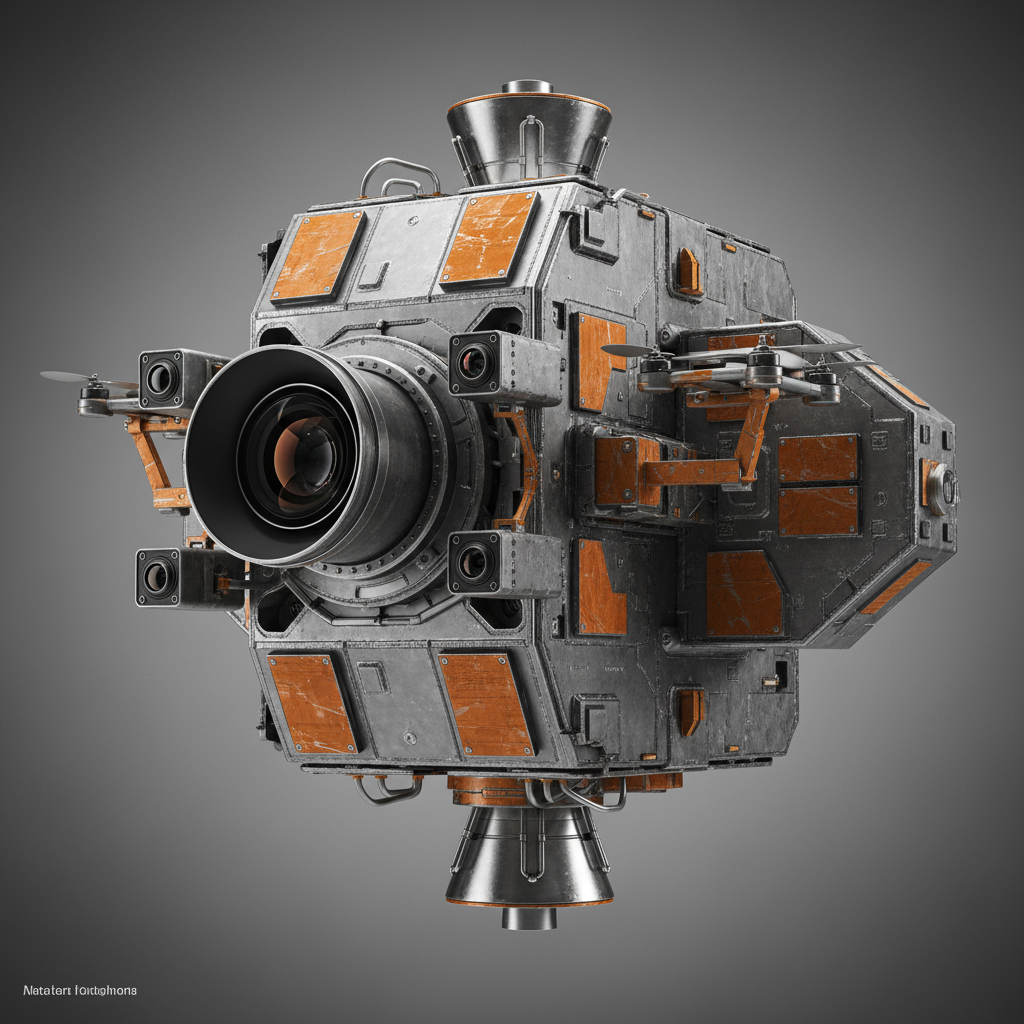
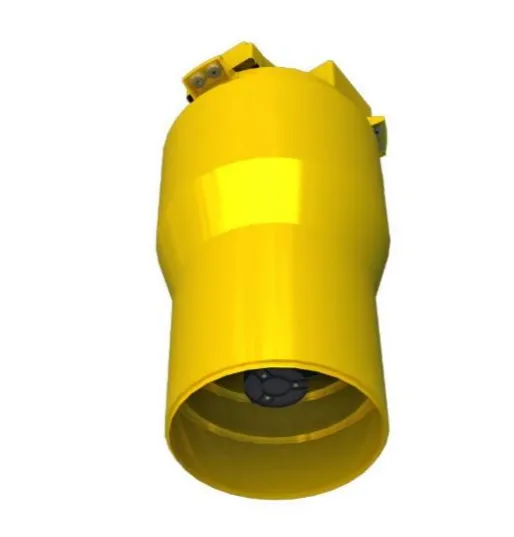
If you’re evaluating camera wide solutions for satellites or high-altitude platforms, you’ve probably noticed a quiet shift: industry teams are moving away from bulky frame imagers toward compact push-broom systems with tighter optics. One standout is the Push-Broom Camera With A Resolution Of 0.75m from Space‑Navi (origin: No. 1299 Mingxi Road, Beihu Science and Technology Development Zone, Changchun, Jilin Province). It adopts a coaxial folding optical system—an insider’s trick to keep size and mass sane—yet delivers 0.75 m GSD from a 535 km orbit. And yes, lead time matters: delivery in as little as 10 months is, frankly, refreshing.
Trends and where this fits
Operators want coverage and detail—at the same time. Push-broom line sensors scan continuously, which boosts signal-to-noise and simplifies motion compensation. The coaxial folding pathway helps fit long effective focal lengths in tighter volumes, a big deal for rideshare launches. In practice, teams tell me they’re shaving weeks off AIT (assembly, integration, testing) because the alignment is more deterministic. Not glamorous, but it matters.
Technical snapshot
| Parameter | Spec (≈ / typical) | Notes |
|---|---|---|
| Ground Sampling Distance | 0.75 m @ 535 km | Real-world use may vary with altitude & optics tuning. |
| Optical System | Coaxial folding | Compact path; improved packaging and alignment. |
| Uhlobo Lwenzwa | Line-scan (push-broom) | TDI-capable options on request. |
| Lead Time | ≈ 10 months | Fast-track delivery window, project-dependent. |
| Design Life | ≈ 5 years (LEO) | Orbit, radiation, thermal cycles affect longevity. |
Materials, process, and testing
Opto-mechanical benches typically use low‑CTE alloys (Invar) or SiC; mirrors and baffles leverage stray-light optimized coatings. Assembly flow: precision machining → optical bonding/alignment → environmental screening (vibe, shock) → TVAC → radiometric/geometric calibration. Testing is usually aligned to ECSS/MIL standards: vibration per MIL‑STD‑810H, EMC per ECSS‑E‑ST‑20‑07, TVAC per ECSS‑Q‑ST guidelines, radiometric checks referencing CEOS QA4EO. Reported internal data points include MTF @ Nyquist ≥ ≈0.18 (typ.) and SNR ≥ ≈85 (illumination-dependent). To be honest, teams obsess more over stability than headline numbers—and that’s the right instinct.
Where a camera wide approach shines
- National mapping and urban planning—rapid update cycles with sharp edges for road extraction.
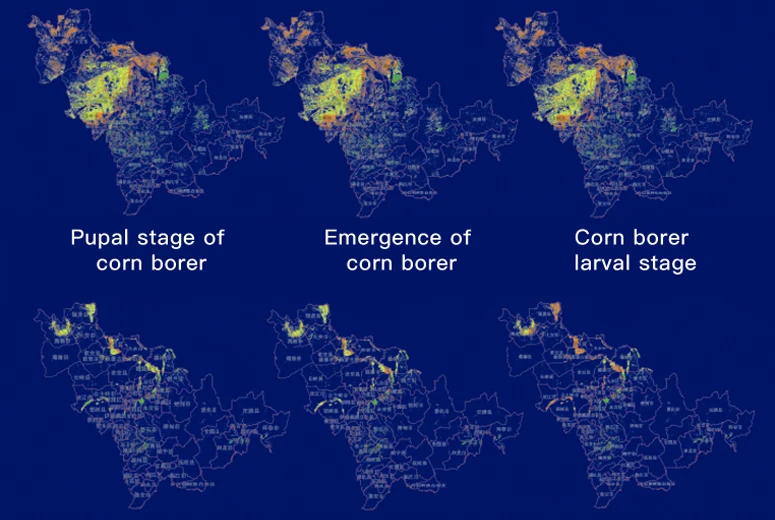
- Agriculture—parcel-level vigor indices; pairing PAN with narrow MSI bands if configured.
- Disaster response—post-event debris maps; lower downlink cost via smart compression.
- Maritime & infrastructure—change detection on ports, pipelines, and rail corridors.
Advantages? Continuous scanning means fewer moving parts, better radiometric consistency, and—surprisingly—simpler calibration over mission life. Several integrators told me the camera wide format cut their boresight alignment rework by half.
Vendor comparison (abridged)
| Vendor | Resolution @ 500–550 km | Lead Time | Customization | Standards Alignment |
|---|---|---|---|---|
| Space‑Navi (this model) | 0.75 m | ≈10 months | Optics, bands, interfaces | ECSS, MIL‑STD‑810H (target) |
| GlobalSat Optics | ≈1.0 m | ≈14–16 months | Moderate | ECSS (select), MIL‑STD (select) |
| Orbis Imaging | ≈0.9 m | ≈18 months | High (pricey) | ECSS focus |
Notes: Publicly available figures vary; vendor roadmaps change. Always request current datasheets and test reports.
Customization and integration
Options typically include spectral configuration (PAN-only or PAN+MSI), detector grade, swath width tuning, on-board compression, and interfaces (SpaceWire, LVDS). For buses, common picks are LEO smallsats in the 50–200 kg class. Ground segment hooks: standard level‑1 orthorectified products, plus RPCs for photogrammetry. It seems that teams appreciate hot/cold redundancy for the focal plane—belt and suspenders.
Field notes and case snippets
A Southeast Asian integrator reported coastline change detection at sub‑meter detail after a typhoon, with cross-strip MTF consistency within ≈3%. Another customer said the camera wide design handled thermal cycling better than expected, with calibration deltas corrected via onboard references in one pass. Is that universal? Not necessarily, but it’s promising.
Compliance and assurance
- ECSS processes for space hardware and EMC (project-specific tailoring).
- Radiometric/geometrics per CEOS QA4EO practices; cleanroom assembly to ISO 14644 classes.
Bottom line: If you want crisp imagery from a compact payload and can’t wait forever, this camera wide push‑broom option is a sensible shortlist pick—technically mature, configurable, and fast to field.
Authoritative references