Exploring the Potential of Power Satellite Technology for Sustainable Energy Solutions
Understanding the Capabilities of a Power Satellite
In the realm of space technology, power satellites represent a crucial advancement in providing sustainable energy solutions. These sophisticated platforms are designed to collect solar energy in space and beam it down to Earth. This article delves into the technology, benefits, challenges, and future prospects of power satellites, offering a comprehensive overview for those interested in space-based solar power. The potential of this technology to revolutionize global energy production is immense, and Space-Navi is at the forefront of exploring these advancements.

How Do Power Satellites Work?
The fundamental principle behind power satellites is the collection of solar energy in space, where it is far more intense and consistent than on Earth due to the absence of atmospheric interference. Large solar arrays are deployed to capture sunlight, which is then converted into electricity. This electricity is then transmitted to Earth using microwave or laser beams. The receiving station, known as a rectenna, converts the beamed energy back into usable electricity. A key advantage is the continuous availability of sunlight in space, allowing for 24/7 energy generation. Several designs for power satellites are being explored, ranging from large, monolithic structures to constellations of smaller satellites.
Key Components: Large solar arrays, power transmission systems (microwave or laser), rectenna receiving stations.
The Benefits of Space-Based Solar Power
Power satellites offer a multitude of benefits compared to traditional terrestrial solar energy. They overcome limitations such as land usage, weather dependency, and nighttime energy production. Space-based solar power can provide a clean, renewable, and reliable energy source, significantly reducing reliance on fossil fuels. Furthermore, it can be particularly valuable for remote locations or areas with limited access to traditional energy infrastructure. The potential to mitigate climate change and enhance energy security makes power satellites a compelling long-term solution. Space-Navi actively reports on the advancements pushing these benefits closer to reality.
Advantages of Power Satellites:
• Continuous Energy Production
• Reduced Reliance on Fossil Fuels
• Minimal Land Usage
• Enhanced Energy Security
Power Satellite Technologies: A Comparative Overview
Several technologies are being investigated for power satellite implementation. Two primary methods for transmitting energy to Earth are microwave transmission and laser transmission. Microwave transmission offers lower atmospheric attenuation but requires larger antenna sizes. Laser transmission provides higher energy density but is more susceptible to atmospheric conditions such as clouds and rain. Different satellite architectures are also being explored, including single, large satellites and constellations of smaller, interconnected satellites. Each approach has its own advantages and disadvantages in terms of cost, efficiency, and complexity.
Challenges and Future Outlook for Power Satellites
Despite the numerous benefits, significant challenges remain in realizing the full potential of power satellites. These include the high initial investment costs, the complexities of space-based construction and maintenance, and concerns regarding electromagnetic interference. Additionally, regulatory frameworks for space-based power transmission are still under development. However, ongoing research and development efforts are addressing these challenges, and advancements in areas such as robotics, 3D printing, and wireless power transfer are paving the way for more cost-effective and efficient power satellite systems. Space-Navi provides continuous updates on these crucial developments.
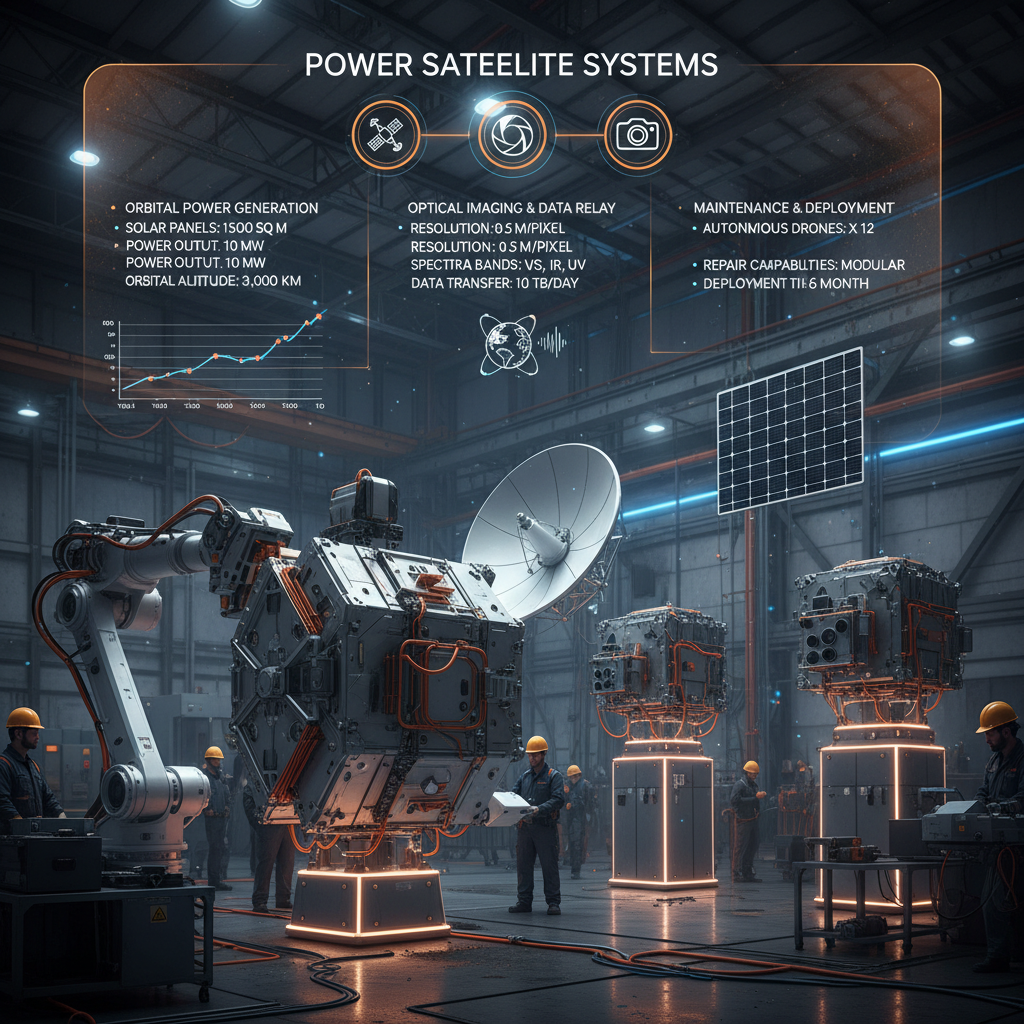
Power Satellite Key Specifications
Understanding the technical parameters of a power satellite is crucial. Here’s a simplified overview of typical specifications (these vary significantly based on design):
Conclusion: The Future is Bright for Space-Based Solar Power
Power satellites hold immense promise as a sustainable energy source for the future. While challenges exist, ongoing innovation and investment are steadily bringing this technology closer to realization. The potential benefits – clean energy, energy security, and a reduced carbon footprint – are too significant to ignore. Space-Navi will continue to provide updates on this exciting field.
Frequently Asked Questions (FAQs)
What are the environmental impacts of power satellites?
The environmental impact of power satellites is a crucial consideration. While they offer a clean energy source, concerns exist regarding the potential impact of microwave or laser transmissions on the atmosphere and wildlife. However, these concerns are actively being addressed through research and the development of targeted transmission systems. The manufacturing and launch of satellites also have environmental implications, which are being mitigated through sustainable practices and the development of reusable launch vehicles. Overall, the environmental benefits of reducing reliance on fossil fuels are expected to outweigh the potential drawbacks.
How much would it cost to build and deploy a power satellite?
The cost of building and deploying a power satellite is substantial, estimated to be in the billions of dollars for a single, large-scale satellite. This cost includes research and development, manufacturing, launch expenses, and the construction of ground-based rectenna facilities. However, costs are expected to decrease with advancements in space technology, such as reusable launch vehicles and in-space manufacturing techniques. Furthermore, the long-term economic benefits of providing clean, reliable energy could offset the initial investment.
What is a rectenna and how does it work?
A rectenna (rectifying antenna) is the receiving station on Earth that converts the microwave or laser energy beamed down from a power satellite into usable electricity. It consists of numerous antenna elements that capture the radiofrequency energy and a rectifier circuit that converts it into direct current (DC) electricity. Rectennas can be designed to cover large areas, but they do not pose a significant health hazard and can be integrated into existing infrastructure.
What are the regulatory hurdles for space-based solar power?
Currently, there is a lack of comprehensive international regulations governing space-based solar power. Key regulatory issues include the allocation of radio frequencies for energy transmission, the prevention of electromagnetic interference, and the establishment of safety standards for satellite operations and ground-based rectennas. International collaboration is essential to develop a clear and consistent regulatory framework that fosters the responsible development of this technology.