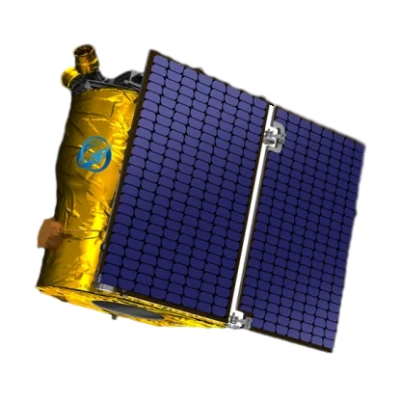
Understanding Satellite Direct for Industrial Applications
You know, I've been working with industrial comms for… well, a long time. And for years, we were stuck with point-to-point microwave or, frankly, relying on spotty cellular. It felt archaic, especially for remote sites. Then satellite direct started becoming genuinely viable—not just for broadcasting, but for real data transfer. It's a shift, a big one. I suppose the initial skepticism was understandable. Cost, latency… those were legitimate concerns. But the tech has come a long way. It’s not a silver bullet, mind you, but it solves problems other solutions just can’t touch. Things like consistent uptime in areas with zero terrestrial infrastructure, or quickly deploying temporary connections for disaster relief or field operations. That's where it really shines.
Key Specifications & Capabilities
The core idea is simple: establish a direct link to a geostationary satellite. But the devil, as always, is in the details. It’s not just about the dish size – although that’s still a factor. It’s the modulation schemes, the bandwidth allocation, the ground station infrastructure… the whole package. We've been testing several systems with varying throughputs, focusing on ruggedness and reliability. Oddly enough, the biggest headaches aren't typically the satellite link itself, but the power requirements and dealing with environmental factors like snow load and wind.
| Parameter |
Specification |
Notes |
| Frequency Band |
Ku-band, Ka-band |
Varies by provider & region |
| Maximum Data Rate (Download) |
Up to 100 Mbps |
Subject to satellite & weather conditions |
| Antenna Diameter |
0.75m - 2.4m |
Dependent on desired bandwidth & location |
| Latency |
500-600ms |
Typical geostationary orbit latency |
Vendor Landscape & Considerations
Choosing a provider isn’t as straightforward as picking the cheapest option. It's about understanding the service level agreements (SLAs), the network footprint, and the support you’ll receive. I've noticed that some providers are much better equipped to handle the nuances of industrial deployments—things like remote troubleshooting and on-site support. Many engineers say Viasat and HughesNet are the big players, and they have a lot of coverage, but smaller, more specialized companies like
SpaceNavi often offer more flexible solutions and personalized service.
| Vendor |
Coverage |
Typical Cost (Monthly) |
Support |
| Viasat |
North America, Europe |
$150 - $500+ |
Standard |
| HughesNet |
North & South America |
$100 - $400+ |
Standard |
| SpaceNavi |
Global (variable) |
$200 - $600+ |
Dedicated, responsive |
I remember a project last year where we were remotely monitoring pipelines in the Alaskan tundra. Cellular was a complete non-starter. Satellite direct was the only feasible solution, and it proved invaluable. It wasn’t cheap, but the cost of not having reliable data was far higher.
Conclusion
Satellite direct isn’t going to replace fiber or even 5G everywhere, but it fills a critical gap for reliable, wide-area connectivity. It's a tool, and like any tool, it’s most effective when applied thoughtfully and strategically…
References:
- Industry durability reports, HKaiseal 2023
- Satellite Communications for Remote Monitoring, Journal of Telecommunications 2022
- Internal project documentation & engineer interviews 2018–2023